SportsCampFinder

Ver todos os Camps

Find the perfect camp for your athlete

camps

Basketball Camps
Soccer Camps
Baseball Camps
Football Camps
Volleyball Camps
Lacrosse Camps
Multi-Sport Camps
Elite Training
Overnight Camps
Day Camps
Destinos populares
BaliSedonaLos AngelesCosta RicaNew YorkSan FranciscoAustinMiamiJoshua TreeTulum
Ver todas as categoriasVer todos os destinos

Explorar todos os recursos

Ferramentas poderosas para expandir seus eventos

Recursos da plataforma

Precificação dinâmica inteligente
Categorias de ingressos
Lugares marcados
Recuperação de carrinho abandonado
Recuperação de visitantes
Doações e preço variável
Sistema de afiliados
Scanner de ingressos
Códigos de desconto
Perguntas personalizadas
Compartilhamento de ingressos
Upsells e adicionais
Análises e relatórios
Sequências de e-mail
Lista de espera / Notificar / Lembrar
Pessoas e Lugares
Camp OrganizersCamp FacilitiesKnowledge BaseInspiration
Ver todos os recursosSobre nós
PreçosBlog
Language
Saved events
Ver todos os eventos

camps

Basketball CampsSoccer CampsBaseball CampsFootball CampsVolleyball CampsLacrosse CampsMulti-Sport CampsElite Training

Destinos populares

BaliSedonaLos AngelesCosta RicaNew YorkSan Francisco

Pessoas e Lugares

Camp OrganizersCamp FacilitiesKnowledge BaseInspiration

Recursos da plataforma

Precificação dinâmica inteligenteCategorias de ingressosLugares marcadosRecuperação de carrinho abandonadoRecuperação de visitantesDoações e preço variávelSistema de afiliadosScanner de ingressosCódigos de descontoPerguntas personalizadasCompartilhamento de ingressosUpsells e adicionaisAnálises e relatóriosSequências de e-mailLista de espera / Notificar / Lembrar
Ver todos os recursosSobre nós
PreçosBlog
EntrarParents & athletesCamp directors
  • Browse all camps
  • Basketball Camps
  • Soccer Camps
  • Baseball Camps
  • Football Camps
  • Volleyball Camps
  • Lacrosse Camps
  • Multi-Sport Camps
  • Elite Training
  • All sports →
  • Orlando
  • Los Angeles
  • New York Metro
  • Dallas / Fort Worth
  • Chicago
  • Phoenix / Scottsdale
  • Atlanta
  • Denver
  • Seattle
  • Boston
  • Houston
  • Philadelphia
  • San Diego
  • Minneapolis / St. Paul
  • Todas as cidades →
  • List your camp
  • Camp director dashboard
  • Pricing
  • Coaches & academies
  • Online registration & payments
  • Waivers & medical forms
  • Check-in app
  • Family messaging
  • Waitlist & notify
  • Camp marketing
  • Reports
  • All features →
  • About SportsCampFinder
  • Camp guides
  • Help Center
  • Contact
  • Careers
  • Press
  • Termos de Serviço
  • Política de Privacidade

Camps

  • Browse all camps
  • Basketball Camps
  • Soccer Camps
  • Baseball Camps
  • Football Camps
  • Volleyball Camps
  • Lacrosse Camps
  • Multi-Sport Camps
  • Elite Training
  • All sports →

Destinos

  • Orlando
  • Los Angeles
  • New York Metro
  • Dallas / Fort Worth
  • Chicago
  • Phoenix / Scottsdale
  • Atlanta
  • Denver
  • Seattle
  • Boston
  • Houston
  • Philadelphia
  • San Diego
  • Minneapolis / St. Paul
  • Todas as cidades →

Para Camp directors

  • List your camp
  • Camp director dashboard
  • Pricing
  • Coaches & academies

Recursos

  • Online registration & payments
  • Waivers & medical forms
  • Check-in app
  • Family messaging
  • Waitlist & notify
  • Camp marketing
  • Reports
  • All features →

Empresa

  • About SportsCampFinder
  • Camp guides
  • Help Center
  • Contact
  • Careers
  • Press
  • Termos de Serviço
  • Política de Privacidade
SportsCampFinder
© 2026 SportsCampFinder. Todos os direitos reservados.
Inspiration

Evolution Beyond Genes:Consciousness Over Competition

Bruce Lipton
Bruce Lipton
Sep 22, 2026
9 min de leitura
Assistir · 7

We inherit a story about ourselves that shapes every choice we make: that life is a competition, that genes are destiny, that survival belongs to the fittest. This narrative, born from Charles Darwin's theory of evolution, has calcified into the foundation of modern civilization—economics, medicine, education, how we relate to one another. But what if the entire framework is wrong? What if the science that supposedly underpins it has moved on, leaving the philosophy behind like a shell?

The story of human evolution is actually older and more subtle than most people realize. The first scientific theory of evolution was published not by Darwin, but by Jean Baptiste Lamarck, a French naturalist, more than 50 years before Darwin entered the conversation. Lamarck understood evolution as a process of adaptation—a dialogue between an organism and its environment. The environment and the individual exchange information and transform together. This is the real engine of evolution: not accident, but relationship.

When Darwin published his theory in 1859, he emphasized heredity through "accidents of mutation"—random genetic changes that happened to make an organism more fit to survive. There was no dialogue in this version, no intention, no agency. Life was shaped by blind chance and ruthless struggle. Yet as Darwin himself grew older and continued his research, he increasingly recognized that environment played a major role in the evolution of life on this planet. His own observations had led him back, in some ways, toward Lamarck's insight. But his followers rejected this late evolution in his thinking. They locked Darwinism into the gear of competition, the notion that "survival of the fittest" meant war by other means—that life was a zero-sum game where one organism's gain was another's loss.

Leitura · 7 seções

The Misunderstanding of Competition

The language we inherit carries meaning that shapes how we behave. The word "competition" in modern usage means winner and loser. But the original definition was far different: to strive together. In the classical sense, competition was an arena for mutual improvement. If you competed against an opponent, your effort was not to destroy them but to use the challenge they presented to become stronger, faster, smarter—a better version of yourself. Your competitor was your collaborator in your own evolution.

This distinction is not merely semantic. When a culture builds its entire foundation on the belief that competition means domination—that you win and others lose, and no moral consideration attaches to how you achieve victory—the consequences ripple through every system. Healthcare becomes commodified, disconnected from wellness. Cooperation is seen as weakness. Collaboration is rebranded as "competitive advantage." The result is a civilization held together by stress, fear, and the constant pressure to outdo others.

This stress has a measurable cost. According to the teaching, approximately 90% of the health crisis on this planet is traceable to the stress of competition—not the competition itself, but the belief system embedded in how we understand it.

What Quantum Physics Reveals About Matter and Mind

The real revolution in our understanding of evolution and human potential did not come from biology. It came from physics. By 1927, quantum mechanics had made a discovery so radical that it overturned the materialist foundation of science: atoms are not made of matter. They are made of energy—specifically, energy vortices that resemble spinning "nano-tornados." The solidity we perceive, the physical world we touch and trust as real, is an expression of energy organized in particular ways.

Albert Einstein articulated the relationship: "The field is the sole governing agency of the particle." In other words, waves of energy—fields—shape the form that energy takes. The field precedes and governs matter. This is not metaphor. This is the physics.

If fields govern matter at the atomic level, the implications extend upward. The human brain can be measured using electroencephalography (EEG), which detects the vibrational energy fields that correlate with different states of consciousness. For decades, the EEG was recorded on the scalp, leading to an assumption: your thoughts are contained in your head. But a newer technology, magnetoencephalography (MEG), reads the same brain activity using probes positioned outside the head. This discovery is profound. It reveals that consciousness energy fields are broadcast through the skull and directly into the environment.

If consciousness is a field, not a localized phenomenon, then Einstein's principle applies: consciousness fields shape the character of matter—both the internal material of our bodies and the external physical world. Each of us is constantly broadcasting the state of our consciousness into reality itself. We do not observe the world passively. We participate in shaping it through the fields we emit.

Genes Are Not Destiny

For nearly a century, genetics has been understood as destiny. We have fewer genes than some of the simplest organisms on the planet, yet humans exhibit vastly greater complexity. If complexity came from gene count alone, this would be impossible. The human genome cannot account for human consciousness, capacity, or potential. So where does complexity arise?

The answer is epigenetics—a science that reveals how environment and genome interact to create harmony. Epi- means "above" or "beyond." Epigenetics is the study of how signals beyond the genes themselves regulate which genes are turned on and off. Your genes are not a fixed program. They are a library, and which books get read depends on the signals your cells receive from their environment—both the cellular environment and, on a larger scale, the environment of your thoughts, beliefs, and consciousness.

Adaptation, not accident, is the foundation of evolution. When an organism encounters an environment, it receives information. That information is integrated by the nervous system and expressed through changes in gene expression. The organism adapts. This process happens across generations as well. What was once thought to be "Lamarckian" (the idea that acquired traits can be inherited) is now understood through epigenetics: environmental pressures can alter gene expression patterns in ways that are passed to offspring.

The control system of life is not genetic. It is consciousness. Consciousness, expressed through the nervous system, reads the environment and orchestrates the response of the organism. We are not controlled by genes. We are controlled by consciousness.

The Body as a Model for Civilization

The human body contains approximately 50 trillion cells. Each cell is, in a sense, like a miniature human—a complete living entity with its own intelligence and capacity to sense, respond, and adapt. When a body is in health and happiness, there is harmony among these 50 trillion individuals. No cell is at war with another. No cell dominates through competition or hoarding resources. They cooperate in service of the whole organism.

If we observe this same principle at the scale of human civilization—8 billion individuals—we can recognize a similar possibility. All humans are part of one living organism called humanity. When we come together and live in harmony, we change the way we relate to the environment. We start to live in harmony with the environment itself. The individual and the collective are not separate. They operate by the same principles.

Polarity and the Unity Principle

The universe is built on polarity—positive and negative, light and dark, masculine and feminine. These polarities are not enemies. They represent a continuum. A positive wire and a negative wire from the same source, when touched together, create an explosion. But when you recognize that positive and negative are expressions of the same field, you understand that their purpose is not to compete but to cooperate. Together, they constitute something essential. Each polarity provides meaning and power to the other.

This is where our cultural narrative of competition has led us astray. We take the polarities—political ideologies, economic systems, races, genders—and frame them as opponents in a struggle for dominance. But when we recognize them as expressions of a unified field, the entire game changes. The purpose of polarity is not victory of one over the other. It is the integration and harmony of both.

The Evolution We Need

The current upheaval on the planet is not a crisis to be managed through competitive struggle. It is a call to evolution. But evolution at this stage is not just individual. It is collective. The entire source of human civilization is what is evolving. For this evolution to occur, each person must first learn to live in harmony with themselves. From that inner harmony, we can extend harmony to others, to our communities, and to the civilization as a whole. Personal healing and planetary healing are not separate projects. They are one project, expressed at different scales.

The old story—competition, scarcity, survival of the fittest—was always a story about fear. It kept people small, divided, and stressed. The new story, grounded in quantum physics, epigenetics, and the principles of harmony, is a story about power: the power of consciousness to shape reality, the power of cooperation to create complexity and resilience, the power of individuals to participate in the evolution of the whole.

This is not optimism or wishful thinking. It is physics. It is biology. It is how systems actually work, once you look beyond the inherited story to see the mechanisms that were there all along.

Where to go from here

The scientific foundation for competition-based civilization is gone. The narrative persists because it is embedded in institutions, policies, and the stories we tell ourselves about who we are. Moving beyond it requires more than intellectual understanding—it requires a shift in consciousness, expressed through how you conduct your own life: in the choices you make about cooperation over domination, in the way you relate to others, in the way you care for your own health and wellbeing as a foundation for serving the health of the whole. This is not something that happens through top-down mandate. It is an evolution that emerges from individuals choosing, again and again, to broadcast harmony instead of fear into the field.
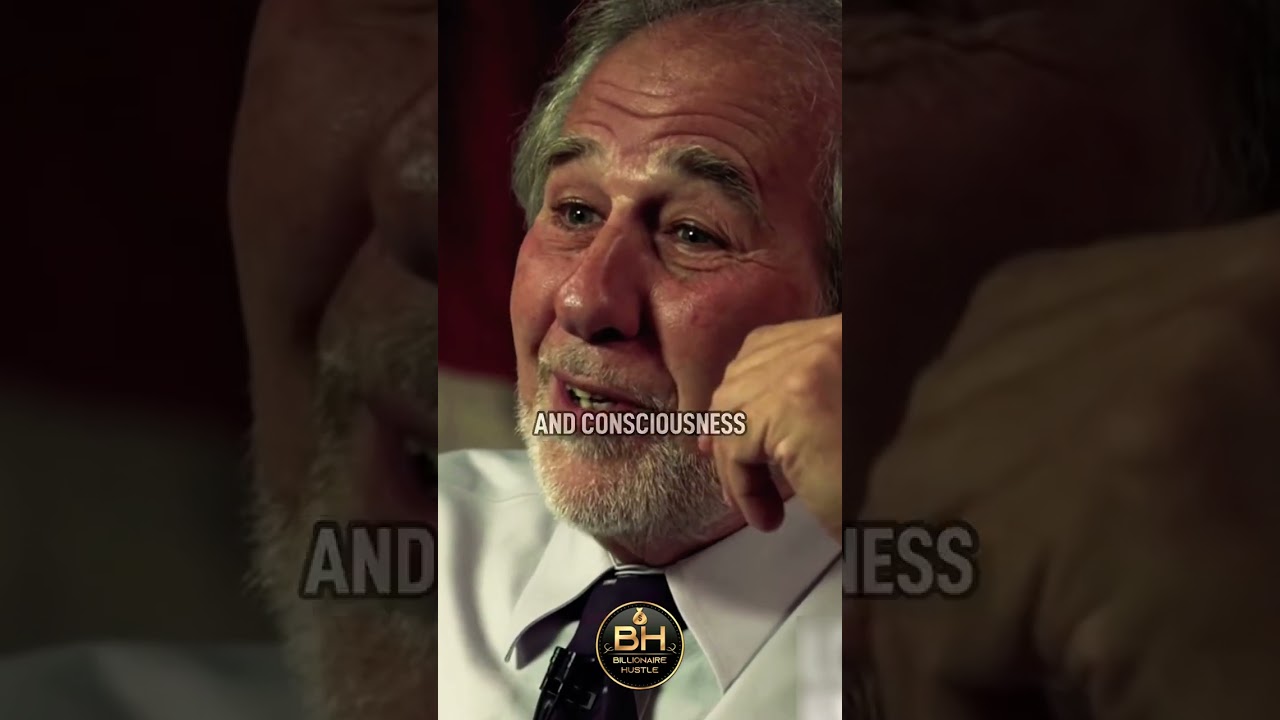
Transcript

[0:15] We have bought the belief of the

[0:17] philosophy of Darwinian theory [music]

[0:19] that our life is controlled by genes and

[0:22] that what happens in the world [music]

[0:25] is all based on the concept of

[0:27] competition. striving in the struggle

[0:30] for life, a [music] competition for

[0:33] fitness. Well, the problem is both of

[0:37] these concepts of Darwin are completely

[0:39] false. Charles Darwin did not come up

[0:42] with a theory of evolution. The [music]

[0:44] first theory of evolution scientifically

[0:47] published was from a French man [music]

[0:49] 50 years before Darwin by the name of

[0:52] Jean Baptiste D. Lamar. [music]

[0:54] 50 years later, Charles Darwin comes up

[0:56] with a theory of evolution. Well, let's

[0:59] recognize [music] something. In

[1:00] understanding the concept of evolution,

[1:02] there's two parts to the story. [music]

[1:04] A, did evolution happen? And B, what was

[1:07] the mechanism that supports that

[1:09] evolution? So, the significance that we

[1:11] now know is that evolution is a process

[1:15] of adaptation to the environment through

[1:17] [music]

[1:18] something called epigenetics

[1:20] where environment and genome interact

[1:23] [music] to create harmony with one

[1:26] another. Adaptation is the [music] whole

[1:28] foundation of evolution. In the original

[1:31] theory of evolution, Lamar recognized

[1:33] that there was an exchange of

[1:35] information between the environment and

[1:36] the individual. However, in Darwin's

[1:40] original understanding on the origin of

[1:42] species, it was recognized that heredity

[1:46] through accidents of mutation is what

[1:48] provided us to be here. Uh, and so there

[1:51] was no particular reason other than

[1:53] accidents in genetics. But what was

[1:56] interesting as Darwin got older, they

[1:58] actually started to see that environment

[2:00] played a major role in the evolution of

[2:03] life on this planet. Interestingly

[2:05] though, his followers just said, "Well,

[2:08] that's [music] because he's scenile

[2:10] getting old and they didn't follow those

[2:12] words. Although Darwin himself fully

[2:15] recognized there was more to evolution

[2:18] than genetic accidents. An important

[2:21] contribution in beyond Darwin is the

[2:23] insight that competition is [music] not

[2:26] what drives our civilization. In fact,

[2:29] competition is misunderstood because

[2:32] today the definition of competition is

[2:35] winner and loser. The original

[2:38] definition of competition was to strive

[2:41] together. Meaning if I'm in a state of

[2:44] competition, my effort is to improve

[2:47] myself to be more [music] powerful in

[2:51] that competition. My effort is not to

[2:54] destroy my competitor, but to use that

[2:58] competitor to foster [music] me to

[3:00] become a better person. So beyond Darwin

[3:04] gives us a new way of dealing with each

[3:06] other. It's not [music] competition. is

[3:08] based on cooperation. Learning to live

[3:11] in harmony with each other. Forming a

[3:13] community, not just a local community,

[3:16] but a global community. The new insights

[3:20] challenged Darwin by two things. We are

[3:24] not controlled by genes. We're

[3:26] controlled by consciousness. Humans do

[3:29] not have any more genes than some of the

[3:31] most simple organisms on this planet.

[3:34] And so, genes cannot [music] account for

[3:35] this complexity.

[3:38] The idea of complexity comes from the

[3:40] nervous system and the evolution of

[3:43] something that we call consciousness to

[3:45] the point that humans have a level

[3:47] called self-conscious

[3:49] which is a freedom aspect [music] where

[3:52] we can manifest an idea take an

[3:55] imagination and turn it into reality.

[3:58] The body is made out of 50 trillion

[4:00] cells. A cell is like a miniature human.

[4:04] When you are in health and happiness,

[4:06] there's harmony among [music] 50

[4:08] trillion individuals.

[4:10] That when we look at the world of 8

[4:13] billion people, we can recognize the

[4:16] same thing can happen in human

[4:18] civilization as [music] in the human

[4:21] body where all humans are part of one

[4:24] living organism called humanity. And

[4:28] this is when we all come together and

[4:30] live in harmony. And when we do this, we

[4:33] change the way we relate to the

[4:35] environment and we start to live in

[4:37] harmony with the environment. There is a

[4:40] purpose to polarity. Not expressing one

[4:43] side versus the other side, but

[4:45] recognizing they represent a continuum.

[4:49] If we use the polar sides to compete

[4:52] with each other, I can give you an

[4:54] example. We take a positive wire and a

[4:58] negative wire from the same source,

[5:00] touch them together and you get an

[5:02] explosion. But if you recognize the

[5:06] positive and negative are of the same

[5:08] field, then we start to recognize that

[5:11] together they mean something very

[5:14] important. [music]

[5:15] not challenging one another but coming

[5:17] to the understanding of their

[5:20] connectivity [music] and what each is

[5:22] providing for the final picture. How

[5:25] Darwin phrased it in his theory is

[5:28] survival of the fittest in the struggle

[5:30] for life. Well, that kind of belief

[5:33] system is really built into the

[5:35] foundation of the culture of

[5:37] civilization on this planet that we're

[5:40] all out here trying to survive through a

[5:43] process called competition. And the

[5:45] significance about that in regard to the

[5:48] theory is there is no morality involved

[5:52] in maintaining that competition. You can

[5:55] do it any way you can win, you win. and

[5:58] a [music] thousand people suffer from

[5:59] the way you're doing it. No problem. The

[6:02] idea [music] is win competition. That's

[6:05] the healthc care crisis on this planet

[6:07] today. 90% of the health crisis is due

[6:11] to the stress [music] of competition. So

[6:15] we're living in an out of balance world.

[6:18] I can see that you're sad and upset

[6:20] about the situation that feels not

[6:22] supporting you. [music] But I want you

[6:24] to recognize you are a very powerful

[6:26] individual. You're capable of adapting

[6:29] and superseding the problem that we're

[6:32] experiencing. You are the source of

[6:34] evolution of your own life. The planet's

[6:37] current upheaval requires an evolution.

[6:40] It's not just the evolution of you as an

[6:42] individual. It's really based on the

[6:44] evolution of the collective [music]

[6:46] population. The entire source of human

[6:50] civilization is what is evolving. But we

[6:53] also must recognize each of us must

[6:56] first learn to live in harmony with

[6:58] ourselves before we can apply that

[7:00] harmony to the rest of the people around

[7:03] us to civilization. [music]

[7:05] So basically we must take care of oursel

[7:08] personally [music] then in a state of

[7:10] health we can apply our help to the

[7:14] others around us. The new book Beyond

[7:17] Darwin is very powerful because it gives

[7:19] [music] us information about how we got

[7:21] to this stage in human evolution. It's

[7:24] powerful because it provides information

[7:26] on how evolution occurs. It also

[7:28] provides us with tools to move from

[7:31] where we are into a higher state of

[7:33] evolution. It's a powerful source of

[7:36] information to control your life. I'm

[7:39] [music] so excited for this for the

[7:40] simple reason is what? that we can move

[7:44] into a future [music] that is totally

[7:47] sustainable, one based on harmony,

[7:51] spirituality,

[7:52] and love. And this is what we have in

[7:56] front of us. And to see that, please

[7:59] check out the new book, [music]

[8:01] Beyond Darwin. It's available at all

[8:04] book sellers. And the reason why I want

[8:06] you to look at it is don't get caught up

[8:09] [music] in the fear of the collapsing

[8:11] civilization. It is now time to settle

[8:15] down and see the future that's in front

[8:18] of us. One of peace, harmony, and love.

Bruce Lipton
ArtistBruce Lipton

Bruce Lipton is a stem cell biologist and author whose research into cellular behavior and epigenetics has shaped contemporary discourse on the relationship between biology and bel…

Ver perfilSite
Explorar temas
EpigeneticsConsciousnessQuantum-physicsEvolutionCooperation

Tem perguntas?

Perguntas frequentes

According to epigenetics, evolution is controlled by consciousness and how organisms adapt to their environment, not by genes alone. Humans have fewer genes than simple organisms, yet far greater complexity, indicating genes alone cannot explain our capabilities. The environment and consciousness orchestrate which genes are expressed.
The original definition of competition meant to strive together—to use another person as a challenge to improve yourself, not to destroy them. Modern usage has distorted this into winner-versus-loser, which creates stress. Recovering the original meaning shifts competition from domination to mutual improvement.
Quantum physics reveals that consciousness exists as an energy field broadcast through and beyond the brain. Using Einstein's principle that fields govern matter, consciousness fields shape both our internal bodies and external reality. We are not passive observers but active participants in creating our world.
The belief system that life requires constant competitive struggle creates chronic stress. This stress destabilizes the body and mind, leading to disease. When individuals and communities shift from competition to cooperation and harmony, stress decreases and health improves.
Epigenetics reveals that environmental pressures can alter gene expression patterns in ways that are heritable. This confirms what was long dismissed as 'Lamarckian'—that adaptation to environment can create changes passed to the next generation through epigenetic mechanisms.
The human body achieves health through harmony among 50 trillion cells cooperating without competition. Applied to 8 billion humans, the same principle suggests that when people live cooperatively rather than competitively, civilization achieves harmony and sustainability, similar to a healthy body.

Continuar lendo

More from Bruce

Ver Tudo
Early Programming: How First Seven Years Shape Your Consciousness
Inspire

Early Programming: How First Seven Years Shape Your Consciousness

Children's brains operate in theta frequency during the first seven years, absorbing beliefs and behaviors through hypnotic download. This e…

1 min read
Reprogram Your Subconscious Mind While You Sleep
Inspire

Reprogram Your Subconscious Mind While You Sleep

Learn how to use the theta brainwave state during sleep to reprogram your subconscious mind with your conscious desires and goals without ef…

1 min read
Interfaith Prayer and Sacred Sound Unity
Inspire

Interfaith Prayer and Sacred Sound Unity

Snatam Kaur explores the universal language of prayer across spiritual traditions, weaving together voices and instruments in a devotional c…

1 min read
Snatam Kaur's "Ray Man Eh Bhid Jog Kamao": Sacred Sound and Inner Transformation
Inspire

Snatam Kaur's "Ray Man Eh Bhid Jog Kamao": Sacred Sound and Inner Transformation

Snatam Kaur's bhajan bridges devotional Sikh kirtan and contemporary meditation music, using sacred mantra to guide listeners toward release…

1 min read

Continue explorando

Continue sua jornada

Mais sabedoria e mais encontros de todo o diretório BrightStar.

Mais artigos

Explore a biblioteca completa de ensinamentos, entrevistas e guias.

Voltar a todos os artigos →

Professores e artistas

Conheça as linhagens, os músicos e os guias do mundo consciente.

Explorar artistas →

Encontre um evento

Kirtan, retiros, banhos de som, breathwork, festivais — acontecendo em breve.

Ver eventos →