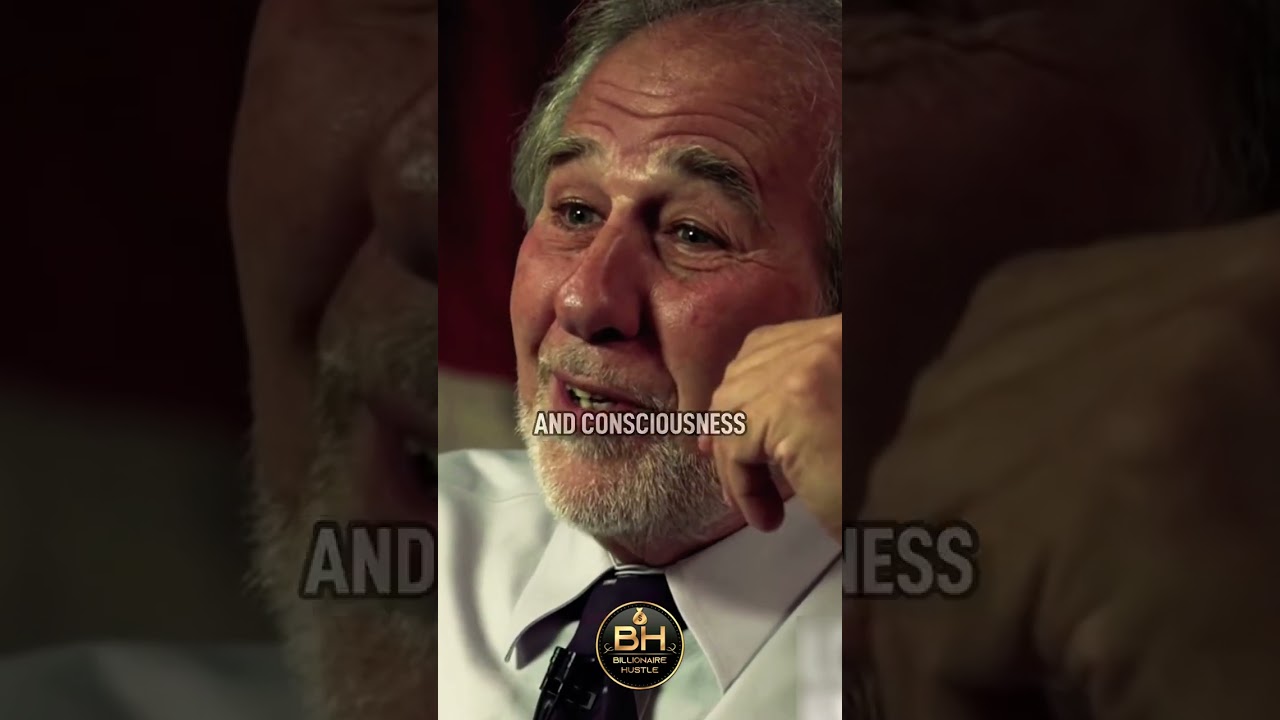
Dr. Bruce Lipton explains why 95% of human behavior is automated by the subconscious mind—and how you can reprogram it while you sleep. By playing audio affirmations as you fall asleep, when your conscious mind disconnects and your brain enters the theta brainwave state (the same state as the first seven years of childhood), these programs bypass your conscious filters and imprint directly on the subconscious. Reprogramming your subconscious with your genuine wishes and desires means you'll automatically spend 90% of your day pursuing those goals without having to consciously think about it.
How Much of Your Behavior Is Automatic?
Most people believe they are consciously running their lives. In reality, Lipton states that a normal person operates from their conscious mind only about 5% of the day. The other 95% is autopilot—the subconscious mind executing programs you installed long ago, often without realizing it.
This happens because of how the conscious and subconscious minds divide labor. Your conscious mind is creative, intentional, and in control when it stays focused. But the moment your conscious mind begins to wander—to think about your job, your chores, or abstract concerns—it takes its hands off the wheel. The autopilot takes over. And that autopilot, Lipton explains, is running whatever program was installed in your subconscious, often from childhood or past conditioning.
The relevance is profound: when your mind wanders, you're not being run by your conscious wishes and desires. You're being run by subconscious programming. And if that programming is negative or limiting—patterns inherited from your parents, trauma, or failed experiences—you will automatically repeat those patterns 95% of the day, no matter what your conscious mind wants.
What Is the Honeymoon Effect and Why Does It End?
Lipton uses the experience of falling in love as a biological illustration of this principle. The "honeymoon effect," described in his book The Honeymoon Effect, is the phenomenon where life transforms in 24 hours. Your job, which felt suffocating, suddenly doesn't seem so bad. Food tastes better. Music sounds richer. Even your environment feels magical. Nothing objectively changed—your circumstances are identical—but your inner experience completely shifted.
What actually happened? You stopped playing the program and started operating from your conscious mind.
When you meet someone you love, you become hyperaware, present, mindful. You are not thinking about your mother or your failures or your doubts. You are looking directly at this person in front of you, at your wishes and desires. Lipton describes this as equivalent to taking the "red pill" from The Matrix—waking up from the program. For the duration of the honeymoon, you're operating from conscious mind 90% of the day instead of the usual 5%. You're creatively seeking and experiencing your wishes and desires in real time.
But then, inevitably, you still have to think about things. Your job requires focus. You have chores. You have responsibilities. The moment you start thinking—the moment your conscious mind engages in abstract thought—it releases the wheel. The autopilot takes over. And guess what shows up? The behaviors your subconscious mind recorded from your parents, your upbringing, your past wounds. Behaviors you haven't thought about in months suddenly emerge, and your partner is shocked: "Where is this coming from? I've never seen this side of you."
This is why the honeymoon doesn't last. Not because love fades, but because the subconscious programming reasserts itself.
How Does the Brain Change State During Sleep?
To understand how to reprogram the subconscious, you need to understand brainwave states. Every night as you fall asleep, your consciousness begins to disconnect. The conscious mind—that vigilant, executive function that keeps you aware of danger and time—starts to shut down.
As consciousness disconnects, the brain enters the theta brainwave state. This is critical: the theta state is the same brainwave frequency as a child in the first seven years of life. In those first seven years, you have zero critical thinking. You absorb everything you observe without filtering it through logic or skepticism. Every interaction with your parents, every family pattern, every emotional tone in your home—it all gets recorded directly into the subconscious like a video file, unquestioned.
Every night, as you fall asleep, your brain re-enters that same theta state. Your conscious filters are offline. Your critical mind is sleeping. You are in a state of high suggestibility—exactly the same neurological condition that allowed your childhood to program you so deeply.
Can You Reprogram Your Subconscious While You Sleep?
Yes. And it's simpler than people realize. If you play an audio program of your stated wishes and desires as you fall asleep—wearing headphones so the sound goes directly into your ears—that program plays during the theta state, when your conscious mind is disconnected and your subconscious is in recording mode.
The program doesn't play into your conscious mind (which is shut off). It goes straight into the subconscious mind. It's a form of what Lipton calls "auto-hypnosis"—hypnosis you conduct on yourself without paying a hypnotherapist.
This works because during sleep, the subconscious has no defenses. There's no critical voice saying, "That's not realistic." There's no conscious doubt. The subconscious simply records what it hears as truth and begins to organize your behavior around it.
The practical application is straightforward: identify what you would like to be true in your life that isn't currently true. Create or find an audio program that affirms those specific goals. Play it every night as you're falling asleep. You don't need to consciously listen or believe it. Your job is simply to let it play as you drift off.
How Does Reprogramming Change Your Daily Behavior?
Here's the core insight: if you reprogram your subconscious with your conscious wishes and desires, then your subconscious programming will be aligned with your conscious goals. You won't have to think about success anymore. You'll automatically be seeking it 95% of the day.
Lipton explains it this way: a normal person's life is split between 5% conscious effort and 95% subconscious automation. If your subconscious is programmed for scarcity, fear, or failure, then 95% of your behavior automatically seeks those outcomes. You feel like you're struggling, but you're actually aligned—your conscious mind wants success, but your subconscious is programmed to expect failure, and the subconscious wins because it's running 95% of the show.
But if you reprogram your subconscious to match your wishes and desires, the math inverts. Now your subconscious automation is working *for* you instead of against you. Now 95% of your day—all those automatic thoughts, the decisions you make without thinking, the opportunities you notice, the people you attract—is organized around manifesting your goals.
You don't have to consciously manifest. You don't have to visualize or affirmation your way through the day with willpower. The subconscious does it automatically. You wake up pursuing your desires. You notice opportunities. You make choices that align with your goals. And you do it all without thinking, because it's now your program.
What's the Difference Between This and Traditional Hypnosis?
Traditional hypnotherapy involves going to a professional, entering a hypnotic state under their guidance, and having them implant suggestions. It works—hypnosis is real and effective—but it requires time, money, and access to a trained hypnotherapist.
Auto-hypnosis via sleep-state affirmations is the DIY version. You're using your body's natural nightly transition into theta brainwaves to achieve the same reprogramming effect. You're essentially hypnotizing yourself at the exact moment your brain is most receptive to suggestion, without any special training.
The subconscious doesn't distinguish between a hypnotherapist's voice and your own voice on an audio program. To the subconscious, a suggestion is a suggestion when delivered during the theta state. And you can do this every single night, which means consistent, ongoing reprogramming rather than a one-time session.
Why Does Conventional Willpower Fail If the Subconscious Runs 95% of Your Life?
This explains why New Year's resolutions and conscious willpower so often fail. You consciously decide, "I'm going to be confident" or "I'm going to be successful." For a few weeks, you white-knuckle it—using your 5% conscious effort to override your 95% subconscious programming. But willpower is exhausting. It requires constant vigilance and effort.
Eventually, you get tired. Your conscious mind gets distracted by work or relationships or just the demands of living. The moment you stop actively resisting, the autopilot takes over again. And now your subconscious program, which was never changed, reasserts itself. You slip back into old patterns. Not because you lack willpower or discipline, but because you didn't reprogram the underlying automation.
This is why reprogramming the subconscious is so much more effective than willpower. Once the subconscious believes and expects success (or love, or health, or whatever you're targeting), it doesn't require your effort. It becomes automatic. You're no longer swimming against the current of your own programming.
Where to go from here
The practical next step is to identify one specific wish or desire you want to make automatic. Not a vague goal like "be happy," but a concrete statement: "I am confident in social situations," or "I attract meaningful relationships," or "I am successful in my career." Then find or create an audio program—whether it's a recording of affirmations, a guided meditation, or a hypnosis track—that embodies that wish as present-tense truth.
Play it every night as you fall asleep. Don't try to consciously hear it or believe it. Just let it play. Consistency matters; the subconscious learns through repetition, just like it did in childhood. After a few weeks of nightly exposure during theta brainwaves, you'll begin to notice shifts in your behavior and the opportunities that appear in your life. Your subconscious will have begun to accept this new program and organize your automated responses around it.
The honeymoon effect demonstrates that a single day of operating from conscious wishes and desires transforms your entire experience of reality. Imagine what weeks or months of reprogramming your subconscious with those same wishes could do. That's the potential Lipton is pointing toward.