Hanuman Chalisa is a 40-verse devotional prayer to the Hindu deity Hanuman, traditionally chanted in group settings called kirtan. This recording captures three distinct melodic interpretations of the Chalisa performed at Bhaktifest in Joshua Tree, California, featuring simple English transliteration to help practitioners learn the Sanskrit words. The practice combines vocalization, harmonium, percussion, and group participation to create a sustained devotional immersion that has been performed annually for years.
What Is Hanuman Chalisa and Why Do People Chant It?
Hanuman Chalisa is a classical Sanskrit devotional text consisting of 40 verses (chalisa means "40" in Hindi) dedicated to Hanuman, the monkey deity revered in Hindu tradition for his unwavering devotion to Rama and his embodiment of courage, loyalty, and spiritual surrender. The prayer is typically recited or sung as a form of bhakti, or devotional practice, and is believed to invoke Hanuman's protective and transformative qualities.
Chanting Hanuman Chalisa serves multiple functions within a spiritual practice. For many devotees, it is a way to deepen connection with the deity through repeated vocalization and breath work. The structured, rhythmic nature of the text makes it suitable for memorization and communal recitation, which intensifies its devotional power. Group chanting, known as kirtan, creates a field of collective sound and intention that participants describe as immersive and clarifying.
How Does Group Kirtan Create Spiritual Immersion?
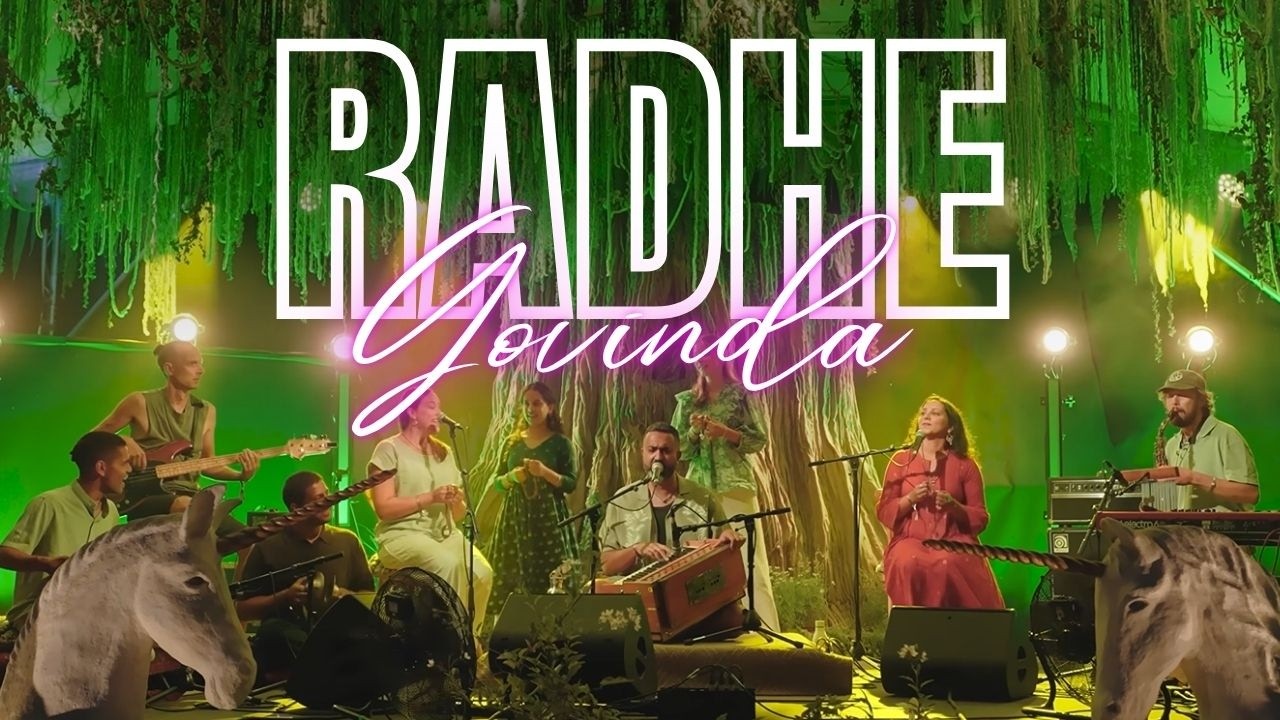
The video documents an annual tradition at Bhaktifest where participants gather for an hour-long session of Hanuman Chalisa chanting. This format reflects a long-standing practice within bhakti traditions: sustained group vocalization used to transcend ordinary mental activity and access states of contemplative depth or devotional opening. By repeating sacred words in unison, often with musical accompaniment, participants synchronize their breath and attention, which neuroscientifically can lower heart rate variability, regulate the nervous system, and create a sense of collective presence.
The instrumentation supporting the chanting includes:
- Harmonium — a keyboard instrument that provides melodic and harmonic structure
- Dholak — a two-headed hand drum that establishes rhythmic pulse
- Violin — adds textural and melodic embellishment
- Kartals — small metal cymbals struck to mark time and emphasize accents
- Manjira — another paired cymbal instrument used for rhythmic layering
Each instrument weaves into a sonic fabric that supports the human voice, preventing the mind from drifting into distraction while the repetition itself becomes a vehicle for meditation. The group context—hearing dozens or hundreds of voices chanting simultaneously—amplifies this effect.
What Are the Three Hanuman Chalisa Melodies Used in This Recording?
The Bhaktifest recording presents three different melodic settings of the Hanuman Chalisa text, each originating from different sources or compositions:
Ocean of Ram Hanuman Chalisa — This is one of the established melodies used in the recording, providing a particular rhythmic and tonal flavor to the prayer. Its name suggests an oceanic quality, perhaps implying a vast, flowing approach to the devotional practice.
Nina Hanuman Chalisa — Composed by Nina Rao and released on her album "Antarayaami—Knower of All Hearts," this version represents a contemporary interpretation of the traditional prayer. By creating her own melodic setting, Rao brings her musical sensibility and voice-leading choices to the form, making it accessible to modern practitioners while maintaining the integrity of the Sanskrit text.
Ramaya Hanuman Chalisa — Originally unreleased at the time of this recording, this melody was later released on Rao's second album in spring 2018. The inclusion of three distinct versions within a single session allows participants to experience the flexibility and durability of the Chalisa text, which can hold multiple musical containers while retaining its devotional essence.
Why Include English Transliteration for Sanskrit Chanting?
One of the stated goals of this video is to provide accessible entry into Hanuman Chalisa practice through simple English transliteration of Sanskrit words. This acknowledges a practical barrier: Sanskrit pronunciation is precise and includes sounds not present in English, requiring careful instruction for non-native speakers to engage authentically with the text.
By offering written phonetic guides, the video democratizes access to the practice, allowing viewers to learn the words at their own pace rather than only by listening or oral transmission. This balances preservation (the original Sanskrit and Devanagari script remain primary) with accessibility (English speakers can participate immediately). The video notes that without diacritical marks, not all nuances of Sanskrit pronunciation can be captured in Roman letters, acknowledging this limitation while providing a practical starting point.
For those seeking greater accuracy, additional resources are available: formal English transliteration with diacritical marks and Devanagari text can be requested through the artist's website, ensuring that practitioners who wish to deepen their engagement can access more precise linguistic tools.
How Does Annual Kirtan Tradition Build Community and Continuity?
The description notes that gathering for an hour of Hanuman Chalisa chanting has been "a tradition for many years now" at Bhaktifest. This consistency creates several effects: participants develop familiarity with the melodies and words, deepening their practice over time; a lineage of shared experience builds community bonds among people who may not see each other regularly outside the festival; and the annual rhythm mirrors the cyclical nature of spiritual practice itself, where repetition and return are central disciplines.
This structured gathering also honors a deeper traditional principle: that sacred sound and prayer are not solitary pursuits but are amplified and purified through collective practice. The decision to record and share the session extends this communal ethos beyond the live event, allowing those who could not attend to participate asynchronously.
What Role Does the Artist's Voice Play in Leading Kirtan?
Nina Rao serves as vocalist and harmonium player, positions that are not merely instrumental but ceremonial. The kirtan leader (often called a kirtan wallah) sets the tone, paces the repetition, holds space for collective emotion, and models authentic engagement with the practice. By singing clearly and with apparent devotion, the leader invites participants to match their own energy and presence to the prayer, rather than mechanically reproducing words.
The harmonium, played by the leader, provides harmonic support that helps participants stay on pitch and creates a musical container for their voices. This is particularly important in a group setting where unison singing can easily fragment into discord. The rhythm section (dholak, kartals, manjira) anchors the pace and energy, while the violin adds melodic conversation that weaves with the primary line of the Chalisa itself.
How Does Recording and Sharing Group Kirtan Preserve the Practice?
By documenting this Bhaktifest session, the recording serves multiple functions: it preserves a particular moment of collective practice; it allows those who were present to revisit the experience; it makes the practice accessible to people around the world who may never attend Bhaktifest; and it functions as a teaching tool for those learning the Chalisa for the first time. The credits to engineer James Redmond emphasize that creating such documentation itself requires intention, skill, and spiritual orientation—it is not a neutral act but a deliberate choice to extend the reach and longevity of the practice.
This aligns with traditional principles of guru-disciple lineage, where sacred knowledge and practice are transmitted directly but also preserved through multiple channels—oral instruction, written texts, and now digital media—ensuring that the practice evolves while maintaining its core integrity.
Where to Go from Here
For those interested in deepening Hanuman Chalisa practice, several pathways are available: begin by learning one of the three melodies presented in this recording, using the English transliteration as a guide; request formal transliteration materials and Devanagari text through Nina Rao's website to refine your pronunciation; attend live kirtan sessions where you can learn by ear and experience the full embodied impact of group chanting; and consider the practice as part of a broader devotional discipline, exploring the mythology and significance of Hanuman through study and reflection. The annual Bhaktifest gathering itself offers ongoing opportunity for community participation in this established tradition.