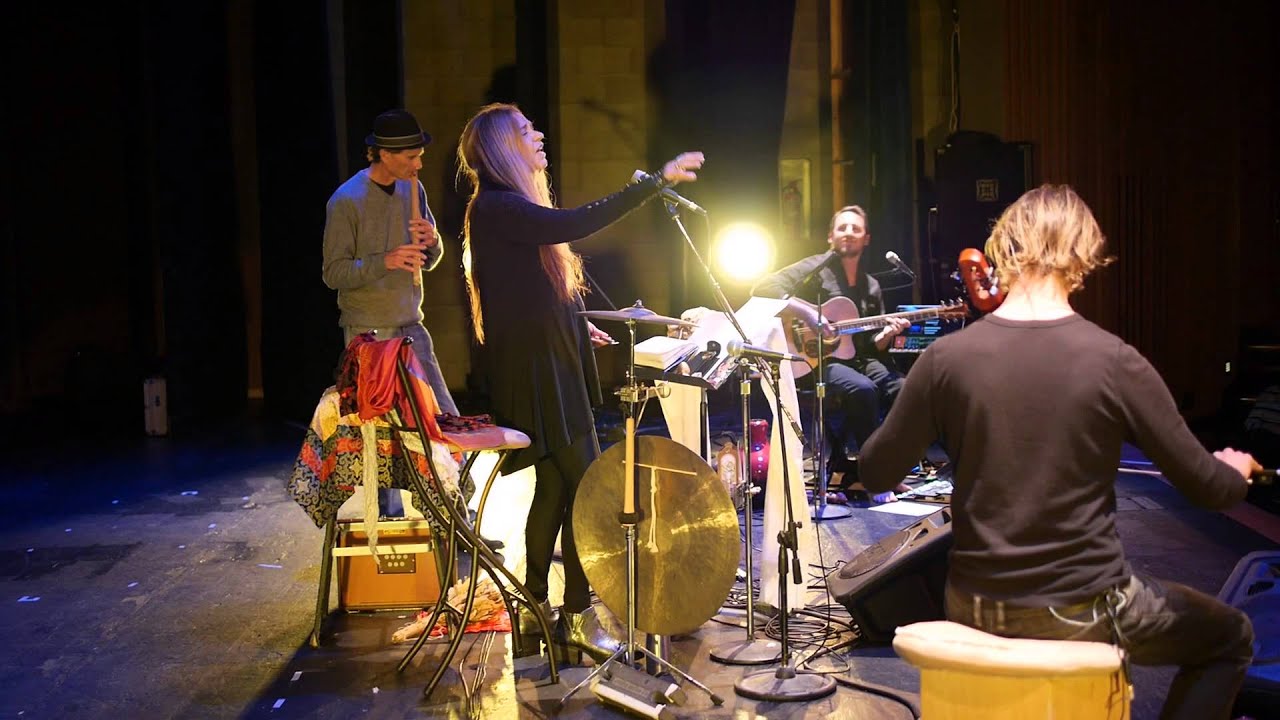
In a brief but concentrated teaching, vocal guide Silvia Nakkach offers a radical reframing of how we relate to the human voice. Rather than treating it as a tool for expression alone—or worse, taking it for granted—she proposes we understand the voice as a demanding, generous instrument that requires daily attention, skillful maintenance, and reverence for its natural properties. This shift in perspective opens a practice that extends far beyond singing technique; it becomes a doorway into presence, embodiment, and the discovery that the body itself is a teacher.
Nakkach begins with a statement that might sound poetic on its surface but carries practical weight: "the music itself is very generous." In her framework, this generosity isn't metaphorical sentimentality. Rather, it describes the voice's fundamental nature—its readiness to respond, its capacity to convey intention, its openness to transformation. The voice wants to work *with* us, not against us. But that generosity requires reciprocal respect.
Generosity in this sense means the voice is a partner in practice, not a possession to exploit. It's asking us to meet it halfway. When we approach the voice with care rather than demand, with curiosity rather than judgment, the instrument reveals its true capacity. This reframes a common frustration: the voice that seems strained, tired, or limited isn't failing us—it's responding accurately to how we've been treating it. The generosity is always there, waiting for us to reciprocate with attention.
Nakkach makes a crucial distinction: "if we consider the voice as an instrument we are not going to be concerned it's an instrument." The logic here is direct. When you recognize the voice as an instrument, you stop treating it casually. You wouldn't leave a violin untuned or a piano unmaintained. The same principle applies to vocal cords, resonance, breath, and the entire apparatus of the voice.
This framework shifts responsibility. Rather than expecting the voice to perform on demand—whether that means speaking in meetings, singing in the shower, or projecting across a room—we understand that it needs preparation, care, and regular maintenance. The moment you frame the voice this way, the question becomes: What does this instrument actually need?
And Nakkach offers a direct answer rooted in how we care for any valued tool: "what do you do with an instrument we clean it we play it every day we tune it." These aren't metaphors. They're concrete practices.
The teaching distills vocal care into three actionable principles. First: cleaning. Just as a musician swabs out a woodwind or wipes down strings, the voice requires preparation. This might mean warm-up sounds, gentle humming, or deliberate release of tension stored in the jaw, throat, and larynx. Cleaning the instrument means creating the conditions for it to function freely.
Second: play it every day. The voice atrophies without use. This isn't an argument for constant talking or singing, but rather for intentional daily practice. Just as a musician picks up their instrument daily, a vocal practitioner engages the voice consciously—through sound-making, humming, chanting, singing, or simply the deliberate use of the speaking voice with awareness. This daily engagement keeps the instrument responsive and alive.
Third: tune it. Tuning is the act of bringing the voice into resonance—with itself, with the breath, with intention. It's the practice of listening to your own sound and adjusting. And beyond tuning, Nakkach mentions "we go up and down"—the exploration of the voice's range, from the depths of lower registers to the heights of upper notes. This isn't about becoming a singer; it's about learning what your voice *is* capable of becoming.
Together, these three pillars form a complete practice: prepare the instrument, use it regularly, and refine it through intentional exploration. This is a framework anyone can apply, regardless of whether they consider themselves musical.
Nakkach offers a poetic but specific description of voice's essential nature: "The Voice is if it has this essence of air and water it wants to go." This layered statement deserves unpacking. The voice, in its truest nature, contains the qualities of air and water—both elements that move, that flow, that cannot be held or forced.
Air suggests the breath—the literal medium through which vocal sound travels. Without air, there is no voice. But air is also a metaphor for freedom, for space, for not being constrained. When the voice carries the essence of air, it moves with lightness rather than effort. It flows rather than strains.
Water adds another dimension: adaptability, continuity, responsiveness. Water doesn't resist obstacles; it finds its way around them. Water takes the shape of its container but never loses its fundamental nature. A voice that carries the essence of water is one that doesn't rigidify against circumstance, that flows with the body's natural architecture rather than fighting it.
The phrase "it wants to go" is crucial. Nakkach is saying that when the voice is free—when it has air and water as its essence—it has an inherent direction, an inherent momentum. It wants to move, to express, to travel. The practice, then, isn't about making the voice do something; it's about removing obstacles so the voice can do what it naturally wants to do.
Perhaps the most profound moment in the teaching comes at the close: "the body becomes a teacher the sound becomes a teacher." This signals a fundamental inversion of how we typically relate to our own voice.
Normally, we think of the body as an instrument we *play*—something we have control over, something that should obey our intentions. But Nakkach is suggesting something more reciprocal. The body has its own wisdom. Through the act of making sound—of tuning, of playing, of listening—the body reveals what it needs, what it's holding, what wants to move.
When sound becomes a teacher, it means you're not just using the voice as a tool of communication; you're using it as a tool of self-discovery. The quality of sound you produce tells you things: whether you're tense or relaxed, whether you're breathing fully or holding back, whether you're present or distracted. The sound is feedback. It's teaching.
And the body—through the practice of vocal attention—learns to listen to itself. It learns where it holds tension. It learns the difference between forced sound and free sound. It learns, through sensation and through hearing, what resonance feels like, what openness feels like. The body becomes both the student *and* the teacher in this exchange.
This is why daily practice matters. It's not rote repetition; it's a conversation between conscious intention and embodied awareness. Every session teaches you something new about how your instrument works, what it needs, and what it's capable of.
Returning to the opening principle—that music is very generous—we can now see the full circle. When you approach the voice as an instrument, when you clean it and play it daily and tune it, when you recognize its essence as air and water seeking to move freely, when you allow body and sound to become your teachers, the generosity the voice was always offering finally has room to flourish. You're not extracting from it; you're in relationship with it. And in that relationship, what emerges is far richer than anything forced or demanded could be.
This framework invites a simple but profound beginning: approach your voice for the next week as you would any valued instrument. Notice what "cleaning" might mean for your voice—perhaps gentle warm-ups or conscious release of tension before you use it significantly. Commit to a few minutes of daily vocal engagement: humming, chanting, singing, or simply speaking with full presence. Listen for the difference between forced and free sound. Notice when your voice feels heavy and when it feels light. Let the body teach you through sensation and hearing what it needs. The rest unfolds from there.