Look up long enough and the sky becomes text. Not language, exactly—something older. A sentence written in vapor and light, changing even as you read it, offering signs to anyone willing to slow down and watch. For one composer and sound artist, this simple act of sky gazing became not just a spiritual practice but the foundation of an entire artistic vision: a multimedia immersion called LIMINAL, in which the formless, impermanent dance of clouds translates into immersive sound and image.
The Spiritual Roots of Sky Watching
The story begins in childhood, in the simple act of looking up. What started as the ordinary curiosity of a young person gazing at passing clouds evolved into something deeper: a contemplative practice, a way of reading the world's hidden meanings. The artist describes this not as weather-watching but as a spiritual experience—a discipline of attention and receptivity that rewires how we listen to the world around us.
This kind of practice has deep roots across many traditions. In Zen Buddhism, sky gazing is a meditation unto itself; in Indigenous cultures, cloud reading carries prophetic weight. But what's significant here is personal: for this artist, the impermanence of clouds—their formlessness, their constant movement, their way of dissolving even as they take shape—became a mirror for something essential about existence itself.
The key insight from decades of sky gazing is this: watching clouds teaches you how to listen. The eye becomes trained in receptivity, in the ability to remain present with something that refuses to hold still. That heightened sensitivity—that capacity to read the subtle—eventually demanded expression. Not through words or visual art alone, but through sound.
What Does Liminality Have to Do with Music?
The title LIMINAL is the crucial key. Liminal comes from the Latin limen, meaning threshold. It describes the space between one state and another—the doorway, the in-between, the moment of transition. A liminal space is not fully one thing or another; it's suspended, uncertain, full of potential.
Clouds are profoundly liminal. They exist between sky and earth. They are neither solid nor fully empty. They form and reform, refusing fixed identity. In that way, they mirror the liminal nature of music itself—sound is vibration suspended in air, a phenomenon that exists only in time, never settling into permanence. Both clouds and music are ephemeral, dependent on perception, constantly in flux.
This is not metaphor alone; it's a structural parallel. When an artist decides to capture the essence of clouds in sound, she's working with materials that share the same fundamental characteristics: formlessness, transience, the capacity to suggest rather than define.
Translating Observation into Sound Design
The challenge of turning sky gazing into music is not one of literal description. You don't record cloud sounds and loop them. Instead, the work requires a translation—a shift from visual phenomena to sonic phenomena that evoke the same interior state, the same quality of attention.
Immersive sound art, as a discipline, emerged partly from contemporary classical composition and partly from installation art and soundscape ecology. The goal is not to create a traditional concert experience with a stage and audience facing forward. Instead, the listener is surrounded, enveloped, placed inside the sound rather than outside observing it. The sound environment becomes the medium through which perception itself is transformed.
What this allows is a dissolution of the boundary between listener and listened-to. When you're immersed in sound, you don't hear it as an object separate from yourself; you experience it as an environment you inhabit. That's closer to how contemplative practice works—not as a performance to witness, but as a state to enter.
The Craft of Minimal and Expansive Sound
Creating music about impermanence and formlessness requires deliberate choices about what to include and what to leave empty. This is where craft becomes philosophy made audible.
Sparse, minimal textures can evoke the quality of openness found in an empty sky. Drones—sustained, unchanging tones—can paradoxically suggest the constant transformation of clouds: the drone becomes a background against which subtle variations in overtone, texture, and color emerge and dissolve. Long durations allow the listener's perception to shift; what sounds static after thirty seconds of listening reveals internal movement after three minutes.
This is the language of contemporary contemplative music: artists like Alvin Lucier, Pauline Oliveros, and more recent figures working in ambient and immersive sound have shown that you can convey profound states of presence and impermanence through materials that seem to move very little. The magic is in what the listener brings—in the quality of attention they offer.
Collaboration as Liminal Space
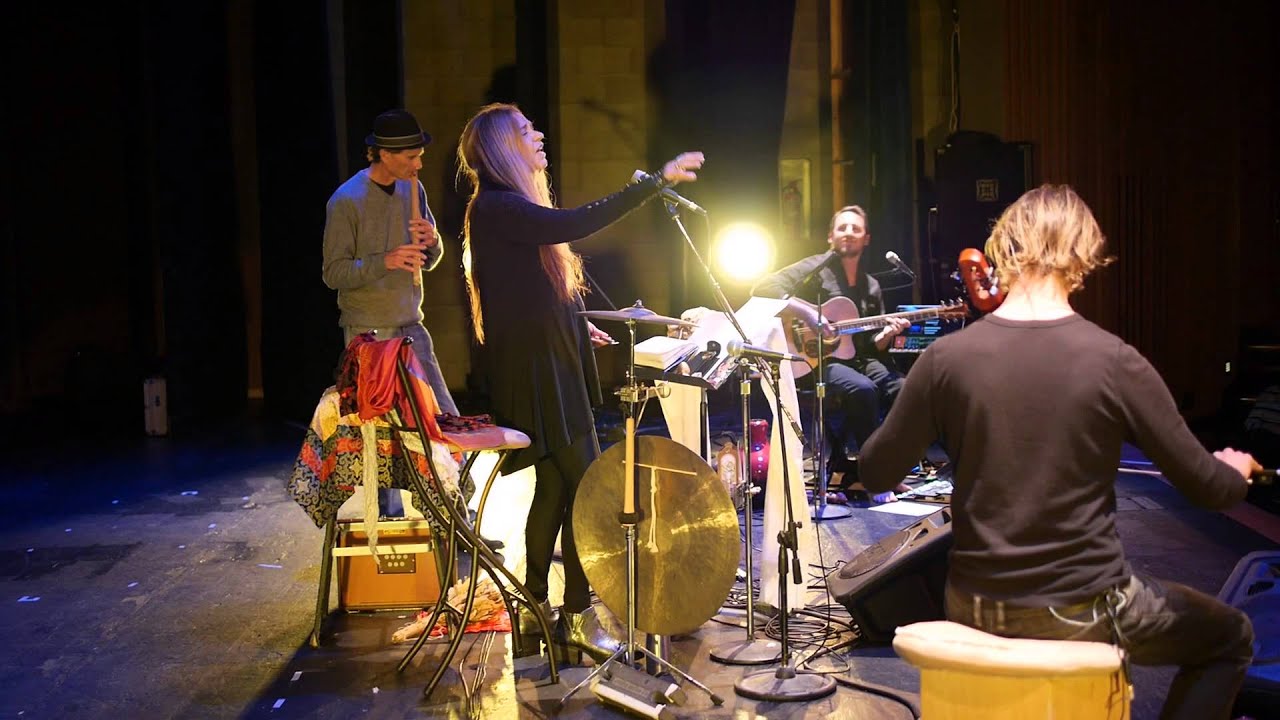
LIMINAL is not a solo work. The composition is by the artist; the music is realized in collaboration with another musician; and the visual component comes from a videographer. This layering of artists creates its own kind of threshold space—the place where one person's internal vision meets another's interpretation, where intent both clarifies and transforms through encounter.
The video element is not decoration. In multimedia immersions, image and sound are meant to move together, each deepening the impact of the other. The actual experience of watching clouds while hearing music inspired by clouds creates a loop of meaning—the visual returns you to the source material while the sonic envelope opens that source material to new depths.
Why This Matters Now
There's something countercultural about dedicating a lifetime to watching clouds and then channeling that into art. In a world that privileges productivity, rapid change, and constant novelty, the act of sustained attention to something formless and slow—and then making that the subject of serious artistic work—is an act of resistance.
The artist notes that this practice "enhances the way I listen to my surrounding world." That's the real claim here: that deep attention to natural transience rewires perception. It's not about romanticizing impermanence as a poetic concept, but recognizing it as the actual condition of existence, and training the nervous system to meet it with presence rather than grasping.
Spiritual traditions have long used impermanence—particularly as taught through meditation on change, death, and the absence of fixed self—as a path to liberation. Art that makes impermanence its explicit subject and its structural principle is doing something similar: inviting the listener into that recognition, not through doctrine but through direct sensory immersion.
The immersive format matters here too. In a concert hall, you can close your eyes and daydream; in a gallery or immersive installation space, the sound enters your body whether you're paying full attention or not. That's not aggressive—it's invitational. The environment does the work of deepening presence; you don't have to perform attentiveness.
The Gratitude Principle
The artist expresses "unconditional gratitude to all who helped to manifest this music." That phrase—manifest—suggests something important. The work wasn't created; it was manifested. The distinction matters. Creation implies the artist as sole originator. Manifestation suggests the artist as a conduit, someone through whom something that was always potentially present comes into form.
That resonates with contemplative understanding: the idea that the deepest creativity comes not from the ego generating novel ideas, but from the artist's ability to attune to something already present in the world and bring it into perceptible form. The clouds didn't need to be invented; they were always there, always moving, always offering signs. The artist's job was to listen deeply enough to translate their language into sound.
Where to Go From Here
If you encounter LIMINAL, the work invites you to return to your own relationship with transience and formlessness. Not as abstract concepts, but as lived experience. How often do you actually watch the sky? How much of your attention is colonized by screens and tasks, and how much remains available for the simple act of looking up?
The work also models something important for artists working in the contemplative and spiritual space: that serious craft—real engagement with form, with sound design, with the discipline of immersion—is not in opposition to spiritual practice. The two strengthen each other. The more technically rigorous your work, the more genuinely it can serve as a transmission of subtle states. The more deeply you practice attention, the more refined and precise your artistic choices become.
And for listeners: consider what happens when you allow yourself to be surrounded by sound designed to evoke the very transience and formlessness you normally resist. What opens? What becomes visible or audible that was hidden before? LIMINAL is not background music. It's an invitation to enter a threshold space—between activity and rest, between form and formlessness, between the self you think you are and the open awareness you actually are.
The clouds keep moving. They always have. The music now holds that movement, makes it audible, invites us to stop and witness the sign we've been too busy to read.