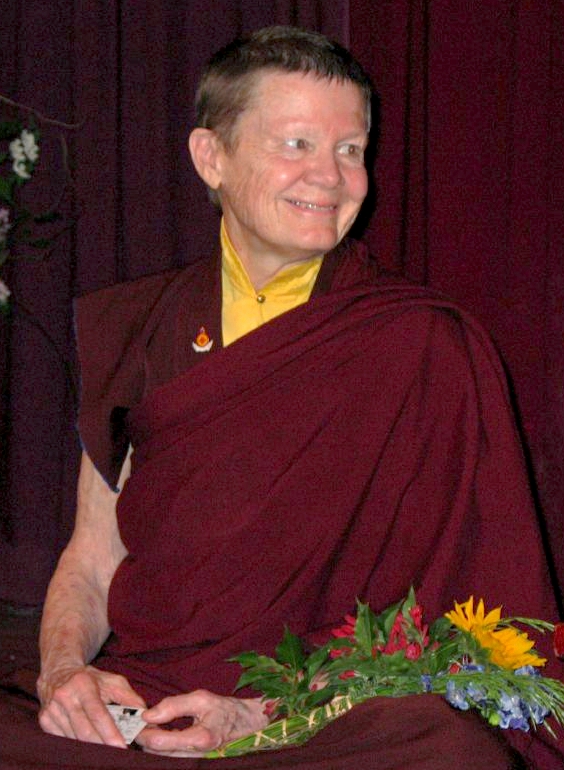
Unconditional friendship with yourself means learning to trust your capacity for open receptivity—staying present to whatever arises without judgment or self-rejection—even when you fall short of your ideals. This foundation naturally opens you to seeing the same basic goodness, sanity, and potential in others, creating genuine compassion not based on whether they behave well, but on recognizing that everyone, like you, is caught in cycles of suffering and covering over their own fundamental decency. The practice requires a brave, honest heart that can witness your own neurosis and shame without abandonment.
What Does It Mean to Have Unconditional Friendship with Yourself?
Unconditional friendship with yourself is not about creating a peaceful or special mental state. Rather, it is about developing a relationship of trust and openness with whatever is actually happening in your mind and heart right now. In Pema Chödrön's formulation, this begins with the capacity to "laugh and cry with a gentle heart"—a phrase drawn from Trungpa Mukpo's poem to his son. This isn't sentimental softness; it's a willingness to be present to your full emotional range without armor or resistance.
The cornerstone of this practice is open receptivity. Rather than judging your experience as good or bad, right or wrong, unconditional friendship means turning toward whatever arises—your anger, your shame, your pettiness—with a kind of brave curiosity. You forget this capacity regularly. You get triggered, carried away, say things you regret, act in ways that conflict with your values. Then you simply return to open receptivity. This is not a linear spiritual achievement; it is a continuous movement of coming back.
Crucially, unconditional friendship does not mean abandoning your capacity for honest self-observation. Chödrön emphasizes that you must "look in the mirror and see our wicked ways, our neuroses as neuroses" while still maintaining a gentle heart. The friendship is unconditional precisely because it survives this clear-eyed witnessing of your own dysfunction. You do not need to pretend to be better than you are, nor do you dissolve into shame and self-rejection. The friendship is with your fundamental sanity—your basic capacity for openness and wakefulness—which remains available even beneath layers of habit and reactivity.
How Does Basic Goodness in You Lead to Seeing It in Others?
The Buddhist teaching that forms the heart of this talk states: "When you realize the basic goodness of yourself, then you see it in others as well. You see it in everyone." This is not wishful thinking or naive positivity. It is a teaching about perception shaped by practice.
Basic goodness, in this context, refers to basic nobility, sanity, and wakefulness as potential in all living beings. This potential does not depend on behavior or achievement. It is not something you earn by being virtuous. Rather, it is the fundamental capacity for openness and awareness that persists beneath all the ways you cover it over with habits, defenses, and reactive patterns.
What makes this teaching practical is Chödrön's honesty about the human condition. Most of us, she observes, are not just covered over by our conditioning—we have never been encouraged to look deeper at all. No one suggested to us that there was an "opened doorway to open receptivity" beneath our hardness, anger, rage, jealousy, and hatred. We were never taught to touch the heart of our sorrow, grief, or shame. So we lived our whole lives thinking the surface—our reactivity, our defenses, our suffering—was all there was.
When you begin to trust your own basic goodness through practice, you start to recognize the same dynamic in others. You see someone "flying off the handle," someone who inflames everyone they meet. Your first reaction may be to feel insulted and retriggered. But something shifts: you begin to perceive that this person is also suffering, also caught in cycles of trying to escape feelings they find intolerable, also escalating their aggression, jealousy, loneliness, and addictions in the attempt. They have "got it down" how to inflame people—they have become professional at their particular strategy for managing unbearable inner states. But beneath that professional reactivity, you can sense they are also covering over their basic goodness.
This recognition is not permissive. It does not mean accepting harmful behavior. Rather, it means holding both truths at once: this person is causing harm AND they are suffering and caught. This simultaneity is what breaks your heart open and becomes the ground of genuine compassion—not the sentimental feeling that they are nice, but the direct perception that, fundamentally, you are in the same boat.
What Is the Relationship Between Gentleness and Honesty in This Practice?
One of Chödrön's most important moves in this talk is to reject the false choice between kindness and clarity. She notes that she often dismisses saccharine spiritual teachings—like the instruction to bow to yourself each morning and say "I love you"—as corny. Yet she acknowledges these teachings point in the right direction. The point is not the surface sentimentality; it is the direction of trust in your own sanity.
The practice requires what she calls a "gentle heart" or a "brave heart"—a heart that can be both tender and unflinching. You look at what is embarrassing in yourself, what you are ashamed of, with wide-open eyes and no self-deception. You do not give up on yourself in the face of what you see. This is not low standards or self-justification. It is the capacity to witness your own neurosis, pettiness, and harm-causing without the conclusion that you are fundamentally flawed or beyond redemption.
This balance is essential because without honesty, unconditional friendship becomes enablement or denial. And without gentleness, honest self-observation becomes self-punishment. The practice is in holding both: you can see your wicked ways clearly and still trust the basic goodness underneath. You can acknowledge that you forget your capacity for open receptivity, that you become triggered and reactive, that you say and do things you wish you hadn't—and simultaneously trust that this capacity is always available to return to.
How Does Recognizing Shared Suffering Create Equality with Others?
The title of Chödrön's retreat, "All in the Same Boat," captures the core insight: the recognition of shared vulnerability and shared fundamental nature. When you begin to see that everyone else has the same potential for basic goodness as you do, and that everyone else also covers it over in their own particular ways, equality naturally dawns.
This equality is not based on external circumstances. The person you admire and the person you despise are not in the same boat because they have the same job, money, or status. They are in the same boat because they both have the same fundamental capacity for wakefulness and the same tendency to protect themselves against overwhelming feeling by escalating aggression, jealousy, addiction, and isolation.
Chödrön describes the dynamic explicitly: we are all "always trying to get away from these feelings" and in trying to run away, we "escalate our aggression, escalate our jealousy, escalate our loneliness, escalate our addictions." We reinforce the old habits. This is not a moral failing unique to bad people; this is the human condition. And seeing this clearly—seeing that everyone does this—is what breaks your heart open.
The equality is not egalitarianism or democratic sentiment. It is the recognition that the person who angers you most is trapped in the same basic human predicament you are trapped in: how to live with unbearable feelings, how to trust in your own sanity when everything in your conditioning tells you to contract and defend.
What Is the Practice of Open Receptivity in Daily Life?
Chödrön emphasizes that unconditional friendship is not a peak experience or a state of consciousness to attain. Rather, it is a practice of returning again and again to open receptivity. In her words: "It's more like coming back to open receptivity. You forget about it, you lose it, you get triggered, you get carried away, worked up. You do and say things you wish you hadn't. And then you come back to the open receptivity."
The practice is fundamentally about trusting that "the basic open receptivity, the basic sanity, is always available." You do not need to fix yourself first or become more virtuous. You need to shift your relationship to what is already there. Rather than "trying to attain a peaceful state or grab on to some special state," you simply learn "to be open and receptive to the state of mind that is there now."
This means looking at your current state of mind "more as the dynamic, fluid, impermanent energy of life as it's manifesting for you right now." Not as a problem to solve. Not as a test you are passing or failing. But as the texture and shape of your aliveness in this moment. And holding a kind of "endearment or trust in your basic sanity, never leaving you."
In practice, this looks like noticing when you have been carried away by reactivity, when you have become someone you do not want to be in response to a trigger. And then, without elaborating a story about how you failed, you simply return to open receptivity. You remember that you can be present to what is arising. You remember that beneath the contraction, the armor, the reactivity, there is still the capacity to receive whatever is happening with some measure of gentleness and awareness.
Where to Go from Here
The insights Chödrön offers in this talk form the foundation for genuine compassion and social healing. If you are interested in deepening this practice, consider sitting regularly with your own inner experience without trying to change it. When you notice reactivity or shame, practice turning toward it with curiosity rather than rejection. Observe the cycles of suffering you create by trying to escape difficult feelings. Then gradually apply the same clear-eyed gentleness to the people who trigger you most, recognizing the same patterns of suffering in them. This is the work of learning to truly see that you are all in the same boat.


