SportsCampFinder

Browse All Camps

Find the perfect camp for your athlete

camps

Basketball Camps
Soccer Camps
Baseball Camps
Football Camps
Volleyball Camps
Lacrosse Camps
Multi-Sport Camps
Elite Training
Overnight Camps
Day Camps
Popular Destinations
BaliSedonaLos AngelesCosta RicaNew YorkSan FranciscoAustinMiamiJoshua TreeTulum
View All CategoriesView All Destinations

Explore All Features

Powerful tools to grow your events

Platform Features

Smart Dynamic Pricing
Ticket Categories
Assigned Seating
Abandoned Cart Recovery
Visitor Recovery
Donations & Sliding Scale
Affiliate Engine
Ticket Scanner
Coupon Codes
Custom Questions
Ticket Sharing
Upsells & Add-ons
Analytics & Reporting
Email Sequences
Waitlist / Notify / Remind
People & Places
Camp OrganizersCamp FacilitiesKnowledge BaseInspiration
View All FeaturesAbout Us
PricingBlog
Language
Saved events
Browse All Events

camps

Basketball CampsSoccer CampsBaseball CampsFootball CampsVolleyball CampsLacrosse CampsMulti-Sport CampsElite Training

Popular Destinations

BaliSedonaLos AngelesCosta RicaNew YorkSan Francisco

People & Places

Camp OrganizersCamp FacilitiesKnowledge BaseInspiration

Platform Features

Smart Dynamic PricingTicket CategoriesAssigned SeatingAbandoned Cart RecoveryVisitor RecoveryDonations & Sliding ScaleAffiliate EngineTicket ScannerCoupon CodesCustom QuestionsTicket SharingUpsells & Add-onsAnalytics & ReportingEmail SequencesWaitlist / Notify / Remind
View All FeaturesAbout Us
PricingBlog
Log inParents & athletesCamp directors
  • Browse all camps
  • Basketball Camps
  • Soccer Camps
  • Baseball Camps
  • Football Camps
  • Volleyball Camps
  • Lacrosse Camps
  • Multi-Sport Camps
  • Elite Training
  • All sports →
  • Orlando
  • Los Angeles
  • New York Metro
  • Dallas / Fort Worth
  • Chicago
  • Phoenix / Scottsdale
  • Atlanta
  • Denver
  • Seattle
  • Boston
  • Houston
  • Philadelphia
  • San Diego
  • Minneapolis / St. Paul
  • All Cities →
  • List your camp
  • Camp director dashboard
  • Pricing
  • Coaches & academies
  • Online registration & payments
  • Waivers & medical forms
  • Check-in app
  • Family messaging
  • Waitlist & notify
  • Camp marketing
  • Reports
  • All features →
  • About SportsCampFinder
  • Camp guides
  • Help Center
  • Contact
  • Careers
  • Press
  • Terms of Service
  • Privacy Policy

Camps

  • Browse all camps
  • Basketball Camps
  • Soccer Camps
  • Baseball Camps
  • Football Camps
  • Volleyball Camps
  • Lacrosse Camps
  • Multi-Sport Camps
  • Elite Training
  • All sports →

Destinations

  • Orlando
  • Los Angeles
  • New York Metro
  • Dallas / Fort Worth
  • Chicago
  • Phoenix / Scottsdale
  • Atlanta
  • Denver
  • Seattle
  • Boston
  • Houston
  • Philadelphia
  • San Diego
  • Minneapolis / St. Paul
  • All Cities →

For Camp directors

  • List your camp
  • Camp director dashboard
  • Pricing
  • Coaches & academies

Features

  • Online registration & payments
  • Waivers & medical forms
  • Check-in app
  • Family messaging
  • Waitlist & notify
  • Camp marketing
  • Reports
  • All features →

Company

  • About SportsCampFinder
  • Camp guides
  • Help Center
  • Contact
  • Careers
  • Press
  • Terms of Service
  • Privacy Policy
SportsCampFinder
© 2026 SportsCampFinder. All rights reserved.
Inspire

Bodhicitta: The Longing forFreedom and Awakened Culture

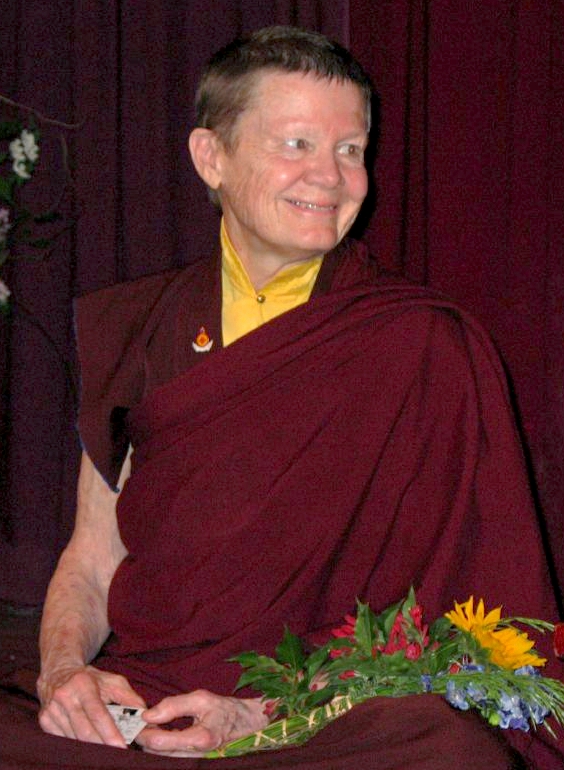
Pema Chodron
Pema Chodron
May 27, 2020
6 min read
Watch · 7

Bodhicitta is often conflated with compassion or love, but it is more precise to understand it as a longing to be completely free—not bound by hopes, fears, or habitual patterns—so that you can bring awakened culture to the earth and alleviate the suffering that all beings carry. This distinction matters, because bodhicitta arises from direct experience of what freedom actually feels like. To the degree you have glimpsed or sustained the experience of being unbound by your own conditioning—what one teacher calls "the blue sky that's always there" or "the sun that's always shining"—to that degree does bodhicitta become powerful and real. It is not an intellectual ideal but a felt longing rooted in tasting, even momentarily, what it means to stop being in your own way.

Read · 6 sections

What Are the Four Limitless Ones?

Longchenpa, a great meditation master, taught on the four limitless ones and referred to them as the four great catalysts for awakening. These practices are considered a warm-up for full-blown absolute and relative bodhicitta. The four limitless ones—typically loving-kindness, compassion, sympathetic joy, and equanimity—form the foundation upon which genuine bodhicitta builds. Without this groundwork, the longing to be free remains abstract rather than embodied.

How Does Suffering Drive Bodhicitta?

Buddhist psychology teaches three kinds of suffering. The first is the suffering of suffering—inevitable hardships like death, illness, separation from loved ones, and natural catastrophes such as earthquakes and floods. These are part of the natural condition of existence. But much of what we call suffering or pain is self-created: the reactivity, the anger, the irritation, the fear, the constant posture of self-protection against discomfort. We live as though we must defend ourselves from anything that might make us feel worse.

The second kind, the pain of pain, involves the escalation we add on top of the initial discomfort. A simple example: someone gives you a stern look. The first reaction—feeling fear, feeling judged—is part of your conditioning, the seeds and propensities that arise when causes and conditions meet. But then, rather than letting that reaction be, you take the story and run with it. You construct elaborate narratives: They must dislike me. I'm being judged. They think I'm inadequate. You tell others about "that person with the stern face." Each telling reinforces and escalates the suffering. One person's reactivity triggers another's, and the cycle continues.

This escalation happens because most of us spend our lives trying to get close to people and experiences that make us feel better, and trying to move away from those that make us feel worse. Our entire lives become organized around this avoidance-seeking pattern. As a result, we become more isolated, more insulated, more defensive. We keep bringing forth the viciousness in the situation rather than its kindness or potential for connection.

How Do Habitual Patterns Water Suffering?

When an emotional reaction arises—irritation, fear, shame—we have a choice. We can notice it and let it be, investigating it or simply allowing it without elaboration. Or we can fertilize it, put it in warm conditions, and watch it grow. Most of the time, we do the latter. We treat our reactive emotions the way someone might treat a dangerous animal: instead of training it toward kindness, we keep triggering its viciousness. We water and fertilize our propensities—our habitual tendencies—until they dominate our inner landscape.

This happens automatically at first because the seeds were sown long ago through conditioning. But at some point, as a practitioner, you see clearly how much suffering this creates—not just in yourself but in everyone around you. You observe what is happening in any country, any region of the world: the Middle East, the United States, South America, Africa. You recognize that the cycle of reactivity and escalation is the root of collective suffering. The buck stops here. One learns to say: A reactive emotion appears. Boom. I feel it. But I don't have to run with it. I can investigate it, embrace it in some way, and do something different.

What Is the Practice of Not Running with Reactions?

The Buddhist and Shambhala teachings offer a radical proposition: you don't get rid of anything. Instead, you tap into the energy of what arises and use that energy to wake up. When an emotional reaction comes—let's say fear in response to a stern face—the teaching is not to suppress it or pretend it doesn't happen. Instead, you become nonreactive to your own reactivity. You notice it, feel it fully, and choose not to amplify it through storytelling and escalation.

This requires practice. One method involves analytical meditation—examining the thought or emotion to see where it actually exists, what it's made of. Another involves gentler approaches, such as imagining light flowing through your body. The specific technique matters less than the willingness to do something different than strengthen the same old habitual patterns. Each time you interrupt the escalation loop, you weaken the propensity and gradually rewire your nervous system.

Why Does Bodhicitta Demand Waking Up?

Bodhicitta arises when you deeply see two things: first, that your own suffering is shared by everyone; second, that your reactivity triggers others' reactivity, creating a cascading effect of pain. For the sake of other people—not out of guilt or obligation, but out of genuine recognition—you want so much to wake up. You want to be someone who can stay open and fearless in the face of anything, who won't add to the world's suffering through unconscious escalation.

This is not a sentimental compassion. It is pragmatic. It is seeing that the only way to genuinely help is to stop being reactive yourself, to stop watering the poison, to develop the capacity to meet any situation with presence rather than fear-based contraction. Bodhicitta, then, is both personal and collective: your longing for freedom is inseparable from your intention to benefit all beings.

Where to Go from Here

If you recognize yourself in this teaching—caught in cycles of reactivity, watching yourself escalate simple moments into elaborate dramas of rejection and judgment—the practice begins exactly where you are. Notice when you are triggered. Notice when you start to run with a story. Notice how it feels in your body when you choose not to escalate. Experiment with different approaches: analytical meditation, visualization, simple mindfulness of breath. The goal is not perfection but the gradual loosening of patterns that bind you and everyone around you. Each small interruption of the escalation cycle is an act of bodhicitta, a step toward the awakened culture Pema Chodron describes—one where people can stay open, connected, and free enough to truly help one another.

Comments

Loading the conversation…

Transcript

[0:00] so when longchenpa was a great 19th

[0:06] century I believe meditation master

[0:09] taught on the for limitless ones he

[0:14] referred to them as the four great

[0:16] catalysts for awakening and they are

[0:21] considered the warm-up for full-blown

[0:30] absolute and relative bodhichitta

[0:33] so what is bodhichitta we hear that word

[0:38] a lot and some people say it's

[0:43] compassion or love or something but and

[0:46] that's true that's a kind of a component

[0:48] but actually bodhichitta

[0:53] to the degree that you've had any

[0:57] glimmer or more sustained experience or

[1:04] experience yeah of of being free of

[1:11] habits and fears not being bound anymore

[1:15] by habits and fears to the degree that

[1:19] you've had some experience of the blue

[1:21] sky that's always there the Sun that's

[1:26] always shining that feeling of free of

[1:31] always being in your own way so to the

[1:36] degree that you've experienced that then

[1:40] the bodhichitta begins to become so

[1:45] strong because it's a longing

[1:47] bodhichitta is actually a longing and

[1:50] it's an along a longing to be completely

[1:53] free a longing to not have not be bound

[1:57] by hopes and fears anymore not be bound

[2:00] by habitual patterns and tendencies

[2:02] anymore but specifically to be free so

[2:08] that you can

[2:11] be part of bringing awakened culture to

[2:19] this earth can be part of alleviating

[2:23] the suffering that all of us carry

[2:27] around with us so much so when I gave

[2:31] the teaching on compassion I talked

[2:33] about the three kinds of suffering and

[2:36] so the first kind the suffering of

[2:40] suffering that includes things that

[2:42] aren't going to go away

[2:43] like death for instance an illness and

[2:48] being separated from loved ones natural

[2:54] catastrophes like earthquakes and floods

[2:57] and volcanic eruptions and tidal waves

[3:02] things like this there's a lot of things

[3:05] that are just part of the natural

[3:08] condition of this earth but the

[3:11] suffering of suffering pain of pain it

[3:14] also definitely there's a lot in there

[3:17] that we can get rid of and we know we

[3:20] can and that's mostly what we call

[3:23] suffering or pain is is all of this this

[3:29] the fact that we get so bent out of

[3:32] shape we get so angry about things so

[3:34] irritated so frustrated so afraid we

[3:38] carry around so much fear we're in we're

[3:42] in such a we come from such a place of

[3:46] feeling what we need to protect

[3:49] ourselves from any discomfort happening

[3:52] and as a result of that as as

[3:55] practitioners begin to see really

[3:57] clearly everything out there begins to

[4:02] be something that's either going to make

[4:03] you feel better and make you feel worse

[4:05] and your whole life is run about you

[4:08] know based on trying to get away from

[4:10] the things and people that make you feel

[4:12] worse and trying to get everybody around

[4:14] people on your same wavelength as we say

[4:17] you know and it just doesn't work

[4:19] because somehow that attitude gets you

[4:23] more and more

[4:23] isolated more and more insulated and so

[4:26] when we talk about the pain of pain a

[4:29] lot of it is that something happens and

[4:32] then there's a reactive in a emotional

[4:37] reaction and then we escalate it right

[4:40] that's what we do there's a lot of

[4:43] teachings about that we something that's

[4:46] somebody looks at me the wrong way in my

[4:50] terms because I'm not feeling well or

[4:52] whatever someone gives me a look maybe

[4:56] very maybe they're not even giving me a

[4:58] look but I look in their direction and

[5:00] they're looking like this and then I

[5:04] because all kinds of conditioning feel

[5:08] terrible and inferior and like oh

[5:13] they're looking like that because I'm

[5:16] the one talking now and they don't like

[5:18] and they're they're judging me and Wow

[5:22] you know so what starts really simple

[5:25] somebody's Stern face and my habitual

[5:29] reaction to it it could just the book

[5:33] could just stop there I mean the first

[5:38] reaction is part of the propensity you

[5:42] know the seeds are there the causes and

[5:44] conditions come together boom I feel

[5:47] fear and judged when I see a stern face

[5:52] but then you could just stop there but

[5:55] no instead you sort of take the ball and

[5:58] you run with it and you have all kinds

[6:01] of storylines and you start talking to

[6:03] other people about this one with the

[6:06] stern face and it escalates and

[6:10] escalates and escalates and the

[6:13] suffering just keeps going on and on and

[6:15] on as one person's propensity czar

[6:18] triggered triggers someone else's and it

[6:21] just goes on like that so after a while

[6:25] with practicing and with the bodhichitta

[6:28] you you just don't want to do that

[6:31] anymore and you see how much suffering

[6:34] it causes you and how much suffering

[6:36] it's

[6:37] causing in the world you you look at

[6:39] what's happening in any country in the

[6:42] world look at what's happening in the

[6:43] Middle East look what's happening in the

[6:45] United States look what's happening in

[6:47] South America Africa all over the world

[6:50] and you see that it's just a result of

[6:53] nobody ever it's just the buck stops

[6:56] here one learns to say you know reactive

[7:04] negative reactivity happens you know bye

[7:07] boom pickup it comes but I could not run

[7:13] with it you know I could just be able to

[7:16] feel it's okay it's alright that that

[7:19] happens I could you could use pink words

[7:21] like embrace it or non pink words like

[7:27] investigate it but in any case when I

[7:31] taught on the three difficulties it's

[7:33] the second difficulty to do something

[7:35] different you know so whether you bathe

[7:38] yourself in light through the tips of

[7:42] your fingers and the tips of your toes

[7:44] or whether you or whether you do

[7:49] analytical meditation or but you just do

[7:51] something different rather than

[7:53] strengthening the same old habitual

[7:56] patterns that happened why just because

[7:59] some seed that you sowed a long time ago

[8:02] appears as an reactive emotion and then

[8:06] you as I think I often say you know it's

[8:09] like it's like it's a precious like

[8:12] orchid in a pot so it comes and then you

[8:14] instead of just enjoying the orchid you

[8:17] the the orchid may not be the best

[8:21] analogy but what I'm getting at is these

[8:23] propensities we sort of water them

[8:25] fertilize them you know put them in nice

[8:28] warm condition so they can grow and it's

[8:31] just crazy it's just crazy

[8:33] it's just like having a poisonous snake

[8:38] that or a pit bull that can't be trained

[8:42] or something that you just keep bringing

[8:45] out it's viciousness more and more

[8:47] than taming it you know I'm bringing out

[8:50] its kindness so so OD cheetah comes from

[8:56] our own experience of not wanting to

[8:58] suffer anymore and more very importantly

[9:02] seeing how the our how our suffering is

[9:05] shared by everyone and that we keep

[9:08] triggering each other off and and the

[9:11] suffering increases and so for the sake

[9:13] of other people you want so much to wake

[9:16] up so that you can be of benefit so that

[9:18] you can be at nonreactive

[9:22] someone who can stay open and fearless

[9:25] in the face of every anything so you

[9:28] start exactly where you are and these

[9:31] teachings and actually all the buddhist

[9:33] and shambhala teachings are about not

[9:37] getting rid of anything but tapping into

[9:41] the energy of what arises and using that

[9:46] energy to wake up and to increase the

[9:50] bodhichitta to open one's heart rather

[9:52] than rejecting anything

Pema Chodron
ArtistPema Chodron

American Tibetan Buddhist nun (Vajrayana, Shambhala lineage), longtime resident teacher at Gampo Abbey, Nova Scotia. Student of Chögyam Trungpa Rinpoche. Her teachings on staying p…

View profileWebsite
Explore Topics
BodhicittaBuddhist-practiceReactivity-patternsCompassionAwakening

Got Questions?

Frequently Asked Questions

While bodhicitta includes compassion as a component, it is more precisely a longing to be completely free from habitual patterns and fears so that you can help alleviate suffering in the world. Compassion is an element, but bodhicitta is the commitment and energy that arises from having tasted genuine freedom and wanting to share that freedom with others.
Real bodhicitta is rooted in direct experience—to the degree that you have glimpsed or sustained the experience of being free from your own habits and fears, bodhicitta becomes powerful and alive. It manifests as a genuine longing to wake up, not for yourself alone but so that you can be of benefit to others and help bring awakened culture to the earth.
When an emotional reaction arises—say, feeling judged after someone gives you a stern look—you initially feel it because of your conditioning. The practice is to notice that reaction without amplifying it through storytelling, escalation, or telling others about the incident. You investigate it, feel it fully, but choose not to water it like a seed that will grow into suffering.
Each person's reactivity triggers another person's propensities and conditioning, creating a cascading cycle of escalation. When you escalate an emotion through storytelling and sharing it with others, you amplify suffering in the collective field. This is why the teaching emphasizes that waking up and becoming nonreactive is not just personal—it is a gift to everyone around you.
The four limitless ones—typically loving-kindness, compassion, sympathetic joy, and equanimity—are described as the four great catalysts for awakening. They are considered a warm-up for full-blown bodhicitta, establishing the foundation of genuine love and openness upon which mature bodhicitta is built.
Yes. The teaching emphasizes that you begin exactly where you are. You don't need to get rid of anything; instead, you tap into the energy of what arises and use it to wake up. Whether through analytical meditation, visualization, or simple mindfulness, the practice is about gradually interrupting escalation cycles and rewiring your response to reactivity.
Rather than suppressing emotions, Buddhist practice involves transforming your relationship to them. When an emotion arises, you investigate it or allow it without elaboration, tapping into its energy to wake up. This approach transforms the emotion's power rather than creating the internal conflict that comes from rejection or denial.
Continue Reading

More from Pema

View All
How Present Moment Awareness Creates Your Future
Inspire

How Present Moment Awareness Creates Your Future

How we relate to the present moment sows seeds for how we'll relate to future moments. This shapes whether we open to change or strengthen e…

1 min read
Unconditional Friendship & Seeing Basic Goodness in Others
Inspire

Unconditional Friendship & Seeing Basic Goodness in Others

Develop unconditional friendship with yourself by trusting open receptivity, then naturally see the same basic goodness in everyone around y…

1 min read
Spiritual Imagination: Breaking Free from Fear's Grip
Inspire

Spiritual Imagination: Breaking Free from Fear's Grip

When fear takes over, imagination contracts into division. Spiritual imagination grounded in presence opens us to healing, shared humanity, …

1 min read
Know Yourself Beyond Thought: Identity Without Your Past
Inspire

Know Yourself Beyond Thought: Identity Without Your Past

Strip away your past and future. What remains is a deeper knowing—not thinking about who you are, but knowing that you are, right now.…

1 min read

Keep exploring

Continue your journey

More wisdom and gatherings from across the BrightStar directory.

More Articles

Browse the full library of teachings, interviews, and guides.

Back to all articles →

Teachers & Artists

Explore the lineages, musicians, and guides of the conscious world.

Explore artists →

Find an Event

Kirtan, retreats, sound baths, breathwork, festivals — happening soon.

Browse events →