SportsCampFinder

Browse All Camps

Find the perfect camp for your athlete

camps

Basketball Camps
Soccer Camps
Baseball Camps
Football Camps
Volleyball Camps
Lacrosse Camps
Multi-Sport Camps
Elite Training
Overnight Camps
Day Camps
Popular Destinations
BaliSedonaLos AngelesCosta RicaNew YorkSan FranciscoAustinMiamiJoshua TreeTulum
View All CategoriesView All Destinations

Explore All Features

Powerful tools to grow your events

Platform Features

Smart Dynamic Pricing
Ticket Categories
Assigned Seating
Abandoned Cart Recovery
Visitor Recovery
Donations & Sliding Scale
Affiliate Engine
Ticket Scanner
Coupon Codes
Custom Questions
Ticket Sharing
Upsells & Add-ons
Analytics & Reporting
Email Sequences
Waitlist / Notify / Remind
People & Places
Camp OrganizersCamp FacilitiesKnowledge BaseInspiration
View All FeaturesAbout Us
PricingBlog
Language
Saved events
Browse All Events

camps

Basketball CampsSoccer CampsBaseball CampsFootball CampsVolleyball CampsLacrosse CampsMulti-Sport CampsElite Training

Popular Destinations

BaliSedonaLos AngelesCosta RicaNew YorkSan Francisco

People & Places

Camp OrganizersCamp FacilitiesKnowledge BaseInspiration

Platform Features

Smart Dynamic PricingTicket CategoriesAssigned SeatingAbandoned Cart RecoveryVisitor RecoveryDonations & Sliding ScaleAffiliate EngineTicket ScannerCoupon CodesCustom QuestionsTicket SharingUpsells & Add-onsAnalytics & ReportingEmail SequencesWaitlist / Notify / Remind
View All FeaturesAbout Us
PricingBlog
Log inParents & athletesCamp directors
  • Browse all camps
  • Basketball Camps
  • Soccer Camps
  • Baseball Camps
  • Football Camps
  • Volleyball Camps
  • Lacrosse Camps
  • Multi-Sport Camps
  • Elite Training
  • All sports →
  • Orlando
  • Los Angeles
  • New York Metro
  • Dallas / Fort Worth
  • Chicago
  • Phoenix / Scottsdale
  • Atlanta
  • Denver
  • Seattle
  • Boston
  • Houston
  • Philadelphia
  • San Diego
  • Minneapolis / St. Paul
  • All Cities →
  • List your camp
  • Camp director dashboard
  • Pricing
  • Coaches & academies
  • Online registration & payments
  • Waivers & medical forms
  • Check-in app
  • Family messaging
  • Waitlist & notify
  • Camp marketing
  • Reports
  • All features →
  • About SportsCampFinder
  • Camp guides
  • Help Center
  • Contact
  • Careers
  • Press
  • Terms of Service
  • Privacy Policy

Camps

  • Browse all camps
  • Basketball Camps
  • Soccer Camps
  • Baseball Camps
  • Football Camps
  • Volleyball Camps
  • Lacrosse Camps
  • Multi-Sport Camps
  • Elite Training
  • All sports →

Destinations

  • Orlando
  • Los Angeles
  • New York Metro
  • Dallas / Fort Worth
  • Chicago
  • Phoenix / Scottsdale
  • Atlanta
  • Denver
  • Seattle
  • Boston
  • Houston
  • Philadelphia
  • San Diego
  • Minneapolis / St. Paul
  • All Cities →

For Camp directors

  • List your camp
  • Camp director dashboard
  • Pricing
  • Coaches & academies

Features

  • Online registration & payments
  • Waivers & medical forms
  • Check-in app
  • Family messaging
  • Waitlist & notify
  • Camp marketing
  • Reports
  • All features →

Company

  • About SportsCampFinder
  • Camp guides
  • Help Center
  • Contact
  • Careers
  • Press
  • Terms of Service
  • Privacy Policy
SportsCampFinder
© 2026 SportsCampFinder. All rights reserved.
Inspiration

How to Survive Your Own Creative Success

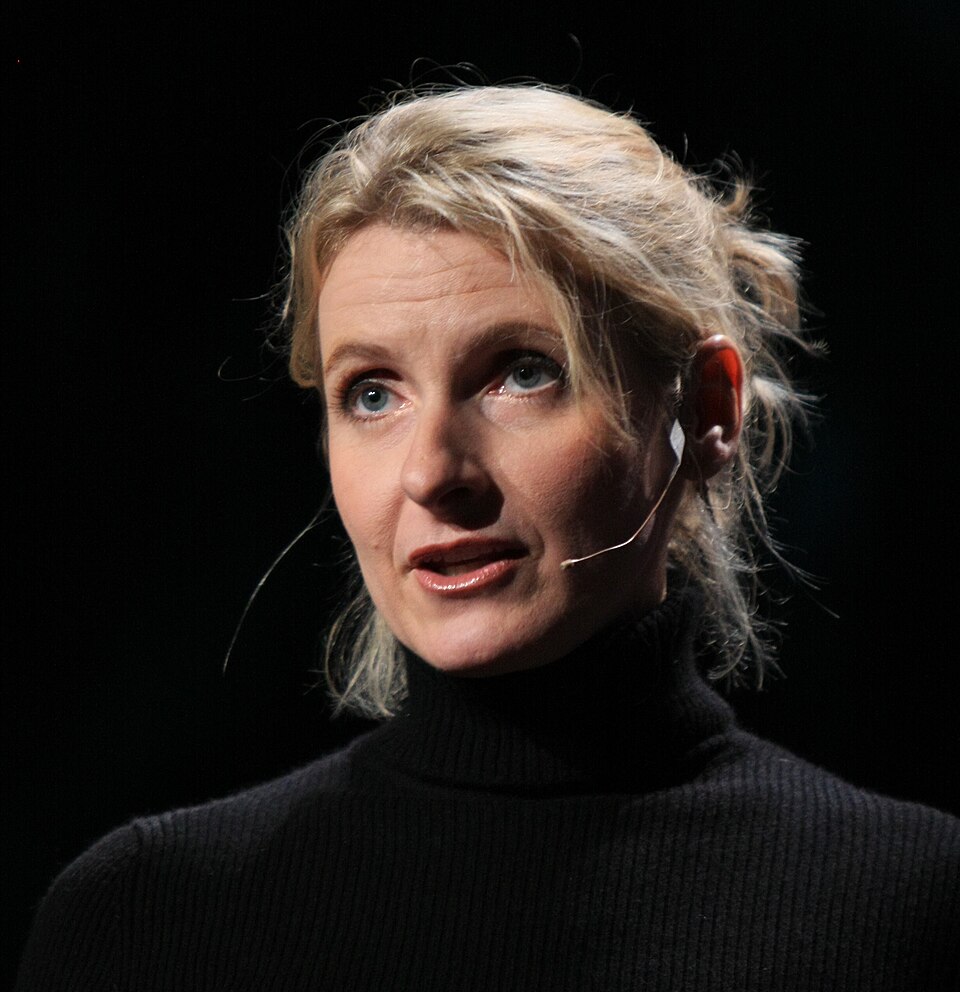
Elizabeth Gilbert
Elizabeth Gilbert
Feb 9, 2009
10 min read
Watch · 8

The aftermath of massive literary success is not what it appears. After Elizabeth Gilbert's memoir Eat, Pray, Love became a surprise international bestseller, she found herself surrounded by people gripped by a peculiar kind of pity. They approached with concern etched on their faces. "Aren't you afraid you're never going to be able to top that?" they asked. "Aren't you afraid you're going to keep writing for your whole life and never create a book that anybody cares about ever again?" The implication hung unspoken but clear: she was doomed. Success, in this framework, is a trap. The creative person who achieves it has nowhere to go but down.

What Gilbert realized, sitting with that doom narrative in 2009, was that she had heard a nearly identical fear her entire life—just in reverse. Two decades earlier, when she told people she wanted to be a writer, they warned her about failure with the same anxious intensity. "Aren't you afraid you're never going to have any success? Aren't you afraid the humiliation of rejection will kill you?" The script was nearly identical, only the failure mode had changed. She was trapped between two prophesies of doom: never succeed, or never survive your success.

The question that emerged from this pattern wasn't personal—it was cultural. Why, she wondered, do we seem to accept that artistic creativity carries an inherent psychological cost? Why do creative people in particular face this assumption that the price of art is mental anguish? You don't hear people asking a chemical engineer if they're worried about the emotional toll of bridge design. But mention you're a writer, and people nod knowingly at the implication that madness is part of the package.

Read · 5 sections

Why Do We Link Creativity to Suffering?

The evidence seems overwhelming. The 20th century alone produced a grim toll of magnificent creative minds who died young, often by their own hands. And even those who didn't commit suicide seemed undone by their gifts. Norman Mailer, in his last interview before his death, said something that captures the assumption perfectly: "Every one of my books has killed me a little more." That statement lands almost like a truism—the cost of great work is exacted from the artist's body and soul. We barely flinch when we hear it because we've internalized the idea that creativity and suffering are inherently linked, that artistry will ultimately lead to anguish.

But Gilbert wasn't comfortable with that. In fact, she found it odious—and dangerous. For someone in her position, already having experienced massive success and facing the real possibility that her best work might be behind her, accepting that link between creativity and suffering wasn't just philosophically troubling. It was a psychological trap door. "It would be very dangerous for me to start sort of leaking down that dark path of assumption," she said, recognizing that she could spend the rest of her life (potentially four more decades of work) drinking gin at nine in the morning, waiting for the anguish to do its job.

So she did what writers do: she researched. She looked across time to find if other societies had better, saner ideas about how to help creative people manage the emotional risks of creativity. That search led her to ancient Greece and Rome, to a framework so different from our own that it seemed to offer an entirely new way of thinking about where creativity comes from and who bears responsibility for it.

The Daemon and the Genius: An Ancient Externalizing of Creativity

In ancient Greece and Rome, the fundamental assumption was entirely different. People didn't believe that creativity came from human beings. They believed it came from somewhere else—from a divine attendant spirit that arrived from "some distant and unknowable source, for distant and unknowable reasons." The Greeks called these spirits "daemons," and famously, Socrates believed he had one who spoke wisdom to him from afar.

The Romans had the same concept but gave it a different name: genius. And here's what's crucial about the Roman conception: they didn't think a genius was a particularly clever individual. A genius was a magical divine entity—literally believed to live in the walls of an artist's studio, invisibly assisting the artist with their work, shaping the outcome. The metaphor Gilbert offered is precise: "kind of like Dobby the house elf"—a magical creature that came with the territory, present in the space of creative work.

The implications of this framework are profound. If your work is brilliant, you can't take all the credit for it. Everyone knows you had this disembodied genius who helped you. If your work bombs, it's not entirely your fault either—everyone knows your genius was "kind of lame." The psychological distance this creates is exactly what Gilbert was looking for: a protective construct between the artist as a person and the outcome of the work. The burden is shared. The responsibility is distributed. The artist is protected from both narcissism and despair.

This was how the West thought about creativity for a very long time. Then the Renaissance arrived and changed everything.

When the Individual Became the Source

The Renaissance brought a big idea that would reshape how we think about creativity: Put the individual human being at the center of the universe above all gods and mysteries. Rational humanism emerged. There was no more room for mystical creatures who take dictation from the divine. Creativity came to be understood as coming completely from the self of the individual. The artist wasn't a conduit anymore—they were the source. They were the genius, not the keeper of one.

This shift had obvious cultural benefits. It put human agency, human dignity, and human potential at the center of the story. But it also created what Gilbert calls "unmanageable expectations about performance." If all creativity originates from your individual self, then all responsibility for it does too. There's no daemon to blame. There's no external genius to credit. There's only you, your talents, and your capacity to either create brilliance or create failure. The entire weight of the work rests on your shoulders.

This is why the ancient framework suddenly seemed so relevant—not as historical curiosity, but as a potential solution to a very modern psychological problem. The shift from "I am a genius" (placing all creative power and responsibility in the individual) to "I have a genius" (understanding creativity as something that flows through you, something you collaborate with) fundamentally changes the emotional stakes of creative work.

How the Genius Actually Works: Two Contemporary Models

To make this abstract idea practical, Gilbert offered two examples of contemporary artists who intuitively understand this externalized model. The first was Ruth Stone, a poet who grew up in rural Virginia. Stone explained that she could feel poems coming—she would feel them approaching like a thunderstorm, shaking the earth under her feet. She had to work fast enough to grab a pencil and capture the poem as it rushed through her. The poem came intact, almost formed before she touched pen to paper. Stone wasn't composing; she was collecting. The creative work was happening at a frequency she could perceive but didn't control. Her job was to be available and to move fast enough not to miss it.

This is entirely different from how Gilbert herself works. She's not the pipeline. She doesn't experience poems rushing through her. But understanding that other artists do—and that this way of working actually freed Ruth Stone from the anxiety of personal authorship—gave Gilbert a model.

The second contemporary example came from Tom Waits. In an interview, Waits described an experience of speeding along in his car when he felt a song wanting to come through him. Anxiety began to rise—performance anxiety, doubt, the weight of expectation. But instead of trying to control or dominate the impulse, instead of tensing up to capture the song perfectly, Waits did something radical. He looked up at the sky and said something to the effect of: "This is a really good song. Get the Tom Waits version, just send it someplace else." Then he released it. He handed the song back to wherever it came from, explicitly declining to be the vessel that brought it into the world on that particular day.

What Waits did was re-establish a relationship rather than a domination. He spoke to the source of creativity as a separate entity with which he could negotiate. He could say no. He could ask it to find another artist. He could release the assumption that every creative impulse that came his way was his job to execute.

This kind of relationship—where the artist is neither the desperate servant nor the controlling master, but rather a partner in dialogue with something larger—is what the ancient daemon framework protected. It's what the idea of having a genius (rather than being one) offers: a psychologically sustainable way to do creative work over decades without being destroyed by the weight of it.

The Work Remains; Only the Burden Changes

It's crucial to understand that externalizing creativity in this way doesn't exempt you from the work. Gilbert was clear on this point. If your job is to write, you write. If your job is to dance, you dance. If your job is to paint, you paint. The work itself is non-negotiable. What changes is your relationship to the outcome and your mental positioning relative to the results.

Toward the end of her talk, Gilbert described a moment when she was working on a project she was uncertain about. Self-doubt began to creep in. The voice arrived that said if this book isn't brilliant, it will tank her career, damage her reputation, possibly ruin her. And she realized: "You know what? I'm going to keep writing anyway because that's my job." The shift here is subtle but complete. The outcome—whether it's brilliant or mediocre, whether it succeeds or fails—isn't actually the primary thing. The primary thing is that you do the work you were put on Earth to do, and you do it without allowing the anxiety about the outcome to poison the doing.

This is where the ancient framework becomes practically transformative. By externalized the source of creativity, you free yourself to focus on the actual practice—showing up, paying attention, moving your hands, putting words on the page. You can distinguish between your responsibility for the work (which is total) and your responsibility for the results (which you share with the universe, with the daemon, with whatever source creativity flows from).

It's not a magical solution. It won't eliminate self-doubt or make creative work easy. But it offers something valuable: a psychological construct that allows an artist to maintain a sustainable relationship with their work over a lifetime. You don't have to be destroyed by your success or crushed by your failure. You just have to do your job and let the genius—yours or the one you're in partnership with—handle the rest.

Comments

Loading the conversation…

Transcript

[0:13] I am a writer.

[0:15] Writing books is my profession but it's more than that, of course.

[0:18] It is also my great lifelong love and fascination.

[0:22] And I don't expect that that's ever going to change.

[0:25] But, that said, something kind of peculiar has happened recently

[0:30] in my life and in my career,

[0:33] which has caused me to have to recalibrate my whole relationship with this work.

[0:37] And the peculiar thing is that I recently wrote this book,

[0:41] this memoir called "Eat, Pray, Love"

[0:43] which, decidedly unlike any of my previous books,

[0:48] went out in the world for some reason, and became this big,

[0:51] mega-sensation, international bestseller thing.

[0:54] The result of which is that everywhere I go now,

[0:57] people treat me like I'm doomed.

[1:00] Seriously -- doomed, doomed!

[1:03] Like, they come up to me now, all worried, and they say,

[1:05] "Aren't you afraid you're never going to be able to top that?

[1:09] Aren't you afraid you're going to keep writing for your whole life

[1:13] and you're never again going to create a book

[1:15] that anybody in the world cares about at all,

[1:17] ever again?"

[1:20] So that's reassuring, you know.

[1:22] But it would be worse, except for that I happen to remember

[1:25] that over 20 years ago, when I was a teenager,

[1:28] when I first started telling people that I wanted to be a writer,

[1:31] I was met with this same sort of fear-based reaction.

[1:34] And people would say, "Aren't you afraid you're never going to have any success?

[1:38] Aren't you afraid the humiliation of rejection will kill you?

[1:41] Aren't you afraid that you're going to work your whole life at this craft

[1:44] and nothing's ever going to come of it

[1:46] and you're going to die on a scrap heap of broken dreams

[1:49] with your mouth filled with bitter ash of failure?"

[1:51] (Laughter)

[1:53] Like that, you know.

[1:55] The answer -- the short answer to all those questions is, "Yes."

[2:00] Yes, I'm afraid of all those things.

[2:02] And I always have been.

[2:03] And I'm afraid of many, many more things besides

[2:06] that people can't even guess at,

[2:07] like seaweed and other things that are scary.

[2:11] But, when it comes to writing,

[2:14] the thing that I've been sort of thinking about lately, and wondering about lately,

[2:18] is why?

[2:19] You know, is it rational?

[2:20] Is it logical that anybody should be expected

[2:22] to be afraid of the work that they feel they were put on this Earth to do.

[2:27] And what is it specifically about creative ventures

[2:31] that seems to make us really nervous about each other's mental health

[2:35] in a way that other careers kind of don't do, you know?

[2:38] Like my dad, for example, was a chemical engineer

[2:42] and I don't recall once in his 40 years of chemical engineering

[2:45] anybody asking him if he was afraid to be a chemical engineer, you know?

[2:49] "That chemical-engineering block, John, how's it going?"

[2:55] It just didn't come up like that, you know?

[2:57] But to be fair, chemical engineers as a group

[3:01] haven't really earned a reputation over the centuries

[3:03] for being alcoholic manic-depressives.

[3:06] (Laughter)

[3:08] We writers, we kind of do have that reputation,

[3:10] and not just writers, but creative people across all genres,

[3:14] it seems, have this reputation for being enormously mentally unstable.

[3:19] And all you have to do is look at the very grim death count

[3:23] in the 20th century alone, of really magnificent creative minds

[3:26] who died young and often at their own hands, you know?

[3:30] And even the ones who didn't literally commit suicide

[3:33] seem to be really undone by their gifts, you know.

[3:36] Norman Mailer, just before he died, last interview, he said,

[3:39] "Every one of my books has killed me a little more."

[3:43] An extraordinary statement to make about your life's work.

[3:47] But we don't even blink when we hear somebody say this,

[3:50] because we've heard that kind of stuff for so long

[3:52] and somehow we've completely internalized and accepted collectively

[3:56] this notion that creativity and suffering are somehow inherently linked

[4:01] and that artistry, in the end, will always ultimately lead to anguish.

[4:06] And the question that I want to ask everybody here today

[4:09] is are you guys all cool with that idea?

[4:11] Are you comfortable with that?

[4:14] Because you look at it even from an inch away and, you know --

[4:17] I'm not at all comfortable with that assumption.

[4:20] I think it's odious.

[4:21] And I also think it's dangerous,

[4:23] and I don't want to see it perpetuated into the next century.

[4:26] I think it's better if we encourage our great creative minds to live.

[4:30] And I definitely know that, in my case -- in my situation --

[4:36] it would be very dangerous for me to start sort of leaking down that dark path

[4:41] of assumption,

[4:42] particularly given the circumstance that I'm in right now in my career.

[4:46] Which is -- you know, like check it out,

[4:49] I'm pretty young, I'm only about 40 years old.

[4:51] I still have maybe another four decades of work left in me.

[4:54] And it's exceedingly likely that anything I write from this point forward

[4:59] is going to be judged by the world as the work that came after

[5:02] the freakish success of my last book, right?

[5:05] I should just put it bluntly, because we're all sort of friends here now --

[5:09] it's exceedingly likely that my greatest success is behind me.

[5:13] So Jesus, what a thought!

[5:16] That's the kind of thought that could lead a person

[5:18] to start drinking gin at nine o'clock in the morning,

[5:21] and I don't want to go there.

[5:24] (Laughter)

[5:25] I would prefer to keep doing this work that I love.

[5:27] And so, the question becomes, how?

[5:30] And so, it seems to me, upon a lot of reflection,

[5:33] that the way that I have to work now, in order to continue writing,

[5:37] is that I have to create some sort of protective psychological construct, right?

[5:40] I have to sort of find some way to have a safe distance

[5:44] between me, as I am writing, and my very natural anxiety

[5:49] about what the reaction to that writing is going to be, from now on.

[5:53] And, as I've been looking, over the last year,

[5:55] for models for how to do that,

[5:57] I've been sort of looking across time,

[5:59] and I've been trying to find other societies

[6:01] to see if they might have had better and saner ideas than we have

[6:05] about how to help creative people

[6:07] sort of manage the inherent emotional risks of creativity.

[6:11] And that search has led me to ancient Greece and ancient Rome.

[6:16] So stay with me, because it does circle around and back.

[6:19] But, ancient Greece and ancient Rome --

[6:21] people did not happen to believe that creativity

[6:23] came from human beings back then, OK?

[6:26] People believed that creativity was this divine attendant spirit

[6:30] that came to human beings from some distant and unknowable source,

[6:34] for distant and unknowable reasons.

[6:37] The Greeks famously called these divine attendant spirits of creativity "daemons."

[6:42] Socrates, famously, believed that he had a daemon

[6:45] who spoke wisdom to him from afar.

[6:48] The Romans had the same idea,

[6:49] but they called that sort of disembodied creative spirit a genius.

[6:54] Which is great, because the Romans did not actually think

[6:57] that a genius was a particularly clever individual.

[6:59] They believed that a genius was this, sort of magical divine entity,

[7:03] who was believed to literally live in the walls of an artist's studio,

[7:08] kind of like Dobby the house elf,

[7:11] and who would come out

[7:12] and sort of invisibly assist the artist with their work

[7:15] and would shape the outcome of that work.

[7:18] So brilliant -- there it is, right there, that distance that I'm talking about --

[7:21] that psychological construct to protect you from the results of your work.

[7:26] And everyone knew that this is how it functioned, right?

[7:29] So the ancient artist was protected from certain things,

[7:32] like, for example, too much narcissism, right?

[7:34] If your work was brilliant, you couldn't take all the credit for it,

[7:38] everybody knew that you had this disembodied genius who had helped you.

[7:41] If your work bombed, not entirely your fault, you know?

[7:45] Everyone knew your genius was kind of lame.

[7:47] (Laughter)

[7:48] And this is how people thought about creativity in the West

[7:52] for a really long time.

[7:53] And then the Renaissance came and everything changed,

[7:56] and we had this big idea, and the big idea was,

[7:58] let's put the individual human being at the center of the universe

[8:01] above all gods and mysteries,

[8:03] and there's no more room for mystical creatures

[8:05] who take dictation from the divine.

[8:07] And it's the beginning of rational humanism,

[8:09] and people started to believe that creativity

[8:11] came completely from the self of the individual.

[8:14] And for the first time in history,

[8:15] you start to hear people referring to this or that artist as being a genius,

[8:20] rather than having a genius.

[8:22] And I got to tell you, I think that was a huge error.

[8:26] You know, I think that allowing somebody, one mere person

[8:30] to believe that he or she is like, the vessel,

[8:33] you know, like the font and the essence and the source

[8:35] of all divine, creative, unknowable, eternal mystery

[8:39] is just a smidge too much responsibility to put on one fragile, human psyche.

[8:45] It's like asking somebody to swallow the sun.

[8:48] It just completely warps and distorts egos,

[8:51] and it creates all these unmanageable expectations about performance.

[8:54] And I think the pressure of that

[8:56] has been killing off our artists for the last 500 years.

[9:00] And, if this is true,

[9:02] and I think it is true,

[9:04] the question becomes, what now?

[9:07] Can we do this differently?

[9:09] Maybe go back to some more ancient understanding

[9:12] about the relationship between humans and the creative mystery.

[9:17] Maybe not.

[9:18] Maybe we can't just erase 500 years of rational humanistic thought

[9:22] in one 18 minute speech.

[9:24] And there's probably people in this audience

[9:27] who would raise really legitimate scientific suspicions

[9:31] about the notion of, basically, fairies

[9:33] who follow people around rubbing fairy juice on their projects and stuff.

[9:38] I'm not, probably, going to bring you all along with me on this.

[9:42] But the question that I kind of want to pose is --

[9:45] you know, why not?

[9:47] Why not think about it this way?

[9:49] Because it makes as much sense as anything else I have ever heard

[9:53] in terms of explaining the utter maddening capriciousness

[9:57] of the creative process.

[9:59] A process which, as anybody who has ever tried to make something --

[10:02] which is to say basically everyone here ---

[10:04] knows does not always behave rationally.

[10:07] And, in fact, can sometimes feel downright paranormal.

[10:12] I had this encounter recently

[10:14] where I met the extraordinary American poet Ruth Stone,

[10:17] who's now in her 90s, but she's been a poet her entire life

[10:20] and she told me that when she was growing up in rural Virginia,

[10:23] she would be out working in the fields,

[10:25] and she said she would feel and hear a poem

[10:28] coming at her from over the landscape.

[10:30] And she said it was like a thunderous train of air.

[10:33] And it would come barreling down at her over the landscape.

[10:36] And she felt it coming, because it would shake the earth under her feet.

[10:40] She knew that she had only one thing to do at that point,

[10:43] and that was to, in her words, "run like hell."

[10:45] And she would run like hell to the house

[10:47] and she would be getting chased by this poem,

[10:49] and the whole deal was that she had to get to a piece of paper and a pencil

[10:53] fast enough so that when it thundered through her, she could collect it

[10:56] and grab it on the page.

[10:57] And other times she wouldn't be fast enough,

[10:59] so she'd be running and running, and she wouldn't get to the house

[11:03] and the poem would barrel through her and she would miss it

[11:05] and she said it would continue on across the landscape,

[11:08] looking, as she put it "for another poet."

[11:10] And then there were these times --

[11:12] this is the piece I never forgot --

[11:14] she said that there were moments where she would almost miss it, right?

[11:17] So, she's running to the house and she's looking for the paper

[11:20] and the poem passes through her,

[11:22] and she grabs a pencil just as it's going through her,

[11:24] and then she said, it was like she would reach out with her other hand

[11:28] and she would catch it.

[11:29] She would catch the poem by its tail,

[11:31] and she would pull it backwards into her body

[11:34] as she was transcribing on the page.

[11:36] And in these instances, the poem would come up on the page perfect and intact

[11:40] but backwards, from the last word to the first.

[11:44] (Laughter)

[11:46] So when I heard that I was like -- that's uncanny,

[11:50] that's exactly what my creative process is like.

[11:53] (Laughter)

[11:56] That's not at all what my creative process is -- I'm not the pipeline!

[12:00] I'm a mule, and the way that I have to work

[12:02] is I have to get up at the same time every day,

[12:04] and sweat and labor and barrel through it really awkwardly.

[12:07] But even I, in my mulishness,

[12:09] even I have brushed up against that thing, at times.

[12:13] And I would imagine that a lot of you have too.

[12:15] You know, even I have had work or ideas come through me from a source

[12:18] that I honestly cannot identify.

[12:21] And what is that thing?

[12:22] And how are we to relate to it in a way that will not make us lose our minds,

[12:26] but, in fact, might actually keep us sane?

[12:29] And for me, the best contemporary example that I have of how to do that

[12:33] is the musician Tom Waits,

[12:35] who I got to interview several years ago on a magazine assignment.

[12:40] And we were talking about this,

[12:41] and you know, Tom, for most of his life, he was pretty much the embodiment

[12:45] of the tormented contemporary modern artist,

[12:47] trying to control and manage and dominate

[12:49] these sort of uncontrollable creative impulses

[12:52] that were totally internalized.

[12:54] But then he got older, he got calmer,

[12:56] and one day he was driving down the freeway in Los Angeles,

[12:59] and this is when it all changed for him.

[13:01] And he's speeding along, and all of a sudden

[13:03] he hears this little fragment of melody,

[13:06] that comes into his head as inspiration often comes, elusive and tantalizing,

[13:10] and he wants it, it's gorgeous,

[13:12] and he longs for it, but he has no way to get it.

[13:15] He doesn't have a piece of paper, or a pencil, or a tape recorder.

[13:18] So he starts to feel all of that old anxiety start to rise in him

[13:21] like, "I'm going to lose this thing,

[13:23] and I'll be be haunted by this song forever.

[13:25] I'm not good enough, and I can't do it."

[13:27] And instead of panicking, he just stopped.

[13:29] He just stopped that whole mental process and he did something completely novel.

[13:33] He just looked up at the sky, and he said,

[13:35] "Excuse me, can you not see that I'm driving?"

[13:38] (Laughter)

[13:42] "Do I look like I can write down a song right now?

[13:45] If you really want to exist, come back at a more opportune moment

[13:49] when I can take care of you.

[13:50] Otherwise, go bother somebody else today.

[13:54] Go bother Leonard Cohen."

[13:57] And his whole work process changed after that.

[14:00] Not the work, the work was still oftentimes as dark as ever.

[14:04] But the process, and the heavy anxiety around it

[14:07] was released when he took the genie, the genius out of him

[14:10] where it was causing nothing but trouble, and released it back where it came from,

[14:13] and realized that this didn't have to be this internalized, tormented thing.

[14:17] It could be this peculiar, wondrous, bizarre collaboration,

[14:20] kind of conversation between Tom and the strange, external thing

[14:24] that was not quite Tom.

[14:27] When I heard that story, it started to shift a little bit

[14:29] the way that I worked too, and this idea already saved me once.

[14:32] It saved me when I was in the middle of writing "Eat, Pray, Love,"

[14:35] and I fell into one of those sort of pits of despair

[14:38] that we all fall into when we're working on something and it's not coming

[14:42] and you start to think this is going to be a disaster, the worst book ever written.

[14:46] Not just bad, but the worst book ever written.

[14:48] And I started to think I should just dump this project.

[14:51] But then I remembered Tom talking to the open air

[14:55] and I tried it.

[14:57] So I just lifted my face up from the manuscript

[14:59] and I directed my comments to an empty corner of the room.

[15:02] And I said aloud, "Listen you, thing,

[15:06] you and I both know that if this book isn't brilliant

[15:09] that is not entirely my fault, right?

[15:11] Because you can see that I am putting everything I have into this,

[15:14] I don't have any more than this.

[15:15] If you want it to be better, you've got to show up and do your part of the deal.

[15:19] But if you don't do that, you know what, the hell with it.

[15:22] I'm going to keep writing anyway because that's my job.

[15:25] And I would please like the record to reflect today

[15:27] that I showed up for my part of the job."

[15:29] (Laughter)

[15:32] Because --

[15:34] (Applause)

[15:37] Because in the end it's like this, OK --

[15:39] centuries ago in the deserts of North Africa,

[15:41] people used to gather for these moonlight dances of sacred dance and music

[15:46] that would go on for hours and hours, until dawn.

[15:48] They were always magnificent, because the dancers were professionals

[15:52] and they were terrific, right?

[15:53] But every once in a while, very rarely, something would happen,

[15:56] and one of these performers would actually become transcendent.

[16:00] And I know you know what I'm talking about,

[16:02] because I know you've all seen, at some point in your life,

[16:05] a performance like this.

[16:06] It was like time would stop,

[16:08] and the dancer would sort of step through some kind of portal

[16:11] and he wasn't doing anything different

[16:13] than he had ever done, 1,000 nights before,

[16:15] but everything would align.

[16:17] And all of a sudden, he would no longer appear to be merely human.

[16:20] He would be lit from within, and lit from below

[16:23] and all lit up on fire with divinity.

[16:26] And when this happened, back then,

[16:28] people knew it for what it was, you know, they called it by its name.

[16:33] They would put their hands together and they would start to chant,

[16:36] "Allah, Allah, Allah, God, God, God."

[16:39] That's God, you know.

[16:42] Curious historical footnote:

[16:45] when the Moors invaded southern Spain, they took this custom with them

[16:50] and the pronunciation changed over the centuries

[16:52] from "Allah, Allah, Allah," to "Olé, olé, olé,"

[16:55] which you still hear in bullfights and in flamenco dances.

[16:58] In Spain, when a performer has done something impossible and magic,

[17:02] "Allah, olé, olé, Allah, magnificent, bravo,"

[17:05] incomprehensible, there it is -- a glimpse of God.

[17:09] Which is great, because we need that.

[17:11] But, the tricky bit comes the next morning,

[17:15] for the dancer himself, when he wakes up and discovers

[17:18] that it's Tuesday at 11 a.m., and he's no longer a glimpse of God.

[17:21] He's just an aging mortal with really bad knees,

[17:25] and maybe he's never going to ascend to that height again.

[17:29] And maybe nobody will ever chant God's name again as he spins,

[17:33] and what is he then to do with the rest of his life?

[17:36] This is hard.

[17:37] This is one of the most painful reconciliations to make

[17:40] in a creative life.

[17:42] But maybe it doesn't have to be quite so full of anguish

[17:45] if you never happened to believe, in the first place,

[17:48] that the most extraordinary aspects of your being came from you.

[17:53] But maybe if you just believed that they were on loan to you

[17:55] from some unimaginable source for some exquisite portion of your life

[17:59] to be passed along when you're finished,

[18:01] with somebody else.

[18:03] And, you know, if we think about it this way, it starts to change everything.

[18:08] This is how I've started to think,

[18:10] and this is certainly how I've been thinking in the last few months

[18:13] as I've been working on the book that will soon be published,

[18:16] as the dangerously, frighteningly over-anticipated follow up

[18:19] to my freakish success.

[18:22] And what I have to sort of keep telling myself

[18:25] when I get really psyched out about that is don't be afraid.

[18:29] Don't be daunted. Just do your job.

[18:33] Continue to show up for your piece of it, whatever that might be.

[18:36] If your job is to dance, do your dance.

[18:38] If the divine, cockeyed genius assigned to your case

[18:42] decides to let some sort of wonderment be glimpsed, for just one moment

[18:48] through your efforts, then "Olé!"

[18:50] And if not, do your dance anyhow.

[18:53] And "Olé!" to you, nonetheless.

[18:55] I believe this and I feel that we must teach it.

[18:57] "Olé!" to you, nonetheless,

[18:59] just for having the sheer human love and stubbornness

[19:02] to keep showing up.

[19:04] Thank you.

[19:05] (Applause)

[19:08] Thank you.

[19:09] (Applause)

[19:12] June Cohen: Olé!

[19:14] (Applause)

Elizabeth Gilbert
ArtistElizabeth Gilbert

American author whose 2006 memoir Eat Pray Love — a year-long journey through Italy, India, and Indonesia in search of pleasure, devotion, and balance — became one of the most-read…

View profileWebsite
Explore Topics
Genius-creativityMental-health-artistsCreative-processAncient-philosophyArtistic-suffering

Got Questions?

Frequently Asked Questions

Gilbert proposes externalizing creativity—thinking of it as something flowing through you rather than something you have to generate from yourself. This shift from "I am a genius" to "I have a genius" distributes the responsibility. Your job is to do the work; the outcome is partly out of your control, which paradoxically frees you to focus on the actual practice instead of obsessing over results.
We've culturally accepted the idea that creativity and suffering are linked, which creates a self-fulfilling prophecy. Ancient cultures actually had a different framework—they believed creativity came from external divine spirits, which protected artists from both narcissism and despair. By placing all creative responsibility on the modern individual, we've increased the psychological burden on artists.
In ancient Rome, genius was understood as a magical entity that lived in an artist's studio and assisted invisibly with the work. It wasn't about being clever—it was about being in relationship with an external source of creativity. This framework means you're a partner with something larger, not the sole origin point. Your responsibility is to show up and do the work, not to generate all creative power from yourself.
You can think of creativity as something that flows through you rather than something you fully control. When doubt or anxiety rises, you can acknowledge it and release it, like Tom Waits did—literally asking the source of creativity to find another vessel if this isn't the right moment. Your non-negotiable job is to do the work; the outcome is a collaboration with something you don't fully control.
No. Externalizing the source of creativity doesn't exempt you from the work or lower your standards. You still show up, you still practice, you still care about craft. What changes is that you do it without the crushing weight of believing your entire worth depends on whether the work succeeds. The work gets done either way—that's your job.
Ancient Greeks and Romans genuinely believed that creativity came from external divine spirits—daemons in Greece and genius in Rome. This wasn't metaphor to them; it was their actual framework for understanding creative work. But even if we treat it as metaphor now, the psychological benefit of externalizing creativity remains real: it protects you from unbearable pressure by distributing responsibility.

Continue Reading

More from Elizabeth

View All
Claiming Comfort: The Politics of Shaving Your Head
Inspire

Claiming Comfort: The Politics of Shaving Your Head

After decades of maintaining her public image, a woman realizes true freedom means claiming the ease and comfort men are simply allowed to h…

1 min read
The Hidden Addiction: When Love Becomes a Substance
Inspire

The Hidden Addiction: When Love Becomes a Substance

A beloved author discovers she's been using people the way others use cocaine. In a new memoir, she reckons with the addiction nobody names.…

1 min read
You Are Life Itself, Not a Separate Observer
Inspire

You Are Life Itself, Not a Separate Observer

You don't have a life—you are life. Eckhart Tolle explains why the phrase "my life" misrepresents our fundamental nature and reality.…

1 min read
Why Your Life Feels Empty: The Ego vs. Deep Self
Inspire

Why Your Life Feels Empty: The Ego vs. Deep Self

Eckhart Tolle explains how the ego—a fragile psychological entity—creates a false sense of incompleteness. Beneath it lies the "deep I," you…

1 min read

Keep exploring

Continue your journey

More wisdom and gatherings from across the BrightStar directory.

More Articles

Browse the full library of teachings, interviews, and guides.

Back to all articles →

Teachers & Artists

Explore the lineages, musicians, and guides of the conscious world.

Explore artists →

Find an Event

Kirtan, retreats, sound baths, breathwork, festivals — happening soon.

Browse events →