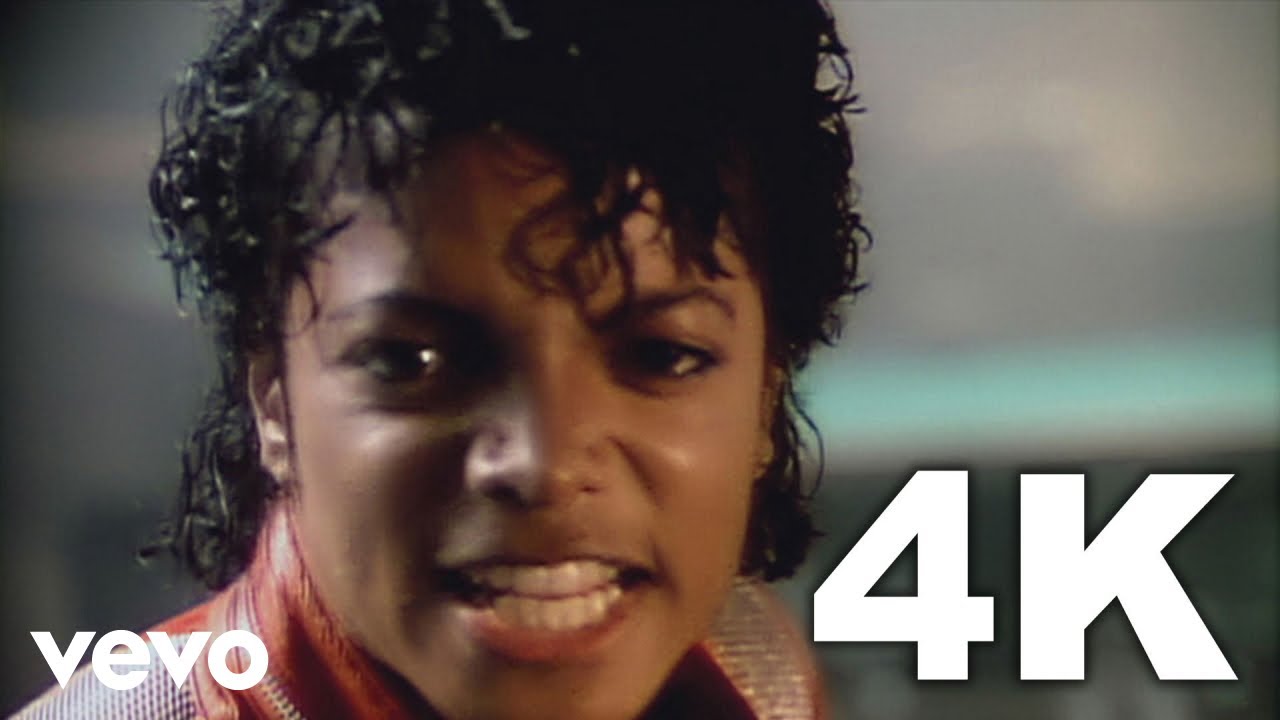
"Billie Jean" is the song that carried Thriller into the record books, and its official video was the first short film ever made from that album. Released as a single on January 2, 1983, the track went to No. 1 in ten countries that spring, held the top of the Billboard Hot 100 for seven consecutive weeks, and became the second-highest-selling single in America that year. The video, directed by Steve Barron and shot in Los Angeles, was also the first by a Black artist to receive heavy rotation on MTV, a milestone that the video's own description says helped open the network's doors wider than they had been before. To understand why this three-and-a-half-minute clip still draws enormous attention, you have to look at what it did, what it signaled, and how the song itself is built to make a listener lean in.
Thriller was released on November 30, 1982, and the video's description calls it "the biggest selling album of all time," with worldwide sales above 105 million as of June 1, 2016. The album did not simply sit on shelves and wait for radio. It was rolled out through a sequence of singles and films, and "Billie Jean" was the first of three short films produced for recordings from the record. That sequencing matters. A short film in 1983 was not a routine promotional clip. It was a bet that a song could carry a narrative, and that a music channel would show it.
The credits on the official upload underline how tightly the project was controlled from the top. The song was written and composed by Michael Jackson, produced by Quincy Jones for Quincy Jones Productions, and co-produced by Jackson for MJJ Productions, Inc. Those lines tell you that the record and the picture were built by the same people who understood the sound. When a producer and an artist are both thinking about the song's architecture, the video becomes an extension of the arrangement rather than a decoration on top of it.
The video's description makes a specific claim: it "made history as the first video by a black artist to receive heavy rotation on MTV." This is the single most important fact about the clip in terms of cultural history, and it is worth treating carefully. MTV was a young channel in 1983, and the story of which artists it played, and which it kept off the air, is one of the defining debates of early music television. Read the claim as the video's own account of its place in that history. What it tells us is that "Billie Jean" was the moment the network's programming decisions could no longer ignore a Black artist whose work was selling at a historic scale.
The same description notes that MTV later ranked the video among the 100 greatest music videos of all time. A ranking from a channel that once resisted the clip is a neat piece of irony, and it is a reminder that a music video's importance often becomes clear only in retrospect, after the channel, the artist, and the audience have all changed.
The short film for this No. 1 single, directed by Steve Barron, made history as the first video by a black artist to receive heavy rotation on MTV.
The video follows the song's lyrical narrative, and the lyrics are what make the visual story land. The opening verse sets the scene in a line the transcript captures at about 0:29: "She was more like a beauty queen from a movie scene." The singer is not just reporting a meeting. He is describing someone who arrives already staged, a figure who seems to know how her entrance will be read. At about 0:54 comes the name that gives the song its title: "She told me her name was Billie Jean."
The song's central tension is built into its repeated phrases. The refrain insists that "Billie Jean is not my lover," and the singer answers her claim with a flat denial that the child is his. The lyric at roughly 1:52 — "For 40 days and 40 nights / The law was on her side" — pivots the story from private accusation to public pressure. The singer is not only dealing with a woman who has made a claim; he is dealing with a system that appears to have taken her side.
Pay attention to the advice the song gives. Around 1:10, the verse says, "People always told me be careful of what you do," and then, a few lines later, "mother always told me be careful of who you love." These lines are the moral frame. They tell us that the narrator has been warned repeatedly, that he knows the stakes, and that he is still caught. The hook at about 2:53 — "Don't think twice, do think twice" — is a tidy inversion of the familiar advice, and it is the line listeners remember. It turns a platitude into a trap.
A song with this much plot can easily become cluttered, but "Billie Jean" stays lean. The lyric uses repetition as a structural device. The phrase "Billie Jean is not my lover" returns again and again, sometimes in a near-chant, and each repetition sharpens the denial until it sounds less like a statement and more like a plea. The refrain also shifts pronouns and emphasis, so the same words come to sound like accusation, self-defense, and fatigue in turn.
That structural economy is why the video could work as a film without the song losing its grip. The clip did not need to explain the lyrics. It needed to sustain the mood the lyrics create, and the choice of a single protagonist moving through a story of suspicion and pressure keeps the attention fixed on the central figure. When the song reaches its final stretch, with the repeated "Billie Jean" tags and the closing "Don't Billie Jean," the music has gathered enough momentum that the ending feels like a release rather than a fade.
It is worth noting how much the song relies on the listener's willingness to hold two stories at once. The narrator is either a man wrongly accused or a man who has done something he will not own. The lyric never settles this, and that ambiguity is what keeps the piece alive more than four decades later. A video can show you a face, but the song decides whether you believe the face.
The official upload, published on October 3, 2009, has been watched more than 2.3 billion times, according to the view count on the page. That number places the clip among the most-watched music videos ever uploaded, and it means that most of the people who watch it today did not see it on MTV in 1983. They found it on a screen, often by accident, and kept watching. The video has outlived the format that first carried it.
What lasts is the combination of a strong song, a clear visual frame, and an artist who understood how a three-minute story could be told through rhythm and repetition. The video's place in the Thriller sequence gives it a second layer: it is the opening chapter of a larger body of work, and every viewer who came to it after the album's success already knew the rest of the story. That context changes how the clip feels. It is no longer just a single. It is the first move in one of the most ambitious campaigns in pop history.
If the video has you curious, start with the song itself. Listen to it in full, then play the official video with the lyrics in mind and notice where the images follow the words and where they push against them. Read the credits, especially the line that names Quincy Jones as producer and Michael Jackson as co-producer through MJJ Productions, and think about what a shared production role means for a record's sound. Then look at the claim in the official description about MTV's heavy rotation and its later ranking, and consider how much of music video history depends on which channels chose to play which artists, and when.
For a broader view, follow the other two short films the description identifies as part of the Thriller sequence. Watching them in order shows how the album was designed as a set of connected stories rather than a collection of singles, and "Billie Jean" is where that design begins.
- Listen to the full Thriller album in release order, paying attention to how "Billie Jean" sets the tone for what follows.
- Compare the song's lyrics with the video's pacing, noting where the story tightens and where it opens up.
- Read about the early history of MTV to understand the context for the claim that this was the first video by a Black artist to receive heavy rotation.