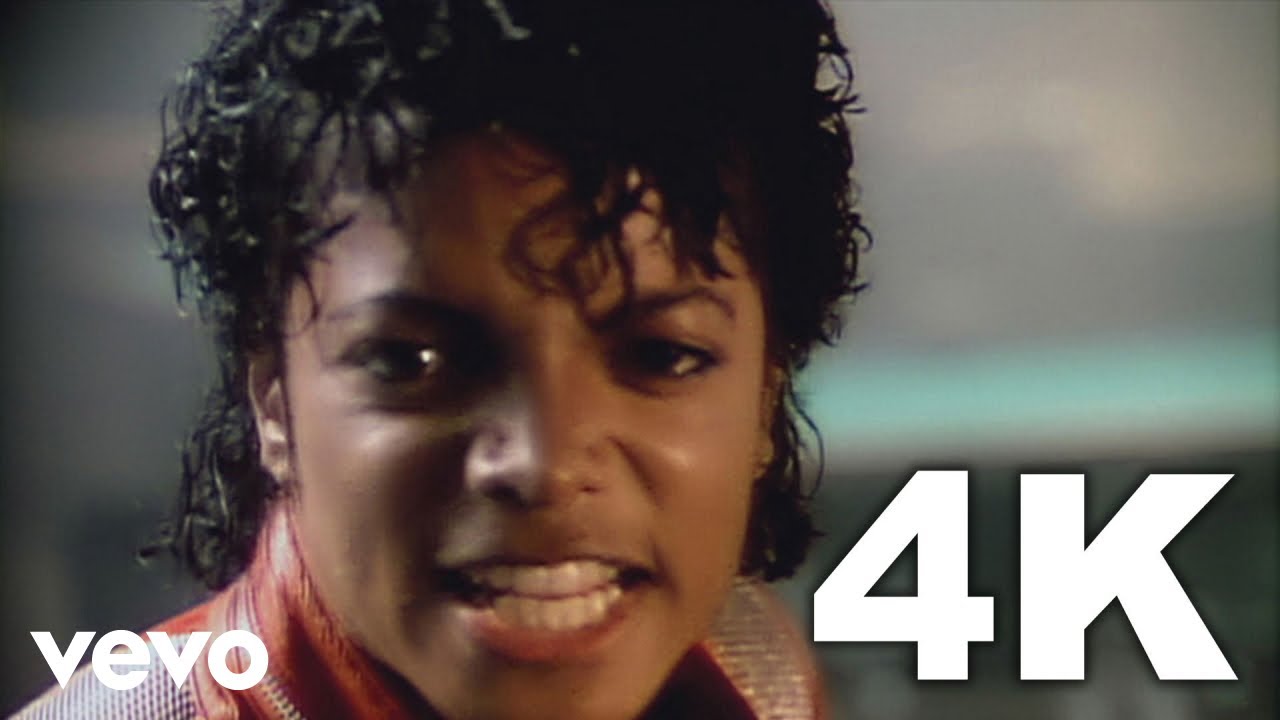
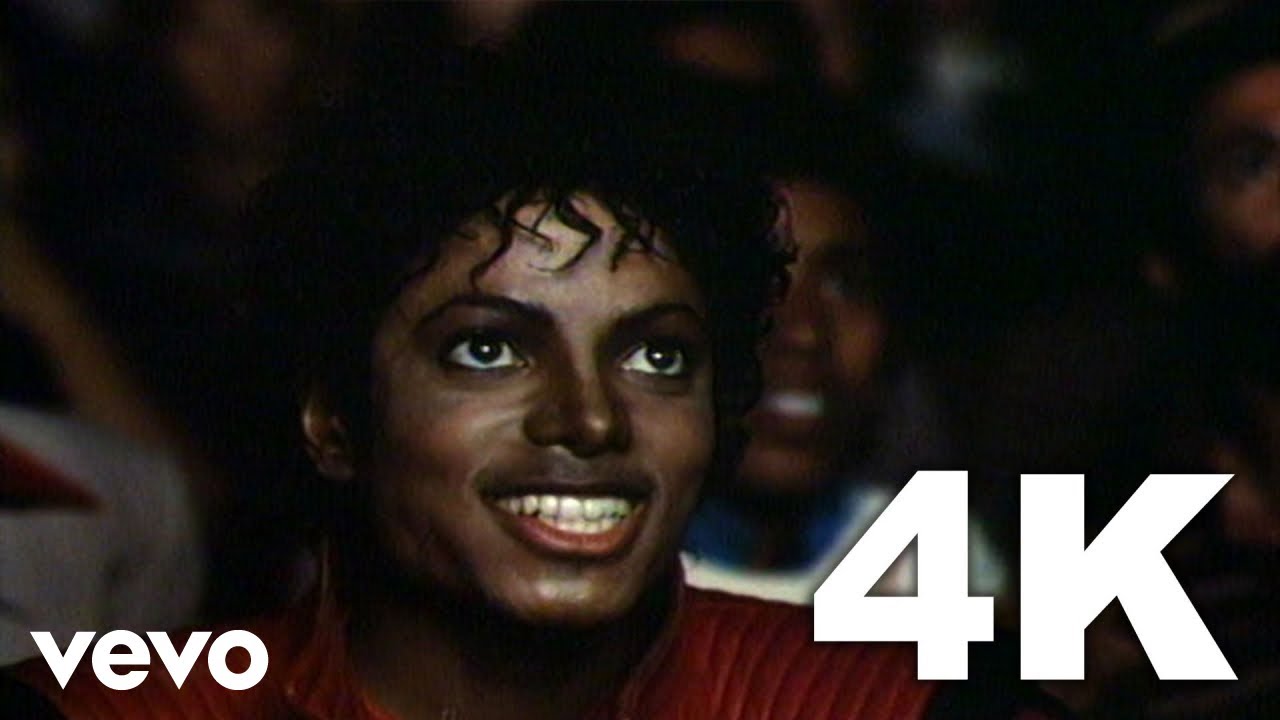
The short film for "Smooth Criminal" does not hurry. Before the first sung line arrives, the video spends roughly the first minute and a half on sound design: a finger snap, a whoosh of air, a thudding door, coins jingling, a bit of magical music. Then a voice slides in with a sharp, playful refrain, and a story starts to unfold around a woman named Annie, a sound at the window, and a question the song keeps asking. Released as a single from the album Bad, the video was the sixth of nine short films made for recordings from that record, and it became the centerpiece of Moonwalker, the feature-length project that was the most ambitious film undertaking of its moment. It is also the place where the world first saw the move that became shorthand for the whole era: the anti-gravity lean.
Most music videos of the period were built around the performer's face and the performance itself. This one is built like a short noir. The lyrics narrate a scene: a sound at the window, a violent intrusion, bloodstains on the carpet, a woman running into the bedroom. The refrain, "Annie, are you okay," returns again and again, and the repetition does real work. It turns a question into a loop, the way a detective keeps circling the same clue until something gives.
The visuals follow that logic. Around the two-minute mark, the dialogue cuts in with a clipped exchange, "Hey. Come here," followed by "Wait a minute," then a gunshot and groans. The film is making narrative choices here, not just decorating a song. The crime is staged as a sequence, with the menace established through sound before anything is seen. For a listener who knows only the hit single, this structure is the surprise: the song is a story, and the video is the detective's case file.
The running time matters too. The upload runs 9 minutes and 26 seconds, which is long for a pop single. That length tells you the clip was conceived as a piece of cinema rather than a three-minute promotional spot. Directed by Colin Chilvers and shot in Los Angeles, according to the official credits attached to the video, it was designed to hold its own as a standalone film before it was ever placed inside a larger one.
The move that defines this video is the lean. The video's official YouTube description puts it plainly:
"The short film for Michael Jackson's 'Smooth Criminal' was the centerpiece of the feature film Moonwalker, and featured the debut of Michael's iconic 'anti-gravity lean.'" (official description, YouTube upload)
That sentence carries a lot of weight. A debut in a piece of film is a fixed point: it means the movement is documented here, in this clip, at this moment in the performer's career. The lean is a dance gesture that looks like it defies the body's usual relationship to the ground, and the video frames it as a showpiece rather than an aside. Watch the sequence that begins around the five-and-a-half-minute mark, where the surreal music arrives and the finger snaps set a new rhythm. The camera gives the movement room. You can see the performer at the center of a stylized space, with a crowd responding in squeals and clapping as the moves land.
It is worth noting what the description does not say. It does not explain the technique behind the lean, and this article will not supply a mechanism the source material doesn't provide. What the record does establish is the placement: the lean and the film are bound together, and the film is the first place it appears.
The description also names a specific ancestor. The video was inspired in part by Fred Astaire's "Girl Hunt Ballet" from the film The Band Wagon. That is a useful lineage to keep in mind. Astaire's dance number is a Hollywood set piece about performance and staging, and the "Smooth Criminal" clip borrows that idea of a dance number as a narrative event rather than a break from the story. The video reads as a film-literate dance piece, one that knows the history of the screen musical and is willing to put a contemporary pop performer inside that tradition.
There is also a small, revealing exchange in the middle of the film. Around the seven-and-a-half-minute mark, one character says, "I taught him everything he knows," and another answers, "Oh yeah, right, you show me," before the scene moves forward. The line is funny and slightly cocky, and it fits the video's larger style: bravado, rivalry, and the sense that skill is something passed between characters, the way a dance step is passed between performers. It is a neat piece of self-awareness, a wink at the apprenticeship that dance-on-screen has always depended on.
The clip was recognized by a wide range of critics and audiences. The official description lists three honors: Best Video at the BRIT Awards, a win from the Broadcast Film Critics Association, and Best Video at the People's Choice Awards. Those are different constituencies, from British pop industry voters to film critics to fans, and winning across all three suggests the video worked on more than one level at once.
The chart history is equally telling. The single hit No. 1 in Spain and The Netherlands and reached the Top 10 in the United States, the United Kingdom, France, Germany, Ireland, and Switzerland. In the United States it reached the top 10 of the Billboard Hot 100, becoming the sixth single from Bad to do so, and it also charted on Billboard's Hot Dance Club Play and Hot R&B/Hip-Hop Singles charts. Those numbers make the album's commercial reach concrete. Bad was not a single-driven record that happened to have a good video. It was a sequence of singles that each needed a visual identity, and "Smooth Criminal" got one of the most distinctive.
The production credits also belong in the story. The song was written and composed by Michael Jackson, produced by Quincy Jones for Quincy Jones Productions, and co-produced by Michael Jackson for MJJ Productions, Inc. The single was released on October 21, 1988, after the album's release on August 31, 1987. That collaboration between a songwriter-performer and a producer who had shaped the sound of the era helps explain why the video feels so built: the musical architecture and the visual architecture were designed to be read together.
The upload attached to the official channel was posted on November 19, 2010, and at the time this article was written it showed a view count of 1,362,563,697. That figure is a snapshot of an ongoing story rather than a final verdict, but it confirms something the clip itself suggests: the video has kept its pull across decades and across audiences who may have discovered it long after its original release. A clip that began as a segment of a feature film now lives as a standalone object, watched in full, with its eerie opening and its nine-minute arc intact.
What holds up most is the craft. The video's first minute and a half is almost entirely atmosphere, which is a bold choice for a pop single. The refrain's repetition is a narrative device, not just a hook. The lean debuts in a sequence that is paced like a set piece. And the whole structure treats the song as a story that needs cinematic space to breathe. That is why the film still reads as an essay in how a music video can be a short film without losing its groove.
If the video has you curious, the most useful next step is to watch it again with the lyrics in mind, paying attention to where the sound design ends and the sung narrative begins. Then look at the context the description gives: the Moonwalker feature, where "Smooth Criminal" became the centerpiece, and the Bad album, whose nine short films form a set that is worth watching in sequence. Finally, if the Astaire connection caught your attention, seek out "Girl Hunt Ballet" from The Band Wagon and watch how a Hollywood dance number about performance and staging planted an idea that a pop video would take much further.