SportsCampFinder

Alle Camps durchsuchen

Find the perfect camp for your athlete

camps

Basketball Camps
Soccer Camps
Baseball Camps
Football Camps
Volleyball Camps
Lacrosse Camps
Multi-Sport Camps
Elite Training
Overnight Camps
Day Camps
Beliebte Reiseziele
BaliSedonaLos AngelesCosta RicaNew YorkSan FranciscoAustinMiamiJoshua TreeTulum
Alle Kategorien anzeigenAlle Reiseziele anzeigen

Alle Funktionen entdecken

Leistungsstarke Tools für Ihre Veranstaltungen

Plattform-Funktionen

Intelligente dynamische Preisgestaltung
Ticket-Kategorien
Sitzplatzreservierung
Warenkorbabbruch-Wiederherstellung
Besucher-Wiedergewinnung
Spenden & Staffelpreise
Affiliate-System
Ticket-Scanner
Rabattcodes
Individuelle Fragen
Ticket-Teilen
Upsells & Extras
Analysen & Berichte
E-Mail-Sequenzen
Warteliste / Benachrichtigen / Erinnern
Menschen & Orte
Camp OrganizersCamp FacilitiesKnowledge BaseInspiration
Alle Funktionen anzeigenÜber uns
PreiseBlog
Language
Saved events
Alle Veranstaltungen durchsuchen

camps

Basketball CampsSoccer CampsBaseball CampsFootball CampsVolleyball CampsLacrosse CampsMulti-Sport CampsElite Training

Beliebte Reiseziele

BaliSedonaLos AngelesCosta RicaNew YorkSan Francisco

Menschen & Orte

Camp OrganizersCamp FacilitiesKnowledge BaseInspiration

Plattform-Funktionen

Intelligente dynamische PreisgestaltungTicket-KategorienSitzplatzreservierungWarenkorbabbruch-WiederherstellungBesucher-WiedergewinnungSpenden & StaffelpreiseAffiliate-SystemTicket-ScannerRabattcodesIndividuelle FragenTicket-TeilenUpsells & ExtrasAnalysen & BerichteE-Mail-SequenzenWarteliste / Benachrichtigen / Erinnern
Alle Funktionen anzeigenÜber uns
PreiseBlog
AnmeldenParents & athletesCamp directors
  • Browse all camps
  • Basketball Camps
  • Soccer Camps
  • Baseball Camps
  • Football Camps
  • Volleyball Camps
  • Lacrosse Camps
  • Multi-Sport Camps
  • Elite Training
  • All sports →
  • Orlando
  • Los Angeles
  • New York Metro
  • Dallas / Fort Worth
  • Chicago
  • Phoenix / Scottsdale
  • Atlanta
  • Denver
  • Seattle
  • Boston
  • Houston
  • Philadelphia
  • San Diego
  • Minneapolis / St. Paul
  • Alle Städte →
  • List your camp
  • Camp director dashboard
  • Pricing
  • Coaches & academies
  • Online registration & payments
  • Waivers & medical forms
  • Check-in app
  • Family messaging
  • Waitlist & notify
  • Camp marketing
  • Reports
  • All features →
  • About SportsCampFinder
  • Camp guides
  • Help Center
  • Contact
  • Careers
  • Press
  • Nutzungsbedingungen
  • Datenschutzrichtlinie

Camps

  • Browse all camps
  • Basketball Camps
  • Soccer Camps
  • Baseball Camps
  • Football Camps
  • Volleyball Camps
  • Lacrosse Camps
  • Multi-Sport Camps
  • Elite Training
  • All sports →

Reiseziele

  • Orlando
  • Los Angeles
  • New York Metro
  • Dallas / Fort Worth
  • Chicago
  • Phoenix / Scottsdale
  • Atlanta
  • Denver
  • Seattle
  • Boston
  • Houston
  • Philadelphia
  • San Diego
  • Minneapolis / St. Paul
  • Alle Städte →

Für Camp directors

  • List your camp
  • Camp director dashboard
  • Pricing
  • Coaches & academies

Funktionen

  • Online registration & payments
  • Waivers & medical forms
  • Check-in app
  • Family messaging
  • Waitlist & notify
  • Camp marketing
  • Reports
  • All features →

Unternehmen

  • About SportsCampFinder
  • Camp guides
  • Help Center
  • Contact
  • Careers
  • Press
  • Nutzungsbedingungen
  • Datenschutzrichtlinie
SportsCampFinder
© 2026 SportsCampFinder. Alle Rechte vorbehalten.
Inspire

How Present Moment AwarenessCreates Your Future

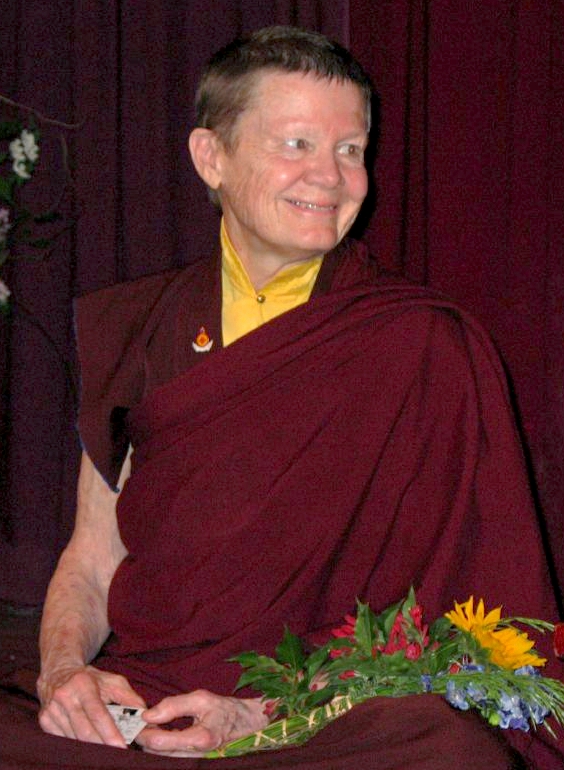
Pema Chodron
Pema Chodron
May 27, 2020
7 Min. Lesezeit
Ansehen · 5

According to this teaching, how we relate to each present moment—with openness, friendliness, gentleness, and warriorship—is not merely a philosophical stance but an active force that shapes our future. By thought, speech, and action, we either create new possibilities for opening or reinforce existing habits, fears, and prejudices. The teaching addresses why uncertainty becomes harder to befriend as we age, not because we cannot learn, but because physical and mental changes amplify our instinct to seek control through rigid patterns. The core invitation is to make friends with the full range of life experience—pleasant and unpleasant, smooth and rough—as part of the natural fabric of existence.

Lesen · 6 Abschnitte

How Does Present Moment Awareness Determine Your Future?

Pema Chödrön opens by asserting that our relationship to the present moment creates a tangible effect on how we will relate to our future. This is not metaphorical: the seeds we sow through how we think, speak, and act in this moment germinate into patterns that extend far beyond the next hour. They shape not just the next moment but the next day, week, month, year, and the years of our lives. When we regard what happens to us with openness and friendliness, we are actively cultivating a nervous system and a mind that will naturally incline toward receptivity. Conversely, when we respond to difficulty with contraction and resistance, we strengthen the neural pathways and mental habits that make future resistance easier.

The language Chödrön uses—openness, friendliness, gentleness, and warriorship—points to something concrete, not abstract. These are not empty words or aspirational ideals floating in the ether. They describe the *posture* we take toward the present moment, and that posture is generative. Every time we choose openness over defensiveness, we are training ourselves to choose it again. Every time we meet discomfort with gentleness rather than judgment, we are creating new neural grooves that make gentleness the path of least resistance.

What Role Does Habit and Conditioning Play?

The teaching distinguishes between creating new possibilities for opening and strengthening pre-existing patterns. By how we think, speak, and act, we are doing one or the other—there is no neutral ground. We are either expanding our capacity for uncertainty, or we are making our fears, prejudices, and habitual reactions stronger. Chödrön emphasizes this point: we can strengthen pre-existing propensities, pre-existing habits, pre-existing fears, and pre-existing prejudices. We can make them stronger and stronger.

This recognition cuts to the heart of why change feels difficult. It is not that we are incapable of learning new responses—the old adage "you cannot teach an old dog new tricks" is not a law of physics. Rather, our repeated choices have built deep grooves in consciousness. When we habitually avoid discomfort, we strengthen the very avoidance patterns that keep us trapped. When we habitually judge ourselves or others, we deepen the networks of judgment. The good news is the inverse is also true: each moment offers a fresh opportunity to choose differently.

Why Does Uncertainty Become Harder With Age?

Chödrön reflects on her own experience turning 70, noting that while it is possible to teach an old dog new tricks, the common saying exists as a truism for a reason. The physical body—that vehicle we live in—begins to fall apart. Joints ache, digestion becomes unreliable, memory falters. These are not moral failures; they are the natural consequences of time's passage. But they have a psychological effect.

When the body is uncomfortable, when there is chronic pain or unpredictable physical sensations, the mind seeks certainty wherever it can find it. If the lamp is moved two inches to the right, it represents a threat to the remaining certainties we can control. The position of that lamp becomes invested with safety and security precisely because so much else is no longer reliable. Chödrön acknowledges this may sound petty, but it is the same dynamic that operates across all ages. The teenager, the person in their twenties, thirties, forties—all are already engaged in avoiding insecurity, avoiding uncertainty, avoiding discomfort in any form.

What changes with age is not the desire to avoid discomfort but the desperation. When the body itself is a source of unpredictability, the impulse to lock down everything controllable becomes more intense. This is why elderly people often get very fixed in their ways. It is not rigidity for its own sake; it is a natural (if counterproductive) response to accumulated uncertainty.

What Does It Mean to Make Friends With Uncertainty?

Chödrön and her dialogue partner (Meg, referenced in the transcript) are encouraging a radically different orientation: to make friends with the whole picture. Not to selectively open to the pleasant and close to the unpleasant, but to open to both. To befriend the salty and the sweet, the rough and the smooth. These are not poetic metaphors but descriptions of concrete life experience.

Making friends with uncertainty means recognizing that difficulty, change, discomfort, and loss are not interruptions to life—they are part of the natural fabric of life itself. When we stop fighting this fundamental truth, we stop wasting energy on the impossible task of creating a life without change. Instead, that energy becomes available for meeting what actually arises with presence and resourcefulness.

This is where the word "warriorship" enters. Warriorship in this context is not aggression or conquest; it is the courage to stay present and engaged even when things are uncomfortable. It is the strength to keep your heart open when it would be easier to close it. A warrior in this sense is not someone who vanquishes enemies but someone who does not turn away from reality.

How Do Our Choices Shape the Nervous System?

Implicit in this teaching is an understanding of how repeated choices rewire the nervous system. Each time we choose to stay present with discomfort rather than escape it, we are sending a signal to the nervous system: "This is survivable. I do not need to panic." Over time, the nervous system learns. The baseline level of defensiveness can lower. Triggers that once seemed catastrophic become workable.

Conversely, each time we flee, judge, or contract, we are reinforcing the message: "This is dangerous. Stay vigilant. Stay defended." The nervous system learns this too, and it learns it more easily because fear and contraction are faster, more familiar pathways.

The teaching suggests that our moment-to-moment choices are not insignificant personal quirks; they are literally shaping the organism we inhabit and will inhabit tomorrow, next year, for the rest of our lives. In this sense, how we relate to the present moment is not a philosophical question but a practical, embodied one.

Where to go from here

The immediate application of this teaching is to bring awareness to how you are relating to the present moment right now. Not what you are doing, but *how* you are doing it. Are you relating with openness or defensiveness? Gentleness or harshness? Can you notice, without judgment, where you habitually contract? Where do you habitually avoid? These observations are not failures; they are data. They are the first step in creating different possibilities. As Chödrön suggests, you might explore what would happen if you intentionally opened to one thing today—one small discomfort, one difficult emotion, one moment of uncertainty—with friendliness rather than avoidance. Not to become perfect or transcendent, but to practice sowing different seeds.

Comments

Loading the conversation…

Transcript

[0:00] so it makes a big difference really to

[0:03] us how we relate to the present moment

[0:08] these words openness friendliness also

[0:14] words like gentleness and owning our

[0:18] warriorship all of these words I really

[0:22] point to the fact that they're not at

[0:26] just empty words they really point to

[0:29] the fact that how we regard the moments

[0:34] and every thing that happens to us in

[0:39] our life how we regard that is actually

[0:42] creating our future and in the sense of

[0:47] how we will relate to our future how we

[0:51] relate to this moment is sowing the

[0:53] seeds of how will relate to not just the

[0:56] next moment but the next day the next

[0:59] week month year all the years of our

[1:03] lives it keeps we keep by how we think

[1:10] speak and act we are creating our own

[1:16] possibilities for opening or or we are

[1:24] strengthening further strengthening

[1:28] pre-existing propensities pre-existing

[1:31] habits pre-existing fears pre-existing

[1:36] prejudices we can make them stronger and

[1:39] stronger and stronger and I always say

[1:41] this in talks in the last since I turned

[1:45] 70 I think I've been saying it over and

[1:48] over but it doesn't get any easier as

[1:53] you get older I am a firm believer that

[1:57] you can teach an old dog new tricks

[2:01] however the reason I believe that

[2:06] expression came to be as a truism is

[2:12] because one one's the kind of vehicle

[2:19] called our body starts to kind of fall

[2:24] apart just like cars do when they're 70

[2:26] years old for God's sake so so along so

[2:34] that process of falling apart which can

[2:37] be such a support actually for staying

[2:39] in the middle also can bring up a lot of

[2:42] insecurity and fear because you're not

[2:46] so comfortable you have indigestion you

[2:50] have all kinds of joint pain and back

[2:52] pain and knee pain and things that are

[2:59] uncomfortable physically and then

[3:02] mentally maybe you're not remembering so

[3:04] well what was it I just said remember

[3:07] you're not remembering so well and etc

[3:12] and so this is why older people elderly

[3:19] people get very fixed we get very fixed

[3:25] in our ways we we don't want our lamp

[3:28] moved two inches to the right because

[3:32] somehow the position of that lamp

[3:36] represents a certainty safety and

[3:39] security I mean it gets pretty petty but

[3:43] it's the same thing that everyone's

[3:45] dealing with whether you're a teenager

[3:48] or in your 20s 30s 40s 50s 60s however

[3:52] old you are you're still already having

[3:57] a lot of experience with avoiding

[3:59] insecurity avoiding uncertainty avoiding

[4:04] discomfort in any form and I think both

[4:08] meg and I are trying to encourage that

[4:11] we could make friends with the whole

[4:14] picture that we could open to the

[4:18] pleasant and unpleasant

[4:19] and salty and sweet rough and smooth as

[4:24] part of the natural fabric of life

Pema Chodron
ArtistPema Chodron

American Tibetan Buddhist nun (Vajrayana, Shambhala lineage), longtime resident teacher at Gampo Abbey, Nova Scotia. Student of Chögyam Trungpa Rinpoche. Her teachings on staying p…

Profil ansehenWebsite
Themen erkunden
Present-moment-awarenessUncertainty-changeHabit-conditioningWarriorshipAging-wisdom

Hast du Fragen?

Häufig gestellte Fragen

According to Chödrön, how you think, speak, and act in this moment sows seeds for how you will relate to future moments. Each choice either creates new possibilities for opening or strengthens existing habits, fears, and prejudices. Over days, weeks, and years, these accumulated choices shape your fundamental patterns of engagement with life.
As the body experiences physical decline—chronic pain, memory loss, reduced comfort—the mind seeks certainty and control where it can find them. When many things are no longer reliable, people often lock down whatever remains controllable, like the position of a lamp. This is a natural response to accumulated uncertainty, though not always helpful.
Yes, according to Chödrön, but it becomes harder not because learning is impossible but because physical and mental changes make avoidance patterns stronger and more entrenched. New neural grooves can still be created at any age through repeated choice, but the existing grooves are deeper.
Making friends with uncertainty means opening to the full range of life experience—pleasant and unpleasant, smooth and rough—rather than constantly trying to avoid discomfort. It means recognizing that uncertainty, change, and difficulty are part of the natural fabric of life, not interruptions to it.
Each time you avoid or contract in response to discomfort, you send the nervous system a signal that the situation is dangerous, strengthening defensive patterns. Conversely, each time you stay present with discomfort, you teach the nervous system it is survivable, gradually lowering baseline defensiveness over time.
Warriorship here means the courage to stay present and engaged with reality even when it is uncomfortable, rather than turning away or contracting. It is not aggression but the strength to keep your heart open when it would be easier to close it.

Weiterlesen

More from Pema

Alle anzeigen
Bodhicitta: The Longing for Freedom and Awakened Culture
Inspire

Bodhicitta: The Longing for Freedom and Awakened Culture

Bodhicitta is not merely compassion—it's a longing to be free from habitual patterns and fears so you can help ease suffering in the world. …

1 min read
Unconditional Friendship & Seeing Basic Goodness in Others
Inspire

Unconditional Friendship & Seeing Basic Goodness in Others

Develop unconditional friendship with yourself by trusting open receptivity, then naturally see the same basic goodness in everyone around y…

1 min read
Minimal Vocalization as Spiritual Practice: Power in Simplicity
Inspire

Minimal Vocalization as Spiritual Practice: Power in Simplicity

A brief live vocal interlude demonstrates how devotional sound—stripped to its essence—can invoke presence and transformation through pure r…

1 min read
Govinda Jaya: How Sacred Sound Awakens the Heart
Inspire

Govinda Jaya: How Sacred Sound Awakens the Heart

Radhika Das channels the liberating power of mantra through a luminous kirtan performance at Medicine Festival, invoking divine names to pur…

1 min read

Weiter erkunden

Setze deinen Weg fort

Mehr Weisheit und Zusammenkünfte aus dem BrightStar-Verzeichnis.

Mehr Artikel

Durchstöbere die ganze Bibliothek an Lehren, Interviews und Leitfäden.

Zu allen Artikeln →

Lehrer & Künstler

Entdecke die Linien, Musiker und Wegbegleiter der bewussten Welt.

Künstler erkunden →

Event finden

Kirtan, Retreats, Klangbäder, Atemarbeit, Festivals — bald in deiner Nähe.

Events ansehen →