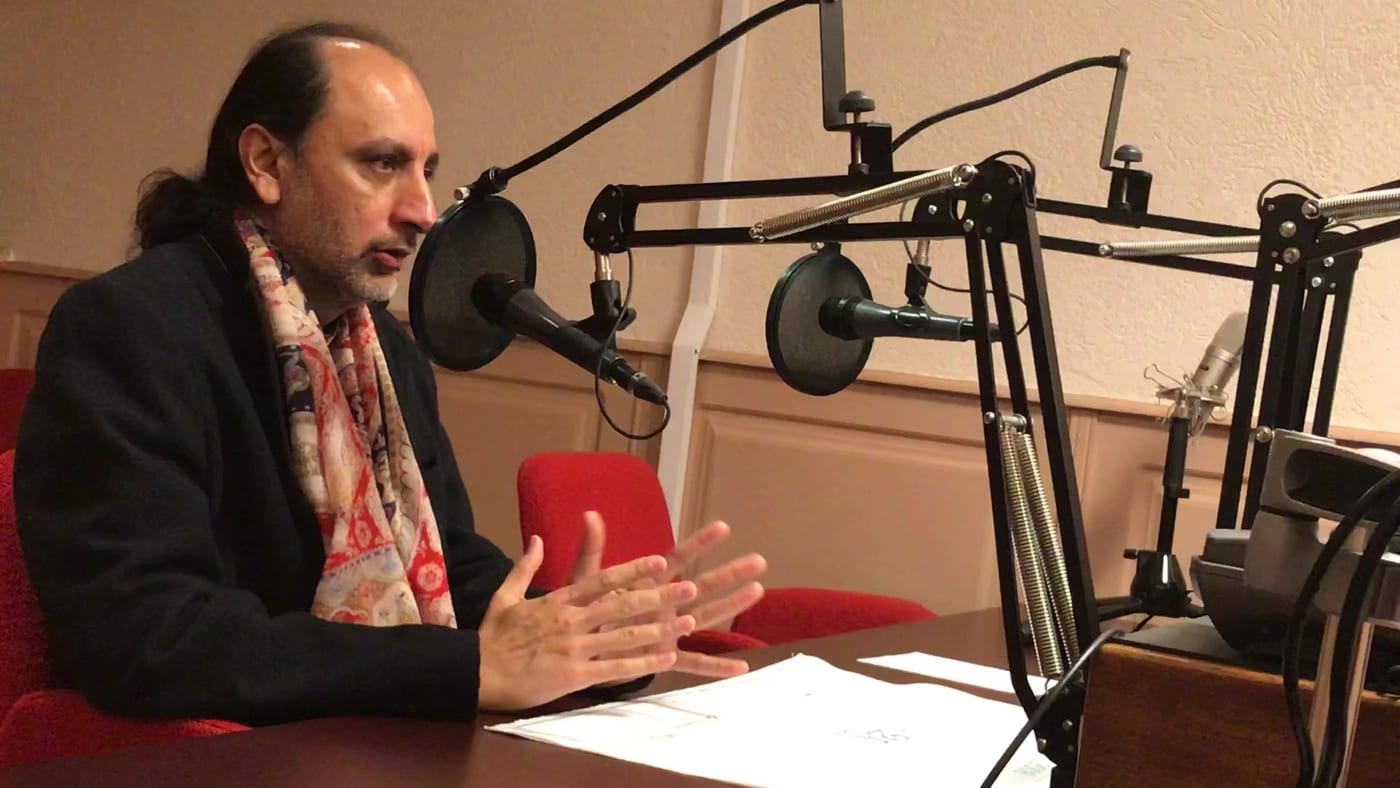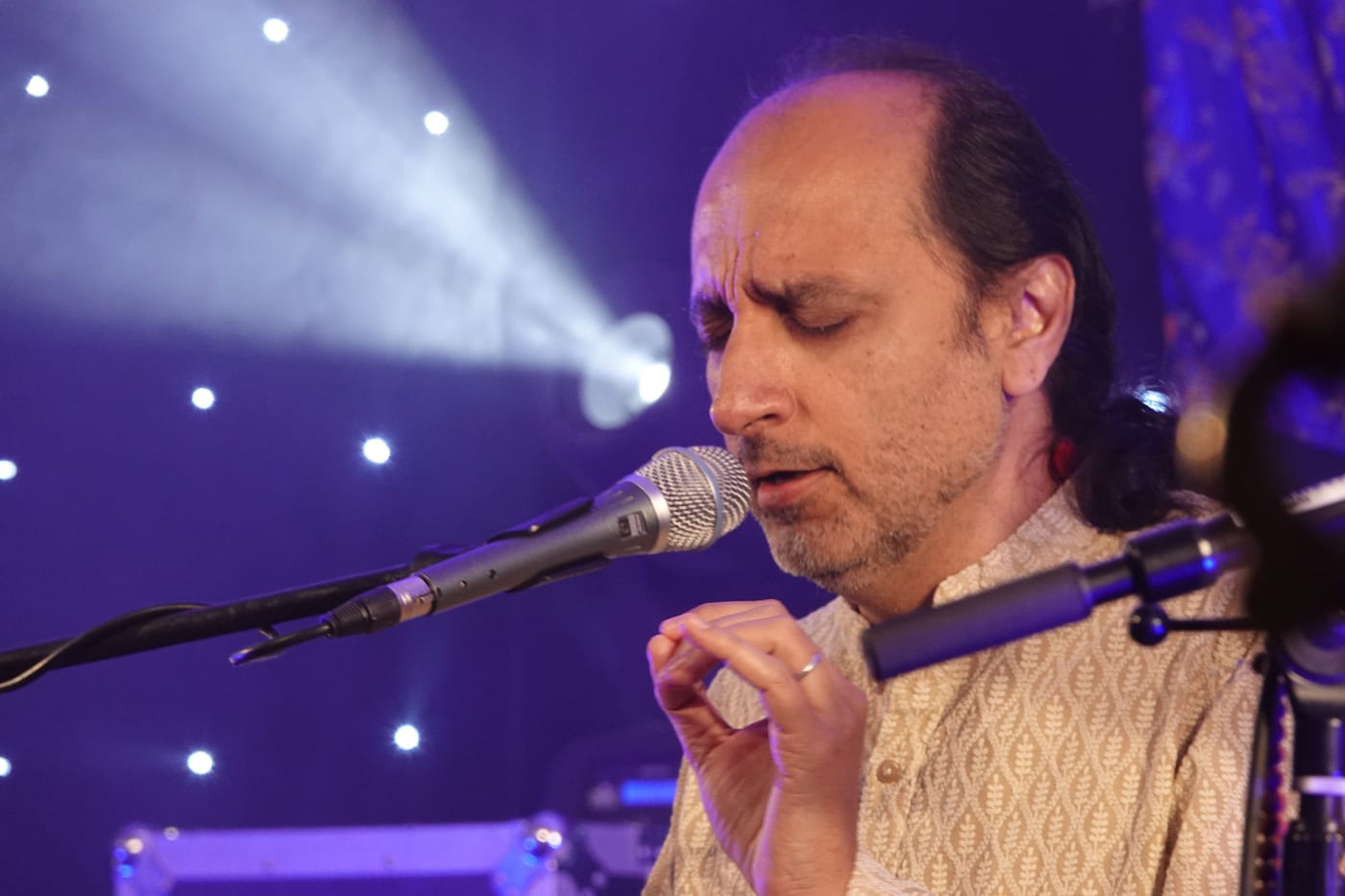

If you know nothing about Manish Vyas, begin with Yoga of Chanting. It is the collection most explicitly built for use rather than for passive listening, and that framing is the quickest way into his work. It is designed to sit alongside pranayama, meditation and light asana, so you can put it on and do something with it. Vyas's central subject is naad yoga, the yogic science of sound, and this collection makes that idea practical. You hear a voice, a harmonium and tabla, and you are invited to join in.
Find it on Spotify, Apple Music or YouTube. Listen first with nothing else going on, then again during a breathing or sitting practice.
Vedic Invocations. Go here second if the Sanskrit chanting drew you in. It is rooted in Vedic hymn tradition, and it suits ceremonial or ritual listening better than the first collection does.
Healing Ragas Collection. This applies raga, the Indian classical melodic framework, to wellness. Go here if the melodic side of the first two interested you more than the text. The tradition holds that ragas evoke particular states, so listen slowly and notice how they shift your mood.
Sufi Splendor. This brings in devotional song from Islamic mysticism, and it shows that Vyas's range is wider than a single tradition. Salaam e Sufi sits nearby in the catalogue if you want more of this thread.
If you want context beyond the recordings, his site, manishvyas.com, is the hub. He describes himself as a podcaster, blogger and filmmaker, and he took part in the documentary True World of Mantra, which explores the science of authentic sound.
Expect restraint. The core sound is his voice over harmonium and tabla, with space left around the notes. It is meditative and unhurried, closer to deep listening than to a sing-along. Press voices praise his rhythm and melody: Prem Joshua of Germany for both, and Spuren Magazine of Switzerland for his voice, mantras and tabla. His catalogue does range further than the quiet end, from relaxation to dance-floor beats, but everything is rooted in Indian tradition. Sparse arrangements can feel austere on a first pass and open up on repeat listens.
"This is relaxation music." It can relax you, but it is framed as a practice grounded in tradition, not as background ambience. Vyas calls himself a "humble postman" passing on what he received from his Master after about twenty years of following him.
"This is high-energy kirtan." If you want the rousing, ecstatic call-and-response of the most energetic kirtan artists, his work will feel introspective by comparison.
"Pick the best album and you're done." The collections are different doors, not rungs on a ladder. Vedic, raga, yogic and Sufi material each draw on a different strand of Indian sacred music.
"I need to understand Sanskrit first." You don't. Start by hearing the sound, and let the meaning come later.
"One listen will tell me." The work rewards patience. Give an album several sessions before deciding.
This work tends to land when you already have, or want, a daily practice: a morning breath routine, a meditation habit, a yoga class that needs a better soundtrack. It also meets people in stretches when noise has become exhausting and they want to listen differently. If you crave catharsis from a single track, it may feel slow. If you are ready to settle into something, it can feel like relief.
Day 1: Play Yoga of Chanting start to finish with no multitasking. Notice the voice, harmonium and tabla separately.
Day 2: Use the same collection during ten minutes of slow breathing or seated meditation.
Day 3: Listen to Vedic Invocations. Pick one track and hum along with the melody, without worrying about the words.
Day 4: Repeat your Day 2 practice with Vedic Invocations playing, and compare the feel.
Day 5: Try Healing Ragas Collection in the evening, ideally in low light, and note your mood before and after.
Day 6: Listen to Sufi Splendor, then browse manishvyas.com for the podcast, blog or film material.
Day 7: Return to whichever collection pulled you most. Chant or hum along for ten minutes, and decide where to go next. If you want to see him in person, his London appearance is listed for May 14, 2027, at Sindhi Community House, and the site is the place to check retreat details.