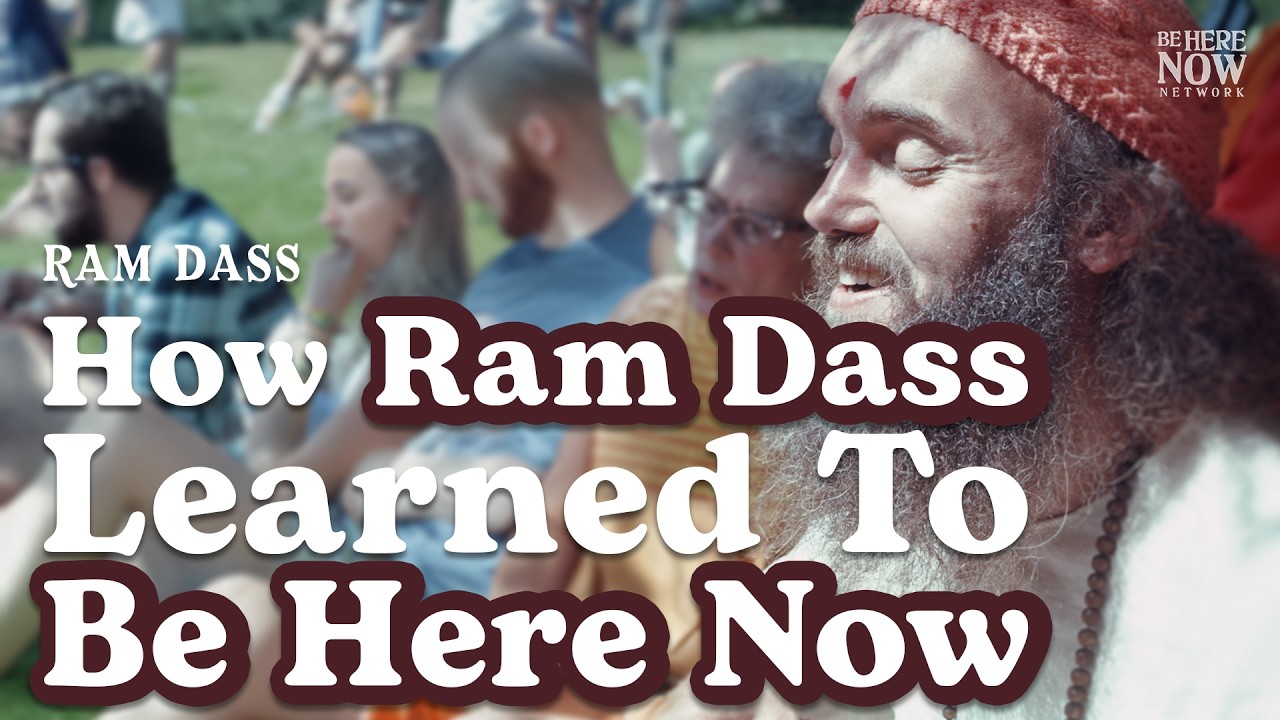
This guided meditation teaches the integration of breath awareness with loving awareness as a direct path to freedom. By bringing mindful attention to the breath while anchoring in compassion, practitioners learn to witness the play of human experience from the perspective of loving awareness itself—the spacious, non-attached presence that is our true nature. Rather than treating meditation as something to achieve, the practice reframes presence as a birthright already available, accessed by relaxing into the present moment with both attention and heart.
What Is Mindful Loving Awareness?
Mindful loving awareness is not two separate practices layered on top of each other. It is the integration of clear, awake attention with an open, compassionate heart. In traditional meditation, practitioners often develop mindfulness—the capacity to observe thoughts, emotions, and sensations without judgment—as a path to clarity. But clarity alone can feel cool, distant, or clinical.
By anchoring mindfulness in loving awareness, the practice becomes warmer and more transformative. You are not just watching your experience; you are witnessing it with compassion. This shift changes everything. When you sit with breath awareness and simultaneously hold a sense of tenderness toward yourself and your experience, the breath becomes a bridge between the thinking mind and the heart. Each inhale and exhale reminds you that you are already held, already supported, already home.
This approach aligns with the core teaching that freedom is not something distant or foreign to gain. Instead, it is an inherent quality of your true nature—what Kornfield calls "the loving awareness that we truly are." The practice, then, is not about becoming someone different or achieving a special state, but about recognizing what is already here.
How Does Breath Anchor You in the Present Moment?
The breath is one of the most accessible anchors for presence. Unlike memories or future plans, which pull the mind backward and forward, the breath is always happening now. Every inhale is a complete, fresh beginning. Every exhale is a release, a letting go.
In this guided meditation, the breath serves multiple functions simultaneously. First, it grounds attention in the body and the sensory present. When you notice the cool air entering the nostrils, the expansion of the chest, the gentle pause at the top of the inhale, you are directly experiencing reality as it unfolds—not as a story, but as immediate sensation. This breaks the habit of living in thought-land, where most of us spend our days.
Second, the breath is a teaching in impermanence and release. Each breath arrives and departs. You cannot hold it. This mirrors the fundamental nature of all experience: everything arises and passes away. By breathing consciously, you practice the art of allowing, of not clinging. This is liberating because so much of our suffering comes from our attempt to hold onto what cannot be held.
Third, the breath connects to the nervous system. A slow, conscious breath naturally calms the body and opens the heart. As your physiology shifts, your capacity to feel compassion and spaciousness naturally increases. You are not forcing love; the conditions for love are arising naturally as the body and mind settle into presence.
What Does It Mean to Witness the Play of Human Experience?
A key teaching in this meditation is learning to witness the play of human experience—thoughts, emotions, sensations, and stories—from a different vantage point. Normally, we are completely identified with our experience. When anger arises, you are the anger. When fear appears, you believe the fear. When sadness comes, you are lost in sadness. This complete identification with the passing weather of mind is the root of much suffering.
By cultivating mindful loving awareness, you begin to notice that there is something in you that is aware of these experiences without being collapsed into them. You are the awareness in which thoughts and emotions appear, not the thoughts and emotions themselves. This shift from identification to witnessing is profoundly liberating.
The "play" language is important. It suggests lightness, non-seriousness, even humor. The point is not to become a cold observer detached from life. Rather, it is to recognize that the drama of your thoughts and emotions—while real and worth attending to—is not the deepest truth of who you are. Underneath the play, there is a presence that is untouched, free, and whole. When you touch this presence through meditation, the play of human experience becomes what it truly is: a dance, a movement, a temporary arising and passing of phenomena in awareness.
This does not mean you become indifferent or numb. Quite the opposite. When you are not identified with your emotional reactivity, you can actually respond to the world with genuine wisdom and compassion rather than being trapped in habitual reactions.
How Do You Become Loving Awareness Itself?
The meditation practices a shift from trying to develop loving awareness to recognizing that you already are loving awareness. This is a reversal of the normal goal-oriented mindset. You are not building up compassion or creating something new. You are uncovering, recognizing, and resting in what is already present.
This happens through a simple practice of turning attention inward and noticing: What is aware right now? Not the content of experience—the thoughts and sensations—but the awareness itself. Awareness is empty of qualities, yet it can hold infinite qualities. It is not your personal property; it is what you are. And its nature is fundamentally spacious, accepting, and loving.
When you rest as this aware presence while breathing consciously, something shifts. The distinction between "I am meditating" and "I am awareness" begins to blur. You are not an individual trying to achieve presence; you are presence itself, temporarily taking the form of an individual in human experience. This recognition is both profoundly peaceful and deeply empowering.
Over time and with gentle practice, this recognition becomes more stable. You begin to access this aware, loving presence more frequently in daily life—not just on the meditation cushion. You walk through your day with a quality of witnessing, with an inner steadiness that is not shaken by the usual ups and downs.
What Is Your Innate Birthright?
Kornfield teaches that freedom is your birthright. This is a radical claim that reverses the common belief that freedom is something you must earn, achieve, or work toward. If freedom were something to be attained in the future, it would always elude you because you would be caught in the effort, the becoming, the striving.
But if freedom is already present as your nature—as the awareness that you are—then the task is simply to recognize it. This recognition comes through coming fully into the present moment. Not because the present moment is special or different from other moments, but because the present moment is where life is actually happening, and where your true nature is directly available.
Your birthright, then, is the freedom to:
- Be fully present without the burden of the past
- Rest in your own awareness without needing to achieve anything
- Respond to life with wisdom and compassion rather than reactivity
- Hold paradox without needing to resolve or control everything
- Return home to yourself again and again, in each breath
This freedom is not about absence of difficulty or problem-free living. Rather, it is the freedom to be with life exactly as it is, with a heart that is open and accepting, and with an awareness that remains untouched and peaceful regardless of circumstance.
How Can You Respond with Mindful Loving Courage?
One of the paradoxes of deep practice is that sitting in meditation—seemingly passive and internal—gives rise to genuine courage in the world. When you know yourself as loving awareness, you are no longer primarily motivated by fear, self-protection, or the drive to control outcomes. Instead, you can act from genuine care.
Mindful loving courage means:
- Seeing clearly: Mindfulness gives you the capacity to see what is actually needed in a situation, not what your fear says is needed.
- Acting from the heart: When anchored in loving awareness, your actions naturally tend toward benefit and compassion rather than harm.
- Trusting the present: Because you know yourself as awareness rather than as a fragile ego, you can take risks and respond authentically without being paralyzed by fear.
- Meeting difficulty with grace: When challenges arise, a heart that has touched loving awareness can meet them with both strength and tenderness.
The meditation itself is an act of courage—the courage to sit quietly, to face yourself without distraction, and to let go of the usual defenses and strategies. Each time you return to the breath, to presence, to loving awareness, you are practicing the courage of trust and surrender.
Where to Go From Here
This guided meditation is an invitation to return to practice again and again. The fruit of meditation is not in having a single breakthrough experience, but in the gradual, steady deepening that comes from regular sitting. Each time you sit, you are planting seeds of presence and compassion in your being.
Consider establishing a daily practice, even for twenty or thirty minutes. Return to the breath. Remember that you are already loving awareness. Notice the play of experience without being caught in it. Over time, this recognition will extend beyond the meditation cushion into daily life—into how you hold difficulty, how you relate to others, and how you meet each moment with your whole heart.
The teaching is simple, but the path of practice is deep. Freedom is available now, in this breath, in this moment. Your task is simply to notice, to rest, and to allow yourself to be the awareness that you truly are.