SportsCampFinder

すべてのCampsを見る

Find the perfect camp for your athlete

camps

Basketball Camps
Soccer Camps
Baseball Camps
Football Camps
Volleyball Camps
Lacrosse Camps
Multi-Sport Camps
Elite Training
Overnight Camps
Day Camps
人気の目的地
BaliSedonaLos AngelesCosta RicaNew YorkSan FranciscoAustinMiamiJoshua TreeTulum
すべてのカテゴリを見るすべての目的地を見る

すべての機能を探索

イベントを成長させる強力なツール

プラットフォーム機能

スマートダイナミックプライシング
チケットカテゴリ
座席指定
カート放棄リカバリー
訪問者リカバリー
寄付とスライディングスケール
アフィリエイトシステム
チケットスキャナー
クーポンコード
カスタム質問
チケット共有
アップセルとアドオン
分析とレポート
メールシーケンス
ウェイトリスト / 通知 / リマインダー
人と場所
Camp OrganizersCamp FacilitiesKnowledge BaseInspiration
すべての機能を見る私たちについて
料金ブログ
Language
Saved events
すべてのイベントを見る

camps

Basketball CampsSoccer CampsBaseball CampsFootball CampsVolleyball CampsLacrosse CampsMulti-Sport CampsElite Training

人気の目的地

BaliSedonaLos AngelesCosta RicaNew YorkSan Francisco

人と場所

Camp OrganizersCamp FacilitiesKnowledge BaseInspiration

プラットフォーム機能

スマートダイナミックプライシングチケットカテゴリ座席指定カート放棄リカバリー訪問者リカバリー寄付とスライディングスケールアフィリエイトシステムチケットスキャナークーポンコードカスタム質問チケット共有アップセルとアドオン分析とレポートメールシーケンスウェイトリスト / 通知 / リマインダー
すべての機能を見る私たちについて
料金ブログ
ログインParents & athletesCamp directors
  • Browse all camps
  • Basketball Camps
  • Soccer Camps
  • Baseball Camps
  • Football Camps
  • Volleyball Camps
  • Lacrosse Camps
  • Multi-Sport Camps
  • Elite Training
  • All sports →
  • Orlando
  • Los Angeles
  • New York Metro
  • Dallas / Fort Worth
  • Chicago
  • Phoenix / Scottsdale
  • Atlanta
  • Denver
  • Seattle
  • Boston
  • Houston
  • Philadelphia
  • San Diego
  • Minneapolis / St. Paul
  • すべての都市 →
  • List your camp
  • Camp director dashboard
  • Pricing
  • Coaches & academies
  • Online registration & payments
  • Waivers & medical forms
  • Check-in app
  • Family messaging
  • Waitlist & notify
  • Camp marketing
  • Reports
  • All features →
  • About SportsCampFinder
  • Camp guides
  • Help Center
  • Contact
  • Careers
  • Press
  • 利用規約
  • プライバシーポリシー

Camps

  • Browse all camps
  • Basketball Camps
  • Soccer Camps
  • Baseball Camps
  • Football Camps
  • Volleyball Camps
  • Lacrosse Camps
  • Multi-Sport Camps
  • Elite Training
  • All sports →

目的地

  • Orlando
  • Los Angeles
  • New York Metro
  • Dallas / Fort Worth
  • Chicago
  • Phoenix / Scottsdale
  • Atlanta
  • Denver
  • Seattle
  • Boston
  • Houston
  • Philadelphia
  • San Diego
  • Minneapolis / St. Paul
  • すべての都市 →

組織向け Camp directors

  • List your camp
  • Camp director dashboard
  • Pricing
  • Coaches & academies

機能

  • Online registration & payments
  • Waivers & medical forms
  • Check-in app
  • Family messaging
  • Waitlist & notify
  • Camp marketing
  • Reports
  • All features →

会社

  • About SportsCampFinder
  • Camp guides
  • Help Center
  • Contact
  • Careers
  • Press
  • 利用規約
  • プライバシーポリシー
SportsCampFinder
© 2026 SportsCampFinder. 全著作権所有.
Inspiration

Raag Jait: Longing and Lossin the Hawk's Flight

Professor Paramjeet Singh
Jul 12, 2011
読了 約6分
視聴 · 7

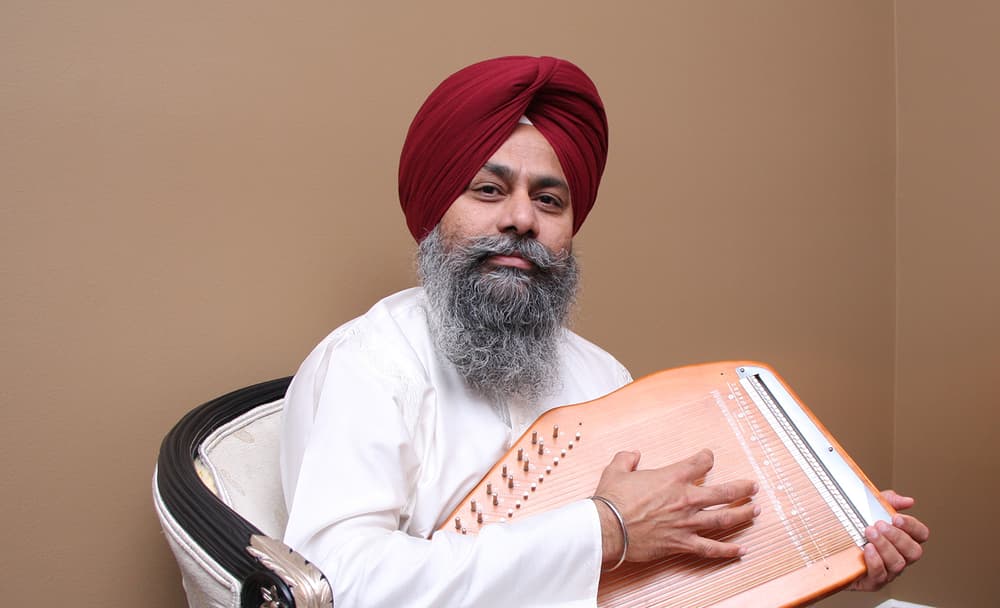
Professor Paramjeet Singh performs "Maye Ni Maye," a Punjabi kirtan in raag Jait that recounts a woman's love affair with a hawk—a richly metaphorical exploration of desire, passion, and abandonment. Through intensely sensory imagery drawn from nature (plumage, fragrance, color, movement), the poem traces the trajectory of infatuation and the devastating rupture when the beloved departs. The performance demonstrates how classical Indian music and folk poetics can render invisible emotional pain into a tangible, embodied experience.

読む · 6セクション

What Does the Hawk Represent in This Poem?

The hawk operates on multiple registers in "Maye Ni Maye." On its surface, it is a literal bird—adorned with a plume on his head and bells on his feet, arriving to peck grain. But as the poem unfolds, the hawk becomes the beloved, the lover, the object of desire whose beauty is so overwhelming that the narrator loses all rational restraint. The hawk's arrival ("o chog chuginda aaya"—he came pecking for grain) is both mundane and charged with significance. What begins as a casual encounter ripens into erotic obsession.

The hawk's external beauty is catalogued with stunning specificity: his form is "as sharp as perfume," his color "the color of rose, born from a fair mother." These are not incidental details. In Punjabi poetic tradition, to describe a beloved's appearance in such detail is to construct a fantasy—to layer projection onto presence. The hawk becomes less a creature and more a screen for the narrator's own longing. When he finally leaves, the poem suggests, he was never truly present in the way the narrator imagined.

How Does the Poem Use Sensory Imagery to Convey Emotional Devastation?

One of the most striking features of "Maye Ni Maye" is its refusal to speak about emotion directly. Instead, Professor Paramjeet Singh's performance of the text floods the listener with sensory snapshots that cumulatively create the texture of desire and despair. The poem does not say "I was in love"; it shows: "I laid a bed of love in the moonlight / my body sheet was stained / the instant he laid his foot on my bed."

This move from preparation (laying the bed) to violation (the stain) is instantaneous and irreversible. The body's sheet becomes marked—not by shared intimacy, but by the imprint of the beloved's presence alone. The physical becomes the proof of loss.

Later, the sensory inventory continues: his eyes were "an evening in spring," his hair "a dark cloud," his lips "a rising autumn dawn." These are not metaphors in the conventional sense; they are acts of translation, converting human features into the only language capacious enough to contain their effect: the language of seasons, weather, and light. To encounter such a beloved is to lose the distinction between self and world.

The poem's turning point arrives when pain becomes bodily: "Corners of my eyes hurt / a flood of tears engulfed me." The narrator spends all night thinking about "what he did to me." The shift is crucial. The beloved has become an agent of harm. His beauty, once the object of worship, is now implicated in cruelty. The poem never resolves this paradox: how can something so beautiful inflict such damage?

What Role Does the Body Play in the Poem's Exploration of Love?

The body in "Maye Ni Maye" is not a vessel for abstract emotion—it is the primary text. The narrator attempts to cleanse herself of the beloved's imprint through ritual washing ("vattna"—a paste used for skin cleansing). But her hands flag with exhaustion, and "embers kept bursting out." Even as she tries to purify herself, the body refuses to cooperate. It retains the mark, the heat, the memory.

The poem then catalogs acts of domestic devotion: preparing choorma (a traditional sweet dish), offering "the flesh of my heart" to the hawk. These are offerings, sacrifices, attempts to bind the beloved through nourishment and care. But the hawk does not eat. He accepts nothing. The act of giving becomes a form of self-annihilation—the narrator has given so much of herself that there is nothing left to withstand his departure.

The final devastation arrives quietly: "He took such a takeoff / never came back home." The body, exhausted from its attempts to please and purify, is left alone with its knowledge. The poem does not offer consolation or transcendence. It sits in the sharp reality of abandonment: the beloved has flown away, and the narrator remains earthbound.

How Does Raag Jait Shape the Emotional Trajectory of This Performance?

Raag Jait is not a raga that delivers easy resolution. It is a morning raga, associated with energy and assertion, yet in Professor Paramjeet Singh's hands—through the Punjab folk content and the minor emotional register of the text—it becomes a container for intensity that refuses to settle. The melodic structure allows the human voice to stretch, to dwell on certain frequencies, to repeat phrases in ways that embed them in the listener's nervous system.

The performance demonstrates a key principle of classical Indian music: the raga is not a fixed sequence of notes but a way of organizing emotional and temporal space. By setting this Punjabi folk poem to raag Jait, Professor Paramjeet Singh elevates the vernacular to the classical, suggesting that the pain of abandonment is not a private sorrow but a universal register—one worthy of the attention and technical precision of the classical tradition.

What Is the Significance of the Poem's Refrain?

The phrase "Maye Ni Maye" (Mother, O Mother) frames the entire poem. It is an invocation, a call to the divine mother, to the witness, to compassion itself. Yet the poem never tells us what the narrator is asking for. Is she calling for intervention? Forgiveness? Simple acknowledgment of her pain? The ambiguity is essential. The refrain holds the poem's contradictions: the beloved is a hawk, a lover, a thief, an agent of destruction. The mother-invocation suggests that only a force outside the realm of human relations—a transcendent, unconditional presence—could possibly comprehend what has occurred.

Where to Go From Here

To engage more deeply with this work, listen to the full performance multiple times, paying attention to how Professor Paramjeet Singh's voice moves through the raag, which syllables he elongates, where he introduces silence. Consult translations of classical Punjabi poetry, particularly from the Bhakti tradition, to understand how devotional language often borrows the vocabulary of earthly love. Consider how other South Asian classical traditions (Hindustani, Carnatic) use similar devices—the metaphorical beloved, the raga as emotional architecture—to contain and transmit experiences that ordinary speech cannot hold. Finally, explore the relationship between folk and classical traditions in Indian music: how folk poems enter the repertoire of trained musicians, how the vernacular and the canonical inform each other.

Comments

Loading the conversation…

Transcript

[0:00] [संगीत]

[0:07] [संगीत]

[0:27] मायनी माए

[0:29] [संगीत]

[0:35] माए

[0:37] मायने

[0:41] मा मैं एक शिकरा

[0:45] यार

[0:52] बना ओद सिरते

[0:57] कलगी ते उद पैरी

[1:04] चाजर ओ चग

[1:09] चुके

[1:10] आया

[1:12] माए नि

[1:15] माय मैं एक शिकरा

[1:19] [संगीत]

[1:21] यार बनाया

[1:34] इयो दे रूप

[1:37] द तपत

[1:44] खेरी द जा में

[1:48] कांदा तिर

[1:53] हाया ते जादर

[1:56] [संगीत]

[2:07] गुलाबी ती

[2:12] जादा ते

[2:18] जादा

[2:21] रंग

[2:26] गुला व किसी गोरी मा

[2:32] जाया माय नि

[2:37] मा इश्क

[2:40] द एक पलग

[2:48] निवा सा

[2:51] चानिया विच

[2:54] डाया तन द

[2:58] चादर हो गई मैं

[3:02] [संगीत]

[3:08] मैली उस पैर जप

[3:12] लंगे

[3:17] पाया चूर

[3:19] कुटा तो

[3:21] खादा

[3:25] नाही चूरी

[3:30] [संगीत]

[3:39] चोरी

[3:43] कुटा चूरी कुटा ता

[3:47] खादा

[3:50] नाही ऐसा दिल दा मास

[3:56] खवाया एक उनी

[4:03] [संगीत]

[4:04] उ ओ मुड़ तनी

[4:10] नाया

[4:14] मायनी

[4:18] मायनी

[4:21] मा मा

[4:33] मैं शिकरा

[4:37] यार बना

[4:42] [संगीत]

Professor Paramjeet Singh
ArtistProfessor Paramjeet Singh

Professor Paramjeet Singh is an Indian classical vocalist and Sikh kirtan artist who has mastered over 125 ragas and devoted his career to preserving the devotional music of saints…

プロフィールを見るウェブサイト
トピックを見る
Punjabi-poetryKirtanRaag-jaitLove-lossBhakti

ご質問はありますか?

よくある質問

In 'Maye Ni Maye,' the hawk is both a literal bird and a metaphor for the beloved—a figure of beauty, desire, and ultimately betrayal. The poem uses the hawk's physical attributes (plumage, movement, color) to construct an image of overwhelming attraction that leads to the narrator's devastation when the bird departs.
Raag Jait provides a melodic and temporal structure that allows the emotional content of the poem to unfold with precision and intensity. By setting vernacular Punjabi poetry to classical raag, the performer elevates personal sorrow to a universal register, suggesting that individual heartbreak participates in an archetypal human experience.
The narrator's ritual washing and domestic offerings are attempts to erase the beloved's imprint and regain control of her body. That these attempts fail—her hands flag, embers burst out—demonstrates how love penetrates the body at a level beyond conscious will or ritual remedy.
The invocation 'Mother, O Mother' positions the poem within a devotional framework, suggesting that only a transcendent, unconditional maternal presence can witness and comprehend the pain of abandonment by a human beloved.
The poem begins with detailed sensory appreciation of the beloved's beauty, moves through intimate physical encounter, and culminates in the moment of departure. The shift is marked by the narrator's realization that the beloved has become 'an agent of harm'—the very beauty that captivated her is implicated in her destruction.
Punjabi's directness and musicality allow the poem to bypass abstract emotional discourse and move straight into sensory and physical register—eyes that 'hurt,' tears that 'engulf,' hands that 'flag.' The language's folk and vernacular roots give the poem an accessibility and immediacy that classical languages sometimes obscure.

読みつづける

More from Professor

すべて表示
Raag-Based Gurbani Kirtan: The Beauty of Mere Laalan Ki Sobha
Inspire

Raag-Based Gurbani Kirtan: The Beauty of Mere Laalan Ki Sobha

Learn how raag-based Gurbani kirtan preserves authentic Sikh devotional music through the shabad "Mere Laalan Ki Sobha," performed in classi…

1 min read
Raag-Based Gurbani Kirtan: Tukhari, Bhairavi, and Classical Tradition
Inspire

Raag-Based Gurbani Kirtan: Tukhari, Bhairavi, and Classical Tradition

Experience the spiritual depth of Patiala Gharana kirtan through rare raags and Gurbani compositions. A live performance honoring classical …

1 min read
Minimal Vocalization as Spiritual Practice: Power in Simplicity
Inspire

Minimal Vocalization as Spiritual Practice: Power in Simplicity

A brief live vocal interlude demonstrates how devotional sound—stripped to its essence—can invoke presence and transformation through pure r…

1 min read
Govinda Jaya: How Sacred Sound Awakens the Heart
Inspire

Govinda Jaya: How Sacred Sound Awakens the Heart

Radhika Das channels the liberating power of mantra through a luminous kirtan performance at Medicine Festival, invoking divine names to pur…

1 min read

探索を続ける

旅をつづける

BrightStarのディレクトリから、さらなる智慧と集いを。

もっと記事を読む

教え、インタビュー、ガイドのライブラリ全体をご覧ください。

すべての記事に戻る →

講師とアーティスト

コンシャスな世界の系譜、音楽家、導き手を探しましょう。

アーティストを探す →

イベントを見つける

キルタン、リトリート、サウンドバス、ブレスワーク、フェスティバル — まもなく開かれます。

イベントを見る →