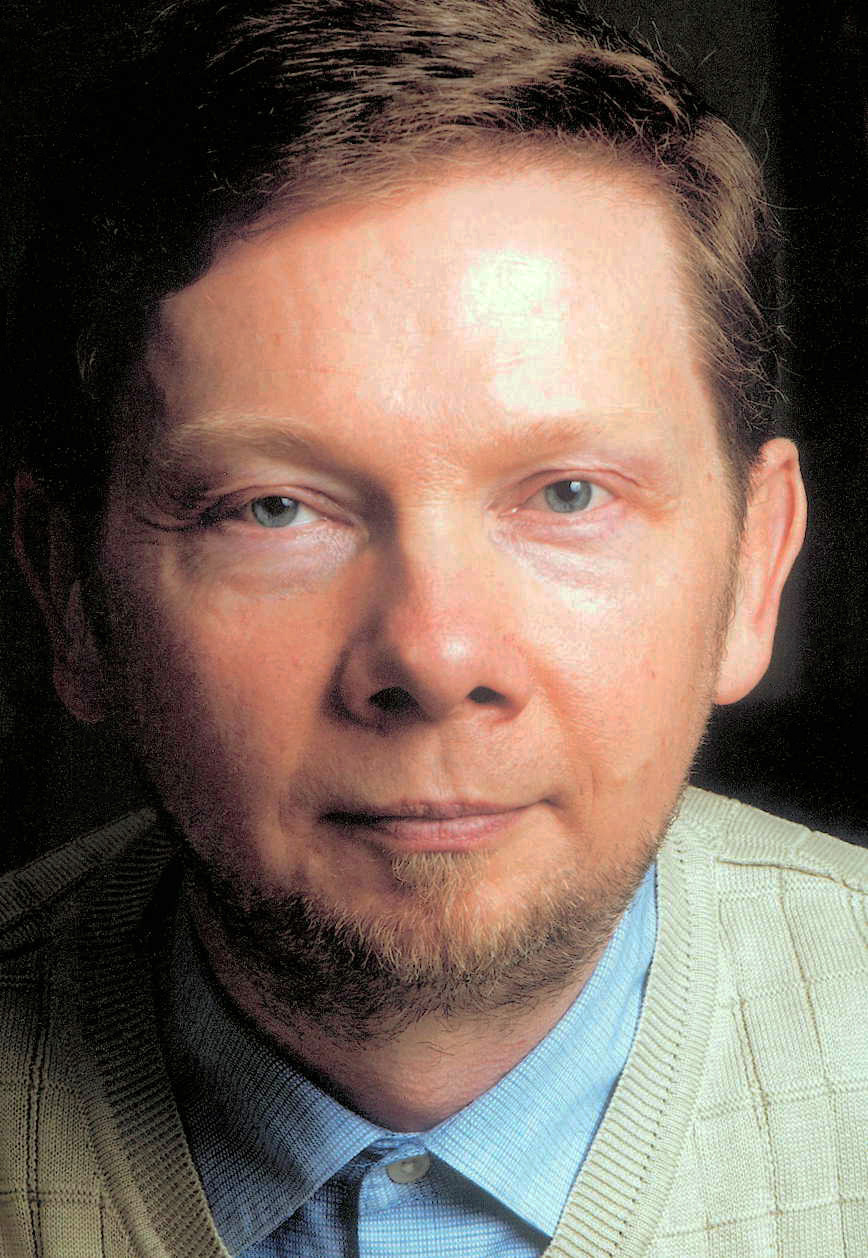
In a world awash with crisis narratives, algorithmic negativity, and information overload, the practice of presence—the simple act of inhabiting the now—becomes a counterbalance to collective anxiety and reactivity. Eckhart Tolle argues that presence is not escapism but a grounded recognition of where actual life unfolds, and that consciousness itself is the antidote to the automaticity and dysfunction that dominates the contemporary landscape.
The modern condition presents a paradox: we have access to unprecedented information and connectivity, yet anxiety, despair, and a sense of impending crisis pervade consciousness. Tolle observes that negativity is not merely a subjective mood but a systemic feature of how information is mediated. News cycles, social media algorithms, and narrative ecosystems are structurally biased toward the sensational, the alarming, and the catastrophic. Fear and outrage drive engagement; peace and stability do not. This means individuals are continuously bombarded with a curated stream of the world's dysfunctions, crises, and failures—a stream that bears little resemblance to the actual texture of most people's immediate lived experience.
The result is what might be called collective dysregulation. People carry the weight of global problems into their nervous systems without any practical capacity to resolve them. A parent worries about climate collapse while sitting at the dinner table. A worker refreshes their news feed and absorbs another cycle of political dysfunction. The mind becomes habitually oriented toward what is wrong, distant, and beyond personal agency—a posture that erodes presence and feeds a chronic low-grade sense of unreality or dread.
Presence, in Tolle's framework, is not meditation in the formal sense, nor is it positive thinking or denial of real problems. Rather, presence is conscious inhabitation of the now—the direct, unmediated experience of what is actually occurring in this moment. When you are present, you are not simultaneously running a parallel narrative about what is happening: the news story, the judgment, the comparison to how things should be. You are simply aware of what is.
Practically, presence means: your senses are active (you notice the texture of your hands, the quality of light, the sound of breath or birdsong); your mind is not fragmented across past regrets or future fears; your emotional body is not flooding with cortisol triggered by a headline you read twenty minutes ago. Presence is a return to what is immediately available and real.
This distinction matters because the mind's habitual mode—what Tolle calls conditioned thinking—generates suffering by separating us from direct reality. We live in thought rather than in awareness. We live in interpretation rather than in sensation. When the mind is running, it is almost always concerned with problem-solving (real or imagined), comparison, judgment, or narrative elaboration. These functions are useful in specific contexts, but when they become the default mode, they create a layer of unreality between the person and actual life.
One of the most profound effects of presence is that it reveals the gap between conceptual reality (the story the mind is telling about how things are) and experiential reality (what is actually happening now). A person might be anxious about a future job loss while sitting in a safe room, drinking water, breathing clean air. The anxiety is real—but it is generated by thought, not by present circumstance. When presence returns, the nervous system recalibrates to actual conditions rather than imagined ones.
This is not denial. Tolle is not suggesting that real problems do not exist or that one should ignore urgent issues. Rather, he points to the fact that chronic rumination about distant catastrophes depletes the energy and clarity needed to respond effectively to actual problems in the present moment. A person who is habitually flooded with anxiety about the state of the world is less available to their partner, their work, their child, or their own health. They are less resourced to make wise choices or to recognize opportunities for meaningful action.
Presence breaks the automaticity of the negativity loop. Instead of unconsciously absorbing each new alarm, a person who is present can observe the impulse to consume crisis content, note how it affects their nervous system, and make a conscious choice about whether to engage. This represents agency recovering from conditioned reactivity.
Tolle emphasizes that presence is accessible right now. It requires no special equipment, belief system, or years of training. A simple practice is to pause and notice: What am I experiencing through my senses in this moment? What sensations are present in my body? Where is my attention actually focused? This simple inquiry interrupts the loop of automated thought and reconnects consciousness to immediate reality.
The body is a particularly reliable anchor for presence because the body exists only in the now. Thought can travel backward and forward in time, but sensations, the breath, physical movement—these are always present-moment phenomena. When overwhelm arises from information or anxiety, returning to bodily awareness is a direct route back to reality.
Tolle positions presence within a larger diagnosis: most human dysfunction arises from a state of unconsciousness. People act from conditioned patterns, historical wounding, and reactive impulses rather than from conscious choice. This applies to personal behavior and to collective systems. Wars, exploitation, environmental destruction—these persist because they are perpetuated by people (and institutions) operating on automation rather than awareness.
Consciousness itself—the capacity to be aware, to observe, to choose—is the antidote. When more individuals live more of the time in presence, the collective field shifts. Decisions made from present-moment awareness are qualitatively different from decisions made from fear, resentment, or habitual grievance. This does not mean problems disappear, but the capacity to address them wisely increases.
To deepen this inquiry, explore the relationship between your own presence and your relationship with news, information, and collective anxiety. Notice: when do you feel most alive and grounded? What draws you into automaticity and reactivity? How much of your suffering is generated by thought about distant events versus direct experience of what is in front of you? A simple daily practice—five or ten minutes of deliberate presence, anchored in sensation and breath—can begin to shift the nervous system and reveal that peace and aliveness are available even in chaotic times. The world may be complex and difficult, but your access to presence, and thus to a clearer mind and steadier response, is always available now.


