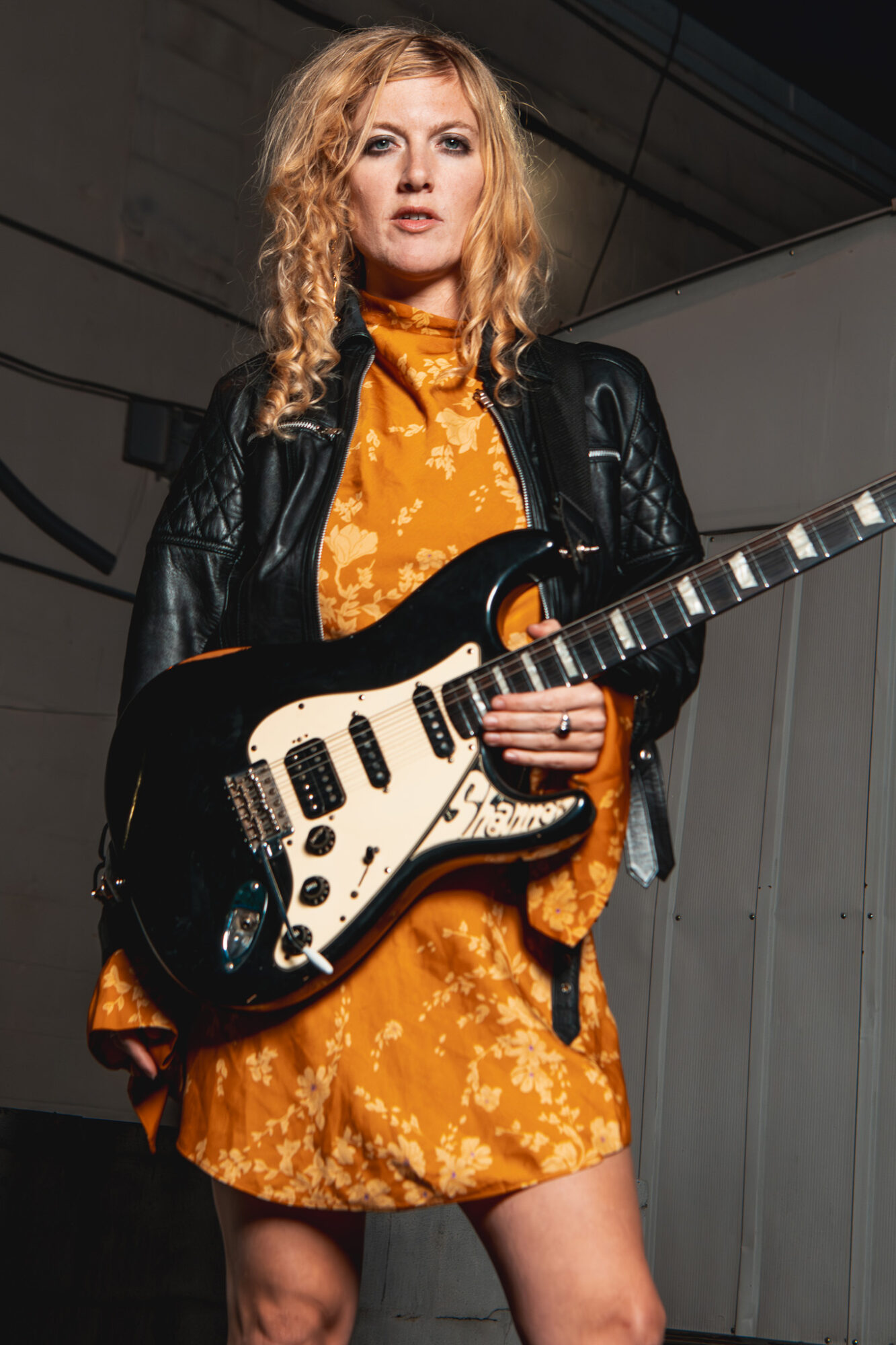
Shannon Hayden is a cellist and vocalist whose work stands at the intersection of classical training and experimental music. Her background is unusual: raised on an off-grid farm, she brought unconventional perspectives to formal music study. She trained under internationally renowned cellists including Janos Starker and Jordi Savall's lineage, figures whose legacies emphasize both technical mastery and expressive depth. Despite this classical foundation, Hayden deliberately moves away from traditional concert repertoire toward original compositions that blur the boundary between instrumental and vocal work, and between acoustic and electronic sound.
Her artistic approach reflects a commitment to defying what she calls "musical norms." Rather than performing standard cello concertos or chamber music repertoire, she builds her own sonic universe—one where strings provide both harmonic foundation and textural atmosphere, where her voice functions as an additional instrument rather than a separate element, and where analog warmth coexists with digital processing.
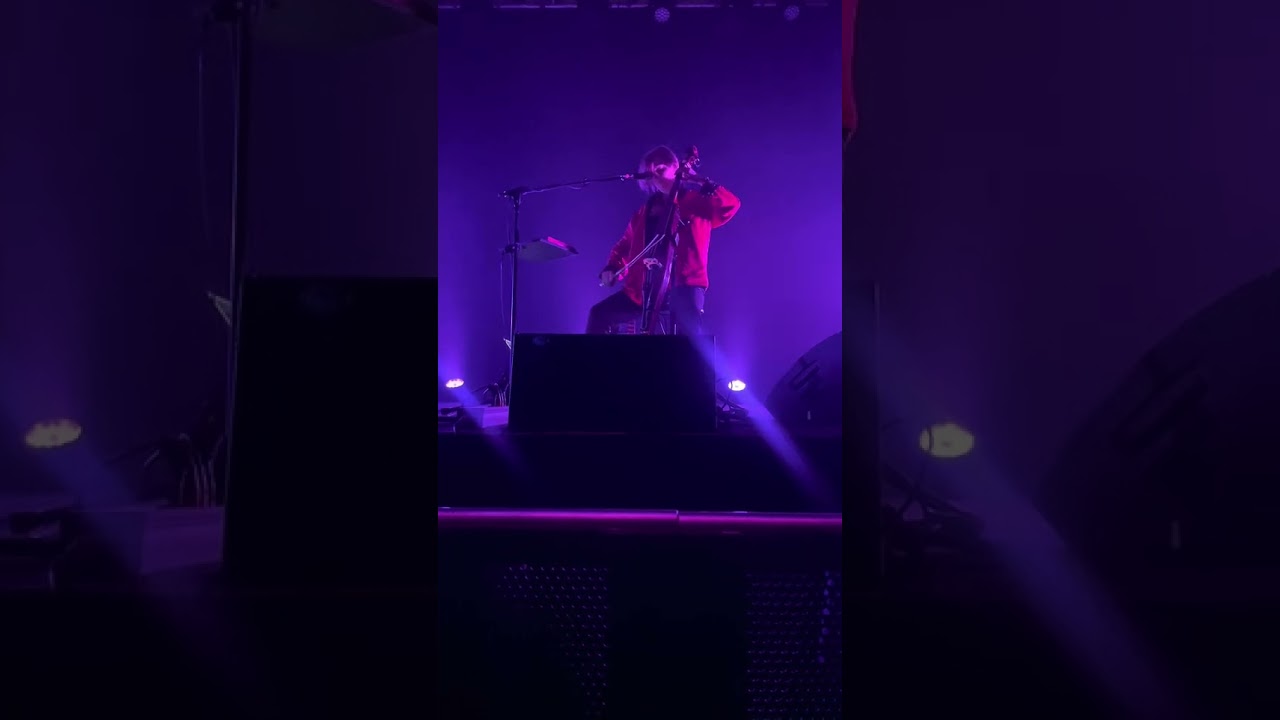
"Paper Lanterns" serves as a vehicle for understanding Hayden's compositional method. The title itself—invoking an image of delicate, translucent light—suggests the album's aesthetic: fragility paired with luminosity, simplicity concealing complexity. As an entry to the 2024 NPR Tiny Desk Contest, the performance captures her in an intimate setting, stripped of elaborate production or multiple takes, showing how her core musical ideas function in real time.
The piece demonstrates Hayden's integration of layered cello textures with vocal melody. Rather than treating the cello as accompaniment, she constructs arrangements where multiple string voices create harmonic density while her voice navigates above or within this texture. This requires both compositional sophistication—understanding how to voice strings so each layer remains distinct—and performance discipline, as the cellist must maintain rhythmic and tonal control across numerous simultaneous lines.
Hayden's childhood on an off-grid farm represents a formative influence often absent from conventional musician biographies. Growing up without grid electricity, commercial media saturation, or easy access to concert halls likely shaped how she listens to sound itself. Off-grid environments demand acute attention to acoustic phenomena—wind through structures, the resonance of physical materials, silence as an active element rather than absence. This sensory education may underpin her sophisticated use of space in recording and composition; she appears to understand how sound behaves in three-dimensional environments and uses that understanding when constructing her arrangements.
Additionally, farm life traditionally emphasizes practical skill development and self-sufficiency. This ethos may explain why Hayden, rather than accepting the predetermined career paths of classical music, invents her own path. She is not trying to become the next competition-winning soloist or orchestral principal; instead, she is building a compositional and performative practice that integrates her entire background—technical training, experimental instinct, rural aesthetic—into something cohesive.
Hayden's vocal approach differs from traditional song interpretation. Her voice is not primarily a vehicle for lyrical narrative or emotional confession; instead, it functions as a textural and harmonic element within the overall sonic design. The descriptor "ethereal" suggests vocal qualities that are distant, floating, perhaps processed—serving the composition's atmosphere rather than dominating it. This positioning reflects post-classical and experimental music conventions, where vocals might be heavily processed, fragmented, or woven into dense instrumental textures.
By integrating vocals this way, Hayden avoids the conventional singer-songwriter model where personal narrative drives the listener's attention. Instead, she invites listeners into an immersive environment where voice and strings are equal partners in creating meaning. This approach allows her to explore what vocals can express beyond language: texture, breath quality, sustained tone, and vocal processing as compositional material.
Modern music production often presents analog and digital sound as opposing forces: analog associated with warmth, tube saturation, and organic imperfection; digital associated with precision, calculation, and coldness. Hayden's approach, according to her artistic statement, deliberately fuses these qualities rather than choosing one. This might manifest as: live cello recorded to tape or digital systems designed to emulate tape's saturation characteristics; acoustic performances layered with subtle digital processing; or string arrangements that sound both physically present and electronically manipulated.
This fusion serves both aesthetic and philosophical purposes. Aesthetically, it prevents her work from sounding retro (purely analog) or sterile (purely digital). Philosophically, it suggests that these categories are false binaries—that contemporary expression requires integrating all available tools, honoring both craft tradition and technological possibility. Given her farm background, where practical technology serves actual needs rather than status, this pragmatic eclecticism makes sense: use whatever sonically and conceptually serves the work.
The album title Gold Star—with its childhood resonance, its connotation of excellence or achievement, its warmth—signals Hayden's intent to create accessible beauty within experimental frameworks. The album includes "Paper Lanterns" and the single "After All," both representatives of her approach to original composition. By releasing work through contemporary channels (NPR contest entries, mailing list exclusives) rather than traditional classical record labels, Hayden positions herself within experimental and indie music communities while maintaining classical training's rigor.
For listeners encountering Hayden's work through "Paper Lanterns," the logical next steps are: explore her full discography through her website (shannonleehayden.com), sign up for her mailing list to access exclusive releases like the single "After All," and follow her social media (@shannonleehayden on Instagram) to track upcoming performances and releases. Her work represents a meaningful alternative to both conventional classical music and mainstream songwriting—a path that integrates rigorous training, experimental instinct, and personal background into something genuinely original. For musicians and composers, her approach offers a model for how to honor classical roots while creating distinctly contemporary work. For listeners seeking music that challenges genre categories while remaining emotionally resonant, her catalog provides sustained exploration of how cello, voice, and electronics can function together.
]]>