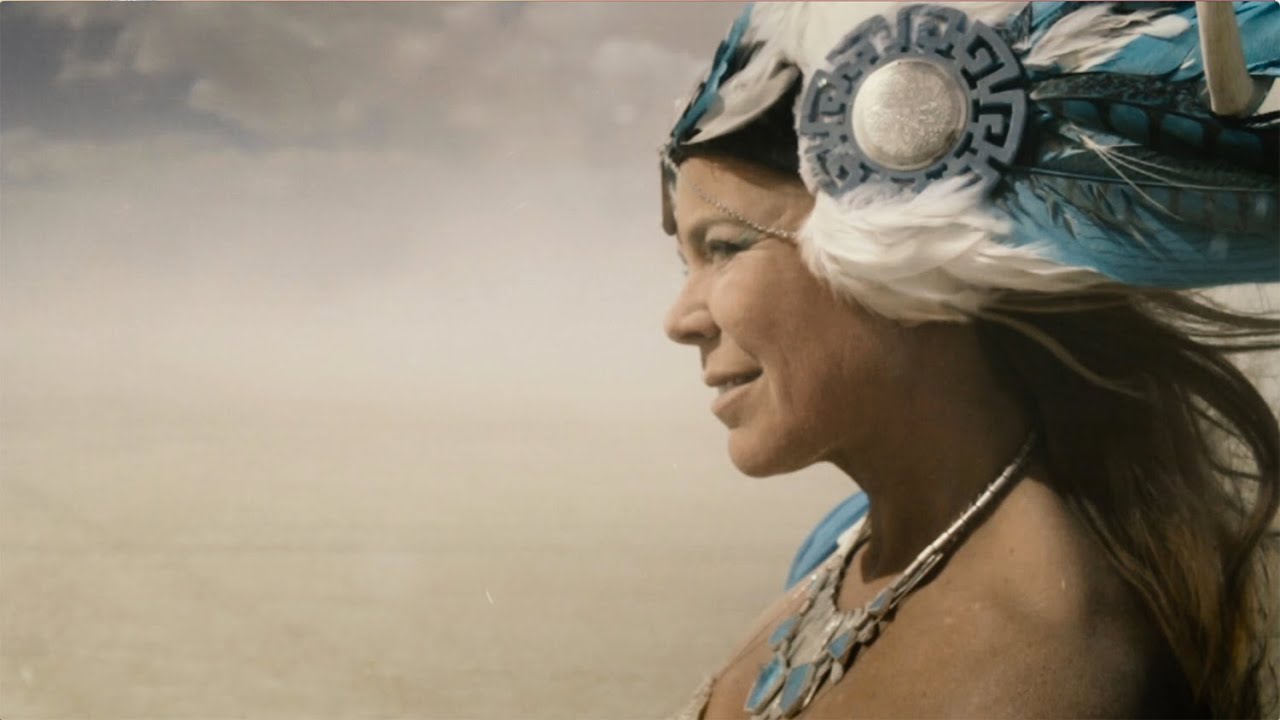
Deya Dova's "Myth of the Cave" is a musical meditation on Plato's allegory reimagined as a contemporary call to transcend limiting perceptions. Through blending ancient vocal traditions, divine frequency work, and organic electronic production, the piece functions as what Dova calls "new myth"—a sonic narrative designed to smash through old paradigms and empower listeners to perceive beyond the boundaries of conditioned reality. The work sits at the intersection of shamanic singing, transformational sound art, and philosophical inquiry into the nature of perception itself.
What Is the "Myth of the Cave" and Why Does It Matter Now?
Plato's allegory of the cave describes prisoners chained in darkness, able only to see shadows cast on a wall—shadows they mistake for reality. For millennia, this allegory has symbolized humanity's entrapment in illusion and the liberatory power of awakening to truth. Deya Dova draws on this ancient philosophical framework not as abstract doctrine, but as a living diagnosis of contemporary consciousness. The "myth" persists: most people remain bound by inherited patterns of perception, cultural conditioning, and normalized limitations on what they believe is possible.
In Dova's artistic vision, sound becomes the key that breaks the chains. Rather than presenting philosophical argument, the music itself enacts the liberation—frequencies and vocal textures designed to crack open rigidified perceptions and invite listeners into direct experience of expanded awareness. This is not metaphorical; Dova's work is grounded in the understanding that specific sound frequencies, combined with intentional artistic narrative, can physiologically and psychologically shift how the nervous system processes reality.
How Does Sound Function as a Tool for Paradigm Shift?
Deya Dova's artistic method merges multiple sonic languages into what she calls the intersection of "ancient and primal song, divine vocal frequencies with organic beats, totemic bass and sacred world instrumentation." Each element serves a specific function in the work of awakening.
The vocal frequencies—often performed in deep tonal work drawing from shamanic and world music traditions—operate on the principle that the human voice can encode and transmit specific information. These are not decorative elements; they are tools. When Dova speaks of "divine vocal frequencies," she is referencing the understanding, present in many traditional cultures, that certain tonal relationships, harmonic ratios, and vocal placements can attune the listener's nervous system, open energetic channels, and facilitate shifts in consciousness. The voice becomes a bridge between the material and the transcendent.
The instrumental palette reinforces this work. Organic beats—rhythms that maintain connection to the body, to dance, to primal human movement—ground the listener in somatic experience rather than abstract thought. The totemic bass carries the weight, the grounding frequency that allows the lighter vocal and instrumental work to lift consciousness without dissociation. Sacred world instrumentation—drawn from diverse cultural lineages—ensures the music speaks in a language that predates modern conditioning, touching ancestral memory and activating deeper layers of knowing.
What Does It Mean to Create "New Myth"?
In speaking of her work as "new myth," Deya Dova identifies a crucial need in contemporary culture: we are not short on information, but we are starved for meaningful narrative. The old myths—the stories that once organized human understanding of meaning, purpose, and the sacred—have been devalued or lost in secular modernity. Yet humans do not function on information alone; we live through story. Myth provides the container in which meaning lives.
New myth, as Dova practices it, takes the archetypal structure of old wisdom (the cave allegory, the hero's journey, the descent and return) and infuses it with contemporary resonance and urgent relevance. The content shifts—the enemies are no longer dragons but fear itself, rigid thought patterns, normalized dissociation from the Earth. The liberation sought is not medieval or abstract but immediate and embodied: the freedom to perceive beyond the limitations you've inherited, to recognize yourself as a sovereign being capable of creating reality rather than merely receiving it.
By embedding this mythology in music rather than literature, Dova bypasses the rational mind's defenses. The listener doesn't analyze the myth; they enter it directly through the body, through rhythm, through tone, through the activation of the nervous system that music provides. This is why the music is not incidental to the message—it is the message. The form and content are inseparable.
What Is the Planetary Grid Music Collection?
Beyond the immediate work of individual songs like "Myth of the Cave," Deya Dova has been engaged in a larger artistic-spiritual project for the past seven years: the Planetary Grid Music Collection. This represents a shift from the music-as-transmission model (where the message is embedded in form and frequency) to music-as-listening-device (where the artist becomes a channel for the Earth's own voice).
The method is specific and grounded: Dova travels to documented energy lines and sacred sites on the planet—over 44 locations to date—and records original music in direct response to the landscape. These are live location recordings, meaning they capture both the music and the environmental ambience. The artist is not composing from imagination but from what she describes as "deep listening with Mother Earth, with our living breathing planet—Gaia."
This practice reflects a worldview in which the Earth itself is a conscious, energetic being, organized along geometric and electromagnetic lines (the "planetary grid"). By singing in response to these locations, Dova is engaging in a form of sonic cartography—mapping the Earth's energetic system through her voice and artistic presence. Over 60 songs have been recorded across these sites, each one a unique response to the particular frequency and presence of that location.
This work extends the liberatory aim of "Myth of the Cave" into a larger context: if we are to awaken from our cave-bound perception, we must first remember that we live within a living being, that the Earth is not an object to be used but a conscious entity with whom we can communicate and create. The music becomes a language of reconnection.
How Does This Fit Into the Festival and Transformational Culture?
Deya Dova performs primarily at transformational festivals—Burning Man, Sonic Bloom, Symbiosis, Envision, and others. These are not conventional concert venues but intentional communities gathered around the explicit purpose of consciousness exploration, cultural experimentation, and liberation from normalized constraints. The festivals function as temporary spaces where the cave can be collectively exited, where participants can practice perceiving and acting differently than conditioned culture demands.
In these contexts, the music serves a specific function: it becomes a ritual container for the work already underway in the festival space. The festival attendees have already signaled their openness to paradigm shift by showing up. Dova's music and presence intensify and catalyze that openness, providing a coherent sonic and artistic frame that helps participants metabolize their experience and solidify whatever shifts in perception they've accessed.
The fact that Dova has maintained this touring practice for years, across multiple continents, with her family, speaks to a model of cultural work that is not about individual fame or commercial success but about creating nodes of coherence and awakening across the globe. Each performance is a small act of collective myth-making, a temporary restructuring of reality through sound, presence, and shared intention.
Why Does This Matter for Personal Perception Work?
On an individual level, engaging with work like "Myth of the Cave" offers a specific invitation: to examine what you perceive as real, true, or possible, and to question whether those perceptions are your own or inherited. The music provides a non-verbal entry point into this questioning—it doesn't tell you what to believe; it creates a state of openness in which different beliefs become possible.
This is the practical alchemy of Dova's work. She is not asking listeners to adopt a specific ideology or spiritual framework. Rather, she is offering a sonic experience designed to temporarily loosen the grip of habitual perception, to create a gap in which something new can emerge. What that new thing is remains up to each listener to discover. The music is a key; what door it opens depends on the person who uses it.
Where to Go from Here
To deepen engagement with this work, listen to "Myth of the Cave" with the awareness that you are not receiving entertainment but participating in a ritual of perception. Notice what happens in your body, your nervous system, your sense of what is possible. Seek out recordings from the Planetary Grid Music Collection and explore the maps of Earth locations from which they originated. Consider what it might mean to listen to the Earth as a conscious being rather than a backdrop for human activity. Explore the original Platonic allegory of the cave in Plato's Republic—seeing how ancient philosophy continues to speak to contemporary awakening. Most importantly, notice moments in your own life where you are operating from inherited limitations rather than fresh perception, and experiment with small acts of paradigm shift in those moments.