
SportsCampFinder

すべてのCampsを見る

Find the perfect camp for your athlete

camps

Basketball Camps
Soccer Camps
Baseball Camps
Football Camps
Volleyball Camps
Lacrosse Camps
Multi-Sport Camps
Elite Training
Overnight Camps
Day Camps
人気の目的地
BaliSedonaLos AngelesCosta RicaNew YorkSan FranciscoAustinMiamiJoshua TreeTulum
すべてのカテゴリを見るすべての目的地を見る

すべての機能を探索

イベントを成長させる強力なツール

プラットフォーム機能

スマートダイナミックプライシング
チケットカテゴリ
座席指定
カート放棄リカバリー
訪問者リカバリー
寄付とスライディングスケール
アフィリエイトシステム
チケットスキャナー
クーポンコード
カスタム質問
チケット共有
アップセルとアドオン
分析とレポート
メールシーケンス
ウェイトリスト / 通知 / リマインダー
人と場所
Camp OrganizersCamp FacilitiesKnowledge BaseInspiration
すべての機能を見る私たちについて
料金ブログ
Language
Saved events
すべてのイベントを見る

camps

Basketball CampsSoccer CampsBaseball CampsFootball CampsVolleyball CampsLacrosse CampsMulti-Sport CampsElite Training

人気の目的地

BaliSedonaLos AngelesCosta RicaNew YorkSan Francisco

人と場所

Camp OrganizersCamp FacilitiesKnowledge BaseInspiration

プラットフォーム機能

スマートダイナミックプライシングチケットカテゴリ座席指定カート放棄リカバリー訪問者リカバリー寄付とスライディングスケールアフィリエイトシステムチケットスキャナークーポンコードカスタム質問チケット共有アップセルとアドオン分析とレポートメールシーケンスウェイトリスト / 通知 / リマインダー
すべての機能を見る私たちについて
料金ブログ
ログインParents & athletesCamp directors
  • Browse all camps
  • Basketball Camps
  • Soccer Camps
  • Baseball Camps
  • Football Camps
  • Volleyball Camps
  • Lacrosse Camps
  • Multi-Sport Camps
  • Elite Training
  • All sports →
  • Orlando
  • Los Angeles
  • New York Metro
  • Dallas / Fort Worth
  • Chicago
  • Phoenix / Scottsdale
  • Atlanta
  • Denver
  • Seattle
  • Boston
  • Houston
  • Philadelphia
  • San Diego
  • Minneapolis / St. Paul
  • すべての都市 →
  • List your camp
  • Camp director dashboard
  • Pricing
  • Coaches & academies
  • Online registration & payments
  • Waivers & medical forms
  • Check-in app
  • Family messaging
  • Waitlist & notify
  • Camp marketing
  • Reports
  • All features →
  • About SportsCampFinder
  • Camp guides
  • Help Center
  • Contact
  • Careers
  • Press
  • 利用規約
  • プライバシーポリシー

Camps

  • Browse all camps
  • Basketball Camps
  • Soccer Camps
  • Baseball Camps
  • Football Camps
  • Volleyball Camps
  • Lacrosse Camps
  • Multi-Sport Camps
  • Elite Training
  • All sports →

目的地

  • Orlando
  • Los Angeles
  • New York Metro
  • Dallas / Fort Worth
  • Chicago
  • Phoenix / Scottsdale
  • Atlanta
  • Denver
  • Seattle
  • Boston
  • Houston
  • Philadelphia
  • San Diego
  • Minneapolis / St. Paul
  • すべての都市 →

組織向け Camp directors

  • List your camp
  • Camp director dashboard
  • Pricing
  • Coaches & academies

機能

  • Online registration & payments
  • Waivers & medical forms
  • Check-in app
  • Family messaging
  • Waitlist & notify
  • Camp marketing
  • Reports
  • All features →

会社

  • About SportsCampFinder
  • Camp guides
  • Help Center
  • Contact
  • Careers
  • Press
  • 利用規約
  • プライバシーポリシー
SportsCampFinder
© 2026 SportsCampFinder. 全著作権所有.
Inspiration

How to Be Present byReleasing Past and Future

Peter Crone
Peter Crone
Oct 3, 2024
読了 約5分
視聴 · 5
The widespread advice to "be present" misses why it's so difficult: our attention is fragmented between unprocessed pain from the past and anxiety we're projecting into the future. Real presence becomes possible only when we stop attending to the psychology of time—when we accept our history as inevitable given our conditioning at the time, and release the need to control or avoid future outcomes that mirror past hurt.

読む · 5セクション

Why "Be Present" Advice Doesn't Work

The instruction to be present is everywhere: meditation teachers, therapists, wellness apps, self-help books. Yet most people find it extraordinarily difficult to actually settle into the now, no matter how much they understand the concept. Peter Crone points to a fundamental reason this advice fails for so many: presence is being asked of people who are simultaneously holding onto two psychological positions—unresolved hurt in the past and protective worry about the future.

When you haven't fully accepted something painful that happened to you, that unfinished business creates a gravitational pull on your attention. Your mind keeps returning to it, replaying it, searching for what you could have done differently. Simultaneously, your nervous system projects that unresolved hurt into future scenarios, trying to anticipate and prevent the same pain from happening again. You're simultaneously anchored in the past and bracing against the future. Being present becomes nearly impossible because your attention is split, pulled in two directions at once.

This isn't a failure of discipline or practice. It's a structural impossibility. You cannot be fully present while holding these two psychological burdens.

How Unhealed Past Creates Future Anxiety

The mechanism is precise: when we haven't accepted and integrated a painful event from our past, we unconsciously treat it as an unfinished problem that could still harm us. Our psyche doesn't file it away as complete; it stays active in the background. Then, as we look toward the future, we're not actually looking at what might happen—we're looking at what we're trying to prevent. We're trying to mitigate the repetition of past pain.

This is why trauma survivors often find themselves recreating or hyper-vigilant about scenarios similar to their original hurt. It's not random; it's the nervous system's attempt to finish the work that wasn't done at the time of the original event. Every time a situation remotely resembles past pain, attention floods toward it. Every time we imagine a future that might contain similar pain, we tense, we plan, we try to control.

The irony is that while we're engaged in this double bind—held by the past, reaching toward a future we're trying to prevent—we simultaneously tell ourselves, "I'm going to be present now." The instruction contradicts our actual psychological state. No amount of willpower or meditation technique resolves this contradiction if the underlying structure remains in place.

What Actually Happens When We Accept Our History

The gateway to presence, Crone explains, is releasing our attendance to what he calls "the psychology of time." This doesn't mean denying the past or ignoring the future. It means stopping the active psychological work we're doing with time—the judging of what happened, the bracing against what might happen.

Specifically, acceptance of history means recognizing a truth that can sound almost trite but operates with enormous psychological force: at any given moment in the past, you were doing the best you could with the awareness and skill you had available. Not in some abstract, motivational sense—in the actual, literal sense. You couldn't have done anything different because you didn't do anything different. Your conditioning, your knowledge, your psychological resources at that moment were exactly what they were. Different choices would have required different conditioning, different awareness, different skill. Since you didn't have those things, you couldn't have made different choices.

This isn't an excuse. It's a fact about causality. Your past actions weren't arbitrary failures; they were expressions of what was possible for you at the time. When you actually accept this—not intellectually but in the body, in the nervous system—something shifts. The need to re-litigate the past, to punish yourself for it, to try to undo it through future control begins to dissolve.

Releasing the Grip of Future Mitigation

Once the past stops being treated as an unfinished problem you need to solve or atone for, the future loses its grip too. You no longer need to use the future as a mechanism to prevent past pain. You can look toward what's coming without the lens of fear and control. This is when presence becomes actually possible—not as a technique imposed on unwilling psychology, but as the natural state once the two temporal anchors have been released.

This doesn't mean becoming passive or careless about consequences. It means the difference between responding wisely to genuine current conditions versus reacting defensively to ghosts of the past. A person free from the psychology of time can still plan, can still be thoughtful about the future—but they're not living as though past pain is about to repeat, and they're not trying to use future control as a psychological solution for present unease.

Where to Go From Here

The practical implication is that meditation on presence, while useful, may be incomplete if it doesn't address the temporal psychology holding you hostage. Before trying harder to focus on the now, it's worth investigating: What from your past haven't you actually accepted? What future scenario are you trying to prevent or control? Where is your attention actually being held? Once you can see those anchors clearly, the work becomes not "be present" but "stop working so hard to fix the past and prevent the future." Presence then follows naturally, as your attention becomes available.

]]>
Comments

Loading the conversation…

Transcript

[0:00] There's so much emphasis on be present,

[0:02] be in the now, but why it's so difficult

[0:05] for people to actually achieve and

[0:06] attain is because it's not natural from

[0:09] somebody who's got a history that they

[0:11] are hurt by and a future that they're

[0:14] worried about. Then what happens is our

[0:16] attention tends to be dispersed in both

[0:19] directions where we haven't fully

[0:20] accepted something which is part of our

[0:22] history then then that tends to get

[0:24] reflected into a future where we're

[0:26] trying to mitigate that and avoid it

[0:28] being repeated. So then you've got those

[0:30] two things that we're holding on to

[0:31] whilst saying no, but I'm going to be

[0:33] present. So really the access to

[0:35] presence is when we're not attending to

[0:38] the psychology of time. Meaning, look,

[0:41] my history is what it is. I was always

[0:43] doing the best I could within the realm

[0:44] of my own awareness and my skill at the

[0:46] time. I couldn't have done anything

[0:47] different because I didn't do anything

[0:49] different. I didn't know to do anything

[0:50] different based on my conditioning.

Peter Crone
ArtistPeter Crone

The Mind Architect who helps individuals unlock their potential by addressing subconscious beliefs through innovative coaching, workshops, and transformative teaching.

プロフィールを見るウェブサイト
トピックを見る
Presence-nowPast-traumaFuture-anxietyConsciousnessPsychological-time

ご質問はありますか?

よくある質問

You can't be fully present while your attention is split between unresolved hurt in the past and anxiety you're projecting into the future. Your nervous system keeps returning to unfinished psychological business, pulling your attention away from the now. Presence becomes possible only after you've accepted your history and released the need to control the future.
Unprocessed pain from the past creates a psychological pull on your attention. Your mind keeps revisiting it, searching for what you could have done differently. Simultaneously, your nervous system projects that unresolved hurt forward, making you hypervigilant about future scenarios that might repeat the same pain.
It means recognizing that at any moment in the past, you were doing the best you could with the awareness and skill you had available at that time. You couldn't have done anything different because you didn't do anything different—different choices would have required different conditioning and resources. This isn't excuse-making; it's recognizing causality.
Yes. Releasing the psychology of time doesn't mean becoming passive or ignoring consequences. It means the difference between responding wisely to genuine current conditions versus reacting defensively to ghosts of the past. You can plan thoughtfully without using future control as a way to solve present unease rooted in past pain.
When you stop treating the past as an unfinished problem you need to solve or atone for, the future loses its grip on your nervous system. You no longer need to use future control as a mechanism to prevent past pain from repeating. This frees you to look toward what's coming without the lens of fear and defensiveness.
Meditation on presence is useful but incomplete if it doesn't address the temporal psychology holding your attention hostage. Real work involves investigating what you haven't accepted from your past and what future scenarios you're trying to control. Presence follows naturally once those anchors are released.

読みつづける

More from Peter

すべて表示
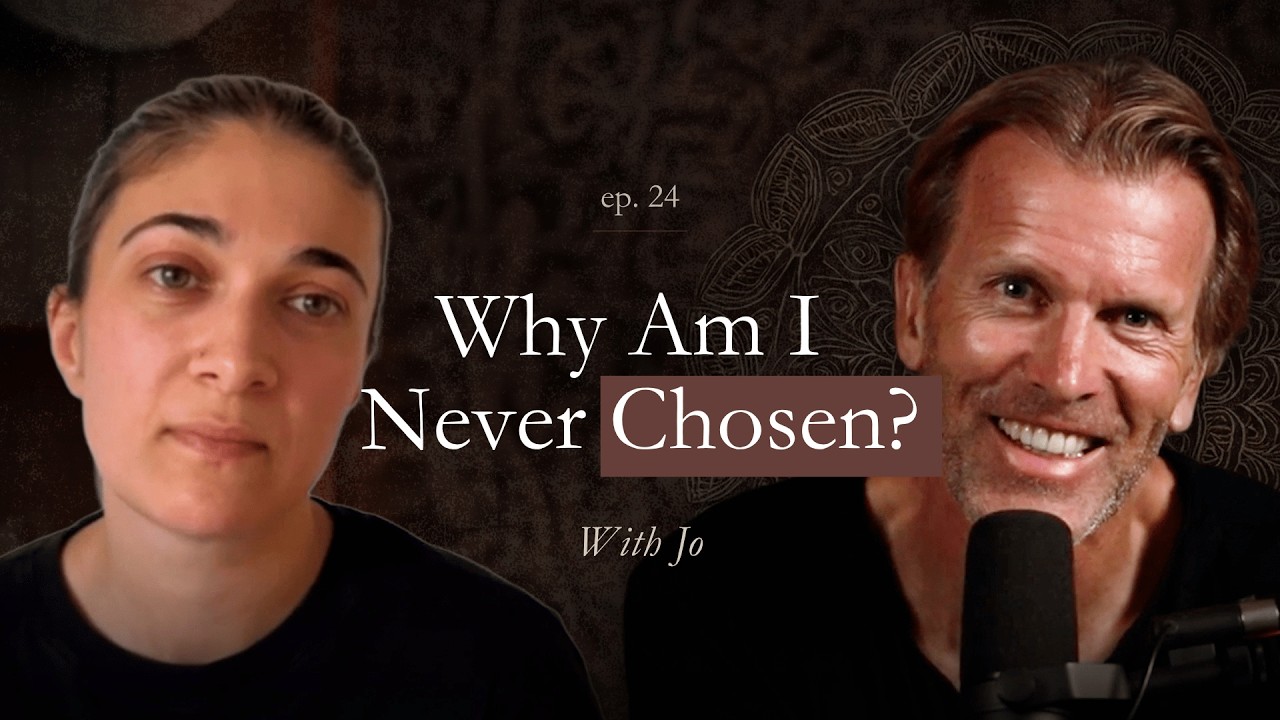
The Fear of Not Being Chosen: Why Self-Love Begins With Acceptance
Inspire

The Fear of Not Being Chosen: Why Self-Love Begins With Acceptance

A conversation with Peter Crone and Jo explores how rejection and shame shape our relationships, and why freedom comes from within.…

1 min read
Identity Wounds & Self-Imposed Healing: Why Fixing Yourself Deepens Suffering
Inspire

Identity Wounds & Self-Imposed Healing: Why Fixing Yourself Deepens Suffering

Explore why every addiction masks an identity wound, and how the pursuit of healing perpetuates the belief that something is broken in you.…

1 min read
Govinda Jaya: How Sacred Sound Awakens the Heart
Inspire

Govinda Jaya: How Sacred Sound Awakens the Heart

Radhika Das channels the liberating power of mantra through a luminous kirtan performance at Medicine Festival, invoking divine names to pur…

1 min read
Om Namah Shivaya Chant: Ecstatic Trance Meditation
Inspire

Om Namah Shivaya Chant: Ecstatic Trance Meditation

Jai Uttal guides listeners into an ecstatic chant trance with Om Namah Shivaya, the Sanskrit invocation of Shiva consciousness. A 91-second …

1 min read

探索を続ける

旅をつづける

BrightStarのディレクトリから、さらなる智慧と集いを。

もっと記事を読む

教え、インタビュー、ガイドのライブラリ全体をご覧ください。

すべての記事に戻る →

講師とアーティスト

コンシャスな世界の系譜、音楽家、導き手を探しましょう。

アーティストを探す →

イベントを見つける

キルタン、リトリート、サウンドバス、ブレスワーク、フェスティバル — まもなく開かれます。

イベントを見る →