SportsCampFinder

すべてのCampsを見る

Find the perfect camp for your athlete

camps

Basketball Camps
Soccer Camps
Baseball Camps
Football Camps
Volleyball Camps
Lacrosse Camps
Multi-Sport Camps
Elite Training
Overnight Camps
Day Camps
人気の目的地
BaliSedonaLos AngelesCosta RicaNew YorkSan FranciscoAustinMiamiJoshua TreeTulum
すべてのカテゴリを見るすべての目的地を見る

すべての機能を探索

イベントを成長させる強力なツール

プラットフォーム機能

スマートダイナミックプライシング
チケットカテゴリ
座席指定
カート放棄リカバリー
訪問者リカバリー
寄付とスライディングスケール
アフィリエイトシステム
チケットスキャナー
クーポンコード
カスタム質問
チケット共有
アップセルとアドオン
分析とレポート
メールシーケンス
ウェイトリスト / 通知 / リマインダー
人と場所
Camp OrganizersCamp FacilitiesKnowledge BaseInspiration
すべての機能を見る私たちについて
料金ブログ
Language
Saved events
すべてのイベントを見る

camps

Basketball CampsSoccer CampsBaseball CampsFootball CampsVolleyball CampsLacrosse CampsMulti-Sport CampsElite Training

人気の目的地

BaliSedonaLos AngelesCosta RicaNew YorkSan Francisco

人と場所

Camp OrganizersCamp FacilitiesKnowledge BaseInspiration

プラットフォーム機能

スマートダイナミックプライシングチケットカテゴリ座席指定カート放棄リカバリー訪問者リカバリー寄付とスライディングスケールアフィリエイトシステムチケットスキャナークーポンコードカスタム質問チケット共有アップセルとアドオン分析とレポートメールシーケンスウェイトリスト / 通知 / リマインダー
すべての機能を見る私たちについて
料金ブログ
ログインParents & athletesCamp directors
  • Browse all camps
  • Basketball Camps
  • Soccer Camps
  • Baseball Camps
  • Football Camps
  • Volleyball Camps
  • Lacrosse Camps
  • Multi-Sport Camps
  • Elite Training
  • All sports →
  • Orlando
  • Los Angeles
  • New York Metro
  • Dallas / Fort Worth
  • Chicago
  • Phoenix / Scottsdale
  • Atlanta
  • Denver
  • Seattle
  • Boston
  • Houston
  • Philadelphia
  • San Diego
  • Minneapolis / St. Paul
  • すべての都市 →
  • List your camp
  • Camp director dashboard
  • Pricing
  • Coaches & academies
  • Online registration & payments
  • Waivers & medical forms
  • Check-in app
  • Family messaging
  • Waitlist & notify
  • Camp marketing
  • Reports
  • All features →
  • About SportsCampFinder
  • Camp guides
  • Help Center
  • Contact
  • Careers
  • Press
  • 利用規約
  • プライバシーポリシー

Camps

  • Browse all camps
  • Basketball Camps
  • Soccer Camps
  • Baseball Camps
  • Football Camps
  • Volleyball Camps
  • Lacrosse Camps
  • Multi-Sport Camps
  • Elite Training
  • All sports →

目的地

  • Orlando
  • Los Angeles
  • New York Metro
  • Dallas / Fort Worth
  • Chicago
  • Phoenix / Scottsdale
  • Atlanta
  • Denver
  • Seattle
  • Boston
  • Houston
  • Philadelphia
  • San Diego
  • Minneapolis / St. Paul
  • すべての都市 →

組織向け Camp directors

  • List your camp
  • Camp director dashboard
  • Pricing
  • Coaches & academies

機能

  • Online registration & payments
  • Waivers & medical forms
  • Check-in app
  • Family messaging
  • Waitlist & notify
  • Camp marketing
  • Reports
  • All features →

会社

  • About SportsCampFinder
  • Camp guides
  • Help Center
  • Contact
  • Careers
  • Press
  • 利用規約
  • プライバシーポリシー
SportsCampFinder
© 2026 SportsCampFinder. 全著作権所有.
Inspiration

Garbh: Contemporary Reimagining of Gujarati Garba Dance

Shyam Dattani
Shyam Dattani
Jul 13, 2025
読了 約7分
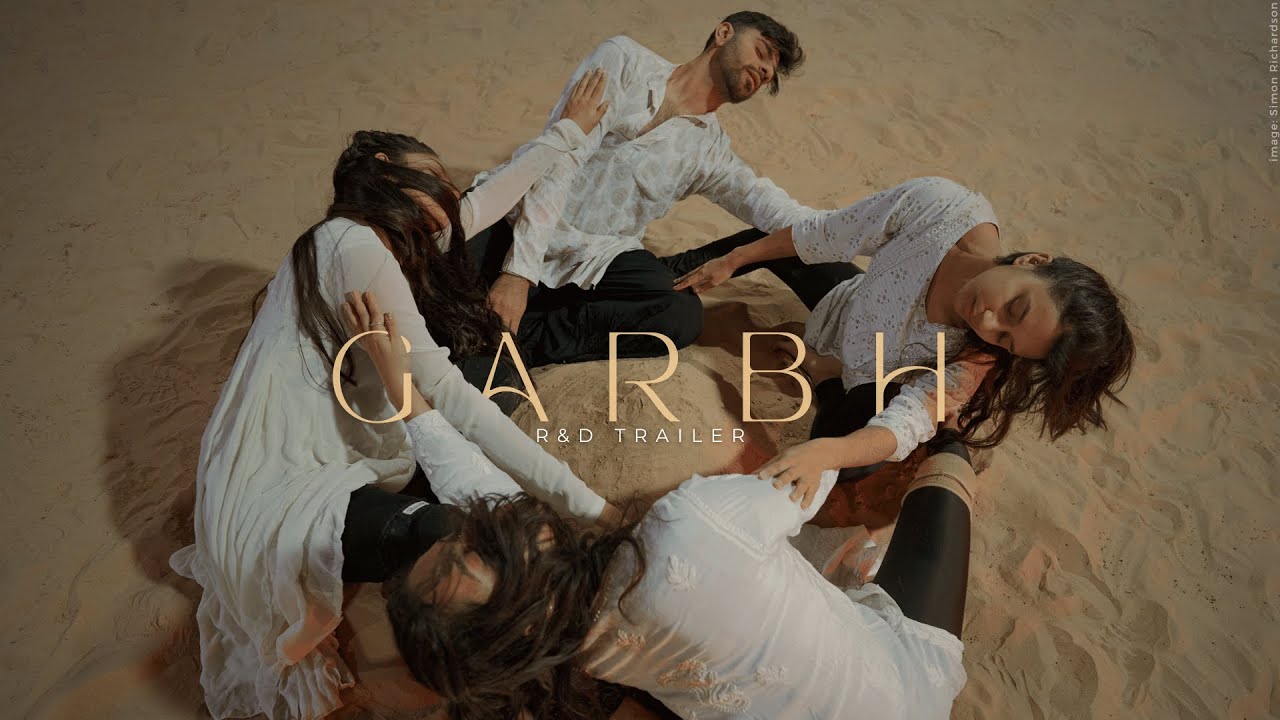
Garbh is a new outdoor dance work co-created by Shyam Dattani and Mira Salat that reimagines the ancient Gujarati folk dance Garba through contemporary choreography. Performed in-the-round on a circular sand set within urban public spaces, Garbh bridges collective community ritual traditions with 21st-century performance art, commissioned for 2025 UK festival audiences through Richmond Arts & Ideas Festival, Pagrav Dance Company, and Arts Council England funding.

読む · 7セクション

What Is Garbh and How Does It Reimagine Garba?

Garbh represents a significant evolution in how classical folk forms are transmitted to contemporary audiences. Rather than preserving Garba as a purely traditional practice confined to cultural or festive contexts, the work positions it as a living artistic language capable of dialogue with modern choreographic approaches. Co-choreographers Shyam Dattani and Mira Salat, working alongside all the dancers as collaborative creators, have extracted the essential energy and structural patterns of Garba—its circular formations, rhythmic community participation, and celebratory embodiment—and repositioned these elements within a contemporary performance framework.

The central innovation is the circular sand set, designed by Simon Daw. This architectural choice transforms the relationship between dancers and audience from the conventional stage-and-seating model into an "in-the-round" configuration. Audiences surround the performance space rather than viewing it from a single direction, creating multiple sight lines and a more immersive spatial experience. The sand itself becomes both a literal and symbolic foundation: it grounds the movement in earth and tactility while evoking the outdoor, often open-air settings of traditional Garba celebrations.

How Does Garbh Connect Community Ritual to Urban Performance?

Traditional Garba is fundamentally a participatory community practice. It emerges from Gujarat's seasonal celebrations and historically invites collective engagement rather than spectatorship. Dancers move in circles, pass rhythmic patterns hand to hand, and create inclusive group energy. Garbh preserves this ethos while translating it into a site-specific performance idiom designed for urban public spaces.

By staging the work in city centers and festival grounds across the UK, the production intentionally breaks garba out of diaspora community halls or heritage festivals where it might otherwise remain siloed. Instead, it makes the form visible and accessible to audiences unfamiliar with Gujarati culture, presenting Garba not as an exotic or museum piece but as a vital contemporary art form rooted in collective ritual. The work functions as both a performance and a cultural invitation—audience members positioned around the sand circle experience the intensity and joy of movement-based celebration even if they do not physically participate.

What Is the Creative Team's Role in Shaping Garbh?

The production credits reveal a deeply collaborative ecosystem. Choreographic mentorship from Urja Desai Thakore, a recognized voice in Indian contemporary dance, grounds the work in both traditional knowledge and innovation. Dramaturgy by Parbati Chaudhury suggests that the piece carries narrative or thematic weight beyond pure movement—the layering of story, cultural context, and somatic experience shapes how audiences understand what unfolds on the sand.

Music curation by Parthiv Gohil, with programming by Divya Pandya and Harsh Kamdar, positions sound as a central structural element. Rather than using pre-recorded tracks, the inclusion of live vocalist Shubhangi Katyayan indicates that the work engages the oral, sung dimensions of Garba tradition. Costume design by Shyam Dattani himself, realized through partnerships with multiple tailoring houses (Alim's Fashion House, Zari House, and specialized artisans), signals that visual language and textile choices are integral to cultural representation and contemporary aesthetic.

The involvement of a community cast alongside professional dancers—names like Keli Kandarpa Gupta, Aayush Patel, and others appear alongside the core ensemble—suggests that Garbh resists a purely professionalized or hierarchical model of performance. This mirrors garba's own democratic structure, where skill exists on a spectrum and participation is more valued than technical virtuosity.

Why Does the Circular Sand Set Matter as a Design Choice?

The circular sand set is not merely decorative. Architecturally and symbolically, it performs multiple functions. First, it anchors the movement in tactile, elemental ground—sand responds to bodies differently than a sprung studio floor or theatrical stage. The friction and yield of sand affects how weight is distributed, how turns are executed, and how dancers maintain balance. This material specificity forces the choreography to engage with environmental constraints and possibilities unique to this setting.

Second, the circular form echoes garba's own circular logic. Traditional garba is danced in concentric rings or spiraling patterns; the gathering space itself is fundamentally round. By designing the performance set as a circle, the work honors and amplifies the geometric intelligence already embedded in the form.

Third, the in-the-round staging creates a more egalitarian viewing relationship. No single viewpoint dominates. Spectators experience perspective shifts as they move around the circle, and the work is designed to be read from multiple angles simultaneously. This mirrors the experience of being embedded in or near a real garba circle at a celebration—the view is never complete or singular; it is relational and shifting.

How Does Garbh Fit Within Contemporary Dance and Cultural Practice?

Garbh emerges within a growing international movement of artists who center non-Western dance forms as contemporary art rather than relegating them to "cultural" or "ethnic" programming categories. By commissioning the work through Arts Council England, supporting it via the Rambert School and 101 Outdoor Arts, and producing it in partnership with Pagrav Dance Company, the project positions Garba-derived work squarely within the contemporary dance and live art ecology.

This positioning matters. It signals that exploration of Indian choreographic languages, collaborative creation with diaspora and UK-based South Asian artists, and innovation rooted in folk forms are central to what contemporary dance can be—not peripheral or supplementary. The work refuses the false binary between "traditional" and "contemporary," instead suggesting that living forms naturally evolve, that communities are not frozen in heritage, and that audiences are hungry for forms of celebration and movement that connect them to collective ritual.

The 2025 UK touring model, beginning with Richmond Arts & Ideas Festival, positions Garbh for accessible, outdoor presentation. This is deliberately not a theater-bound work requiring tickets to a building. It is designed for public space, which deepens the gesture toward democratization and community accessibility.

What Is the Significance of Bringing Garba to Festival Audiences?

Festival contexts invite loose, participatory, open-air energy. By designing Garbh for festival rather than concert-hall presentation, the work engages audiences in a different register. People encounter it without the formality of reserved seating, program notes, or darkened theaters. The work exists in daylight or twilight, in the same spatial logic as food stalls, children's activities, and other bodies moving through public grounds.

This context allows Garbh to function both as spectacle and as invitation. Audiences who encounter the circular sand set and movement might stop, watch for a moment, and move on—or they might stay, drawn into the rhythm and energy. Some may recognize garba and feel seen; others may encounter the form for the first time. The festival setting creates permission for multiple modes of engagement rather than demanding the focused, silent, seated attention of concert dance.

Where to Go From Here

If Garbh has sparked your interest in Garba as a living, evolving practice, consider exploring how other diaspora and UK-based South Asian dance artists are innovating within and beyond classical forms. Follow the work of artists like Urja Desai Thakore and collectives engaging contemporary dance across Indian and South Asian traditions. Attend festivals and outdoor performances that prioritize site-specific, community-engaged work. If you encounter Garbh during its 2025 UK tour, arrive with curiosity about how a familiar form might be defamiliarized and reimagined through contemporary choreographic vision, and notice how your body responds to movement within a circle, surrounded by others, in public space.

]]>
Comments

Loading the conversation…

Shyam Dattani
ArtistShyam Dattani

Shyam Dattani is a classical Indian vocalist specializing in ghazal and thumrī, performed in the intimate baithak format. He hosts the Poems of Love series in collaboration with Aa…

プロフィールを見るウェブサイト
トピックを見る
Garba-danceContemporary-choreographyGujarati-cultureOutdoor-performanceCultural-innovation

ご質問はありますか?

よくある質問

Garbh is a contemporary reimagining of the ancient Gujarati folk dance Garba, co-created by Shyam Dattani and Mira Salat. While traditional Garba emphasizes community participation and circular formations, Garbh frames these elements within modern choreography and stages them on a circular sand set in urban public spaces for audiences to view and experience the collective energy of the ritual through contemporary performance.
The circular sand set, designed by Simon Daw, serves multiple purposes: it echoes garba's own circular geometric logic, creates tactile ground that affects movement differently than a stage floor, and enables in-the-round staging where audiences surround the performance space. This design honors the form's collective roots while creating a more immersive, egalitarian viewing experience from multiple angles.
No. Garbh is designed to be accessible to audiences unfamiliar with Garba tradition. By presenting the work in urban public spaces and festival settings across the UK, the production intentionally makes Gujarati folk dance visible to broad audiences while maintaining cultural authenticity and collaborative creation with South Asian artists.
Garbh is commissioned for the Richmond Arts & Ideas Festival 2025 and is co-produced by Pagrav Dance Company with Arts Council England funding. The work is designed for UK festival touring across 2025, staged in outdoor public spaces rather than theater venues.
Garbh is positioned within the contemporary dance and live art ecology through funding from Arts Council England, support from the Rambert School and 101 Outdoor Arts, and production by Pagrav Dance Company. This positioning signals that exploration of Indian choreographic languages and innovation rooted in folk forms are central to contemporary dance practice, not peripheral or supplementary.
Festival contexts create different audience engagement than concert-hall settings. Garbh exists in public space, daylight or twilight, allowing people to encounter it casually, stay as long as they wish, and experience it alongside other public activities. This supports both spectacle and invitation, allowing multiple modes of participation rather than demanding focused, seated attention.
Garbh is co-choreographed by Shyam Dattani and Mira Salat in collaboration with all dancers. The creative team includes choreographic mentor Urja Desai Thakore, dramaturg Parbati Chaudhury, set designer Simon Daw, and music curator Parthiv Gohil with live vocalist Shubhangi Katyayan. The project also includes a community cast alongside professional dancers, reflecting garba's democratic, participatory structure.

読みつづける

More from Shyam

すべて表示
Garbh: Outdoor Dance Celebrating Shakti Through Gujarati Folk Traditions
Inspire

Garbh: Outdoor Dance Celebrating Shakti Through Gujarati Folk Traditions

Garbh is an outdoor dance work rooted in Gujarati Garba tradition, celebrating the Feminine Divine through ensemble movement and innovative …

1 min read
Yamal Kathak Duet: Classical Dance Meets Intricate Rhythm
Inspire

Yamal Kathak Duet: Classical Dance Meets Intricate Rhythm

A Kathak duet by Shyam Dattani and Ishira Shah showcases the grace, fluidity, and intricate technique of Indian classical dance choreographe…

1 min read
Minimal Vocalization as Spiritual Practice: Power in Simplicity
Inspire

Minimal Vocalization as Spiritual Practice: Power in Simplicity

A brief live vocal interlude demonstrates how devotional sound—stripped to its essence—can invoke presence and transformation through pure r…

1 min read
Govinda Jaya: How Sacred Sound Awakens the Heart
Inspire

Govinda Jaya: How Sacred Sound Awakens the Heart

Radhika Das channels the liberating power of mantra through a luminous kirtan performance at Medicine Festival, invoking divine names to pur…

1 min read

探索を続ける

旅をつづける

BrightStarのディレクトリから、さらなる智慧と集いを。

もっと記事を読む

教え、インタビュー、ガイドのライブラリ全体をご覧ください。

すべての記事に戻る →

講師とアーティスト

コンシャスな世界の系譜、音楽家、導き手を探しましょう。

アーティストを探す →

イベントを見つける

キルタン、リトリート、サウンドバス、ブレスワーク、フェスティバル — まもなく開かれます。

イベントを見る →