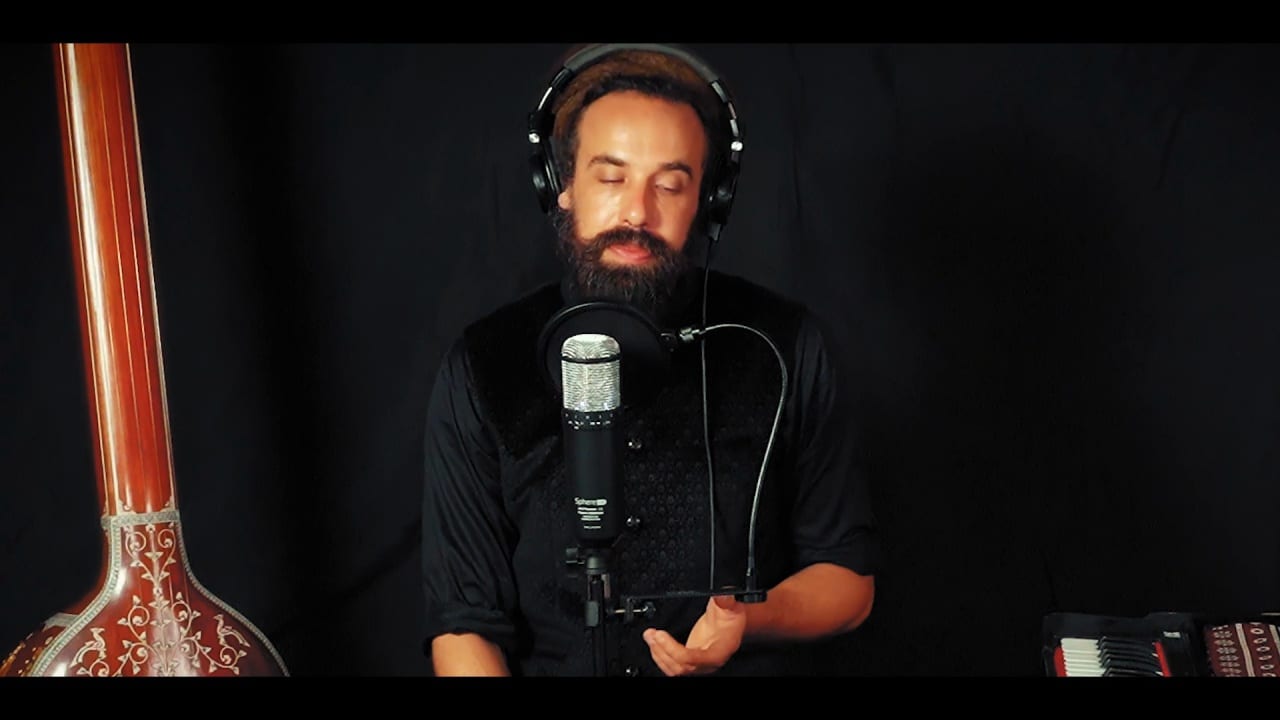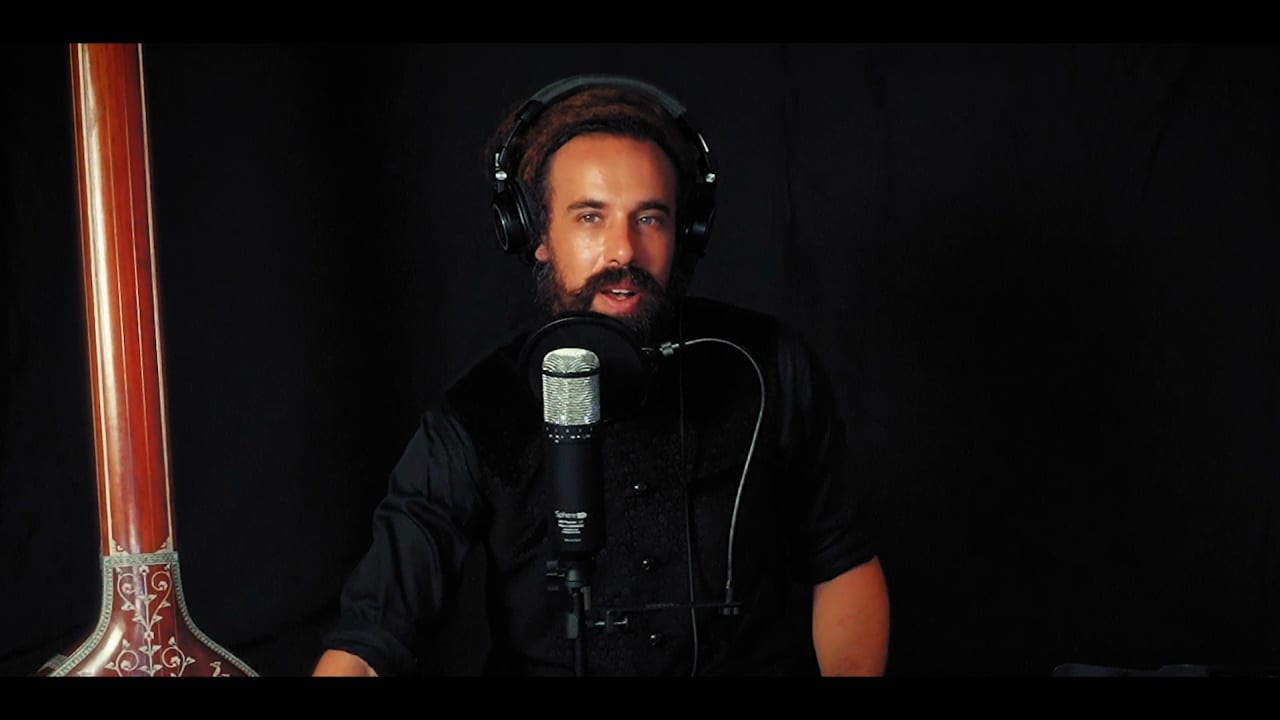
Tahir Qawwal's story diverges from the typical trajectory of a traditional musician. At fifteen, he made a decision that would shape everything that followed: he left home for the Himalayas. There, he spent his teenage years living alone as a dervish, practicing yogic disciplines in solitude and exploring an unusual question for someone so young—the relationship between sound, pitch, and spiritual awakening.
This wasn't a brief retreat or a summer of soul-searching. It was years of ascetic training, removed from conventional society, dedicated to understanding the mechanics of consciousness through the vehicle of the human voice. That period of isolation and intensive practice would become the foundation of everything Qawwal would later teach and perform. It continues to inform his work today, particularly his emphasis on what he calls the "inner mechanics" of voice and breath—not as mere technique, but as tools for transformation.
Qawwal eventually emerged from his solitary practice to take up the mantle of Qawwali, the centuries-old devotional music tradition of South Asian Sufism. This musical form, characterized by repetitive melodic cycles, Urdu and Persian poetry, and call-and-response structures, has long been used to induce states of spiritual ecstasy in listeners and performers alike. But Qawwal approaches it with the insight gained from his years in the Himalayas—understanding Qawwali not just as cultural expression, but as a precise spiritual technology.
He leads Fanna-Fi-Allah, a Sufi Qawwali ensemble that performs internationally. The name itself is telling: "annihilation in God," referring to the Sufi concept of fana, the dissolution of individual ego in divine presence. This isn't metaphor in Qawwali practice—it's the intended outcome of the music itself. Through sustained repetition, specific pitches, and the physical demands of the vocal performance, the tradition aims to exhaust the performer's sense of separation, creating the conditions for what Sufis describe as union with the divine.
What distinguishes Qawwal's approach is his integration of yogic philosophy with this Islamic mystical tradition. His years studying the relationship between sound and consciousness have given him a framework that bridges these lineages, finding the common ground between Sufi dhikr (remembrance) and yogic mantra, between the trance states of Qawwali and the meditative absorption of classical Indian practice.
Beyond performance, Qawwal has worked to document and contextualize the tradition he serves. He produced Music of the Mystics, a documentary film that examines Qawwali and other forms of sacred sound in South Asia. The film, which received industry recognition, explores the lineages and practices that have preserved these devotional arts across centuries. In creating it, Qawwal positioned himself not just as a practitioner but as a scholar and preservationist of musical traditions that exist at the intersection of religion, culture, and technique.
This documentary impulse—the need to explain, contextualize, and transmit—finds its fullest expression in the Sama School of Music, which Qawwal founded and directs. The school trains students in Qawwali vocal technique, South Asian classical music theory, and the meditation practices connected to sacred sound. The name references "sama," the Arabic word for "listening" or "audition," which in Sufi practice describes the act of listening to music as a path to spiritual experience.
At the Sama School, students learn the technical demands of the music—the complex ragas, the rhythmic cycles, the ornamentation—but always in relationship to the tradition's spiritual purpose. This is music education that refuses the separation between craft and consciousness, between vocal training and inner transformation.
Qawwal's cultural significance lies in his ability to hold multiple lineages at once. He is a practitioner of an Islamic devotional tradition who speaks fluently in the language of yogic philosophy. He is a product of rigorous ascetic training who now teaches in institutional settings. He is a guardian of ancient practice who uses contemporary media—documentary film, international performance circuits, formal music education—to preserve and transmit what he has received.
His work reaches those interested in Sufi mysticism, certainly, but also yoga practitioners curious about the role of sound in spiritual practice, music students seeking depth beyond technique, and listeners who may not share the religious context but recognize something universal in the tradition's approach to consciousness and transcendence.
With a modest but dedicated following—nearly 3,000 Spotify listeners who have found their way to this specialized tradition—Qawwal represents a particular kind of cultural work: the patient, committed transmission of practices that don't fit neatly into contemporary categories. He is neither pop artist nor academic, neither strictly religious figure nor secular musician.
He matters because he keeps alive a question that his teenage self took into the mountains: what happens when sound is used not for entertainment or even for beauty, but as a tool for the dissolution of the self? In a cultural moment saturated with sound but often lacking in listening, Qawwal's work invites a different kind of attention—one that his tradition has been cultivating for centuries.