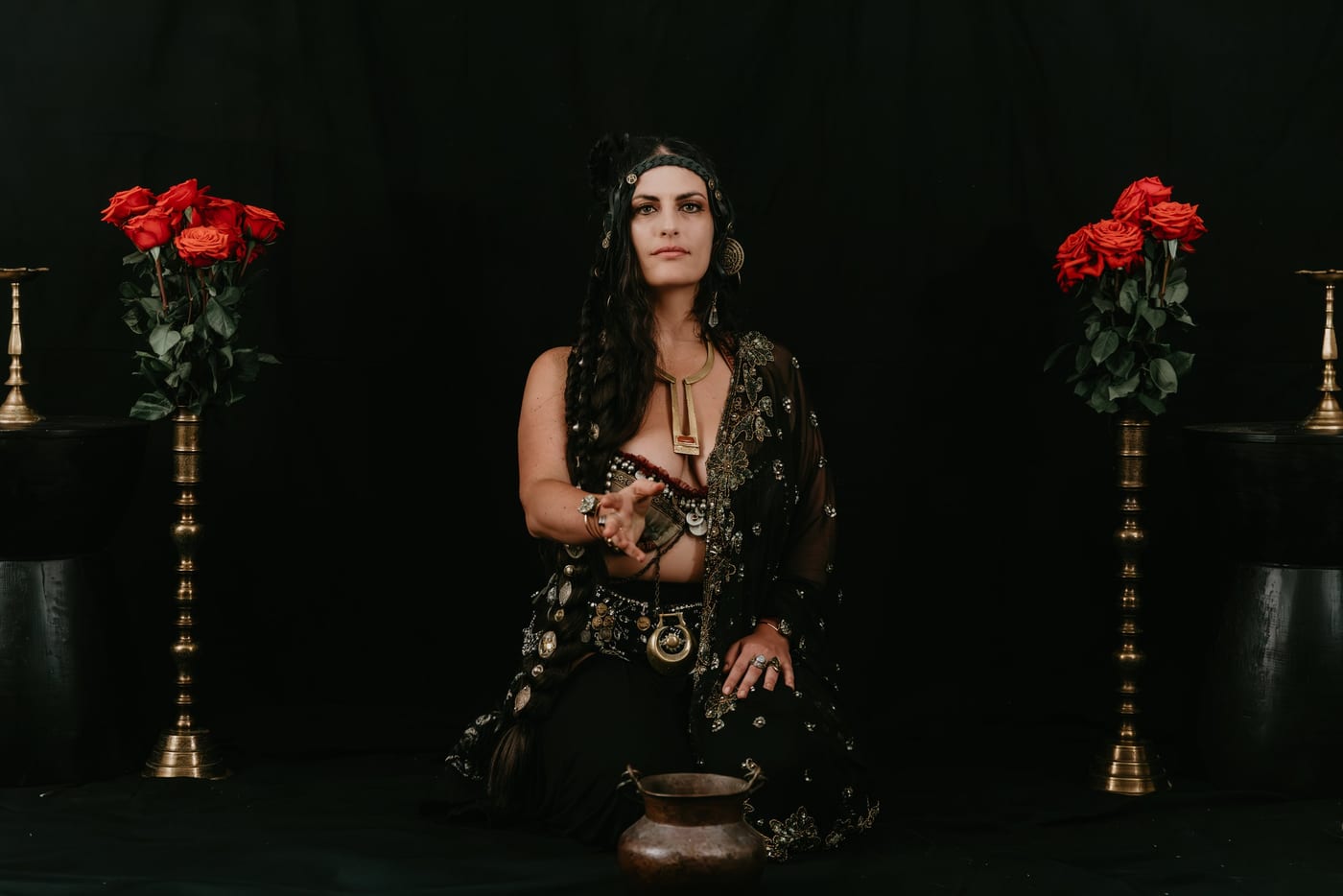
A teaching session with Marya Stark doesn't begin with instruction—it begins with listening. Students arrive to find her already tuned in, creating space with intentional sound: perhaps a drone, perhaps silence weighted with expectation. The room feels calibrated differently than other meditation spaces. There's an implicit invitation to drop below conversation, below thought, into the body's own resonance.
What follows resists easy categorization. Part vocal exploration, part meditation, part therapeutic excavation, her sessions move fluidly between guided stillness and active sound-making. She might lead students through breathwork that gradually opens into toning, or invite them into extended silence punctuated only by the occasional chime or vocal note that seems to arrive from nowhere and everywhere at once. The structure is loose enough to follow what emerges, tight enough that students aren't left wandering. This is teaching through attunement rather than curriculum.
Her retreats intensify this approach. Multi-day immersions become journeys into what she terms "Archetypal Embodiment"—a process of discovering one's authentic sound signature. Participants cycle through phases: shedding self-consciousness, meeting resistance, breaking through into unexpected vocal territory. The arc is deliberate but unhurried, honoring the pace of genuine transformation over the production of quick results.
Stark returns again and again to the voice as oracle and diagnostic tool. She treats the human voice not as an instrument to be trained but as a channel to be cleared. Her teaching constantly circles back to questions of authenticity—what it means to find one's "true voice" beneath conditioning, beneath the learned patterns of pleasing and performing.
The body as a site of wisdom appears frequently in her framework. She guides students to locate sensation, to track energy, to notice where sound wants to move and where it meets obstruction. This somatic emphasis places her work at the intersection of meditation practice and embodied creativity, refusing the split between spiritual development and artistic expression.
Another persistent theme: music and sound as ancestral technology. She speaks of the bardic tradition not as historical curiosity but as living lineage, positioning herself as heir to storytellers and wisdom-keepers who understood that certain sounds carry medicine. This isn't metaphor for Stark—it's methodology.
Rather than providing techniques to master, Stark poses questions meant to be inhabited: What is your voice trying to tell you? What would you sound like if no one were listening? What stories are lodged in your throat? These aren't rhetorical flourishes but genuine inquiries she expects students to live with, sometimes for months.
She pushes particularly hard on the question of purpose: Why do you want to be heard? The question disarms those seeking validation or platform, redirecting attention toward service and authenticity. It's an uncomfortable inquiry that separates those seeking spiritual performance from those willing to do actual spiritual work.
Stark's delivery blends the mystical and the matter-of-fact. She can shift from guiding a meditation on the cosmic vibration to offering practical advice about hydration and vocal care. There's humor, but it's dry, emerging from keen observation rather than performed levity. She uses story selectively—personal anecdotes, fragments of myth, moments from students' journeys—but never indulgently. Silence holds significant real estate in her teaching. She's comfortable with it, doesn't rush to fill gaps, trusts the spaces between words.
Her own voice in teaching mirrors her approach: clear, unadorned, calibrated to the moment. There's little performance in her delivery, which is itself a teaching. She demonstrates the very thing she guides others toward—presence without pretense.
Stark's work lands for those already suspicious of conventional achievement metrics, people exhausted by performing, artists who sense their creative practice wants to become spiritual practice. It resonates with students willing to look foolish, to make strange sounds, to sit with discomfort in pursuit of something more essential than polish.
It likely bounces off those seeking systematic technique, concrete milestones, or quick access to altered states. Her teaching demands patience and tolerance for ambiguity. Those looking for charismatic authority or guru devotion will find her approach frustratingly egalitarian—she positions herself as guide, not savior.
Stark emerges from multiple streams: the contemplative traditions of meditation practice, the somatic awareness work of embodied therapies, and the ancient role of the bard. She belongs to a growing cohort of teachers who refuse the separation between artistic practice and spiritual development, who understand creativity as prayer and sound as sacrament. Her work parallels teachers in the nada yoga tradition while maintaining independence from any single system. She's building a practice at the convergence of several paths, creating something recognizable yet distinctly her own.