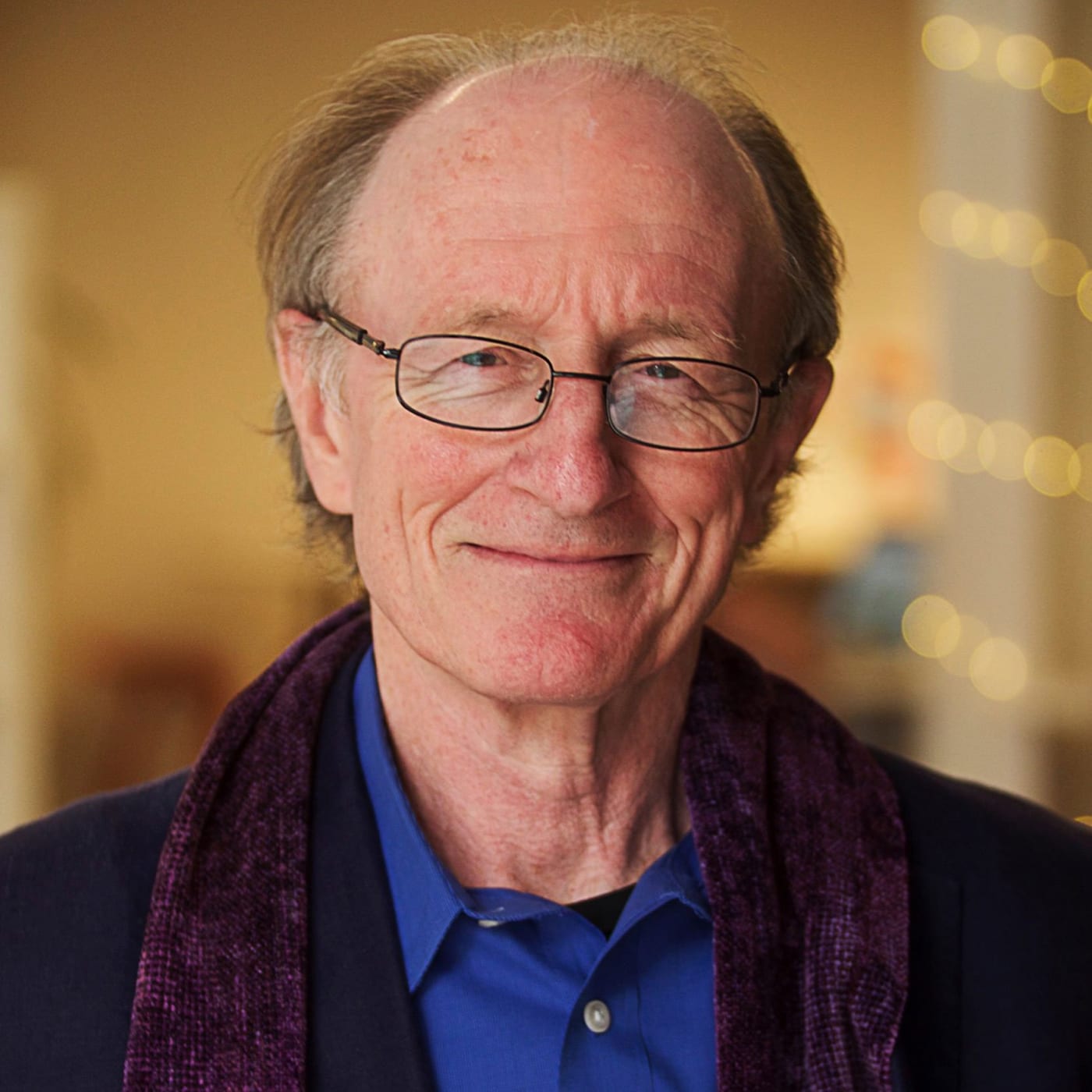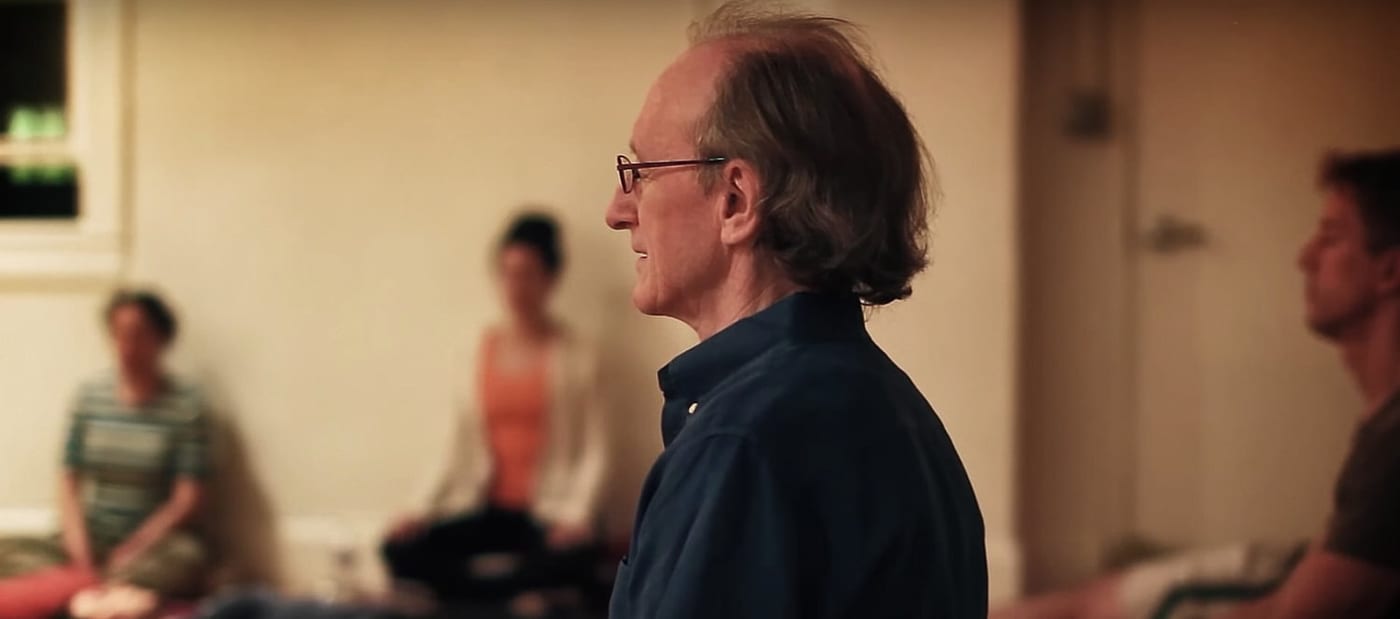

Hugh Byrne's teaching is easiest to understand through the route that led to it. Before he taught meditation, he spent more than twenty years working for human rights in Latin America and Africa, and for U.S. policies supporting equality and genuine development. He has described the stress and the sense of separation that came from an "us" and "them" approach, and from being tightly tied to the outcome of that work. Buddhist teachings changed how he understood working for change. That history is not background color. It sets the terms for most of what he teaches.
Byrne is a lead teacher at the Insight Meditation Community of Greater Washington (IMCW), with more than thirty years of meditation and retreat practice and more than twenty years of teaching, both Buddhist and secular. He has taught with IMCW and with Kripalu, Omega, Insight Meditation Society, corporations and government settings. A session with him is built from guided meditation and teaching that connects what a student notices in practice to how habits form and change. The emphasis is on investigation of conditioning rather than on reaching a special state. Attention goes to the body and to emotional patterns as they arise, and to what happens in the pause before reacting.
The register shifts with the setting. A corporate or government room calls for plain, secular language; a retreat allows more of the Buddhist framework to show. At Kripalu he frequently co-leads weekends with Rebecca Hines, an MBSR teacher with IMCW, combining mindfulness, loving-kindness and poetry. At IMCW he has co-led the New Year retreat with Ofosu Jones-Quartey and Trisha Stotler. The pattern is collaborative rather than a single authority at the front of the room.
Two interests anchor the work. The first is habit: how behavior becomes unconscious and automatic, and how mindfulness can make the unconscious conscious so that change becomes possible. This is the subject of his books The Here-and-Now Habit (2016), which brings together Buddhist teachings and neuroscience, and Habit Swap: Mindfulness Skills to Change Habits for Good (2020).
The second is the relationship between inner practice and social change. Through mindfulness, compassion, equanimity and loving-kindness, he writes, we can include everyone in our vision for justice and peace. He has put this into practice in Washington, DC by helping organize "mindful politics" meetings, a year of engaged dharma, and Mindful Engagement 2020. Metta is treated less as a pleasant feeling than as a counterweight to the separation and righteousness that he knows firsthand from advocacy work.
The bio and his stated concerns point to a consistent set of questions. What is happening in me before I react? Which of my patterns run without my consent? Where am I contracted around "us" and "them," and what does that cost me and the people I claim to serve? How attached am I to the outcome of what I care about, and what does that attachment do to the work? These are not questions with tidy answers, and his approach asks students to stay with them rather than resolve them quickly. They also demand some honesty about complicity in one's own suffering, which is not comfortable.
Nothing in the record suggests theatrics. The voice is clear, practical and investigative, with neuroscience used alongside Buddhist concepts instead of mystical framing. Poetry enters through the Kripalu weekends with Hines, which makes those retreats less austere than sitting-only formats. I can't point to a signature story, a favored scripture or a characteristic comic register, and it would be invention to claim one. What can be said is that he teaches in both Buddhist and secular idioms and moves between them without apparent strain, and that his own career change serves as the main personal example behind the teaching.
It lands most readily for people who want a practical account of why patterns persist and how awareness loosens them: skeptics, pragmatists, people with a psychological bent, and those in habit-change or recovery contexts who would not call themselves spiritual. It also suits activists and others in service work who recognize burnout and us-versus-them thinking in themselves. The books are written to be entered without prior meditation experience.
It is likely to frustrate others. Someone seeking a quick lift, an ecstatic or devotional experience, or a mystical account of awakening may find the pace slow and the framing too demystified. Someone who wants a distant, authoritative guru figure will not find one in a teacher who co-teaches routinely. And people who regard spirituality as properly apolitical may resist a teaching that treats justice and ethics as part of practice rather than a distraction from it. The work also asks for a tolerance for looking at unflattering material in oneself, which not every student is ready for at a given moment.
The bio places Byrne in Buddhist teaching, specifically through the vocabulary of mindfulness, compassion, equanimity and loving-kindness, and through his Buddhist-based teaching at IMCW and Insight Meditation Society, alongside secular work. It names no individual teacher or lineage, and none is assigned here. The tradition that fits what the bio does state is engaged practice: the conviction that meditation bears on how one acts in the world, which Byrne has carried from his human rights career into his teaching.