
Denis Kucherov's Teaching: Approach, Method, and Voice
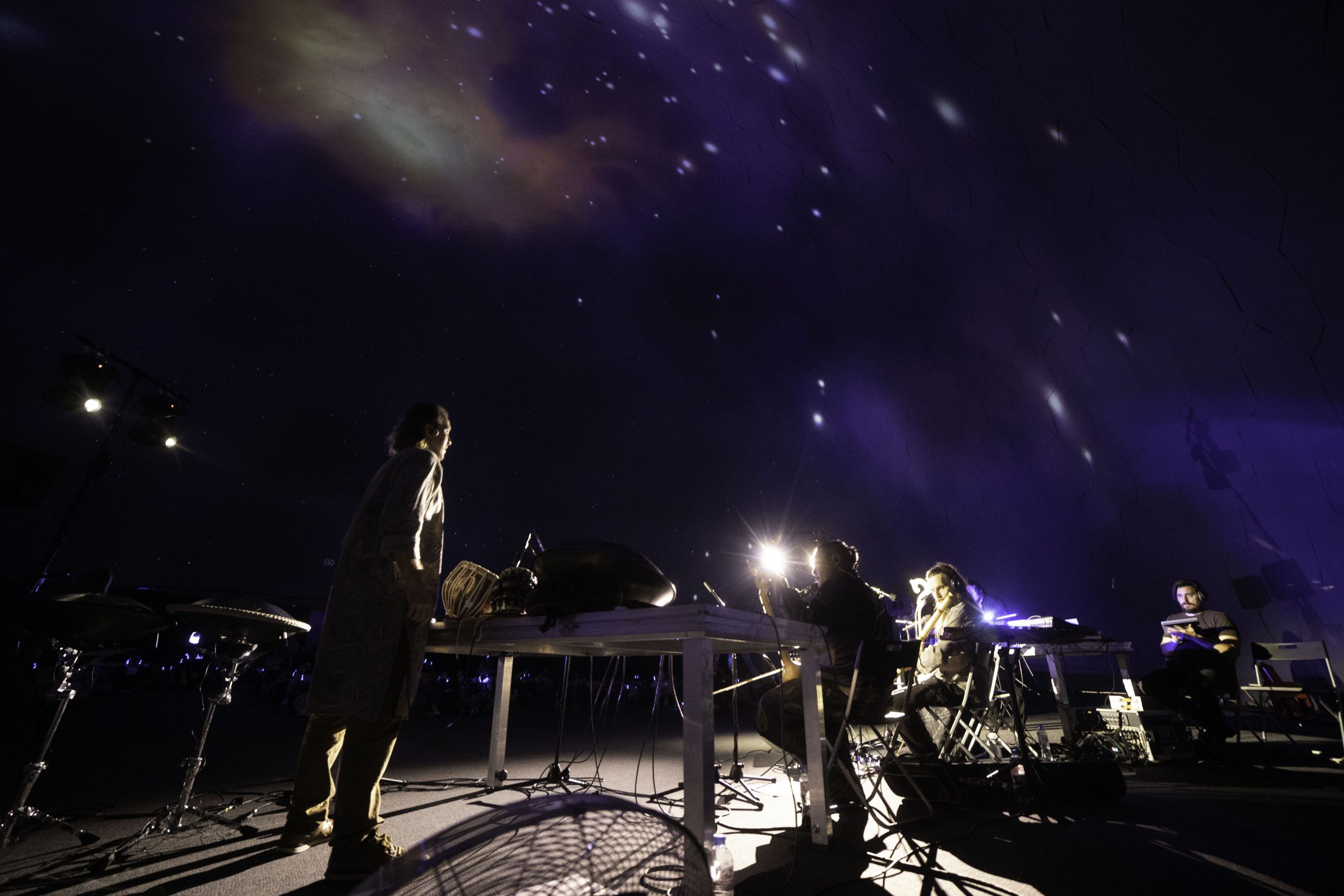
A session with Denis Kucherov begins with silence. Not the awkward silence of a group waiting for instruction, but a deliberate emptying—a clearing of the acoustic space before sound enters it. Students sit with their instruments or simply with their bodies, and Kucherov waits. He waits until the rustling stops, until breath settles, until attention gathers itself without being forced. Only then does he begin, often with a single stroke on the tabla or a resonant tone from the handpan, letting the sound decay completely before speaking or playing again.
This patience is not a affectation. It reflects the core of Kucherov's teaching: that rhythm and tone emerge from emptiness, and that a student's capacity to listen precedes their capacity to play. His retreats and workshops unfold with this same patience, structured around long cycles of practice, rest, and reflection. A weekend retreat might involve only a handful of rhythmic phrases or melodic ideas, each examined from multiple angles, played at different tempos, explored in silence and then in conversation. There is no rush to accumulate repertoire. The focus is on depth, on the internal experience of a pattern before its external display.
Returning Questions
Kucherov returns again and again to a set of fundamental questions that shape his pedagogy. What is the relationship between precision and expression? How does a musician inhabit cyclical time rather than merely mark it? Where does discipline end and obsession begin? These are not rhetorical questions posed for effect—they are working problems he expects students to sit with, sometimes for months. He will ask a student to play the same phrase for ten minutes without variation, then ask what they noticed. He will introduce a polyrhythmic structure and let the group struggle with it, offering minimal correction, waiting for them to discover the pocket through trial and confusion.
This approach frustrates students who arrive expecting clear instruction and measurable progress. Kucherov provides both, but not immediately. He asks students to develop what he calls "rhythmic patience"—the ability to rest inside a phrase without anticipating the next one, to trust that the cycle will return. For those trained in Western conservatory methods or contemporary music pedagogy, this can feel opaque. The questions seem designed to destabilize rather than clarify.
The Aesthetic of Delivery
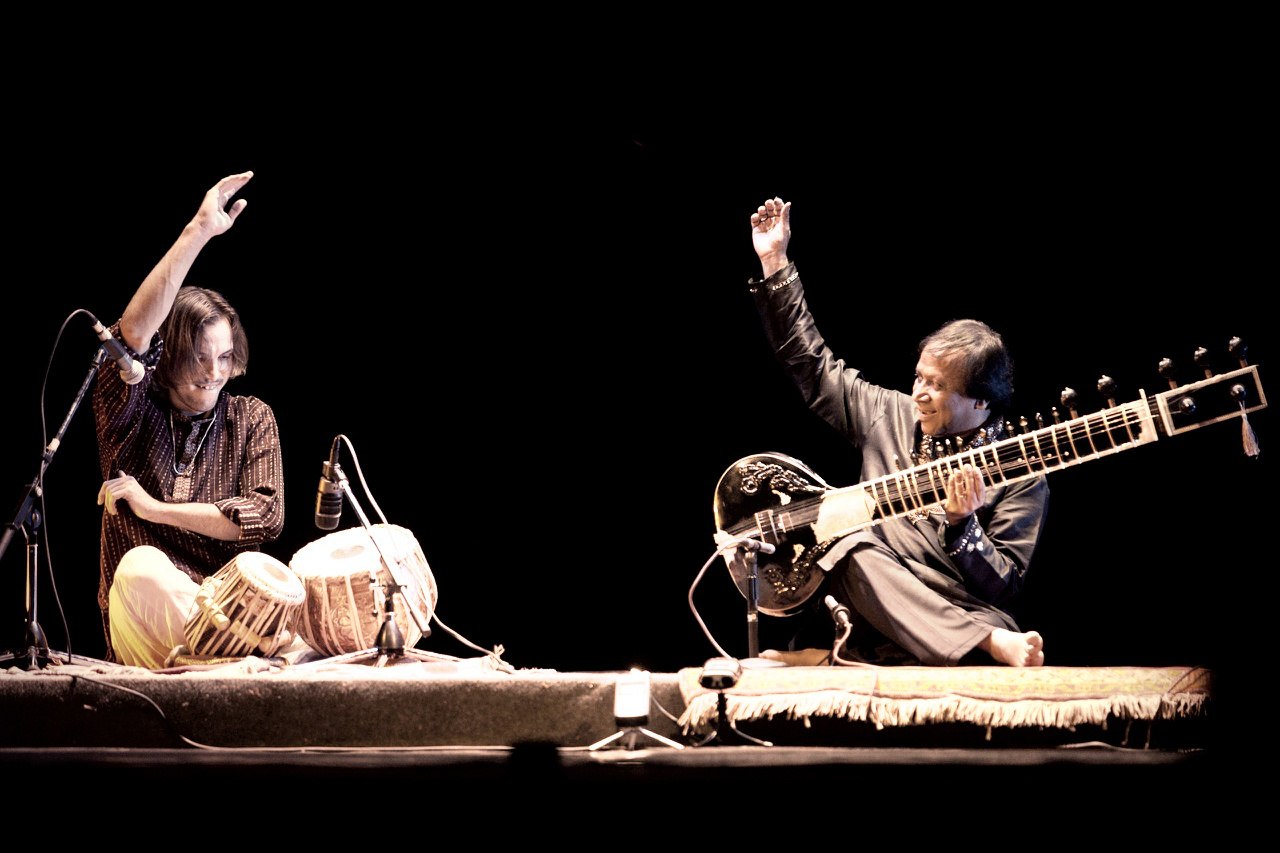
Kucherov's teaching voice is quiet and deliberate. He uses few words, rarely raising his voice even in large group settings. Demonstrations are central—he plays often, sometimes stopping mid-phrase to restart, modeling the process of refinement rather than presenting polished results. His humor is dry and appears sparingly, usually directed at the absurdity of trying to control sound rather than collaborate with it. He does not rely on anecdotes from his own training, though occasionally a reference to his tabla studies surfaces, usually in the form of a rhythmic phrase or a principle about listening.
Story and scripture play almost no role in his teaching. He does not invoke lineage in mystical terms or frame music-making as a spiritual practice, though students often describe it that way afterward. His focus remains technical and experiential: how the hand meets the drum, how the ear tracks overlapping cycles, how the body manages long periods of sustained focus. The aesthetic is minimalist, even austere, but not cold. There is warmth in his attention, in the way he listens to each student as if their sound matters.
Who This Lands For
Kucherov's teaching finds its audience among musicians who have already developed facility on their instruments and are searching for something beyond technique. Students drawn to his retreats often describe dissatisfaction with performance-focused training or a desire to reconnect with the sensory and meditative dimensions of music-making. The work appeals to those comfortable with silence, repetition, and gradual transformation. It does not suit those seeking rapid skill acquisition, charismatic inspiration, or communal exuberance.
Some students bounce off the teaching entirely. The lack of explicit feedback can feel withholding. The emphasis on internal process over external result can seem evasive. Those expecting validation or a clear pedagogical roadmap may leave confused or frustrated.
Lineage and Tradition
Kucherov operates within the North Indian classical tradition's pedagogical values—oral transmission, patient repetition, the primacy of listening—while adapting them for European students and contemporary instruments. He does not claim the authority of a tabla ustād, nor does he position himself as a guru. Instead, he functions as a bridge figure: someone who has absorbed a rigorous apprenticeship model and is translating its principles for musicians working outside that lineage. His teaching belongs to a small but growing cohort of Western-trained musicians who study deeply within non-Western traditions and then create hybrid pedagogies that honor both inheritance and innovation.