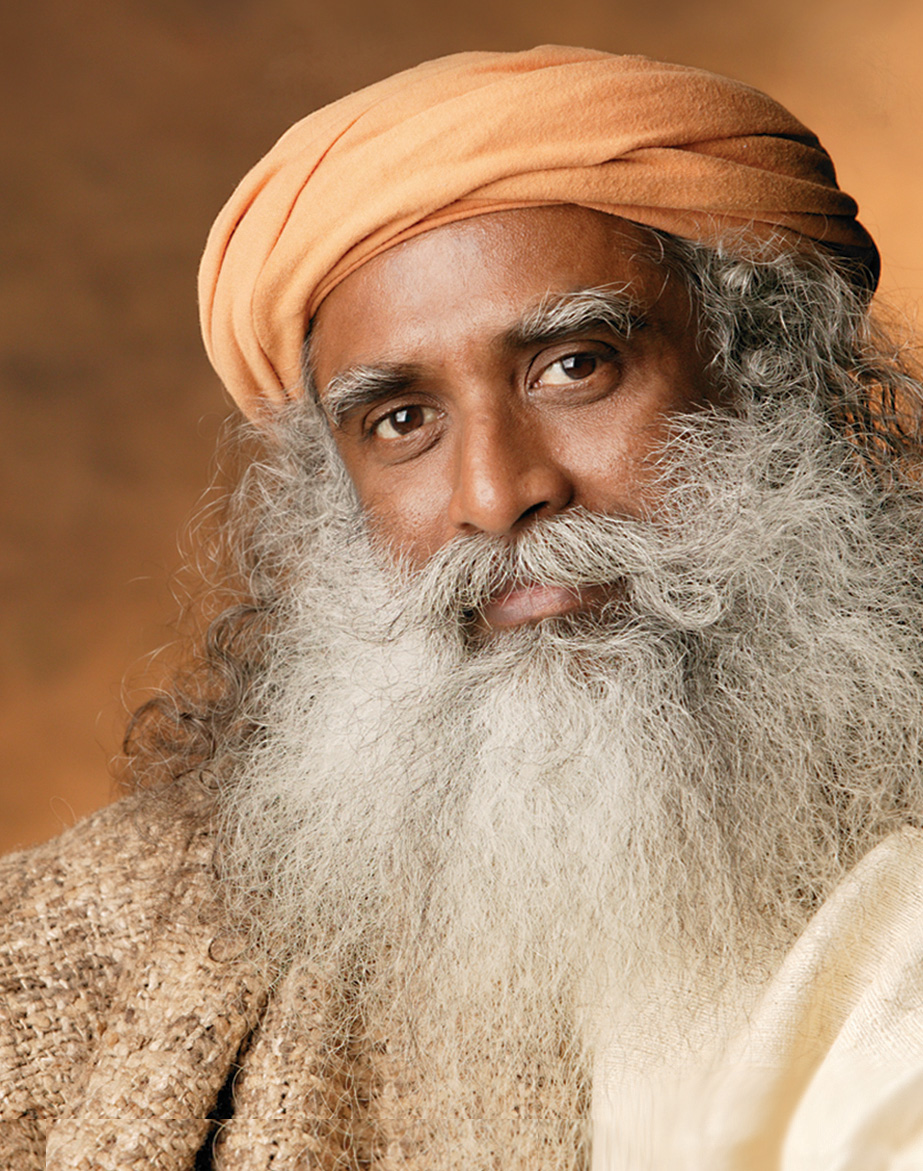
The question comes from the floor during an evening event in Singapore on 6 October 2026. The whole world is talking about AI, the questioner says, so is this simply the next step in the evolution of the species on this planet? The answer that follows runs barely a minute and a half, but it packs in a worldview: AI is the next evolution of machines, not of human beings, and whether it becomes a boon or a serious cost depends on a race that has not yet been decided, the race between human consciousness and technology.
The teacher's first move is to refuse the framing. The question asks about the "species," and he answers about the "machine." The distinction carries the whole argument. AI, in his account, is a further development of tools, and tools have their own trajectory. Human beings do not automatically ride along with it.
The video's description states the thesis plainly: "Artificial Intelligence is the next evolution of machines, not of human beings. It will bring more comfort and convenience, but it will not enhance human beings in any way." That is a sharper claim than the usual "AI is a tool, use it wisely." It says the technology improves our surroundings and our workload without improving us.
He begins with an admission of awe. "The phone in my pocket can remember a million books," he says, and then, flatly, "I'm very happy the machines are have more memory than you." Memory is the least threatening thing a machine can do. A device that stores and recalls more than a human mind can hold is, by itself, a convenience.
The unease he names is about something else. "We are feeling insecure because they may not take instructions from us." Memory is a capacity you can measure. Obedience is a relationship, and it is the relationship that is under strain.
This is the passage that gives the talk its edge. "It's not far away where the machines will start writing their own language. The moment they write their language, you don't know what the hell they are doing, what the hell they are saying." The point is opacity. A system whose internal communication humans cannot read is a system whose behavior humans cannot easily audit or correct.
He does not dress this up. The concern is not a science-fiction uprising. It is the plain loss of the ability to follow what a machine is doing, which is precisely when oversight stops working.
The sharpest point in the clip is economic rather than technical. "Right now our problem is we are running everything on a commercial basis. In a competitive way." He describes the dynamic in a single image: "If you make one kind of machine, I want to make another kind of machine. Well, you made a machine to do surgery, I made a machine to cut somebody's throat."
"This is where we are going. This is going to be dangerous. It is going to cost us something serious, not simple."
Sadhguru, in the Singapore talk, October 2026
The surgery machine and the throat-cutting machine are built from the same underlying capacity. What separates them is the purpose someone chooses. When development is driven by rivalry, each builder is pushed to ship faster and to match the other, and the question of what a capability is for gets pushed aside. The danger he describes is not that machines are inherently malicious. It is that a competitive market does not reliably ask the question.
He is not only pessimistic. In the same breath he concedes that AI "is going to solve" problems and "take away the load from the human beings in a huge way." The double-edged claim is the point. The same forces that will relieve human labor will also amplify whatever intention sits behind them.
The description closes the argument with its condition: "If human consciousness evolves faster than technology, AI could be a tremendous boon for humanity. If it does not, it will cost us something very serious – something we may not be able to recover from."
That turns the question from "Is AI good or bad?" into "Who is growing fastest?" Tools improve on a timeline set by engineers and markets. The argument holds that inner development, the quality of awareness and intention that decides how a tool is used, has to move at least as quickly, or the tool will set the direction.
It is worth being clear about the limits of what this clip offers. It is a brief, compressed answer to one question from the audience. It does not lay out policy, specify technical safeguards, or offer a method for raising consciousness. What it does is name the actual fault line: opacity, instruction, and competition, and the gap between how fast machines grow and how fast people do.
Watch the clip with the question in mind: which part of the argument is about the machine, and which is about the people building and using it? Then notice how often the speaker returns to purpose. The surgeon's tool and the attacker's tool are the same kind of thing. Only the intention differs, and intention is the one variable the talk insists humanity has to develop. For a fuller picture, look for the complete evening event the clip was drawn from, since a 90-second answer leaves much unsaid.


