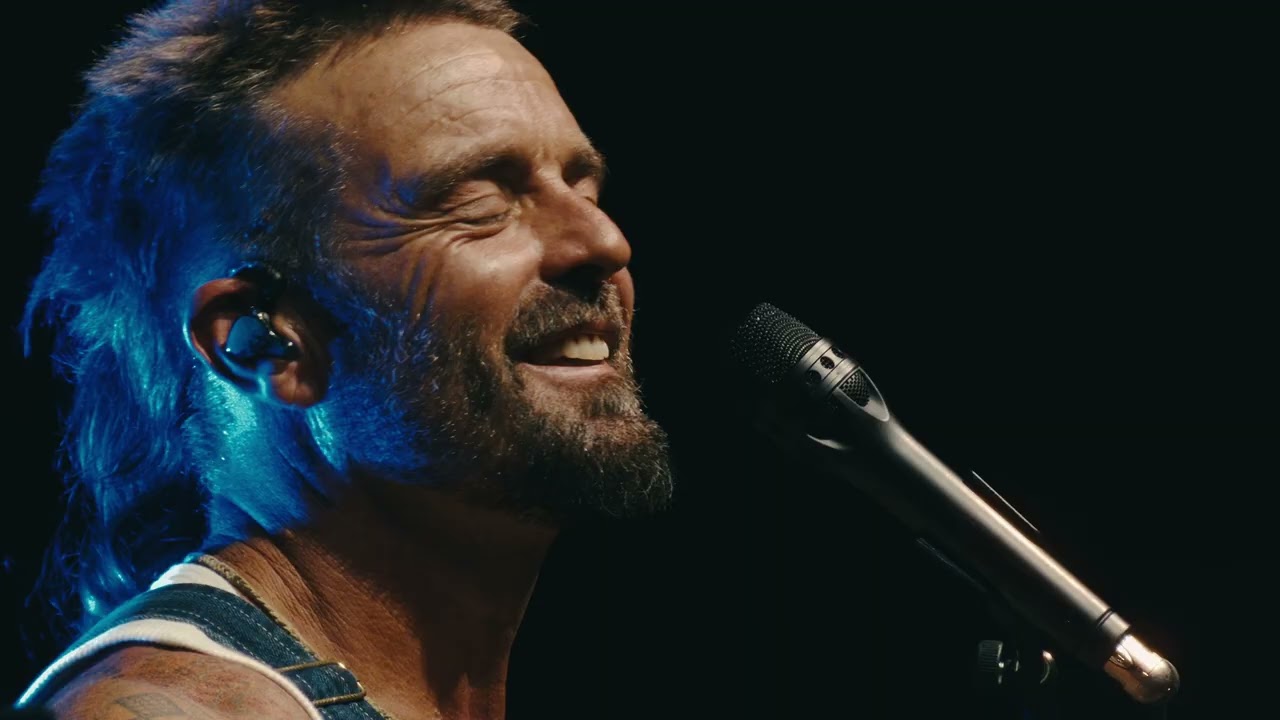
Xavier Rudd's "Walk Away" is a meditation on attachment and release, centered on the observation that people cling to "nothing"—broken dreams, fractured connections, false sense of belonging—while the song asks what becomes possible when we let go. The song contrasts two states: holding onto emptiness and the peculiar freedom of having nowhere to call home, suggesting that walking away from what no longer serves us is not loss but recognition of how far we've come.
The central image in "Walk Away" is deceptively simple: "I've seen people holding on to nothing / broken dreams and broken cords." Rather than depicting people grasping solid things, Rudd observes them clutching absence itself—the ghost of what once was or what was promised but never delivered. A broken dream is not a thing; it is the weight of expectation that outlives its object. Broken cords suggest severed connections, yet people carry the tension of those severed lines as if they still held weight.
This observation cuts to a psychological truth: we often spend energy maintaining our grip on what no longer exists. The broken cord no longer binds anyone, yet the muscle memory of holding remains. Rudd doesn't judge this impulse—he simply names it as something he has "seen," inviting listeners to recognize themselves in the image without shame. The song operates at the level of witness; it documents a universal human pattern.
Rudd extends the metaphor into the body: "I'll empty these and sleep it's true / ever these cracks upon my feet." The cracks suggest wear, the accumulation of standing on unstable ground while holding what cannot be held. To "empty these" implies a deliberate release—the speaker is choosing to set down the burden, suggesting that sleep (rest, cessation, perhaps even death or renewal) becomes possible once the hands are empty.
The phrase "ever these cracks" suggests permanence or habit; the cracks are not new but ongoing, familiar parts of the terrain we walk. Yet Rudd poses this not as a lament but as a condition that can be altered. Emptying what we carry is presented as a deliberate act, one that requires intention but promises rest.
The song's second major image introduces a paradox: "and I have seen people holding on to something / smiling there's no place to call home." This is not simply homelessness; it is the smile of people holding onto something while lacking any actual ground to stand on. They have attachment but no dwelling. They have something—perhaps a belief, a relationship, an identity—yet that something does not provide the shelter a home should provide.
This resonates with spiritual traditions that distinguish between attachment (holding tight) and belonging (being held). The people Rudd observes have chosen the former. They smile, suggesting not necessarily happiness but a kind of determined contentment or perhaps a mask of acceptance. Rudd does not say they should stop smiling; he records what he sees and implies a question: why hold so firmly to something that cannot house you?
"Do I see something so familiar / different so nice to have you home." This shift in the song marks a turn—no longer observing others from a distance but encountering something that touches the speaker directly. The familiar and the different are held in tension; the speaker recognizes something yet it appears strange. "So nice to have you home" could address a person returning, a part of oneself coming back, or even an understanding arriving. The ambiguity is intentional; the song doesn't explain what returns but celebrates the feeling of recognition that comes when something true appears.
In the final lyric, "just how far we've come," Rudd shifts to measure. The song is not about how far we have to go but the distance already traveled. This reframes the entire reflection: the holding on, the broken dreams, the cracks in our feet—these mark a journey. To see how far we've come is to recognize progress not as arrival at a destination but as movement through terrain. The song suggests that walking away is not failure but part of the arc of having come anywhere at all.
Structurally, the song is spare—the lyrics are few, and the music (built on acoustic instrumentation characteristic of Rudd's work) leaves space for the words to settle. This spaciousness mirrors the act of letting go; the song doesn't fill every moment, and in that restraint, it invites listeners into their own silence. The music from the album Storm Boy carries Rudd's signature style: earthy, rooted in folk and world instruments, with a meditative quality that allows each image to breathe.
While the song never explicitly invokes spiritual language, its logic aligns with contemplative traditions that teach non-attachment: the insight that clinging causes suffering, and that release—not as abandonment but as honest recognition—opens possibility. Walking away is not running from but turning toward clarity. The song doesn't prescribe this practice; it simply shows what it looks like when someone has done it and invites others to notice the same pattern in their own lives.
Listen to "Walk Away" not as a command but as an invitation to observe yourself. What are you holding that no longer holds you? Where are you smiling without a home to return to? Rudd's gift is the clarity of witness—he names the pattern without prescribing the solution, trusting listeners to recognize themselves and, in that recognition, to find their own way to release. The song is a mirror, and what you see in it is yours to walk away from.