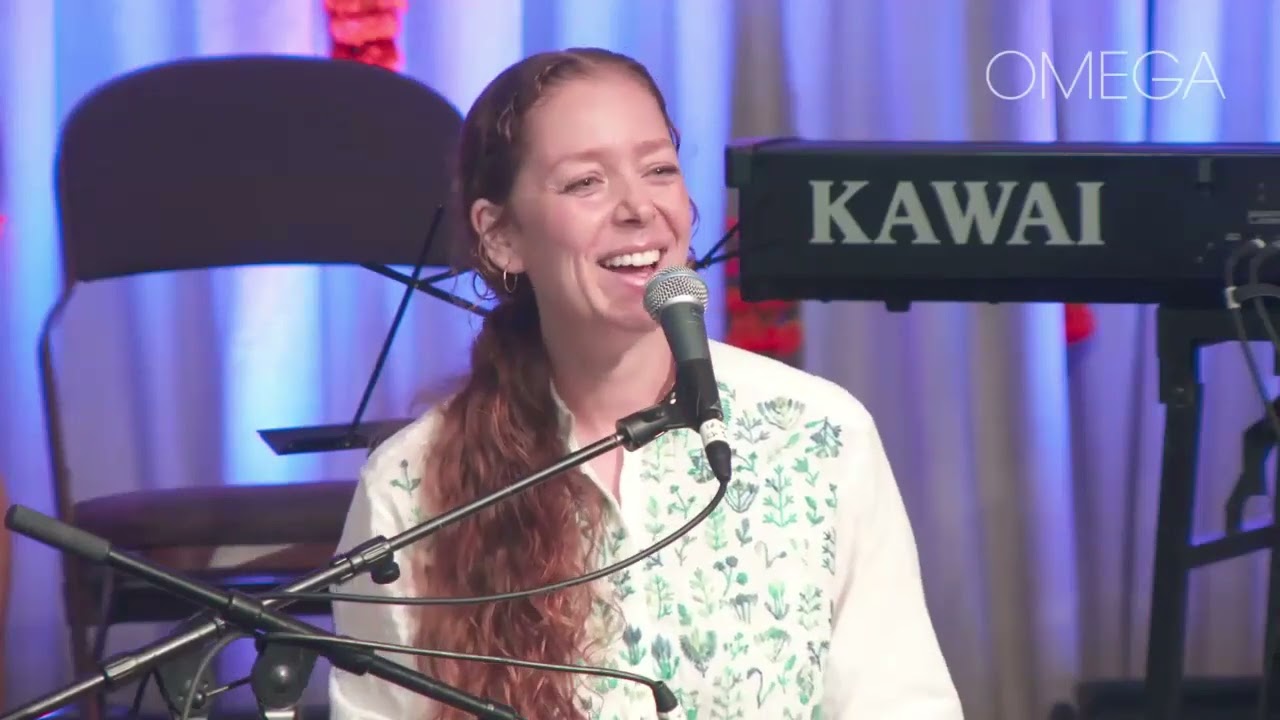
When the piano first sounds in "Hari's Home," it carries a presence that is both intimate and expansive—a single moment of music that contains five hundred years of spiritual lineage, a specific historical revolutionary, and the hopes of a global community practicing congregational chanting. The track, recorded in March 2022 at Ohm Studios in Montreal and released on the auspicious day of Gaura Purnima, fuses contemporary studio production with Vedantic philosophy. The song includes Bader Soma on piano and lead vocals, Tulasi Manjari on lead vocals, violinist Nicolò Bernardi, and backing vocals from a multicultural ensemble. Yet beneath the production choices—the instrument choices, the careful mixing—sits a radical philosophy about the power of collective chanting.
This piece of music represents something worth understanding: a living spiritual tradition that does not exist in museums or nostalgia but in contemporary artistic practice, now flourishing in diaspora, now reaching new audiences through precisely the same tools—studio recording, Spotify distribution, international collaboration—that market secular music globally.
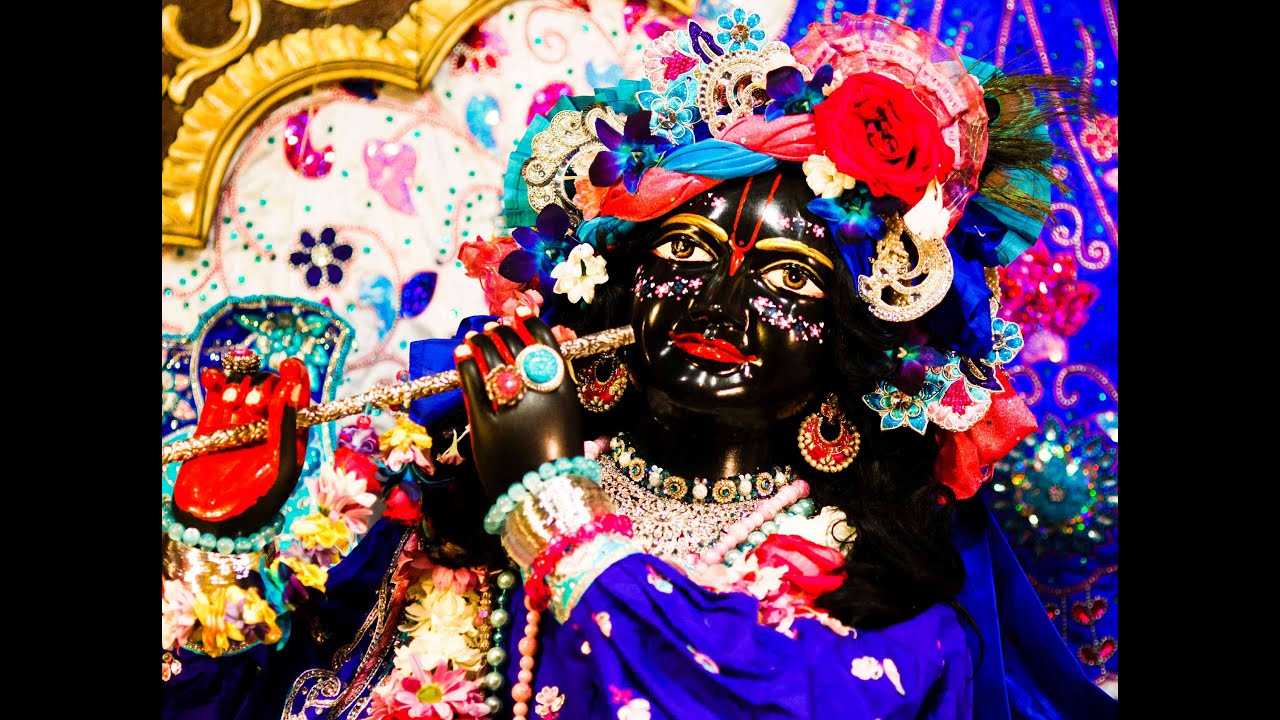
The description accompanying "Hari's Home" does not treat Chaitanya Mahaprabhu as a historical curiosity. It positions him as a civilizational revolutionary. Born in the fifteenth century in Bengal, Chaitanya did not simply teach philosophy or organize worship. He transformed the intellectual, religious, social, and political landscape of his era.
Philosophically, Chaitanya defeated the greatest thinkers and philosophers of his day—not through abstract debate alone, but through spiritual charisma and a practice so compelling it became a movement. He founded what the description calls "the largest, most widespread theistic movement in India's history." Religiously, he did not establish a hierarchical priesthood or esoteric mystery school. He established congregational chanting—sankirtan—as the central spiritual practice, radically accessible to anyone regardless of birth, gender, or social position.
This was revolutionary in fifteenth-century India precisely because the caste system had structured all spiritual authority through birth. Chaitanya's public challenges to religious inequities embedded in caste practice were not rhetorical niceties but direct, embodied confrontation with the most powerful social structures of his time. And his organization of massive civil disobedience movements in Bengal occurred more than four hundred years before Mahatma Gandhi pioneered the tactic on the national stage. The description emphasizes this timeline not to rank historical importance but to clarify what Chaitanya was: a visionary who understood that spiritual liberation and social liberation were inseparable.
What made all of this possible was a single practice: congregational chanting of the divine names. In Chaitanya's philosophy, this was not peripheral ritual or devotional garnish. It was the foundation.
Sankirtan—or kirtan in contemporary Western usage—is the practice of chanting divine names in congregation, typically in a call-and-response form, often with musical accompaniment. The verses attributed to Chaitanya himself, preserved in texts like the Siksastakam, function as something between poetry, philosophy, and technical manual.
The verse embedded in the description of "Hari's Home" reads:
"Glory to the śrī-kṛṣṇa-saṅkīrtana, which cleanses the heart of all the dust accumulated for years and extinguishes the fire of conditional life, of repeated birth and death. This saṅkīrtana movement is the prime benediction for humanity at large because it spreads the rays of the benediction moon. It is the life of all transcendental knowledge. It increases the ocean of transcendental bliss, and it enables us to fully taste the nectar for which we are always anxious." — Sri Siksastakam
Read carefully, this is not claiming that chanting is a useful wellness practice or a pleasant way to spend an evening. It makes specific, sweeping claims about the work that chanting does. It cleanses accumulated "dust"—interpreted in this philosophy as the residue of ignorance, attachment, and confusion. It "extinguishes the fire of conditional life, of repeated birth and death"—referring to samsara, the cycle of suffering caused by identification with a limited, ego-bound self. This is not metaphorical language for stress reduction. It is describing a radical transformation of consciousness.
The philosophy continues: chanting "spreads the rays of the benediction moon" and is "the prime benediction for humanity at large." Note the universality. Not for monks or initiates or those born into high castes, but for "humanity at large." It is "the life of all transcendental knowledge"—suggesting that understanding the divine is not intellectual work but participatory, embodied, through sound. And it "increases the ocean of transcendental bliss"—bliss that is not individual comfort but oceanic, transcendent, a state aligned with divine reality itself.
In this framework, chanting is not supplementary to spiritual life. It is the practice. It is how transformation happens. The invitation of the verse is direct and inclusive: anyone can do this. Anyone can taste the nectar for which they are always anxious.
"Hari's Home" exists at a cultural crossroads. The description lists the lineup with precision: Bader Soma on piano and lead vocals, Tulasi Manjari on lead vocals, Nicolò Bernardi on classical violin, backing vocals from Myriam Turenne, Rayanne Abbas, Jason Owen, Nrsimha Chaitanya, and Natacha Bianchet. The recording was mixed and engineered by Rad Crasto at Ohm Studios in Montreal, Canada.
This is not a temple recording or bare chanting circle captured on a smartphone. This is a produced album track, part of the album "Govinda's Grace," engineered with the technical sophistication and care typically reserved for secular music—drum programming, string arrangements, careful vocal layering, professional mixing. The inclusion of piano and violin—instruments rooted in European classical traditions—alongside Sanskrit chanting and Bengali musical forms reflects something genuinely new: the practice of kirtan is no longer confined to temples, Indian communities, or countercultural spiritual circles. It has become cosmopolitan.
Yet the production serves the content, not the reverse. The instruments do not domesticate the Sanskrit or soften the philosophy into something more palatable to Western ears. Instead, they create acoustic space. The piano provides harmonic foundation; the violin adds texture and emotion; the careful mixing ensures that the words—the names of God, the philosophical verses—remain audible and clear. This is a musician's understanding of production in service of meaning.
Bader Soma, whose name appears in the format "Bhāgavat Āshraya Dās," maintains both identities: he is a contemporary musician with access to modern recording technology, and he is a practitioner deeply embedded in a lineage of philosophy and practice. This dual identity is not a contradiction. It is how living traditions evolve. The music does not apologize for its tradition or for its modernity. It is both, fully.
Gaura Purnima—the appearance day of Lord Chaitanya—falls on the full moon in the Hindu lunar calendar, typically in March or April. The recording and release of "Hari's Home" on this exact day is not accidental. As noted in the description: "On this auspicious day of Gaura Purnima, I dedicate this track to Lord Chaitanya Mahaprabhu."
This dedication reframes the entire work. "Hari's Home" is not a composition created as product and then ceremonially blessed. The making of the music is itself a spiritual act, timed to cosmic and spiritual significance, offered as devotion. This is how sacred music traditions work in practice: the creation is inseparable from the spiritual purpose. The artist is not producing content; the artist is practicing.
The Sanskrit verses embedded in the description serve a similar function. By including the Siksastakam, Bader Soma ensures that anyone encountering "Hari's Home"—whether through Spotify or YouTube or word of mouth—can understand not just the melody but the philosophy animating the chant. The verses are teaching. They explain why the practice exists, what it purports to accomplish, and what the chanter is inviting into consciousness.
Kirtan has experienced a quiet but persistent renaissance in Western spiritual communities over the past two decades. It appears in yoga studios, consciousness festivals, meditation retreats, and now increasingly as produced music releases distributed globally. The accessibility is part of the appeal: chanting requires no special equipment, no years of instrumental training, no exclusive lineage permission. It requires only willingness—to listen, to participate, to allow sound to move through your body and mind.
For practitioners newly encountering the practice, the reported effects are often immediate and measurable: a calming of the nervous system, a shift in emotional tone, a sense of connection. These effects are real. But for practitioners embedded in the Chaitanya tradition, the effects—however real—are never the point. The point is love. Bhakti, in this philosophy, means not a feeling but a relationship: love toward the divine, expressed through sound, through breath, through the congregation itself.
"Hari's Home" signals that this lineage is not static, frozen in historical form or confined to a specific geography. It evolves. It incorporates new instruments, new languages of recording and distribution, new centers of practice. A recording made in Montreal by an international ensemble of musicians and released digitally is not a departure from the tradition. It is the tradition continuing, adapting, spreading "the rays of the benediction moon" into new ears and new hearts.
The song's title—"Hari's Home"—carries multiple meanings. Hari is another name for Krishna in Hindu philosophy. Home suggests both intimate return and cosmic belonging. In this reading, the song is not about a physical place but about a state of consciousness: a return to divine awareness, a homecoming to what one truly is beneath the layers of conditioned identity. The production makes this philosophy audible. It is not metaphorical music about spirituality. It is music that enacts the philosophy through sound.
The music of Bader Soma is available across streaming platforms including Spotify, where the artist maintains an official profile. His website, badersoma.com, offers direct access to his work and information about his practice and lineage. The album "Govinda's Grace," of which "Hari's Home" is part, provides a fuller exploration of how contemporary production serves devotional chanting rooted in Vedantic philosophy.
For those curious about the historical and philosophical foundations, texts attributed to Chaitanya Mahaprabhu—particularly the Siksastakam—are widely available in translation. The Bhagavad Gita, often considered the philosophical heart of Hindu spirituality, provides broader context for the concepts referenced in kirtan practice. Many cities now host regular kirtan gatherings, often advertised through local yoga studios, meditation centers, or spiritual community organizations. No prior training, musical ability, or religious affiliation is required to participate.
The practice itself is open: anyone can chant.