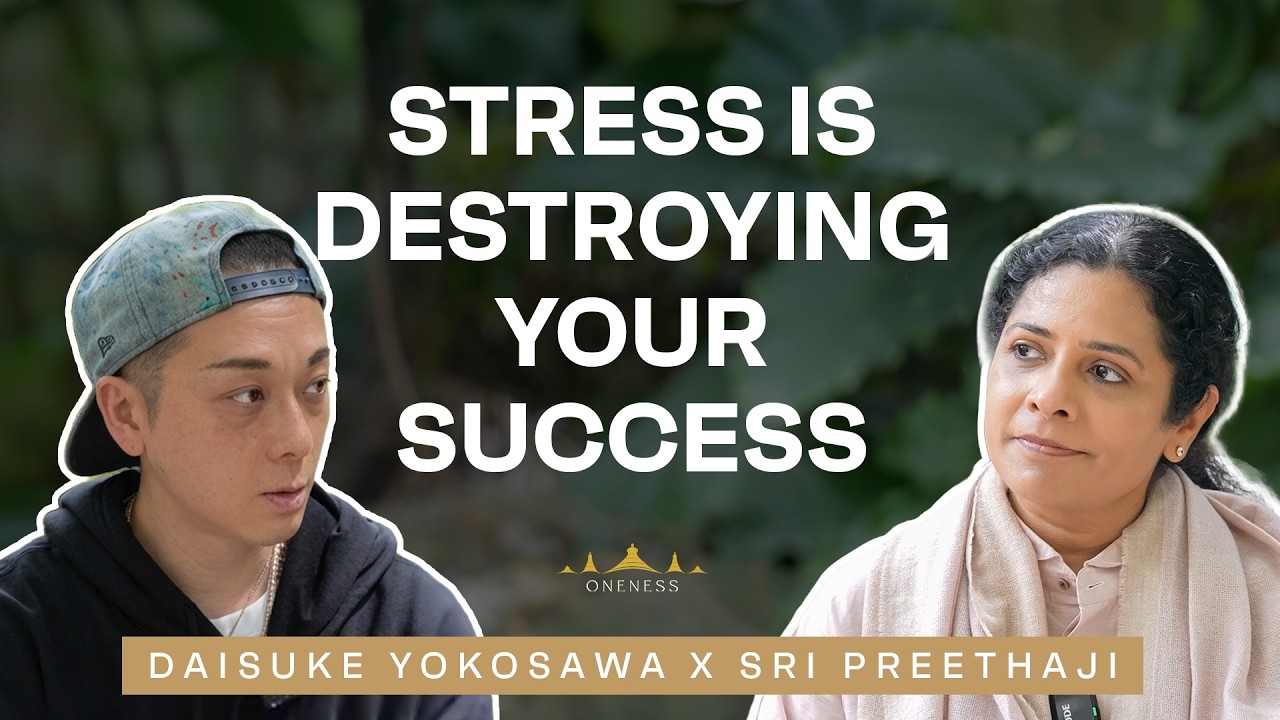
Depression often persists because we avoid facing our mental and emotional state, believing that ignoring pain will make it disappear. Sri Preethaji teaches that this avoidance mechanism actually deepens suffering, and that genuine healing requires turning toward—not away from—the inner landscape of difficult emotions. The path to well-being is not suppression but compassionate engagement with what we're experiencing, combined with conscious nurturing of our internal state.
Why Avoidance Deepens Depression
One of the core mechanisms that keeps depression entrenched is the human tendency to sidestep what hurts. When painful emotions arise—sadness, emptiness, anxiety, shame—the instinctive reaction is often to numb, distract, or deny them. We reach for phones, work, entertainment, substances, or any refuge that promises temporary relief. Sri Preethaji identifies this pattern as fundamentally counterproductive. The avoidance doesn't eliminate the pain; it compounds it.
What happens when we avoid our emotional state is that the underlying pain becomes buried, but not resolved. It festers beneath conscious awareness, coloring our thoughts, relationships, and sense of self. Depression thrives in this soil of unaddressed hurt. Each time we turn away from what we're feeling, we send ourselves a signal: "This is too dangerous to look at. You cannot handle it." This message alone becomes a secondary layer of suffering—shame about the sadness, fear of the fear, guilt about the depression itself.
The avoidance cycle also prevents the natural metabolization of emotion. Emotions are meant to move through us; they're not static states. But when we refuse to acknowledge them, we freeze them in place. They become chronic rather than acute. A temporary wave of sadness, if met with presence and compassion, can transform and release. But that same sadness, when suppressed for weeks or months, calcifies into depression.
What Does It Mean to Address Your Inner State?
Addressing your inner state is not the same as ruminating, wallowing, or drowning in despair. Nor is it clinical analysis or self-criticism. It is, instead, a deliberate turning toward your experience with awareness and kindness. Sri Preethaji's teaching points to an internal posture that is fundamentally different from avoidance: one of curious, compassionate observation.
To address your inner state means to:
- Notice what is actually present. Without judgment, observe the texture of your emotions. Are you numb? Agitated? Heavy? Scattered? Name it, even silently.
- Allow yourself to feel it. Instead of resisting or dramatizing the emotion, simply let it exist. This is not resignation; it is acceptance of what is already true.
- Inquire with gentleness. What does this sadness need? What is it trying to communicate? Sometimes emotions carry information—about unmet needs, violated boundaries, or areas where we've abandoned ourselves.
- Respond with care. Rather than waiting for the pain to dissolve on its own, you actively nurture your internal state. This might mean rest, movement, conversation, creative expression, or spiritual practice—whatever genuinely serves your healing in that moment.
This is radically different from avoidance. It requires courage. It requires patience. But it is the only pathway to genuine resolution, not just temporary relief.
The Paradox of Turning Toward Pain
There is a paradox at work: when we turn toward emotional pain with full presence and compassion, it begins to dissolve. Not immediately, but inevitably. Emotions that are witnessed lose their grip. Feelings that are named become manageable. This is not magical thinking; it is the natural physiology and psychology of how the human system processes experience.
Depression often intensifies because the depressed person believes they must hide the depression, manage it secretly, be ashamed of it. This double bind—depression plus the effort to conceal and overcome it—becomes overwhelming. But when someone stops fighting the inner reality and instead meets it with honesty, something shifts. The energy that was being spent on denial becomes available for actual healing.
Sri Preethaji's teaching invites us out of this exhausting battle. It is not a suggestion to indulge suffering or to resign ourselves to it. Rather, it is an invitation to stop the internal war and instead offer ourselves the compassion we might naturally offer a friend in pain.
How to Nurture Your Internal State
Once you begin to address your inner state—to acknowledge and meet what is present—the next step is active nurturing. This is not self-indulgence; it is genuine care. Nurturing your internal state means creating the conditions in which healing can naturally occur.
This might include:
- Regular moments of stillness or meditation, not to "fix" yourself, but to sit with yourself as you are
- Movement that helps emotions flow and discharge tension held in the body
- Meaningful connection with others, where your inner state is seen and accepted
- Creative or expressive outlets that give form to what is difficult to articulate
- Sleep, rest, and basic physical care—often the first casualties when depression takes hold
- Spiritual or contemplative practices that remind you that painful states are temporary and that you are more than your depression
Importantly, nurturing your internal state is not about becoming "positive" or "happy." It is about being human. It is about honoring the full range of your experience without judgment or rejection. Depression often carries a harsh inner critic; true nurturing involves quieting that critic and offering yourself fundamental acceptance.
The Critical Role of Internal Healing
Sri Preethaji emphasizes that internal healing is crucial for true well-being. This is distinct from external fixes—medication, therapy, life changes—though these may also have a role. Internal healing speaks to the fundamental relationship you have with yourself and with your own experience. It is the ground upon which lasting well-being rests.
When you heal internally, you develop a different relationship to difficulty. You no longer believe you must be perfect, problem-free, or always happy to be worthy. You recognize that emotions—even painful ones—are natural, valid, and workable. You learn that you can hold sadness and still function. You can feel lost and still find your way. You can be depressed and still be okay on some deeper level.
This shift is profound. It moves you out of the fight-or-flight stance that depression often locks you into, and into a more resourced, resilient stance toward your own life. From this place, change becomes possible—not as desperate escape, but as natural evolution.
Where to Go From Here
If you resonate with Sri Preethaji's teaching, consider beginning with a single practice: commitment to notice your inner state without judgment for one week. Each day, take a few moments to observe what is present emotionally. You don't need to change it or fix it; simply notice and name it. This small act of turning toward yourself is the beginning of the healing journey out of depression.
If your depression is severe, professional support—therapy, medical consultation—is also wise. These approaches are not contrary to what Sri Preethaji teaches; they are complementary. The invitation remains the same: stop avoiding your inner state and meet yourself with the full attention and compassion your healing requires.