SportsCampFinder

Sfoglia tutti i Camps

Find the perfect camp for your athlete

camps

Basketball Camps
Soccer Camps
Baseball Camps
Football Camps
Volleyball Camps
Lacrosse Camps
Multi-Sport Camps
Elite Training
Overnight Camps
Day Camps
Destinazioni popolari
BaliSedonaLos AngelesCosta RicaNew YorkSan FranciscoAustinMiamiJoshua TreeTulum
Vedi tutte le categorieVedi tutte le destinazioni

Esplora tutte le funzionalità

Strumenti potenti per far crescere i tuoi eventi

Funzionalità della piattaforma

Prezzi dinamici intelligenti
Categorie di biglietti
Posti assegnati
Recupero carrelli abbandonati
Recupero visitatori
Donazioni e prezzi variabili
Sistema affiliati
Scanner biglietti
Codici sconto
Domande personalizzate
Condivisione biglietti
Upsell e componenti aggiuntivi
Analisi e report
Sequenze email
Lista d'attesa / Notifica / Promemoria
Persone e Luoghi
Camp OrganizersCamp FacilitiesKnowledge BaseInspiration
Vedi tutte le funzionalitàChi siamo
PrezziBlog
Language
Saved events
Sfoglia tutti gli eventi

camps

Basketball CampsSoccer CampsBaseball CampsFootball CampsVolleyball CampsLacrosse CampsMulti-Sport CampsElite Training

Destinazioni popolari

BaliSedonaLos AngelesCosta RicaNew YorkSan Francisco

Persone e Luoghi

Camp OrganizersCamp FacilitiesKnowledge BaseInspiration

Funzionalità della piattaforma

Prezzi dinamici intelligentiCategorie di bigliettiPosti assegnatiRecupero carrelli abbandonatiRecupero visitatoriDonazioni e prezzi variabiliSistema affiliatiScanner bigliettiCodici scontoDomande personalizzateCondivisione bigliettiUpsell e componenti aggiuntiviAnalisi e reportSequenze emailLista d'attesa / Notifica / Promemoria
Vedi tutte le funzionalitàChi siamo
PrezziBlog
AccediParents & athletesCamp directors
  • Browse all camps
  • Basketball Camps
  • Soccer Camps
  • Baseball Camps
  • Football Camps
  • Volleyball Camps
  • Lacrosse Camps
  • Multi-Sport Camps
  • Elite Training
  • All sports →
  • Orlando
  • Los Angeles
  • New York Metro
  • Dallas / Fort Worth
  • Chicago
  • Phoenix / Scottsdale
  • Atlanta
  • Denver
  • Seattle
  • Boston
  • Houston
  • Philadelphia
  • San Diego
  • Minneapolis / St. Paul
  • Tutte le città →
  • List your camp
  • Camp director dashboard
  • Pricing
  • Coaches & academies
  • Online registration & payments
  • Waivers & medical forms
  • Check-in app
  • Family messaging
  • Waitlist & notify
  • Camp marketing
  • Reports
  • All features →
  • About SportsCampFinder
  • Camp guides
  • Help Center
  • Contact
  • Careers
  • Press
  • Termini di servizio
  • Informativa sulla privacy

Camps

  • Browse all camps
  • Basketball Camps
  • Soccer Camps
  • Baseball Camps
  • Football Camps
  • Volleyball Camps
  • Lacrosse Camps
  • Multi-Sport Camps
  • Elite Training
  • All sports →

Destinazioni

  • Orlando
  • Los Angeles
  • New York Metro
  • Dallas / Fort Worth
  • Chicago
  • Phoenix / Scottsdale
  • Atlanta
  • Denver
  • Seattle
  • Boston
  • Houston
  • Philadelphia
  • San Diego
  • Minneapolis / St. Paul
  • Tutte le città →

Per Camp directors

  • List your camp
  • Camp director dashboard
  • Pricing
  • Coaches & academies

Funzionalità

  • Online registration & payments
  • Waivers & medical forms
  • Check-in app
  • Family messaging
  • Waitlist & notify
  • Camp marketing
  • Reports
  • All features →

Azienda

  • About SportsCampFinder
  • Camp guides
  • Help Center
  • Contact
  • Careers
  • Press
  • Termini di servizio
  • Informativa sulla privacy
SportsCampFinder
© 2026 SportsCampFinder. Tutti i diritti riservati.
Inspiration

24-Hour Meditation Within Daily Life:Naam Simran Without Isolation

Nanak Naam
Nanak Naam
Dec 21, 2016
6 min di lettura
Guarda · 6

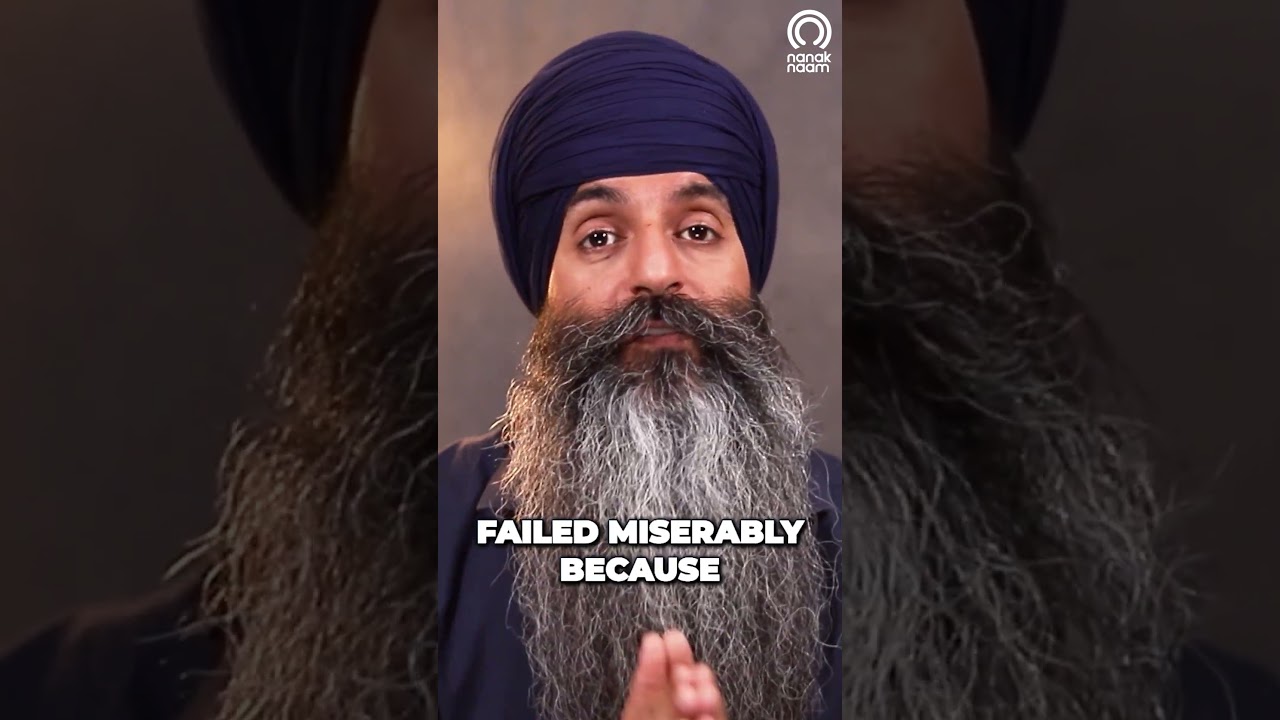
The Sikh guru path teaches that sustained meditation—or naam simran (remembrance of the divine name)—should continue throughout daily activities rather than being confined to morning sessions. Unlike monastic traditions where practitioners withdraw from the world, the guru recommends integration of spiritual practice within maya (worldly life). The core technique involves reciting the divine name silently or aloud during routine activities that don't require full mental attention: driving, cooking, washing dishes, or any automatic task. Success depends on shifting the mindset at the end of formal practice (rather than treating it as "done") and gradually training the mind to hold the practice continuously.

Lettura · 7 sezioni

Why the Guru Recommends the Hardest Path

The foundation of this teaching rests on a historical and theological choice. As Bhai Satpal Singh explains, spiritual masters before the Sikh gurus—including Buddha and other advanced meditators—achieved profound meditative states (gan, or union with the divine) but extracted themselves from worldly life to do so. They lived as sadhus or monks, removing themselves from maya entirely. These approaches worked for individuals willing to renounce normal responsibilities, but they created a spiritual path accessible only to a monastic minority.

The Sikh guru recognized this limitation and chose differently. Rather than giving followers an "easy path" of withdrawal, the guru deliberately offers what Satpal Singh calls "the hardest path"—one that operates within maya. This is significant: the path is harder precisely because it demands integration, not escape. A person raising a family, working a job, managing household duties, and handling financial obligations still must maintain spiritual continuity. The guru's rationale was practical: this technique is "for everyone in our everyday practice." It doesn't require leaving your job or entering a monastery.

The Mental Switch-Off That Ends Continuous Practice

One of the most concrete obstacles Satpal Singh identifies is what happens at the moment formal practice concludes. When a practitioner closes their holy text (gutka) after reciting morning prayers (nitnem) or finishes their meditation session, a psychological mechanism activates: thank you, I've done my duty; now I can start my day. This mental switch creates a barrier between "meditation time" and "worldly time."

The teaching here is not to fully stop. Instead, at the moment you would normally cease practice—even if you're only sitting for five minutes—extend the simran (remembrance) for another minute or two. More importantly, as you rise from your seat and move into the day's activities, do not complete the simran. Keep it going. This reframes the boundary: the practice doesn't end; it transitions.

How to Extend Simran Into Routine Activities

The practical method relies on understanding where your mind actually needs to be. Satpal Singh makes an important distinction: the mind can hold two simultaneous activities only when one requires minimal cognitive engagement. He gives several examples:

  • Driving: You can drive while reciting the divine name—unless you're actively calculating directions or having a focused conversation that requires attention.
  • Washing dishes: The physical motion requires no sustained thought; your mind is free to hold the simran.
  • Cooking, showering, brushing teeth: Routine hygiene and meal preparation don't demand continuous mental focus.
  • Hoovering or household chores: Physical labor that becomes automatic is ideal for extended practice.

Satpal Singh emphasizes that "the majority of the day we don't actually have to use our mind. Our mind is just going in all directions because it's free." This observation is key: you're not adding a burden; you're redirecting what your mind is already doing. When you're not in conversation with a client, solving calculations, or engaging in work that demands cognitive focus, your mind defaults to wandering. The practice is to give it a single, sustained anchor instead.

Beginning With Loud Recitation, Moving to Silent Practice

Satpal Singh provides a concrete starting point: "Start by doing it out loud." This means audibly reciting the divine name (Waheguru, or similar phrases used in Sikh practice) while performing daily tasks. Doing this aloud creates a stronger neural and psychological anchor—it's harder for the mind to drift when your voice is engaged. Once this becomes established habit, the recitation can gradually become whispered, then silently internal. But the beginning requires external reinforcement.

The progression is gradual. Satpal Singh notes that "none of this falls straight away." There is no sudden shift into 24-hour meditation. Instead, practitioners must build the habit incrementally, establishing the practice in one or two routine activities, then expanding to others over weeks or months.

Addressing the "Why Haven't I Achieved This Yet?" Mindset

Satpal Singh acknowledges a common frustration: "So many people have achieved it. Why am I the only one that hasn't achieved it?" His response reframes the issue. This is not the easy path. The path of withdrawal into caves or mountains is, in some ways, simpler—you remove external distractions. The path of maintaining spiritual continuity while holding a job, managing relationships, and handling worldly responsibilities is genuinely difficult. But it is the path the guru gave, and it is possible.

What prevents many people is not incapacity but the mindset that creates separation between "my spiritual time" and "my worldly time." Breaking this separation requires daily, moment-to-moment choice: in the shower, recite; while eating, recite; while walking to your car, recite. Not in a forced or guilt-ridden way, but as a gentle, continuous return to practice.

Why This Practice Is Designed for Householders

The historical context matters here. Sikh philosophy explicitly values the householder path—those who raise families, earn livelihood, and participate in society. The guru's teaching on continuous simran directly addresses this population. You don't have to quit your job to be spiritual. You don't have to retreat to ashrams or monasteries to deepen your practice. Instead, you integrate the practice into the existing structure of your life, and through that integration, you develop a meditation that never stops.

This is the radical democratization of a spiritual path that other traditions reserved for renunciates. It means 24-hour meditation is not for monks alone; it is available to anyone willing to redirect their mind during tasks that don't demand focused thought.

Where to Go From Here

If this teaching resonates, begin with one routine activity: perhaps your morning commute, or the time you spend preparing breakfast. Choose something you do daily and that doesn't demand your full attention. Recite the divine name aloud or in a whisper during this time for one week. Once it feels natural, add a second activity. Gradually expand the practice across your day. After weeks or months, you may notice that simran has become a background awareness—not something you have to "do" but something that is simply happening. This is the point at which 24-hour meditation begins to take root.

The goal is not perfection or constant recitation with zero lapses. The goal is a fundamental retraining of how your mind spends its free moments—redirecting it from distraction toward a single, continuous focus. The guru recommends this path precisely because it is possible within maya, within your normal life, without requiring you to abandon the world.

Comments

Loading the conversation…

Transcript

[0:00] The first thing to acknowledge is that

[0:03] the reason we're in this battle is

[0:06] because this is the battle that the guru

[0:08] recommends. Yeah. We don't come from a

[0:11] tradition where the guru says take

[0:12] yourself away from maya and go sit in a

[0:15] mountain somewhere and just do

[0:16] meditation cuz you could take yourself

[0:18] away from all of your work and your your

[0:21] commitments and just go sit in a

[0:23] mountain somewhere. But the guru doesn't

[0:24] recommend that technique to us. So we

[0:27] have to take comfort in the fact that

[0:28] actually we're doing even living our

[0:30] worldly life we're doing what the guru

[0:32] recommends because the guru's experience

[0:34] that. So guru talks about the hardest

[0:37] path is the one which is within maya the

[0:40] most challenging path. So why would the

[0:43] guru give us the most challenging path?

[0:46] The reason the guru gives us the most

[0:47] challenging path is because all the

[0:50] meditators the sadhus before them took

[0:52] themsel out of maya. Look at Buddha.

[0:54] Look at all of these great meditators.

[0:56] They they were all achieving the same

[0:58] level of gan, the same merging, but they

[1:02] never found a way that was for everyone.

[1:06] So the guru has given us a technique

[1:08] that's for everyone in our everyday

[1:10] practice. And the technique is n. So the

[1:14] guru gives us a technique that while

[1:16] you're in your work, nam siman has to be

[1:20] going on. You have to be actually saying

[1:22] in arms siman while you're just doing

[1:24] everyday things. So you're chopping your

[1:26] wood or whatever it is that you're

[1:27] working on that that technique

[1:32] has to be where you have to get so

[1:35] comfortable with doing siman in Maya and

[1:39] taking yourself out of maya. Now one of

[1:42] the ways to do that is again part of

[1:44] mindset. You know if you're sitting in

[1:47] the ga early in the morning or if you're

[1:49] sitting at home and you're reading your

[1:50] nitnim one of the biggest mistakes that

[1:52] we do is when we close our gutka when we

[1:55] stop our nitname and we do the fat ka

[1:59] fat there's a switch off mechanism in

[2:01] our mind that says nitname done now I

[2:04] can start my day that's the barrier the

[2:07] point at which you stop your nitname and

[2:10] that bit when you close the gka and you

[2:12] say your fate that's a part of your mind

[2:15] that says

[2:16] Okay, thank you. I've done my duty. Now

[2:18] go do your worldly duty. That is a very

[2:21] significant thing that we do which we

[2:23] should be mindful of when you stop your

[2:26] siman in the morning and even if it's

[2:28] get up for 5 minutes give yourself 5

[2:30] minutes before you get out of bed you

[2:31] just say wuru for a couple of minutes

[2:33] whatever it is that is our practice

[2:36] when you finish it don't finish it

[2:39] what I mean by that is as soon as you

[2:41] stop sitting there doing that nitanim

[2:44] keep that nitanim going keep the sim

[2:47] going so you go to the bathroom you're

[2:49] brushing your teeth. Why group? Why

[2:50] group? Why group? Having a shower. Why

[2:52] group? Why group? Eating breakfast.

[2:54] Yeah. Then we have to get into the habit

[2:56] of doing this. None of this falls

[2:58] straight away. Yeah. And nobody's saying

[3:00] that, you know, it's easy or it's like,

[3:02] you know, so it's so many people have

[3:04] achieved it. Why am I the only one that

[3:05] hasn't achieved it? No. This isn't the

[3:07] easy path. But the path is to have it

[3:10] within Maya. And part part of that is

[3:12] actually every day, every moment, we

[3:15] have to try and find a way that we can

[3:17] incorporate what the guru teach us

[3:19] teaches us in everyday life. And the way

[3:22] that I found out is that if you're just

[3:25] doing any activity,

[3:27] anything that doesn't require you to be

[3:29] having a a thought right now, you know,

[3:31] like when you're driving, you can be

[3:33] driving and not really, you don't your

[3:35] mind is all over the you can be planning

[3:36] a holiday while you're driving, but you

[3:38] can also be doing siman at the same

[3:40] time. So unless you're having a

[3:42] conversation with a client or something

[3:44] like that and that needs your mind to be

[3:45] aware or you're actually figuring out

[3:47] some calculations something that's when

[3:49] you can't do something that's because

[3:50] you're having to literally work and use

[3:52] your mind. But the majority of the day

[3:54] we don't actually have to use our mind.

[3:56] Our mind is just going in all directions

[3:59] because it's free. When you're washing

[4:01] the dishes at home, when you're cooking,

[4:02] all these things don't really require a

[4:04] lot of mental focus. That kind of stuff

[4:08] can happen even when you're hoovering or

[4:09] whatever you're doing at home. So during

[4:13] those times we have to get into the

[4:15] habit of just reciting n. And how do you

[4:18] start that? Start by doing it out loud.

[4:20] Start doing it out loud and then slowly

[4:22] slowly it should become part of the

[4:23] everyday practice.

Nanak Naam
ArtistNanak Naam

Nanak Naam is a UK charity, founded by SathPaal Singh in 2013, sharing Guru Nanak's teachings of Oneness through meditation, mindfulness, free courses, videos and music.

Vedi il profiloSito web
Esplora i temi
Naam-simranSikh-meditationDaily-practiceMindfulnessMaya-worldly-life

Hai domande?

Domande frequenti

Yes, according to Sikh practice, you can hold simran (divine remembrance) during any routine activity that doesn't require active thought—cooking, driving, showering, or household chores. The key is that your mind must be free; if you're problem-solving or having a focused conversation, that's when you can't maintain the practice. Most of the day requires less mental attention than we assume, so there's usually space to sustain the recitation.
The Sikh guru deliberately chose the harder path: sustaining meditation *within* worldly life rather than renouncing it. While monks and previous meditators found ways to achieve profound union with the divine, they didn't create a path accessible to householders with jobs and families. The guru's approach makes spiritual depth available to everyone, not just renunciates.
When you finish your morning meditation or prayer session and close your holy text, your mind creates a 'switch-off' that signals 'my spiritual duty is complete, now I can do worldly things.' This separation between meditation time and daily life is the key barrier. The solution is to not fully stop the practice—keep it flowing into your daily activities instead of treating it as finished.
Start with loud or whispered recitation during one routine daily activity—perhaps your morning commute or breakfast preparation. Once it becomes habitual, gradually shift to silent internal recitation and expand to other activities. The practice is progressive and takes weeks or months to establish; there's no sudden jump into 24-hour meditation.
Yes. This teaching is specifically for householders managing jobs, families, and worldly responsibilities. It's harder than monastic meditation because you're not removing yourself from distractions, but it's designed to be integrated into normal life. You don't have to be perfect; the goal is to gradually train your mind to hold the practice during the moments when your attention is free.
Many traditions teach meditation as a separate practice—you meditate for 30 minutes, then stop. The Sikh approach using naam simran is designed to be continuous throughout your day, embedded in householder life. Rather than creating a boundary between spiritual and worldly, it integrates them, so your awareness of the divine is meant to persist while you work, eat, and handle daily tasks.

Continua a leggere

More from Nanak

Vedi Tutto
Sehaj: The Inner Peace Beyond Numbness
Inspire

Sehaj: The Inner Peace Beyond Numbness

Discover why emotional numbness persists even after trauma healing, and how Gurbani's concept of Sehaj reveals true spiritual peace through …

1 min read
Taking Life Too Seriously: Why External Fixes Fail
Inspire

Taking Life Too Seriously: Why External Fixes Fail

When you treat every problem as something to fix externally, you enter an unwinnable game. Gurmat teaches that inner mental state must come …

1 min read
Guided Meditation: Resting in Reality Within the Body
Inspire

Guided Meditation: Resting in Reality Within the Body

A 23-minute guided meditation practice that returns attention to embodied presence, using body scan, breath, and sound to rest in the living…

1 min read
Trusting the Gold: Awakening Your Intrinsic Goodness
Inspire

Trusting the Gold: Awakening Your Intrinsic Goodness

Discover how to awaken from the trance of unworthiness and recognize the loving awareness already living within you, beyond the stories that…

1 min read

Continua a esplorare

Continua il tuo viaggio

Altra saggezza e altri incontri da tutta la directory BrightStar.

Altri articoli

Sfoglia l’intera raccolta di insegnamenti, interviste e guide.

Torna a tutti gli articoli →

Insegnanti e artisti

Esplora i lignaggi, i musicisti e le guide del mondo consapevole.

Esplora gli artisti →

Trova un evento

Kirtan, ritiri, sound bath, breathwork, festival: in arrivo presto.

Sfoglia gli eventi →