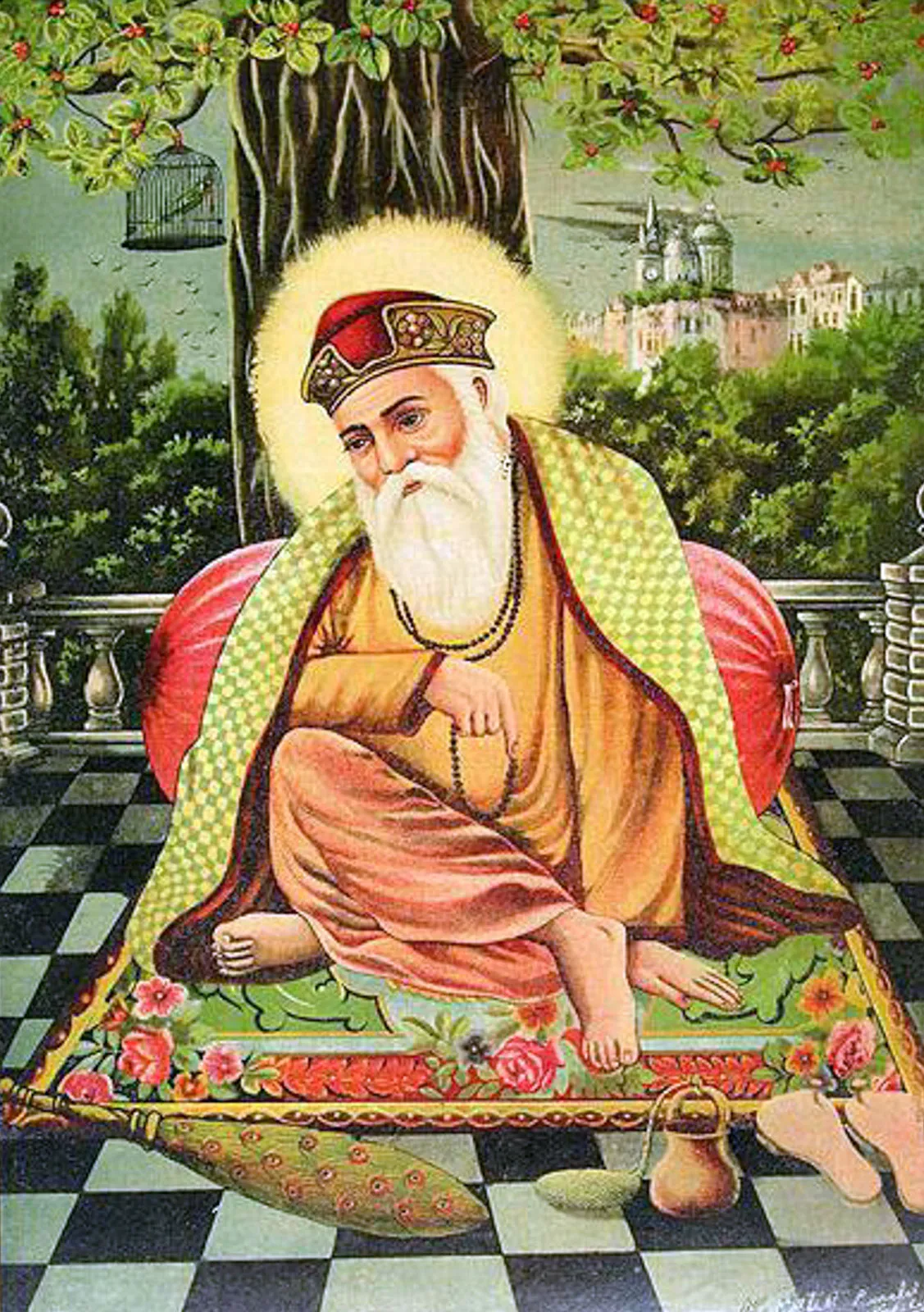
The Depth of Praise: Understanding Guru Nanak's Wisdom
In the quote, "Some sing of His power — who has that power? Some sing of His gifts — who can know the value?" Guru Nanak invites us to reflect on the nature of divine power and the gifts bestowed upon us. He challenges the superficial understanding of these concepts, urging us to delve deeper into their essence. This inquiry is not merely academic; it touches the core of our spiritual journey, prompting us to question our perceptions and the value we assign to the divine.
By questioning who possesses the power and who can truly appreciate the gifts, Guru Nanak emphasizes the limitations of human understanding. This quote serves as a reminder that the divine is beyond our grasp, and our attempts to articulate it often fall short. In a world where we often seek tangible proof and clear definitions, Nanak's words invite us to embrace the mystery and wonder that lie at the heart of spirituality.
The image / the metaphor
The imagery in Guru Nanak's quote is rich and layered. The act of singing, often associated with joy and celebration, contrasts with the profound questions he poses about power and value. The verbs "sing" and "know" suggest a dynamic interplay between expression and understanding, highlighting the limitations of our language and comprehension when it comes to the divine. The power he refers to is not merely a force to be wielded but a profound presence that transcends human experience.
Delving deeper into the metaphor, we see that the "power" and "gifts" symbolize the divine qualities that are often celebrated in religious traditions. However, Nanak's inquiry prompts us to consider the nature of these attributes. Are they to be understood as possessions or as expressions of a deeper reality? This distinction invites us to move beyond a transactional view of spirituality, where power and gifts are commodities, towards a more relational understanding that emphasizes connection and reverence.
In the speaker's tradition
Guru Nanak's teachings are rooted in the Sikh tradition, which emphasizes the interconnectedness of all beings and the importance of living in harmony with the divine. Concepts such as dharma, or righteous living, and bhakti, the path of devotion, resonate deeply with the essence of this quote. Nanak's perspective encourages us to recognize that true power lies not in domination or control but in humility and surrender to the divine will, a theme echoed throughout Sikh scripture.
In the Japji Sahib, from which this quote is drawn, Nanak articulates a vision of spirituality that transcends dogma and invites seekers to experience the divine directly. His emphasis on the ineffable nature of the divine aligns with the concept of sunyata, or emptiness, found in various spiritual traditions. This emptiness is not a void but a space of potential, where the divine can be encountered beyond the limitations of language and conceptualization.
Living the teaching
Consider a modern scenario where this teaching resonates: a moment of awe in nature, perhaps standing before a vast mountain range or gazing at a star-filled sky. In such moments, we often feel a sense of the sublime, a recognition of something greater than ourselves. Yet, how often do we attempt to articulate that experience? Guru Nanak's words remind us that the power of these moments cannot be fully captured in words; they invite us to embrace the mystery and wonder without the need for explanation or validation.
In relationships, this teaching can manifest as a deeper appreciation for the gifts we receive from others. When we acknowledge the inherent value of love, kindness, and support, we begin to understand that these gifts are not merely transactional but expressions of a profound connection. In difficult moments, when misunderstandings arise, we can return to Nanak's wisdom, recognizing that the true power of our relationships lies in our ability to appreciate the depth of what we share, rather than getting lost in the surface-level conflicts.
A reflection
As we contemplate Guru Nanak's profound inquiry, we are invited to reflect on our own understanding of power and gifts in our spiritual lives. What does it mean to truly appreciate the divine presence in our lives? How can we move beyond mere acknowledgment to a deeper experience of connection and reverence? In this spirit, consider this contemplative question: In what ways can you embrace the mystery of the divine, allowing it to enrich your understanding and appreciation of life’s gifts?


