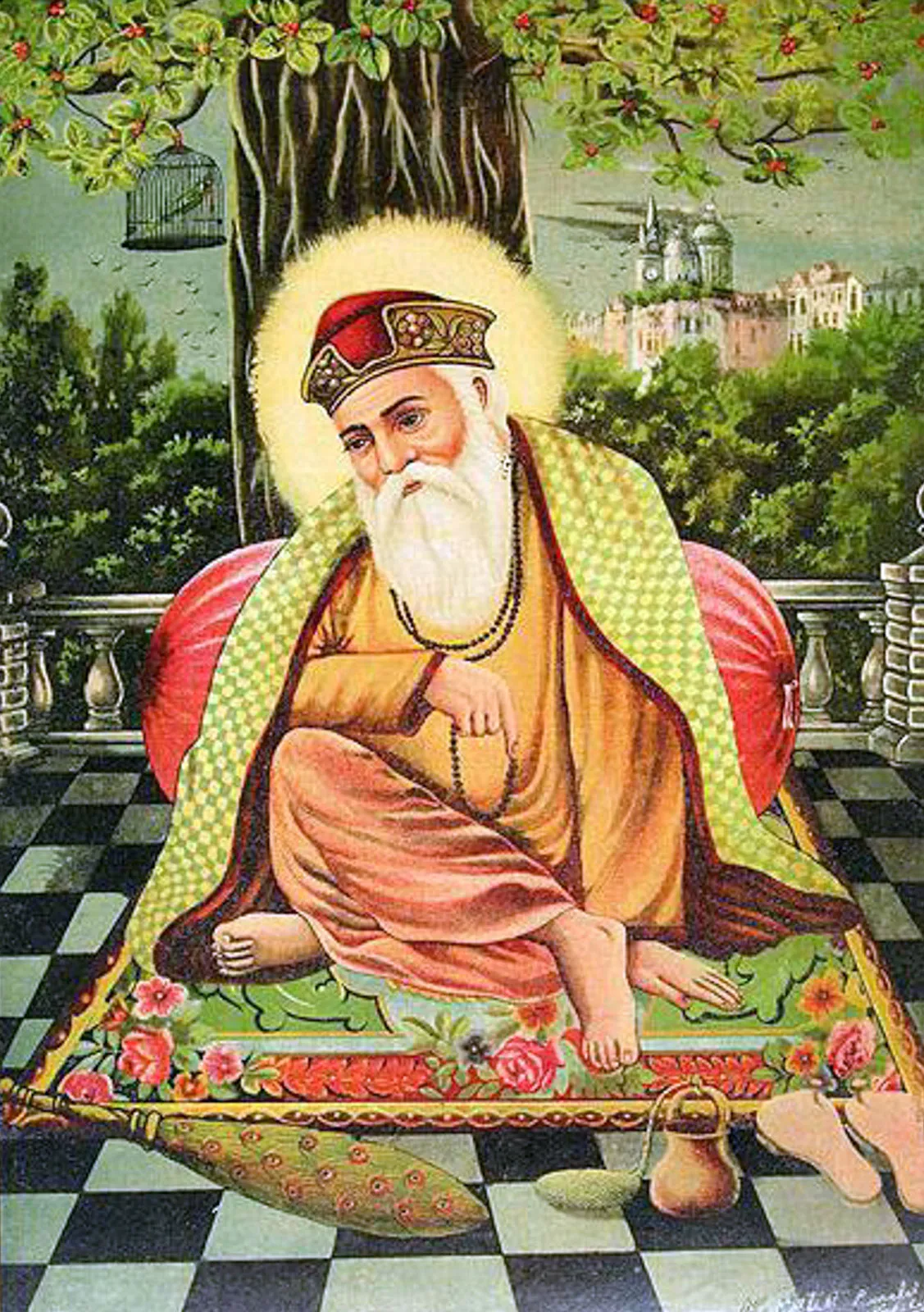
The Unwritten Essence of Faith
Guru Nanak's profound assertion, "No paper, no pen, no scribe can record the state of the faithful," invites us to contemplate the limitations of language and the ineffable nature of true faith. This statement underscores the idea that the essence of spiritual experience transcends mere words and cannot be fully encapsulated by any written account. In a world increasingly reliant on documentation and validation, this wisdom serves as a reminder of the deeper, unquantifiable dimensions of our spiritual journeys.
In a society that often prioritizes tangible evidence and articulate expression, Guru Nanak's words challenge us to recognize the profound mystery inherent in faith. The state of being faithful is not a checklist of beliefs or practices but rather an intimate, personal experience that defies articulation. This quote beckons us to explore the depths of our own faith, urging us to embrace the mystery that lies beyond the confines of language and to seek a connection with the divine that is felt rather than spoken.
The image / the metaphor
At first glance, the imagery in Guru Nanak's quote evokes a sense of futility in attempting to capture the essence of faith through conventional means. The mention of "paper," "pen," and "scribe" conjures images of the written word, which is often seen as the ultimate tool for recording thoughts and experiences. Yet, the verbs chosen—"record"—imply a sense of limitation, suggesting that the true state of the faithful is an experience that eludes documentation. This evokes a felt sense of longing, as if the heart yearns to express something that remains just beyond the reach of language.
Diving deeper into the metaphor, we can see that Guru Nanak is not merely critiquing the act of writing; he is illuminating the profound gap between the ineffable nature of spiritual experience and the finite capacity of human expression. Faith, in its truest form, is a living, breathing entity that cannot be pinned down or confined to the pages of a book. It is a dynamic relationship with the divine, characterized by moments of grace, doubt, joy, and sorrow—elements that cannot be fully captured in words. This metaphor invites us to embrace the mystery of faith, recognizing that some experiences are meant to be felt deeply rather than articulated clearly.
In the speaker's tradition
Guru Nanak's teachings are deeply rooted in the Sikh tradition, which emphasizes the importance of personal experience and direct connection with the divine. Concepts such as dharma, or righteous living, and bhakti, the devotional love for God, resonate with the idea that faith is an experiential journey rather than a set of doctrines. In Sikhism, the notion of kenosis—self-emptying to allow for divine presence—aligns with the understanding that true faith requires surrendering the ego and embracing the mystery of the divine. This surrender is not merely an intellectual exercise but a heartfelt engagement with the sacred.
In the Japji Sahib, the foundational text of Sikhism, Guru Nanak articulates the importance of experiencing the divine through meditation and contemplation. He emphasizes that the true essence of spirituality cannot be confined to rituals or external expressions but is found in the inner experience of the seeker. This aligns with the idea that the state of the faithful is a deeply personal journey, one that transcends the limitations of language and written records. The teachings of Guru Nanak invite us to explore our own spiritual paths with openness and humility, recognizing that the divine often reveals itself in ways that defy our attempts to articulate or document.
Living the teaching
Consider a modern scenario where this teaching resonates: a moment of profound connection during a quiet walk in nature. As you breathe in the crisp air and observe the beauty around you, there may be a sense of peace and belonging that words cannot capture. In this experience, the essence of faith is felt in the stillness and the connection to something greater than oneself. It is a reminder that while we may seek to express our spirituality through words or actions, the most profound moments often exist beyond the realm of articulation, inviting us to simply be present.
In the context of relationships, this teaching can manifest during times of conflict or misunderstanding. When words fail to convey the depth of our feelings, we may find ourselves at a loss for how to communicate our love or hurt. In such moments, embracing the ineffable nature of our emotions can lead to deeper understanding and connection. Rather than relying solely on verbal communication, we can express our faith in the relationship through acts of kindness, presence, and empathy, recognizing that the essence of our bond transcends the limitations of language.
A reflection
As we reflect on Guru Nanak's profound statement, we are invited to consider the ways in which we experience and express our own faith. What moments in your life have felt too sacred or profound to articulate? How can you embrace the mystery of your spiritual journey, allowing yourself to feel deeply without the need for documentation or explanation? In this exploration, may we find a deeper connection to the divine that transcends the written word, inviting us into a more profound relationship with faith itself.


