SportsCampFinder

Parcourir tous les Camps

Find the perfect camp for your athlete

camps

Basketball Camps
Soccer Camps
Baseball Camps
Football Camps
Volleyball Camps
Lacrosse Camps
Multi-Sport Camps
Elite Training
Overnight Camps
Day Camps
Destinations populaires
BaliSedonaLos AngelesCosta RicaNew YorkSan FranciscoAustinMiamiJoshua TreeTulum
Voir toutes les catégoriesVoir toutes les destinations

Explorer toutes les fonctionnalités

Des outils puissants pour développer tes événements

Fonctionnalités de la plateforme

Tarification dynamique intelligente
Catégories de billets
Places assignées
Récupération des paniers abandonnés
Récupération des visiteurs
Dons & Prix variables
Système d'affiliation
Scanner de billets
Codes promo
Questions personnalisées
Partage de billets
Ventes additionnelles & Options
Analyses & Rapports
Séquences d'emails
Liste d'attente / Notifier / Rappeler
Personnes & Lieux
Camp OrganizersCamp FacilitiesKnowledge BaseInspiration
Voir toutes les fonctionnalitésÀ propos
TarifsBlog
Language
Saved events
Parcourir tous les événements

camps

Basketball CampsSoccer CampsBaseball CampsFootball CampsVolleyball CampsLacrosse CampsMulti-Sport CampsElite Training

Destinations populaires

BaliSedonaLos AngelesCosta RicaNew YorkSan Francisco

Personnes & Lieux

Camp OrganizersCamp FacilitiesKnowledge BaseInspiration

Fonctionnalités de la plateforme

Tarification dynamique intelligenteCatégories de billetsPlaces assignéesRécupération des paniers abandonnésRécupération des visiteursDons & Prix variablesSystème d'affiliationScanner de billetsCodes promoQuestions personnaliséesPartage de billetsVentes additionnelles & OptionsAnalyses & RapportsSéquences d'emailsListe d'attente / Notifier / Rappeler
Voir toutes les fonctionnalitésÀ propos
TarifsBlog
ConnexionParents & athletesCamp directors
  • Browse all camps
  • Basketball Camps
  • Soccer Camps
  • Baseball Camps
  • Football Camps
  • Volleyball Camps
  • Lacrosse Camps
  • Multi-Sport Camps
  • Elite Training
  • All sports →
  • Orlando
  • Los Angeles
  • New York Metro
  • Dallas / Fort Worth
  • Chicago
  • Phoenix / Scottsdale
  • Atlanta
  • Denver
  • Seattle
  • Boston
  • Houston
  • Philadelphia
  • San Diego
  • Minneapolis / St. Paul
  • Toutes les villes →
  • List your camp
  • Camp director dashboard
  • Pricing
  • Coaches & academies
  • Online registration & payments
  • Waivers & medical forms
  • Check-in app
  • Family messaging
  • Waitlist & notify
  • Camp marketing
  • Reports
  • All features →
  • About SportsCampFinder
  • Camp guides
  • Help Center
  • Contact
  • Careers
  • Press
  • Conditions d'utilisation
  • Politique de confidentialité

Camps

  • Browse all camps
  • Basketball Camps
  • Soccer Camps
  • Baseball Camps
  • Football Camps
  • Volleyball Camps
  • Lacrosse Camps
  • Multi-Sport Camps
  • Elite Training
  • All sports →

Destinations

  • Orlando
  • Los Angeles
  • New York Metro
  • Dallas / Fort Worth
  • Chicago
  • Phoenix / Scottsdale
  • Atlanta
  • Denver
  • Seattle
  • Boston
  • Houston
  • Philadelphia
  • San Diego
  • Minneapolis / St. Paul
  • Toutes les villes →

Pour Camp directors

  • List your camp
  • Camp director dashboard
  • Pricing
  • Coaches & academies

Fonctionnalités

  • Online registration & payments
  • Waivers & medical forms
  • Check-in app
  • Family messaging
  • Waitlist & notify
  • Camp marketing
  • Reports
  • All features →

Entreprise

  • About SportsCampFinder
  • Camp guides
  • Help Center
  • Contact
  • Careers
  • Press
  • Conditions d'utilisation
  • Politique de confidentialité
SportsCampFinder
© 2026 SportsCampFinder. Tous droits réservés.
Back to Karmapa
Karmapa's Teaching: Approach, Method, and Voice
Teaching

Karmapa's Teaching: Approach, Method, and Voice

A teaching session with the 17th Karmapa, Ogyen Trinley Dorje, typically unfolds without theatrics. He sits, often in traditional robes, sometimes in casual dress, and begins speaking in a measured cadence that suggests the weight of a lineage stretching back…

Karmapa
Karmapa
Jul 18, 2026
4 min de lecture
Lecture · 4 sections

Karmapa's Teaching: Approach, Method, and Voice

A teaching session with the 17th Karmapa, Ogyen Trinley Dorje, typically unfolds without theatrics. He sits, often in traditional robes, sometimes in casual dress, and begins speaking in a measured cadence that suggests the weight of a lineage stretching back nine centuries. His delivery is neither austere nor overly warm—there is formality, but it bends. A retreat with him might include extended periods of silent meditation punctuated by teachings that toggle between classical Buddhist philosophy and unexpectedly concrete discussions: the ethics of meat consumption, the mechanics of institutional corruption, the way anger lives in the body. He does not rush. Silence is structural, not accidental. When he pauses, it is to let a point settle, not to perform gravitas.

The Karmapa belongs to the Karma Kagyu lineage, one of the four major schools of Tibetan Buddhism, and his teaching style reflects its emphasis on direct experience over scholastic elaboration. Mahamudra—the "great seal" meditation tradition central to Kagyu practice—prioritizes recognizing the nature of mind through sustained contemplation rather than doctrinal mastery. This shapes his method: he will cite scripture, but he more often circles back to the question of what you are actually doing when you sit down to meditate. What are you bringing to the cushion? What are you avoiding? He pushes students to examine their motivation, not as a moral audit but as a diagnostic tool. Why are you here? What do you want from this practice? The questions are not rhetorical.

Recurring Themes and Concerns

Environmental collapse appears frequently in his teachings, not as a side topic but as a moral emergency continuous with Buddhist ethics. He draws the connection plainly: interdependence is not metaphor. If all beings are connected, then the destruction of ecosystems is a failure of compassion at scale. He has spoken about reducing meat consumption, about the carbon footprint of large religious gatherings, about the complicity of silence. This is not the language of traditional dharma talks, and it can feel jarring to students expecting purely contemplative instruction.

Gender inequality within Buddhist institutions is another thread he returns to, sometimes with visible frustration. He has publicly supported full ordination for women in Tibetan Buddhism, a position that places him at odds with conservative elements of his own tradition. His critiques are measured but clear: institutional inertia is not the same as doctrinal necessity. The question he leaves hanging: if Buddhism teaches the dissolution of ego and the equality of all beings, why do its power structures contradict this?

Nonviolence, in his teaching, is both principle and practice. He speaks often about anger—not to demonize it, but to anatomize it. Where does it come from? What does it cost? He draws on Shantideva's Bodhisattvacharyavatara, but he also talks about geopolitics, about Tibet, about the ethics of resistance. He does not offer easy answers. The question persists: how do you hold both compassion and accountability?

Aesthetic and Delivery

Humor exists in his teaching but arrives obliquely. A wry comment about the absurdity of celebrity lamas. A self-deprecating aside about his own impatience. He does not perform levity; it surfaces when the tension of a difficult teaching needs puncturing. Story is present but not dominant—he will relate a Jataka tale or a lineage anecdote, but more often he works through concepts methodically, building arguments rather than painting parables.

Scripture is cited, but he does not hide behind it. He will quote Nagarjuna or Gampopa and then pivot to contemporary application. The Uttaratantra Shastra on Buddha-nature becomes a lens for examining self-hatred. The Abhidharma becomes a framework for understanding digital distraction. He assumes his students can handle complexity. There is little coddling.

His voice on digital platforms—YouTube, Instagram—extends this approach. The production is clean but unadorned. He speaks directly to the camera, often from a simple room. The content is teaching, not branding. This is consistent with his broader aesthetic: clarity over charisma.

Who It Lands For

This teaching appeals to practitioners who want rigor without scholasticism, tradition without nostalgia. It suits people who are uncomfortable with guru devotion as pageantry but still want lineage transmission. Those drawn to socially engaged Buddhism, to the intersection of contemplative practice and systemic critique, will find traction here.

It may not land for students seeking ecstatic experience, for those who want teaching to feel like balm rather than challenge. His refusal to soften difficult questions—about complicity, about motivation, about the gap between belief and action—can feel confrontational. If you come wanting reassurance, you may leave unsettled. That appears to be intentional. The Karmapa teaches as though the stakes are high, because in his framework, they are.
Karmapa
AboutKarmapa

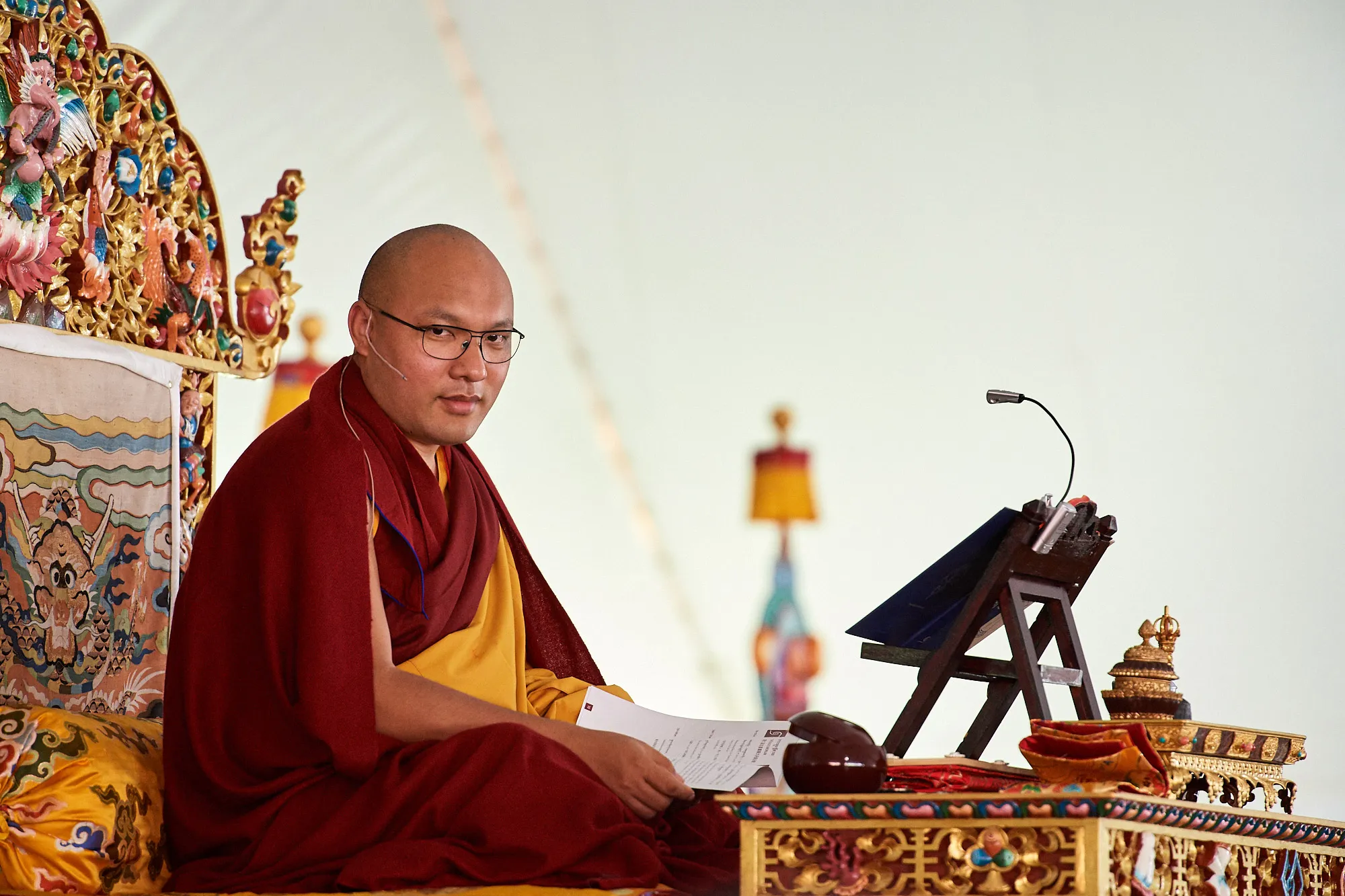
Ogyen Trinley Dorje is the 17th Gyalwang Karmapa, the head of the Karma Kagyu lineage of Tibetan Buddhism. He teaches on the Dharma through both traditional monastery settings and…

Voir le profilSite web

Continuer la lecture

More about Karmapa

Voir tout
Where to Start with Karmapa: A Beginner's Guide
Article

Where to Start with Karmapa: A Beginner's Guide

Who Is Karmapa? Life, Work, and Legacy
Article

Who Is Karmapa? Life, Work, and Legacy

Continue d’explorer

Poursuis ton chemin

Plus de sagesse et de rassemblements dans tout l’annuaire BrightStar.

Plus d’articles

Parcours toute la bibliothèque d’enseignements, d’entretiens et de guides.

Retour à tous les articles →

Enseignants et artistes

Découvre les lignées, les musiciens et les guides du monde conscient.

Explorer les artistes →

Trouver un événement

Kirtan, retraites, bains sonores, breathwork, festivals — bientôt près de chez toi.

Parcourir les événements →