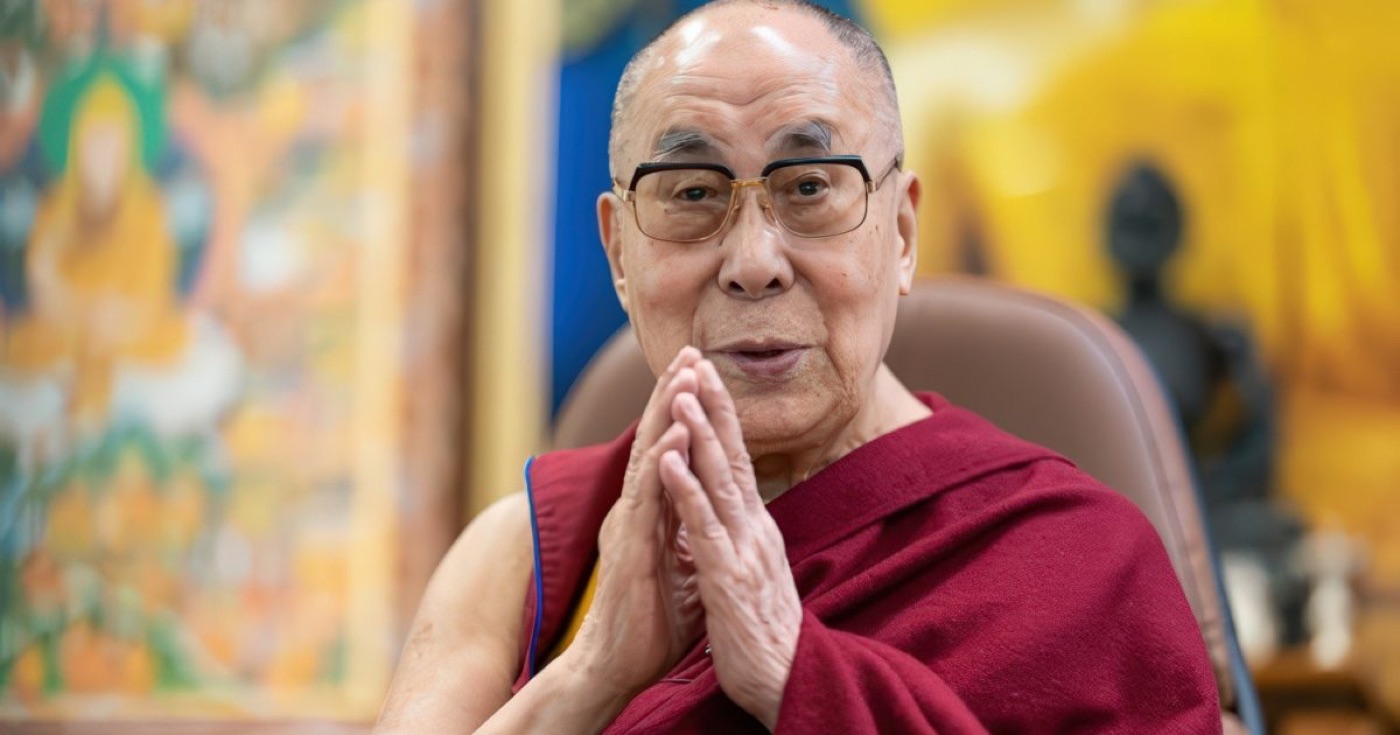

Dalai Lama's Teaching: Approach, Method, and Voice
A teaching session with the Dalai Lama rarely begins with stillness. There is laughter first—sometimes at himself, sometimes at a translator's fumbling, sometimes at the absurdity of certain questions. Then comes the settled quality, the shift into transmission mode. What follows is not mysticism but something closer to a graduate seminar: careful unpacking of texts, distinctions drawn between subtle philosophical positions, and an insistence that students think rather than simply absorb. A two-hour teaching might involve thirty minutes on a single stanza from Śāntideva's Bodhisattvacharyāvatāra, with each word examined for its implications about the nature of self, phenomena, and ethical action.
The physical environment matters less than the method. Whether in Dharamsala, a hotel ballroom in New Jersey, or a stadium in Mongolia, the structure remains consistent: scriptural citation, logical analysis, and direct challenge to habitual thinking. He references the Nalanda masters—Nāgārjuna on emptiness, Dharmakīrti on epistemology—as living conversation partners rather than historical artifacts. The teaching unfolds through reasoning rather than revelation, and students are expected to test every proposition against their own experience.
The Core Return
Three themes recur with the regularity of ritual: emptiness, compassion grounded in reasoning, and the cognitive errors that sustain suffering. But these are not presented as inspirational concepts. Emptiness, in his presentation, is a precise philosophical claim about the absence of inherent existence in all phenomena, including the self. He returns repeatedly to dependent origination—the idea that things exist only in relation to causes, conditions, and mental designation—and uses it to dismantle both eternalism and nihilism.
Compassion, for him, cannot rest on sentiment alone. It must be cultivated through understanding the emptiness of the distinction between self and other, through recognizing that the "enemy" who harms you is as trapped in ignorance as you are. The ethical imperative emerges from philosophical analysis, not from commandment. He often quotes the eighth-century master Śāntideva: "All the suffering in the world comes from seeking pleasure for oneself. All the happiness in the world comes from seeking pleasure for others."
The third theme is subtler: the identification of cognitive afflictions—anger, attachment, ignorance—as objects of investigation rather than moral failures. These are treated as philosophical errors about the nature of reality that can be corrected through sustained analytical meditation.
The Questions That Linger
His students are pushed to sit with uncomfortable inquiries: If there is no inherently existing self, who is practicing? If phenomena lack inherent existence, why does ethics matter? Can reason alone lead to liberation, or is devotion necessary? He does not resolve these tensions quickly. The pedagogy assumes that confusion, properly directed, becomes the engine of insight.
He also asks students to examine their own death with forensic attention—not to cultivate fear, but to strip away the assumption of permanence that distorts every decision. What remains valuable if you will die tonight? What changes in your conduct toward others if their existence is as fragile as yours?
The Delivery
His aesthetic is deceptively casual. There is humor—broad and frequent—that punctures solemnity without undermining seriousness. He laughs at dogmatism, at ritual performed without understanding, at the pretensions of teachers who claim special powers. But the laughter gives way to something more exacting: the slow, repetitive work of definition, distinction, and dialectical engagement.
Silence plays almost no role. Where Zen teachers might let a koan hang in the air, he fills the space with clarification. Scripture is cited constantly, but always as premise for argument rather than authority that ends discussion. Stories appear rarely; when they do, they serve as illustrations of philosophical points rather than standalone parables.
Who It Serves, Who It Repels
This teaching lands for those who distrust easy consolation and are willing to treat Buddhism as a philosophical system rather than a therapeutic intervention. It suits people trained in academic rigor, those who want texts and arguments rather than atmosphere and aphorism. It appeals to scientists, scholars, and anyone suspicious of mysticism without rational foundation.
It may bounce off those seeking direct meditative transmission, energetic initiation, or non-conceptual presence. Students drawn to devotional practices, ritual beauty, or the suspension of analytical mind will find his approach austere, even dry. Those wanting immediate experiential shifts rather than long-term cognitive restructuring may feel frustrated by the iterative, gradual nature of the path he describes.
The Lineage
He stands within the Gelug school of Tibetan Buddhism, but his explicit reference point is older and broader: the Nalanda tradition of Indian Buddhist philosophy. By centering the seventeenth masters of Nalanda University, he positions Tibetan Buddhism not as an independent phenomenon but as the living continuation of classical Indian reasoned inquiry into the nature of mind and reality. This is teaching as preservation and argument both—an insistence that liberation is a matter of clear seeing rather than faith alone.