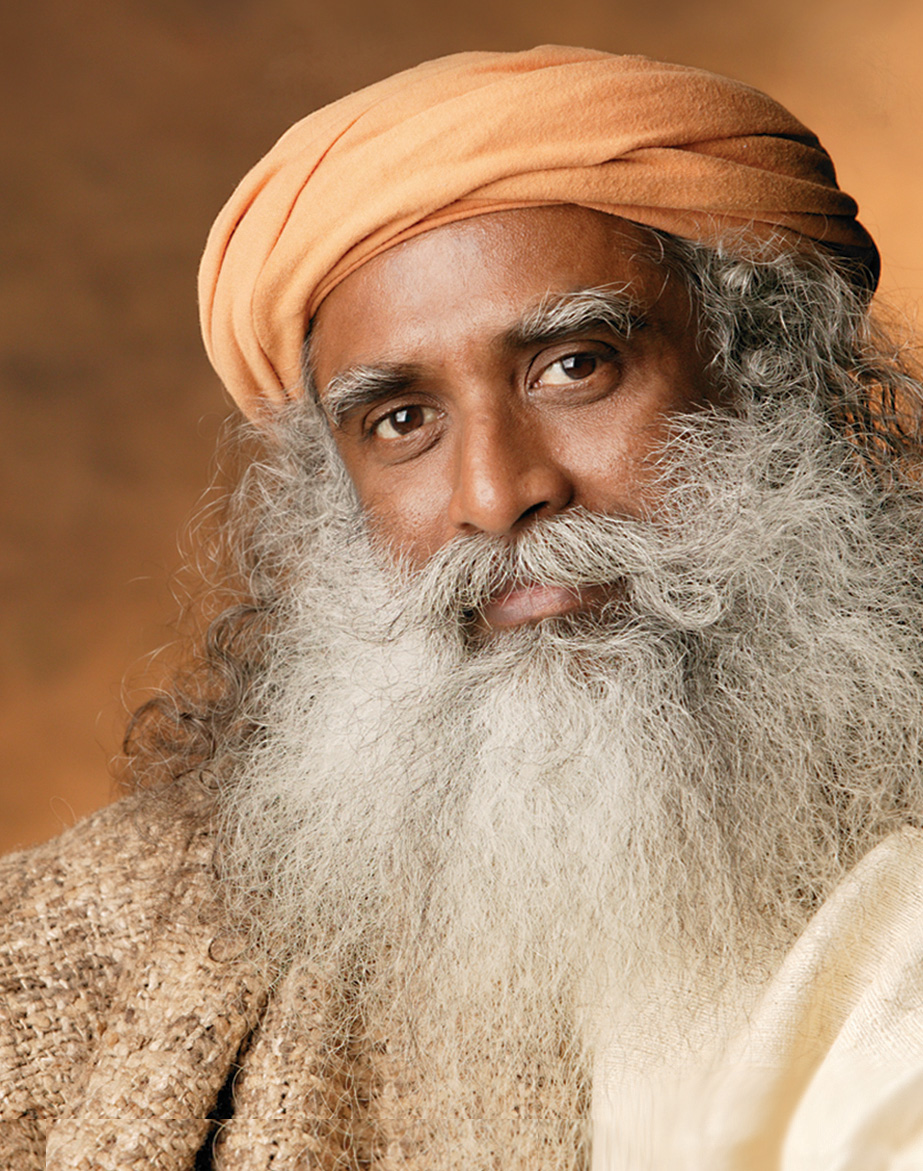
Sadhguru teaches that the mind and emotions constantly seek novelty and change, pulling practitioners in circles that prevent spiritual progress. The core instruction is simple: reach a state of inner joy and clarity, choose a direction consciously, then commit to it without wavering. If you change directions frequently, you reveal disinterest in arriving anywhere—you're merely wandering. This principle applies equally to meditation practice, yoga, career, and relationships: sustained effort in one chosen direction, maintained from a place of genuine joy rather than compulsion, is what produces results.
Why the Mind Creates Circles Instead of Progress
The human mind has a fundamental tendency toward distraction and restlessness. Sadhguru points out that without clear intention and commitment, the mind uses emotions—desire, fear, boredom—as reasons to shift direction repeatedly. A practitioner may begin a meditation practice with enthusiasm, then after weeks abandon it for another technique they discover. They may commit to a guru or teacher, then, when facing an internal challenge, decide that teacher is "not right for them" and seek another. This pattern is not random; it reflects how the mind's survival mechanisms work. The mind evolved to scan for threats and opportunities, which means it naturally leans toward novelty and away from sustained effort.
The consequence is a life spent "making journeys" that never reach their destination. You walk forward for a time, then turn left. You walk that direction briefly, then turn again. After years of such movement, you find yourself near where you started, having expended enormous energy while gaining little ground. Sadhguru emphasizes that this isn't a moral failing—it's a mechanical property of an undisciplined mind. The mind is not the problem; unconsciousness about the mind's patterns is the problem.
What Does It Mean to Choose From Joy and Clarity?
Sadhguru introduces a critical distinction: the choice of direction must come from a state of inner joy and clarity, not from desperation, fear, or the influence of others' opinions. Many people choose a spiritual path because they are suffering and seeking escape. Others choose because they feel obligated or because a teacher or community pressures them. These are weak foundations. When discomfort inevitably arises—as it does in any sustained practice—the practitioner abandons the path, thinking they made the wrong choice.
Joy and clarity as preconditions mean you have tasted, at least briefly, an inner state of wellbeing that isn't dependent on external circumstances. From that foundation, you consciously decide: "This direction—this practice, this teacher, this commitment—aligns with what I wish to explore." The decision comes from something stable within you, not from the turbulent emotions of the moment. This is why Sadhguru speaks of the spiritual path as distinct from therapy or self-help: therapy works with what you have, while the path asks you to touch something beyond the ordinary mind, then choose from there.
The Problem With Frequent Direction Changes
Every time you change direction, you lose momentum. If you practice a meditation technique for three weeks, your nervous system begins to stabilize and your attention begins to sharpen. But if you abandon it for a different technique, you restart the process. Your mind interprets this as validation: "See, that technique wasn't working; I was right to switch." In truth, you were beginning to see depth when you quit. Sadhguru's teaching here is empirical: observe any master craftsperson, athlete, or contemplative, and you will find decades of commitment to one primary method, refined endlessly rather than abandoned for novelty.
There is also a subtle psychological mechanism at play. If you frequently change spiritual directions, you create a narrative that "nothing works for me" or "I haven't found the right path yet." This narrative then becomes self-fulfilling. You never give any path enough time to produce real transformation. You remain in a perpetual state of seeking, which is actually a form of avoiding commitment. Sadhguru suggests that this habit often reflects a deeper unwillingness to change—because changing requires that you surrender control, and the mind resists surrender fiercely.
What Does "Doing Only That" Actually Mean?
Once you have chosen a direction, Sadhguru says you must "do only that." This is not about abandoning all other activities. It means that within the sphere you have chosen—whether a meditation practice, a guru relationship, or a spiritual discipline—you focus your intention exclusively there. You don't practice one technique on Mondays, a different one on Wednesdays, and a third on Fridays. You don't maintain relationships with three different teachers simultaneously while comparing their teachings. You don't read books that contradict or undermine your chosen path.
This exclusivity serves multiple functions. First, it allows depth. The human nervous system stabilizes and opens to subtler dimensions of experience only when you maintain consistency. Second, it removes the constant mental chatter of comparison and doubt. Each time you entertain an alternative path, your mind is split. Third, it demonstrates to yourself—and to the universe, if you believe in such things—that you are serious. Sadhguru teaches that commitment itself is a form of practice. By choosing once and maintaining that choice, you are training your will, your discernment, and your capacity to trust your own judgment.
How to Know You've Changed Direction Too Often
The clearest sign that you have changed directions too often is that you are not arriving anywhere. If you have pursued spiritual practice for five years but have no evident stability, clarity, or deepening of experience, the problem is likely not the path or the teacher—it is the frequency of your direction changes. Sadhguru points out that being "interested in getting somewhere" means you must accept the long-term commitment that any real journey requires. A journey across a continent takes months; a journey across inner dimensions takes years or decades.
Another sign is constant doubt. If you are perpetually questioning whether you chose correctly, comparing your teacher to others, or wondering if a different technique would work better, this is the mind in its restless mode. True doubt serves wisdom; constant doubt serves only the ego's desire to remain in control. Sadhguru suggests that the cure is not to seek more information or to shop for a better path, but to deepen your commitment to the one you have chosen and observe what unfolds.
Applying This Beyond Formal Spirituality
While Sadhguru frames this teaching in terms of the spiritual path, the principle extends to any significant endeavor. An artist who constantly shifts mediums, a musician who never masters one instrument, a professional who changes careers every two years—all suffer from the same mechanical pattern as a meditator who samples different practices. The difference is that in spirituality, the stakes are higher because you are working with consciousness itself. A scattered spiritual practice doesn't just fail to produce results; it can create confusion in the subtle body and strengthen the very habits of mind that bind you.
Conversely, mastery in any domain requires this commitment. A surgeon spends decades refining one set of techniques. A contemplative master spends decades refining one set of practices. This isn't limitation; it is focus. And focus, Sadhguru teaches, is the gateway to extraordinary capability and understanding.
Where to Go From Here
If this teaching resonates, the practical application is straightforward: examine the directions you have chosen in life, particularly in spiritual practice. Are you in a state of genuine joy and clarity, or are you seeking escape? Have you committed to one path long enough to experience real depth, or are you still in the shopping phase? If you recognize the pattern of frequent direction changes, the invitation is to simply stop—to choose consciously from a place of inner clarity (not desperation), and then to walk that direction fully, allowing time for the teaching to transform you from the inside out. This doesn't mean blind faith; it means intelligent commitment. The proof of whether a path is right for you comes only through sustained engagement, not through comparison or intellectual analysis.