SportsCampFinder

Ver Todos los Camps

Find the perfect camp for your athlete

camps

Basketball Camps
Soccer Camps
Baseball Camps
Football Camps
Volleyball Camps
Lacrosse Camps
Multi-Sport Camps
Elite Training
Overnight Camps
Day Camps
Destinos Populares
BaliSedonaLos AngelesCosta RicaNew YorkSan FranciscoAustinMiamiJoshua TreeTulum
Ver Todas las CategoríasVer Todos los Destinos

Explorar Todas las Características

Herramientas poderosas para hacer crecer tus eventos

Características de la Plataforma

Precios Dinámicos Inteligentes
Categorías de Entradas
Asientos Asignados
Recuperación de Carritos
Recuperación de Visitantes
Donaciones y Escala Móvil
Motor de Afiliados
Escáner de Entradas
Códigos de Cupón
Preguntas Personalizadas
Compartir Entradas
Ventas Adicionales
Análisis e Informes
Secuencias de Email
Lista de Espera / Notificar / Recordar
Personas y Lugares
Camp OrganizersCamp FacilitiesKnowledge BaseInspiration
Ver Todas las CaracterísticasSobre Nosotros
PreciosBlog
Language
Saved events
Ver Todos los Eventos

camps

Basketball CampsSoccer CampsBaseball CampsFootball CampsVolleyball CampsLacrosse CampsMulti-Sport CampsElite Training

Destinos Populares

BaliSedonaLos AngelesCosta RicaNew YorkSan Francisco

Personas y Lugares

Camp OrganizersCamp FacilitiesKnowledge BaseInspiration

Características de la Plataforma

Precios Dinámicos InteligentesCategorías de EntradasAsientos AsignadosRecuperación de CarritosRecuperación de VisitantesDonaciones y Escala MóvilMotor de AfiliadosEscáner de EntradasCódigos de CupónPreguntas PersonalizadasCompartir EntradasVentas AdicionalesAnálisis e InformesSecuencias de EmailLista de Espera / Notificar / Recordar
Ver Todas las CaracterísticasSobre Nosotros
PreciosBlog
Iniciar sesiónParents & athletesCamp directors
  • Browse all camps
  • Basketball Camps
  • Soccer Camps
  • Baseball Camps
  • Football Camps
  • Volleyball Camps
  • Lacrosse Camps
  • Multi-Sport Camps
  • Elite Training
  • All sports →
  • Orlando
  • Los Angeles
  • New York Metro
  • Dallas / Fort Worth
  • Chicago
  • Phoenix / Scottsdale
  • Atlanta
  • Denver
  • Seattle
  • Boston
  • Houston
  • Philadelphia
  • San Diego
  • Minneapolis / St. Paul
  • Todas las Ciudades →
  • List your camp
  • Camp director dashboard
  • Pricing
  • Coaches & academies
  • Online registration & payments
  • Waivers & medical forms
  • Check-in app
  • Family messaging
  • Waitlist & notify
  • Camp marketing
  • Reports
  • All features →
  • About SportsCampFinder
  • Camp guides
  • Help Center
  • Contact
  • Careers
  • Press
  • Términos de Servicio
  • Política de Privacidad

Camps

  • Browse all camps
  • Basketball Camps
  • Soccer Camps
  • Baseball Camps
  • Football Camps
  • Volleyball Camps
  • Lacrosse Camps
  • Multi-Sport Camps
  • Elite Training
  • All sports →

Destinos

  • Orlando
  • Los Angeles
  • New York Metro
  • Dallas / Fort Worth
  • Chicago
  • Phoenix / Scottsdale
  • Atlanta
  • Denver
  • Seattle
  • Boston
  • Houston
  • Philadelphia
  • San Diego
  • Minneapolis / St. Paul
  • Todas las Ciudades →

Para Camp directors

  • List your camp
  • Camp director dashboard
  • Pricing
  • Coaches & academies

Características

  • Online registration & payments
  • Waivers & medical forms
  • Check-in app
  • Family messaging
  • Waitlist & notify
  • Camp marketing
  • Reports
  • All features →

Empresa

  • About SportsCampFinder
  • Camp guides
  • Help Center
  • Contact
  • Careers
  • Press
  • Términos de Servicio
  • Política de Privacidad
SportsCampFinder
© 2026 SportsCampFinder. Todos los derechos reservados.
Inspiration

How Self-Created Suffering ArisesFrom Unawakened Consciousness

Eckhart Tolle
Eckhart Tolle
Apr 22, 2026
6 min de lectura

Most human suffering is not an inevitable product of nature, disease, or external circumstance, but rather a self-created phenomenon arising from an unawakened state of consciousness. When humans operate from a limited, habitual mind—disconnected from present-moment awareness—they generate unnecessary pain through repetitive thoughts, resistance to reality, and identification with ego structures. Understanding this distinction is the first step toward reducing suffering, since recognizing its true source opens the possibility of changing the conditions that produce it.

Leer · 6 secciones

What Is Self-Created Suffering?

Self-created suffering refers to the pain and distress that arise not from external events themselves, but from how an unawakened consciousness interprets, resists, and clings to those events. While humans do face genuine challenges—illness, loss, natural hardship—the predominant portion of emotional and psychological suffering emerges from the mind's habitual patterns of thinking and reacting.

When consciousness remains unawakened, it becomes trapped in loops of worry about the future, rumination about the past, and resistance to what is actually happening now. The mind generates stories about suffering, amplifies pain through thought, and creates secondary layers of distress on top of primary difficulties. A person facing a work setback, for example, may experience not just the challenge itself but hours of self-recrimination, catastrophic thinking, and identity-based suffering ("I am a failure") that far exceeds the actual difficulty.

How Does Unawakened Consciousness Generate Pain?

Unawakened consciousness operates primarily through the ego—a mental structure built on conditioning, memory, and a sense of separation from the present moment and from others. This state of mind is characterized by three primary mechanisms that create suffering:

  • Identification with thought: In an unawakened state, the mind does not distinguish between thoughts and reality. Whatever the mind thinks becomes believed as absolute truth. A thought like "I will fail" or "Nobody likes me" is taken as fact, generating fear and shame that may have no basis in actual circumstance.
  • Resistance to what is: An unawakened mind constantly judges and resists present reality, always preferring how things "should be" to how they actually are. This creates a fundamental friction between reality and the mind's demands, producing chronic tension and dissatisfaction.
  • Loss of presence: Without anchoring in the present moment, consciousness dwells compulsively in past regrets and future anxieties. The past cannot be changed, and the future cannot be controlled—yet the unawakened mind spends the majority of its energy in these two domains, generating suffering in an imaginary present that doesn't actually exist.

Why Is Most Suffering Not Caused by External Circumstances?

This teaching invites a careful examination of human experience. While external hardships certainly exist and can cause real pain, research and ordinary observation reveal that the intensity and duration of suffering often bears little relationship to the severity of the external circumstance. Two people facing identical challenges respond with vastly different levels of distress based largely on their psychological state and habitual patterns of thinking.

A person with an awakened consciousness—one able to remain present, accept reality as it is, and distinguish between thoughts and truth—experiences difficulty without the compounding layers of mental suffering. The challenge itself may be addressed clearly and practically. But a person operating from an unawakened state applies layer upon layer of psychological pain: worry, blame, shame, catastrophizing, and identification with the difficulty as a sign of personal inadequacy.

Furthermore, much suffering arises entirely from internal sources with no external trigger. Anxiety about things that may never happen, regret about unchangeable past events, jealousy toward others, resentment about circumstances beyond anyone's control—these are entirely self-generated. They require no external misfortune; they are products of an unawakened mind operating in isolation.

The Role of the Ego in Self-Created Suffering

The ego—not in the everyday sense of arrogance, but as a psychological structure based on mental identification and separation—is the primary mechanism through which unawakened consciousness generates suffering. The ego sustains itself through a constant narrative of lack, threat, and unworthiness. It needs problems to solve, enemies to defend against, and improvements to chase in order to feel secure.

An ego-driven mind cannot accept present circumstances without judgment. It measures itself against others, fears loss of status or identity, and creates elaborate stories about what things mean. A simple experience like critical feedback becomes, in the ego's interpretation, evidence of personal failure and a threat to the self. The ego then mobilizes a defensive response—shame, anger, blame—that generates suffering far beyond what the situation warrants.

How Can Recognizing This Distinction Change Suffering?

The understanding that most suffering is self-created is liberating precisely because it shifts the locus of change from the external world to the internal landscape of consciousness. If suffering were purely a product of external circumstances, humans would be helpless victims—able only to optimize their circumstances, which is largely impossible. But if suffering is created by patterns of unawakened consciousness, then awakening—developing presence, accepting reality, and releasing identification with ego-generated thoughts—becomes a direct path to reducing pain.

This does not mean ignoring practical problems or accepting injustice. Rather, it means addressing external difficulties from a place of clarity and presence rather than from a reactive, ego-driven state. An awakened consciousness can work effectively on solving real problems while refusing to generate unnecessary psychological suffering around them.

The first step is simple awareness: noticing, in real time, when the mind is creating suffering through thought patterns, resistance, and identification. This noticing itself creates a small gap—a space between the unaware reaction and consciousness itself. In that gap lies freedom and the possibility of a different response.

Where to Go From Here

Begin observing your own experience with this framework in mind. When you notice suffering, ask: Is this suffering coming directly from an external circumstance, or is my mind creating additional layers through thought, resistance, and judgment? Notice how much of your daily distress is actually memory-based (regret) or future-based (worry) rather than rooted in what is actually happening now. Start practicing simple presence—bringing attention fully to whatever you are doing in this moment—and notice how suffering naturally decreases when the mind stops generating stories about the past and future. Consider which situations in your life would be significantly less painful if you could accept them as they are and separate your thoughts about them from reality itself. These observations form the foundation for gradually shifting from an unawakened to an awakened state of consciousness.
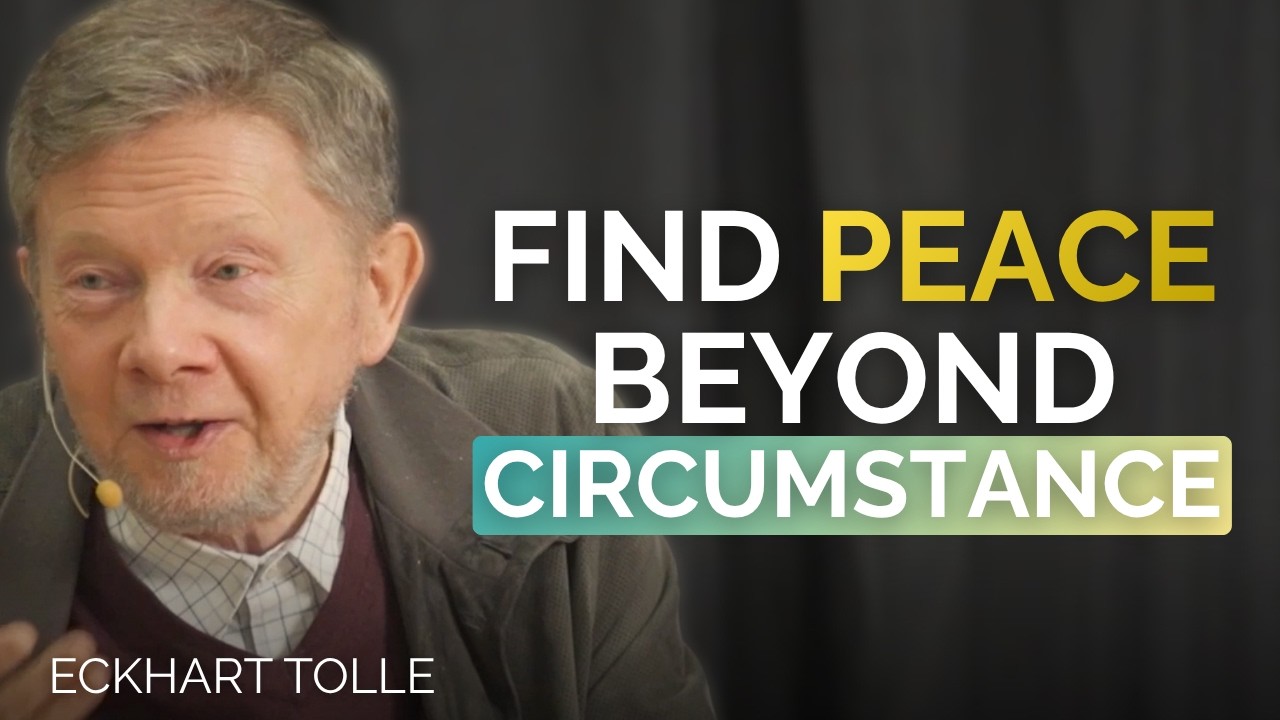
Eckhart Tolle
ArtistEckhart Tolle

German-born spiritual teacher whose 1997 book The Power of Now became one of the most widely read spiritual works of the 21st century. After a profound transformation at 29 — movin…

Ver perfilSitio web
Explorar temas
Self-created-sufferingUnawakened-consciousnessEgoPresent-moment-awarenessPsychological-suffering

¿Tienes Preguntas?

Preguntas Frecuentes

Self-created suffering arises from how an unawakened consciousness interprets and resists events, not from the events themselves. The mind generates additional layers of distress through worry, rumination, and identification with thoughts, which far exceed the actual difficulty of external circumstances.
The ego sustains itself through narratives of lack, threat, and unworthiness, measuring the self against others and creating defensive reactions to perceived threats. It transforms simple challenges into identity-based crises, generating psychological suffering that has no basis in the actual situation.
No. Since most suffering is self-created through patterns of unawakened consciousness, external optimization has limited impact. Real reduction in suffering comes from awakening—developing presence, accepting reality, and releasing identification with ego-generated thoughts.
Unawakened consciousness dwells compulsively in past regrets and future anxieties, generating suffering in imaginary scenarios. Anchoring in the present moment eliminates the temporal basis for much psychological pain, since the present moment itself is rarely the actual source of suffering.
Examine whether the suffering involves worry about the future, regret about the past, or judgment about what is happening now. If it is rooted in thought patterns rather than direct, immediate experience, it is likely self-created by an unawakened mind.
No. It means addressing external difficulties from a place of clarity and presence rather than from a reactive, ego-driven state. You can solve real problems effectively without generating unnecessary psychological suffering around them.
Simple awareness: noticing, in real time, when the mind is creating suffering through thought patterns, resistance, and identification. This noticing creates a gap between unconscious reaction and consciousness itself, opening the possibility of a different response.

Seguir leyendo

More from Eckhart

Ver Todo
How Suffering Becomes the Path to Real Peace
Inspire

How Suffering Becomes the Path to Real Peace

Hardship isn't only an obstacle—it's often where genuine awareness begins. The deepest peace comes not from ease, but from facing challenges…

1 min read
Music as a Gateway: How Sound Liberates You From Yourself
Inspire

Music as a Gateway: How Sound Liberates You From Yourself

Music, nature, and motion can temporarily free you from the conceptual self—but the real practice lives in ordinary life, where presence is …

1 min read
Snatam Kaur's "Ray Man Eh Bhid Jog Kamao": Sacred Sound and Inner Transformation
Inspire

Snatam Kaur's "Ray Man Eh Bhid Jog Kamao": Sacred Sound and Inner Transformation

Snatam Kaur's bhajan bridges devotional Sikh kirtan and contemporary meditation music, using sacred mantra to guide listeners toward release…

1 min read
Build Relationships on Purpose, Not Chemistry
Inspire

Build Relationships on Purpose, Not Chemistry

Krishna-centered relationships transform from transactions into pilgrimages. Discover how shared spiritual purpose creates lasting love.…

1 min read

Sigue explorando

Continúa tu camino

Más sabiduría y encuentros de todo el directorio de BrightStar.

Más artículos

Recorre la biblioteca completa de enseñanzas, entrevistas y guías.

Ver todos los artículos →

Maestros y artistas

Explora los linajes, músicos y guías del mundo consciente.

Explorar artistas →

Encuentra un evento

Kirtan, retiros, baños de sonido, breathwork, festivales — muy pronto.

Ver eventos →