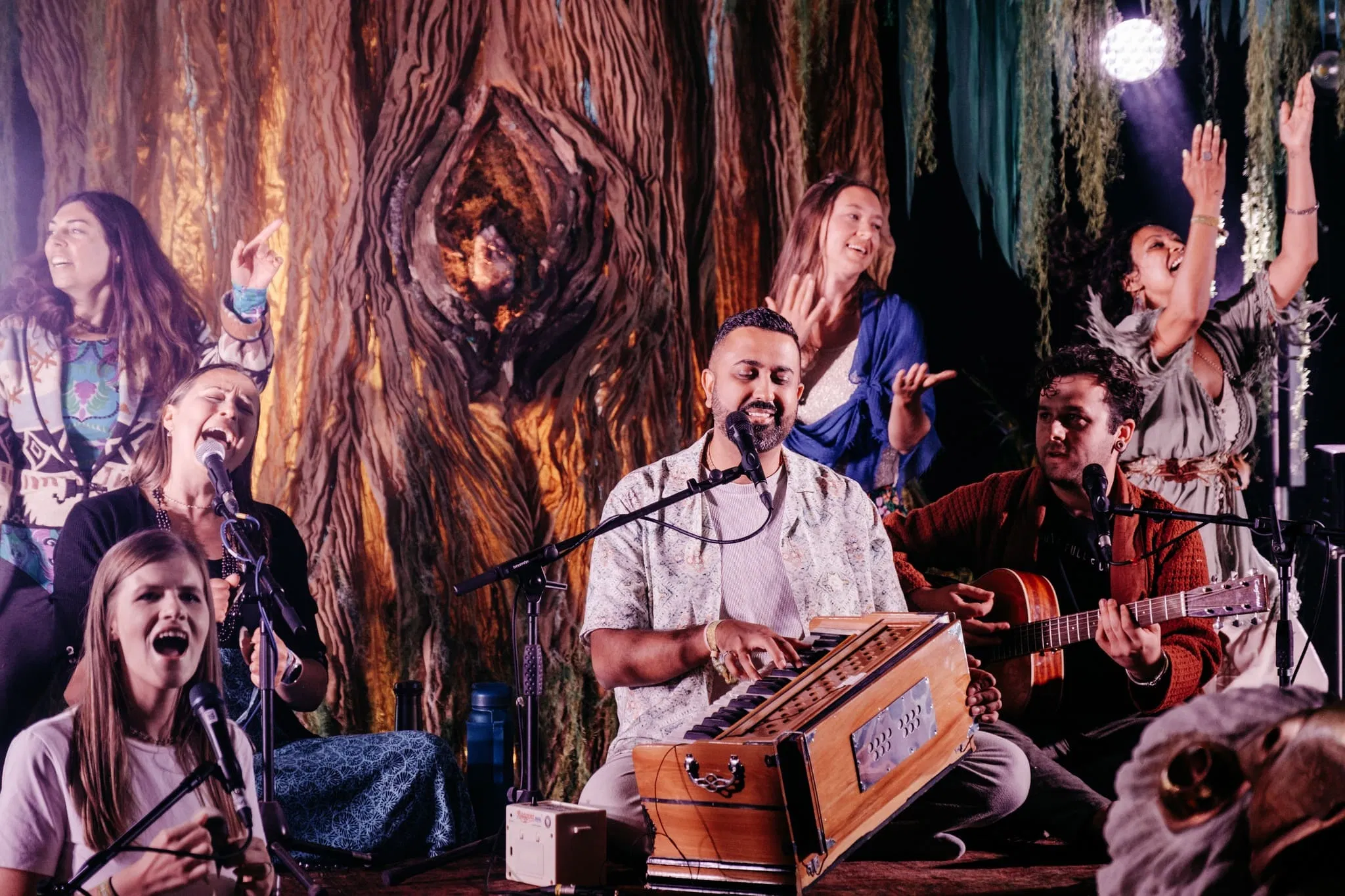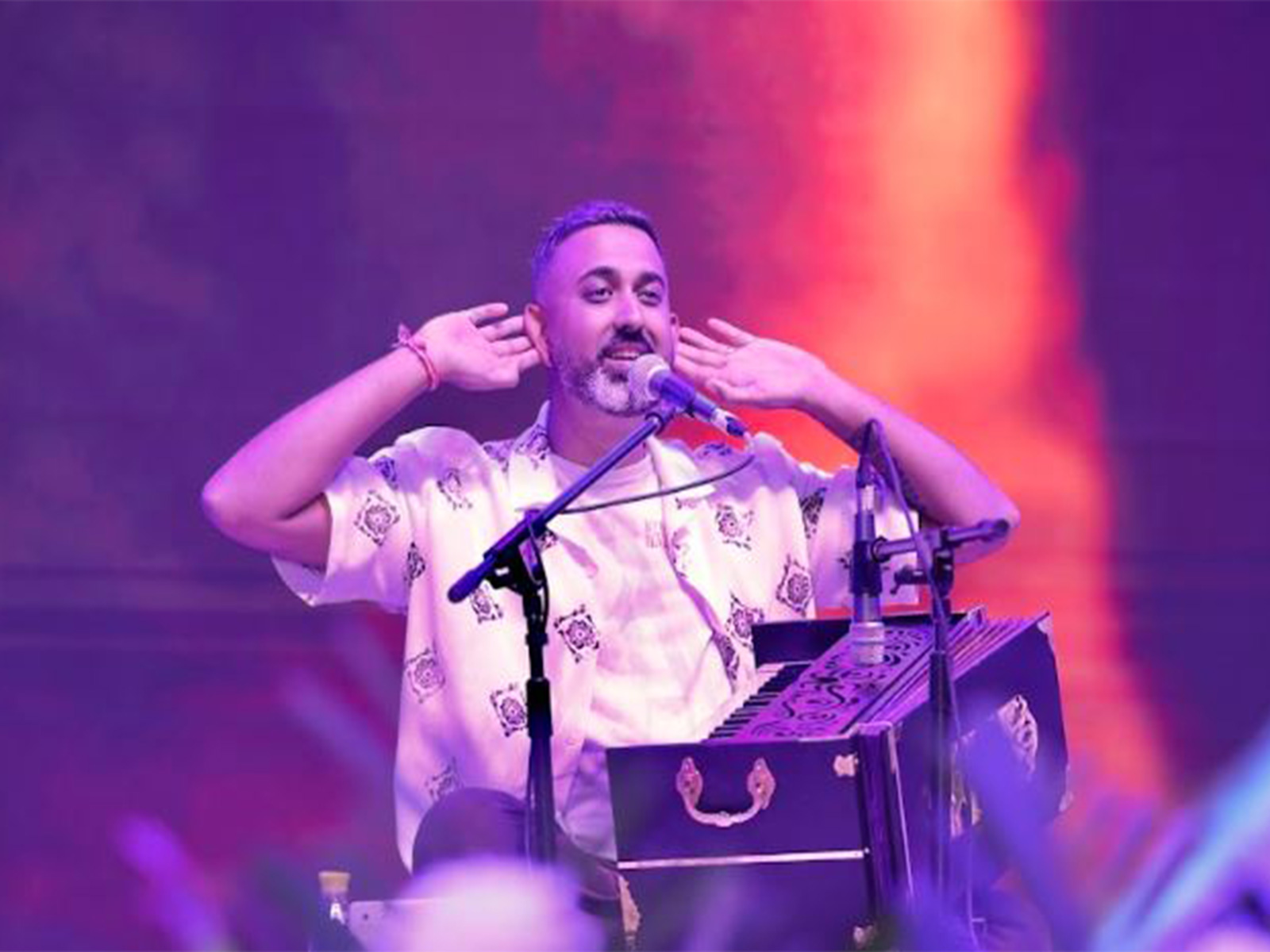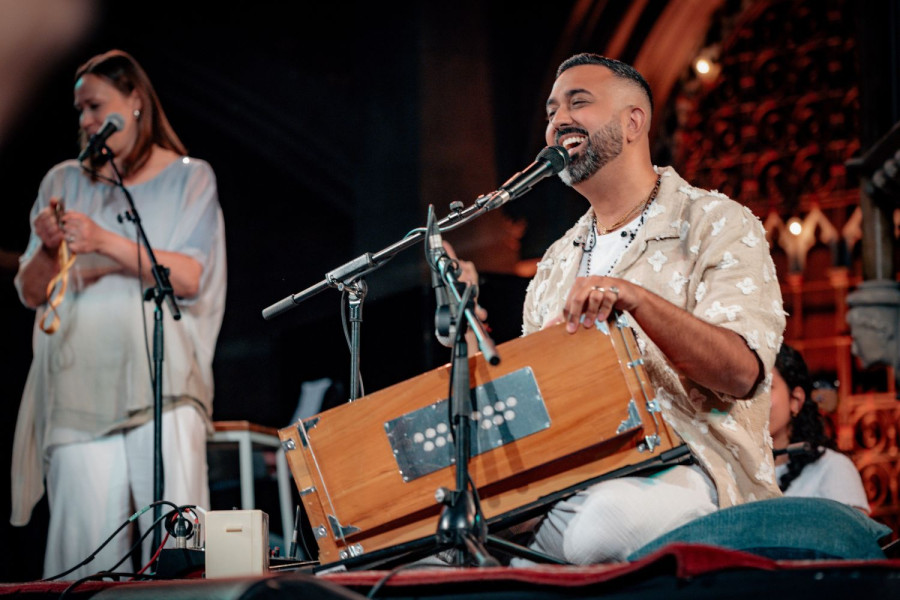

Released on 27 February 2025, Sri Narasingha is a two-track single, and it arrives in a catalogue that leans heavily toward live recording. Radhika Das, the London-based kirtan leader and bhakti yoga teacher, has documented years of mantra meditation nights through the Heartland live series and Midnight 23/24 (Live). This single belongs to the same year as the studio album Mantra and *Heartland 5 (Live)**,* and it shows the devotional focus of his work in miniature: one sacred name, given room to be sung.
The title draws on Narasimha, the avatar named in the verified material alongside Rama, Sita, Govinda and Shiva. It sits among a run of releases that take individual divine names as their subject. That makes it a useful, compact entry point for hearing how he approaches a single name and treats it as a song form rather than a backdrop.
The facts here call for restraint, so a caution first: the materials describe a band of musicians on live nights but do not name the instruments. Kirtan ensembles in this tradition commonly centre on harmonium, hand drums and cymbals, and those are the sounds to expect, though that is an expectation, not a credit list.
What can be said with confidence is the shape of the music. Radhika Das builds his work around sacred names sung in repetition over a steady pulse. A lead voice carries the melody and the mantra rather than decorating it, and in the live format the band and room answer in call-and-response. Pacing is deliberate. A mantra may run for minutes because the repetition is the point, and the aesthetic favours restraint over spectacle.
The mood follows from that. This is devotional rather than atmospheric, an offering rather than neutral sound. Expect the melody to reveal itself slowly as the repetition settles. A first listen can feel slow, particularly for anyone arriving with verse-chorus expectations.
The single has two tracks, and I won't name a second title that the facts don't supply. What can be named is the title piece.
"Sri Narasingha." This is the track the release is built around. What makes it land is the discipline of a devotional song centred on a single name. The invitation is to listen the way a practitioner would: let the opening phrase establish itself, then notice how repetition shifts from something you hear into something that holds your attention. The lead voice is the anchor. Pay attention to how the melody is carried rather than ornamented, and how small changes in phrasing become significant once the pulse is steady.
Because the release is short, it also serves as a sampler of the form. Listeners curious about the call-and-response format can hear its logic here before moving on to Heartland 5 (Live), where the room's answering voice is audible.
This single belongs to bhakti, the devotional path within Hinduism that centres love of a personal deity expressed through singing, chanting and remembrance. Narasimha is one of the avatars the verified material names among the figures that appear in his song titles. The public materials do not name a specific sampradaya or guru lineage, and I won't assign one. What is documented is sixteen years of practice, mantra meditation as method, and kirtan in call-and-response as the form.
That distinction matters for how to hear the record. It isn't ambient music borrowing sacred language, and it isn't a pop template with devotional lyrics. The songs are sacred names set to melody. Radhika Das has said he thinks of mantras as gifts of love that carry peace and presence wherever they are sung or spoken, and the single honours that framing by staying simple.
The best fit is someone already drawn to bhakti, kirtan or slow sacred song, and ideally someone who wants to join in. It will suit a listener who already has a seated practice and wants a single name to return to, or someone preparing to attend one of his live nights who would like to hear the form first.
It lands in life moments that call for steadiness: a restless week, an evening you want to slow down, or a stretch when repetition is more welcome than variety. Newcomers who find the vocabulary of devotion foreign may feel some distance at first. A short orientation on Narasimha and the other names in his titles makes the lyrics clearer.
It is not for listeners wanting high-BPM electronic music, cinematic production or background sound for a workout. Those wanting a secular or purely aesthetic experience may find the devotional framing too direct.
Choose an evening and a quiet room. Headphones help here, because the pleasures are in the voice and the small shifts in phrasing rather than in production effects. Sit rather than multitask, and give the title track its full length before judging it.
If you practise, try the simple test the material suggests for his work: chant along for five minutes and let the repetition do its work. Singing along is part of the design, so do not treat this as a purely quiet listen. Afterward, consider moving on to Mantra (June 2025, nine tracks), the most complete single listen in the catalogue, and then to Heartland 5 (Live) to hear how a room answers.
For live context, the official site, radhikadas.com, is the most reliable hub for dates, and listings can shift, so confirm before travelling.