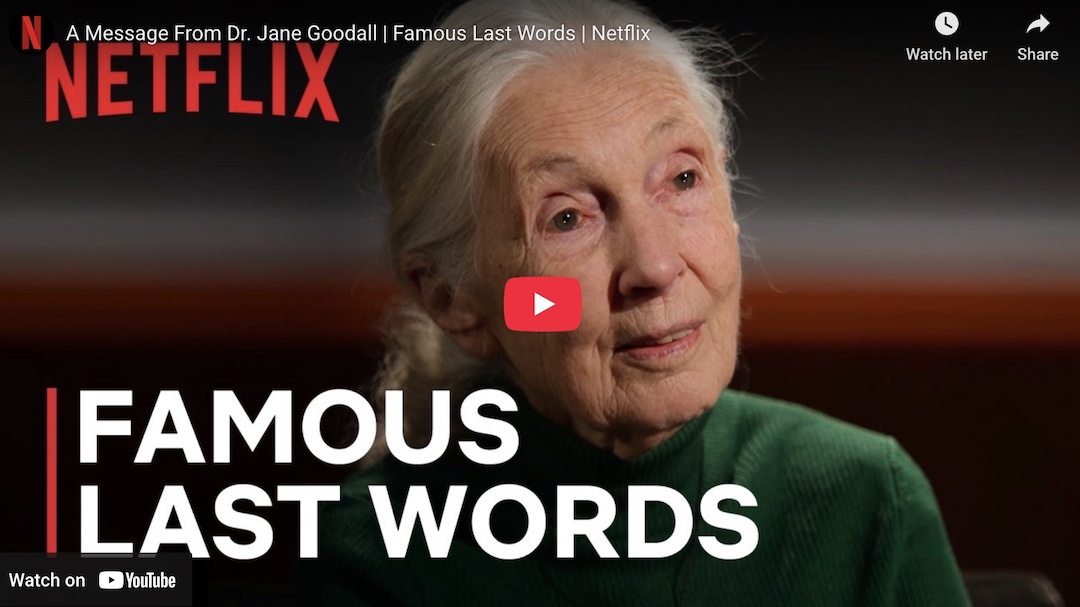
Jane Goodall's assertion that "Action is the antidote to despair" serves as a powerful reminder of the transformative potential inherent in our choices and behaviors. In a world often overshadowed by environmental crises, social injustice, and personal struggles, despair can feel like an insurmountable weight. Yet, Goodall invites us to consider that the very act of engaging with our challenges can serve as a remedy, a way to reclaim agency in the face of overwhelming odds. This perspective is not merely optimistic; it is a call to responsibility and engagement, urging us to recognize that our actions, however small, can ripple outwards to create meaningful change.
Delving deeper into this idea, we find that action is not just a response to despair; it is a proactive stance that fosters resilience and hope. When we engage with the world around us—whether through environmental stewardship, community service, or personal growth—we cultivate a sense of purpose that counters feelings of helplessness. Goodall's wisdom suggests that despair thrives in isolation and inaction, while action, rooted in compassion and awareness, can illuminate paths forward. This dynamic interplay between action and despair invites us to reflect on our own lives and the choices we make in response to adversity.
The image / the metaphor
The imagery in Goodall's quote evokes a vivid contrast between two states of being: despair and action. Despair is often depicted as a heavy fog, obscuring clarity and hope, while action emerges as a light cutting through that fog, illuminating possibilities. The verb "is" suggests a definitive relationship, indicating that action does not merely alleviate despair but fundamentally alters its presence. This metaphor invites us to visualize our own struggles with despair as a landscape that can be navigated through purposeful movement, rather than a static condition to be endured.
Going deeper, we can see that action embodies a dynamic force that reshapes our emotional and spiritual landscapes. It is not just about physical movement; it encompasses the choices we make, the values we uphold, and the connections we foster. In this sense, action becomes a form of expression, a way to manifest our inner convictions in the external world. The metaphor of action as an antidote suggests that it is a healing balm, one that requires our active participation in the world, reminding us that we are not passive observers but integral players in the unfolding narrative of life.
In the speaker's tradition
Jane Goodall's insights are deeply rooted in the contemplative-ecology tradition, which emphasizes the interconnectedness of all life and the moral imperative to act in ways that honor this connection. Concepts such as dharma, which refers to the ethical duty to act in accordance with the greater good, resonate with Goodall's call to action. In this tradition, despair is often viewed as a disconnection from our true nature and purpose, while action serves as a means to realign ourselves with the rhythms of the natural world and our communal responsibilities.
Moreover, Goodall's perspective can be likened to the Buddhist concept of sunyata, or emptiness, which teaches that despair arises from attachment to fixed notions of self and circumstance. By engaging in action, we can transcend these attachments and cultivate a sense of interconnectedness that fosters hope. In her book, "The Book of Hope," Goodall draws upon her experiences with wildlife and conservation, illustrating how direct engagement with the natural world can lead to profound insights and a renewed sense of purpose, echoing the teachings found in many contemplative traditions.
Living the teaching
Consider a modern scenario where this teaching resonates: a community grappling with the effects of climate change. Residents may feel overwhelmed by the scale of the problem, leading to a sense of despair that paralyzes action. However, when individuals come together to organize clean-up efforts, advocate for sustainable practices, or educate others about environmental issues, they begin to transform their despair into a collective force for change. This illustrates how action not only alleviates individual feelings of helplessness but also fosters a sense of community and shared purpose.
In a more personal context, think of a relationship strained by conflict. One partner may feel despondent, believing that the situation is hopeless. Yet, by choosing to engage in open communication, seeking understanding, and taking steps toward reconciliation, both partners can shift the dynamic. This act of reaching out, of choosing to act rather than retreat, embodies Goodall's teaching and highlights how action can serve as a bridge over the chasm of despair, fostering healing and connection.
A reflection
As we contemplate Goodall's assertion that "Action is the antidote to despair," we are invited to reflect on our own lives and the moments when we have felt overwhelmed by circumstances. What actions can we take, however small, to counter feelings of despair? In what ways can we engage with our communities, our environments, and ourselves to foster hope and resilience? This contemplation encourages us to recognize that within each of us lies the power to transform despair into action, illuminating the path forward.