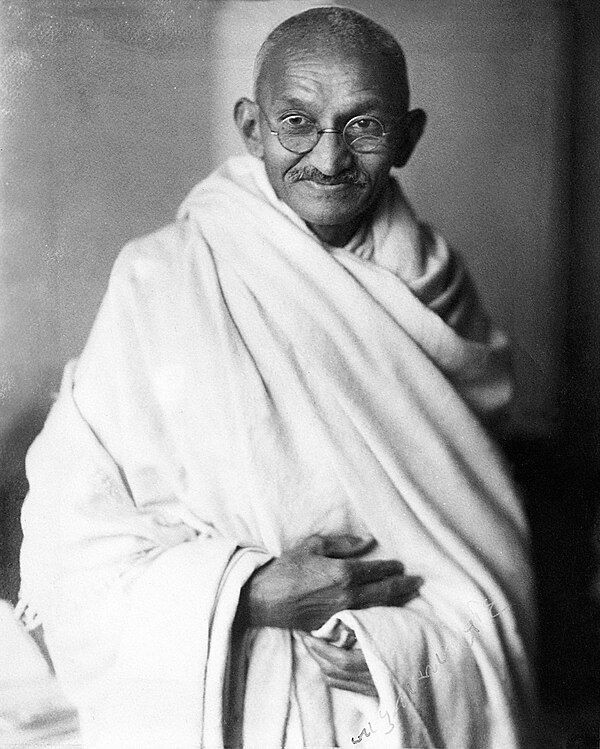
The Balance of Needs and Greed: A Contemplation on Gandhi's Wisdom
Mahatma Gandhi's assertion that "Earth provides enough to satisfy every man's needs, but not every man's greed" invites us to reflect on the delicate balance between our essential requirements and the insatiable nature of human desire. This statement resonates deeply in a world increasingly marked by environmental degradation and social inequality. It challenges us to reconsider our relationship with the Earth and each other, urging a shift from a mindset of consumption to one of stewardship and simplicity.
In a time when materialism often overshadows spiritual fulfillment, Gandhi's words serve as a poignant reminder of the importance of aligning our lives with the principles of sustainability and equity. The quote encapsulates a profound truth about the abundance of the Earth, suggesting that while nature can provide for all, it is our own greed that leads to scarcity and suffering. This dichotomy between need and greed is not merely an economic issue; it is a spiritual one that calls for introspection and a reevaluation of our values.
The image / the metaphor
The imagery in Gandhi's quote evokes a vision of a bountiful Earth, rich in resources, capable of meeting the fundamental needs of humanity. The verbs "provides" and "satisfy" suggest a nurturing relationship between the Earth and its inhabitants, one that is grounded in reciprocity and respect. In contrast, the term "greed" introduces a darker element, highlighting the destructive tendencies of human desire that can lead to exploitation and imbalance. This juxtaposition creates a felt sense of urgency, prompting us to consider the consequences of our actions on both a personal and global scale.
Diving deeper into the metaphor, we can see that Gandhi is not merely speaking about material possessions but also about the spiritual nourishment that comes from living in harmony with our environment. The notion of "needs" encompasses not just physical sustenance but also emotional and spiritual well-being. In this light, the quote becomes a call to cultivate a lifestyle that prioritizes simplicity and mindfulness, recognizing that true fulfillment arises not from excess but from a deep connection to the world around us.
In the speaker's tradition
Moreover, the teachings of the Bhagavad Gita resonate with Gandhi's message, particularly in the context of selfless action (karma yoga). The Gita encourages individuals to perform their duties without attachment to the fruits of their labor, promoting a mindset that prioritizes the well-being of the collective over personal gain. This alignment with spiritual principles reinforces the idea that true satisfaction comes from serving others and living in harmony with the Earth, rather than succumbing to the allure of greed.
Living the teaching
In contemporary society, the implications of Gandhi's teaching can be seen in the growing movement towards sustainable living. For instance, individuals and communities are increasingly adopting practices such as minimalism, local sourcing of food, and reducing waste as a means to honor the Earth’s resources. This shift reflects a recognition that our consumption patterns have far-reaching consequences, not only for the environment but also for social justice. By embracing simplicity and making conscious choices, we can align our lifestyles with the principle that the Earth has enough to meet our needs.
On a more personal level, this teaching can be applied in our relationships and daily interactions. Consider a scenario where one is faced with the temptation to accumulate more possessions or wealth at the expense of others. By reflecting on Gandhi's words, one might choose to prioritize generosity and sharing over accumulation. This could manifest in acts of kindness, such as volunteering time or resources to support those in need, thereby fostering a sense of community and interconnectedness that transcends individual desires.
A reflection
As we contemplate Gandhi's profound insight, we are invited to ask ourselves: How can I cultivate a mindset that prioritizes needs over greed in my own life? This question encourages a deep exploration of our values, habits, and the impact of our choices on the world around us. By engaging with this inquiry, we can begin to shift our focus from mere consumption to a more meaningful existence that honors both our needs and the well-being of the Earth.


