Beyond the Horizon: Embracing Our Limitless Potential
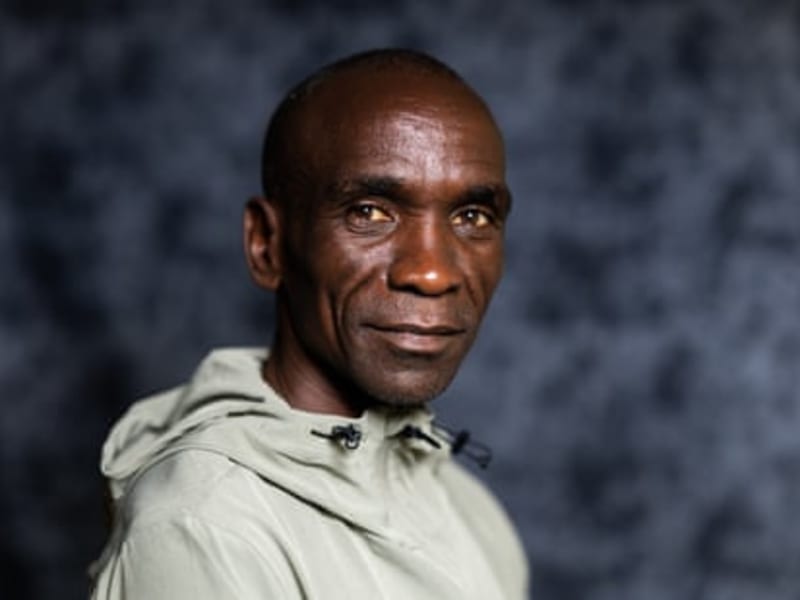
"No human is limited." This profound assertion by Eliud Kipchoge, the world-renowned marathon runner, encapsulates a transformative philosophy that transcends the boundaries of physical endurance and mental resilience. In a world often constrained by self-doubt and societal expectations, Kipchoge's words serve as a clarion call to recognize the vast potential that resides within each of us. The stakes are high; embracing this mindset can lead to extraordinary achievements, not only in athletics but in every facet of life.
As Kipchoge completed the historic INEOS 1:59 Challenge, he not only shattered the two-hour barrier for the marathon but also illuminated a path for others to follow. His statement invites us to reconsider our perceptions of limitations, urging us to explore the depths of our capabilities. This exploration is not merely about physical prowess; it is a journey into the heart of what it means to be human, to strive, to overcome, and ultimately, to thrive. In this light, Kipchoge's words resonate as a universal truth, challenging us to redefine our understanding of what is possible.
The image / the metaphor
The phrase "No human is limited" evokes a powerful imagery of boundless horizons and uncharted territories. The choice of the word "limited" suggests confinement, a barrier that exists only in the mind. Kipchoge's assertion is a declaration of freedom, an invitation to break through the invisible walls that we often construct around ourselves. The verb "is" implies a state of being, reinforcing the idea that our limitations are not inherent but rather self-imposed, waiting to be dismantled by the courage to push beyond our perceived boundaries.
Diving deeper into the metaphor, we can see that Kipchoge's statement is not just about physical endurance; it speaks to the essence of human potential. It suggests that the true limits we face are often psychological, rooted in fear, doubt, and societal conditioning. By embracing the belief that we are limitless, we open ourselves to a world of possibilities, where the only barriers are those we create in our minds. This perspective invites us to cultivate a mindset of growth and resilience, allowing us to navigate life's challenges with a sense of empowerment and purpose.
In the speaker's tradition
Eliud Kipchoge's philosophy is deeply rooted in the tradition of marathon running, which itself is a profound metaphor for life. The marathon embodies the principles of perseverance, discipline, and mental toughness—qualities that resonate with concepts found in various spiritual traditions. For instance, the Buddhist notion of "sunyata," or emptiness, encourages us to let go of preconceived notions and limitations, allowing for a fuller experience of life. Similarly, Kipchoge's assertion aligns with the idea of "dharma," or one's path, suggesting that each individual has a unique journey that transcends conventional boundaries.
In the context of Kipchoge's achievements, we can draw parallels to the teachings of great philosophers and athletes who have emphasized the importance of mental fortitude. The Stoics, for example, believed in the power of the mind to shape our reality, echoing Kipchoge's sentiment that limitations are often self-imposed. In his own words, Kipchoge has often referred to the importance of a strong mindset, suggesting that the marathon is as much a mental challenge as it is a physical one. This interplay between mind and body is a central theme in both athletic and spiritual pursuits, highlighting the interconnectedness of our experiences.
Living the teaching
Consider a modern scenario where Kipchoge's teaching resonates profoundly: the workplace. Many individuals find themselves constrained by the expectations of their roles, often feeling limited by their perceived capabilities. However, by embracing the belief that "no human is limited," one can approach challenges with a renewed sense of possibility. For instance, a team member who feels overwhelmed by a project deadline might find the courage to propose innovative solutions, breaking free from the confines of self-doubt and contributing to a more dynamic and collaborative environment.
This teaching can also manifest in personal relationships, particularly during difficult moments. Imagine a couple facing a significant conflict, feeling trapped in a cycle of misunderstanding. By adopting the mindset that they are not limited by their past grievances, they can engage in open dialogue, exploring new ways to communicate and connect. This shift in perspective allows for growth and healing, transforming limitations into opportunities for deeper understanding and intimacy. In both scenarios, the essence of Kipchoge's message serves as a guiding light, encouraging individuals to transcend their perceived boundaries and embrace the fullness of their potential.
A reflection
As we contemplate Kipchoge's powerful assertion, we are invited to reflect on our own lives and the limitations we may have accepted as truths. What barriers have we constructed in our minds that prevent us from pursuing our dreams or engaging fully with the world around us? In this moment of introspection, consider the question: "What would I attempt if I truly believed that I was limitless?" Allow this inquiry to guide you toward a deeper understanding of your potential and the possibilities that await when you embrace the truth of your boundless nature.