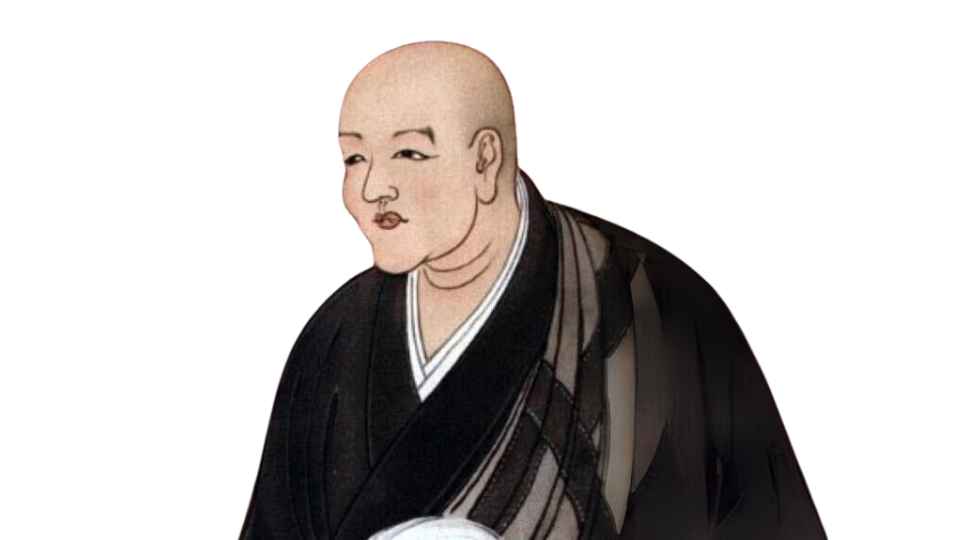
Reflections of Wholeness: The Dewdrop and the Cosmos
In the profound words of Dōgen, "The whole moon and the entire sky are reflected in one dewdrop on the grass," we encounter a striking image that invites us to contemplate the interconnectedness of all things. This quote encapsulates the essence of Zen practice, where the minute and the vast are not separate but rather reflections of one another. The stakes of this teaching lie in its ability to shift our perception, urging us to recognize the sacredness in the ordinary and the infinite within the finite.
As we delve deeper into this reflection, we find that Dōgen's words challenge the conventional boundaries of perception and understanding. The dewdrop, a seemingly insignificant entity, becomes a vessel for the entirety of the cosmos, suggesting that every moment holds the potential for profound insight. This teaching resonates with the heart of Zen, where the ordinary is imbued with extraordinary significance, and the mundane becomes a portal to the divine.
The image / the metaphor
The imagery of a dewdrop capturing the vastness of the moon and sky evokes a sense of wonder and intimacy. The choice of the word "reflected" suggests a mirroring, a relationship between the small and the large, the individual and the universe. The dewdrop, delicate and transient, embodies the ephemeral nature of existence, while simultaneously holding within it the entirety of the cosmos. This juxtaposition invites us to feel the weight of both beauty and fragility, urging us to appreciate the fleeting moments that often go unnoticed.
Dōgen's metaphor extends beyond mere observation; it invites us to engage with the world in a way that recognizes the interconnectedness of all phenomena. The dewdrop is not just a passive reflection but an active participant in the cosmic dance. It reminds us that our experiences, no matter how small, are imbued with the essence of the whole. In this way, the metaphor serves as a bridge between the individual self and the greater universe, encouraging us to see ourselves as integral parts of a vast, interconnected tapestry.
In the speaker's tradition
Within the Zen tradition, Dōgen's teaching resonates with the concept of *sunyata*, or emptiness, which posits that all things are interdependent and lack inherent existence. This understanding invites practitioners to see beyond dualistic thinking and recognize the unity of all phenomena. The dewdrop, in its reflection of the moon and sky, exemplifies this principle, illustrating how the individual can embody the universal. Dōgen's work emphasizes the importance of direct experience and the realization that enlightenment is not separate from the everyday world.
In his seminal text, *Genjokoan*, Dōgen explores the nature of reality and the relationship between form and emptiness. He writes, "To study the Buddha Way is to study the self; to study the self is to forget the self; to forget the self is to be actualized by the myriad things." This passage echoes the sentiment of the dewdrop, suggesting that in recognizing our connection to the whole, we can transcend the limitations of the self and experience a deeper understanding of existence. The reflection of the moon in the dewdrop becomes a metaphor for this profound realization.
Living the teaching
Consider a moment in your daily life when you feel overwhelmed by the chaos of the world around you. Perhaps you are caught in the rush of a busy street, surrounded by people, noise, and distractions. In this scenario, Dōgen's teaching invites you to pause and observe the small details—the glint of sunlight on a dewdrop, the laughter of a child, or the rustle of leaves in the wind. By focusing on these seemingly insignificant moments, you can access a deeper sense of connection to the universe, recognizing that within each detail lies the entirety of existence.
In the context of relationships, the teaching of the dewdrop can also illuminate our interactions with others. Imagine a difficult conversation with a loved one, where misunderstandings and emotions run high. Dōgen's insight encourages you to see beyond the immediate conflict and recognize the shared humanity that connects you both. By reflecting on the larger context of your relationship, you can cultivate empathy and understanding, allowing the dewdrop of your connection to reflect the vastness of love and compassion that exists between you.
A reflection
As we contemplate Dōgen's profound words, we are invited to ask ourselves: In what ways can I recognize the vastness of the universe within the small moments of my life? This question encourages us to cultivate mindfulness and awareness, allowing us to see the interconnectedness of all things. By embracing the teachings of the dewdrop, we can transform our perception of the ordinary into a gateway for experiencing the extraordinary.


