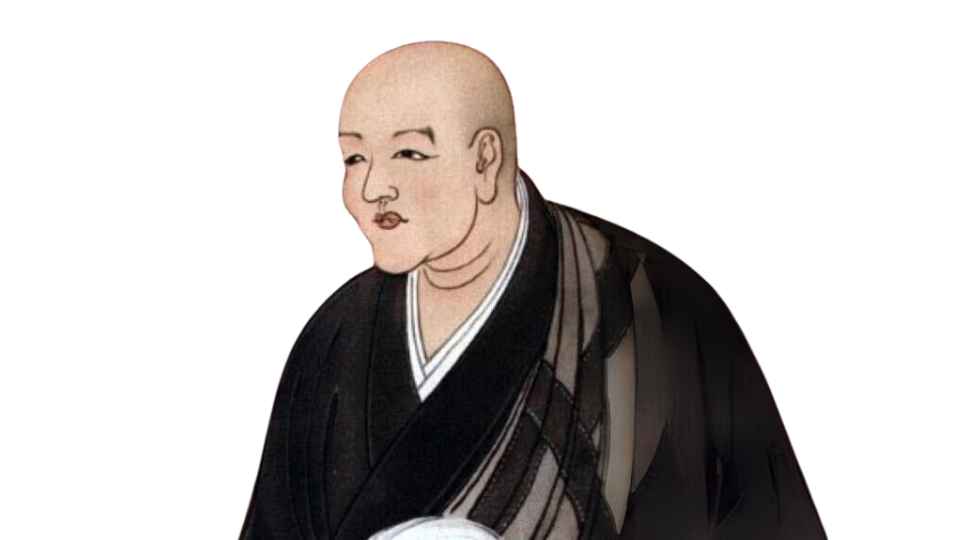
The Dance of Existence and Time
“Being is time.” In this succinct yet profound assertion by Dōgen, we are invited to explore the intricate relationship between existence and the temporal realm. This statement challenges our conventional understanding of both being and time, urging us to reconsider how we perceive our lives and the world around us. The stakes are high; grasping this concept can lead to a deeper awareness of our own existence and the nature of reality itself, ultimately guiding us toward a more harmonious way of living.
As we delve deeper into Dōgen's insight, we begin to recognize that time is not merely a linear progression of moments but an integral aspect of being itself. This perspective invites us to reflect on how our experiences are shaped by the flow of time, suggesting that our very essence is intertwined with the temporal. In a world that often prioritizes productivity and efficiency, Dōgen's words serve as a gentle reminder to embrace the present moment, to acknowledge that our existence is a continuous unfolding within the vast tapestry of time.
The image / the metaphor
At first glance, the phrase “Being is time” may seem paradoxical, as we often delineate being from the passage of time. However, Dōgen employs a rich metaphorical language that invites us to visualize being as a dynamic process rather than a static state. The verb “is” serves as a bridge, connecting the two concepts in a way that suggests they are not separate but rather two sides of the same coin. This imagery evokes a sense of fluidity, encouraging us to perceive existence as an ongoing dance with time, where each moment is imbued with significance.
Dōgen’s metaphor extends beyond mere semantics; it invites us to experience the interconnectedness of all things. By recognizing that our being is inseparable from the temporal flow, we can begin to appreciate the beauty of each fleeting moment. This understanding fosters a sense of presence, urging us to engage fully with our experiences rather than allowing them to slip away unnoticed. In this way, Dōgen's teaching becomes a call to mindfulness, urging us to inhabit our lives with intention and awareness.
In the speaker's tradition
Dōgen, a seminal figure in Zen Buddhism, articulates his philosophy through the lens of profound spiritual concepts such as sunyata (emptiness) and prajna (wisdom). In Zen, the understanding of time is often linked to the notion of impermanence, a fundamental truth that underscores the transient nature of all phenomena. By asserting that “Being is time,” Dōgen aligns himself with the Zen tradition's emphasis on the present moment, suggesting that true understanding arises when we fully engage with our current experience, free from the distractions of past regrets or future anxieties.
Living the teaching
Consider a modern scenario where the teaching of “Being is time” can be applied: a busy professional navigating the demands of work and family life. In the rush to meet deadlines and fulfill obligations, one may find themselves perpetually focused on the future, often neglecting the richness of the present moment. By embracing Dōgen’s insight, this individual can cultivate a practice of mindfulness, allowing them to fully engage with their tasks and relationships, transforming mundane moments into opportunities for connection and presence.
In a different context, imagine a couple facing a challenging moment in their relationship. Instead of allowing past grievances or future uncertainties to cloud their interactions, they can draw upon Dōgen’s teaching to ground themselves in the present. By acknowledging that their being is intertwined with the time they share, they can foster a deeper understanding and compassion for one another, recognizing that each moment spent together is a precious opportunity for growth and healing.
A reflection
As we contemplate Dōgen’s profound assertion that “Being is time,” we are invited to reflect on our own relationship with the present moment. How often do we find ourselves lost in thoughts of what has been or what is yet to come, neglecting the beauty of the here and now? In this light, we might ask ourselves: What would it mean to fully inhabit each moment, to recognize the sacredness of our existence as it unfolds within the flow of time?


