What is Experimental?
Experimental refers to practices, art forms, and methodologies that deliberately move beyond conventional boundaries to explore uncharted territory in consciousness, creativity, and human experience. In the context of spiritual and conscious communities, experimental work emphasizes direct phenomenological inquiry over doctrinal adherence, values process over predetermined outcomes, and treats failure or unexpected results as generative rather than problematic. The experimental orientation rejects the notion that wisdom traditions must remain fixed, instead viewing them as living laboratories for discovering new modes of awareness, expression, and being.
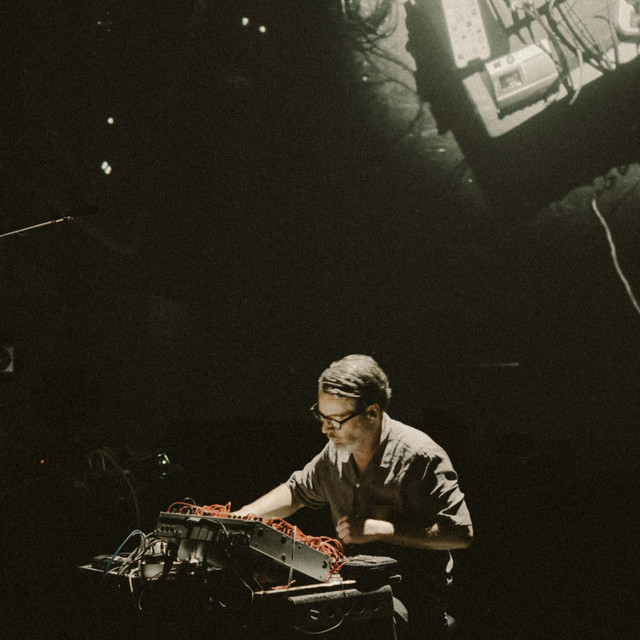
Unlike traditional practices with clearly defined lineages and prescribed methods, experimental approaches are characterized by their willingness to hybridize, improvise, and invent. An experimental practitioner might combine Tibetan visualization techniques with biofeedback technology, or merge ecstatic dance with algorithmic composition. The term encompasses everything from avant-garde music that explores the edges of perception to novel contemplative practices that have no historical precedent.
Origins & Lineage
The term “experimental” entered common usage through the scientific method of the 17th century, but its application to art and consciousness work emerged primarily in the 20th century. John Cage’s 4’33" (1952), a composition of deliberate silence, exemplified the experimental music movement that questioned fundamental assumptions about what music could be. Cage, deeply influenced by Zen Buddhism and his studies with D.T. Suzuki in the late 1940s, positioned experimentation as a spiritual practice of letting go of intention and embracing chance operations.
In the visual arts, the Fluxus movement of the 1960s merged experimental art with consciousness exploration, with artists like Yoko Ono creating “instruction pieces” that functioned as both artwork and meditation. The Black Mountain College (1933-1957) served as an incubator for experimental cross-pollination between disciplines, bringing together John Cage, Merce Cunningham, and Buckminster Fuller in collaborative exploration.
The term gained particular traction in music through the San Francisco Tape Music Center (founded 1962) and later through Brian Eno’s articulation of “generative music” in the 1970s. By the 1990s, experimental electronic music festivals and the rave culture began explicitly linking sonic experimentation with consciousness exploration and spiritual experience.
How It’s Practiced
Experimental practice manifests across multiple domains. In music, it may involve extended techniques (playing instruments in unconventional ways), algorithmic composition, field recording, or the exploration of psychoacoustic phenomena. Pauline Oliveros’s Deep Listening practice, developed from the 1970s onward, formalized experimental listening as a consciousness practice, using long tones, resonant spaces, and attentional exercises to deepen awareness.
In movement and somatic work, experimental practice might involve improvised choreography, authentic movement, or body-based research that questions inherited assumptions about posture, gesture, and kinesthesia. Anna Halprin’s work bridging dance, ritual, and healing represents this experimental spirit.
In contemplative practice, experimental approaches might involve technological augmentation (neurofeedback, VR meditation environments), hybridization of traditions, or entirely novel protocols. The open-source meditation movement and the research-driven contemplative science community both embody experimental orientations, treating meditation as a domain for systematic first-person investigation rather than received wisdom.
Experimental work often involves documentation and iteration—practitioners keep detailed records of protocols and results, treating each session as a trial that informs subsequent exploration. The practice is fundamentally empirical: what happens when we do this? How does experience shift under these conditions?
Experimental Today
Contemporary seekers encounter experimental work through several channels. Festivals like SPLICE (Spatial Listening and Interactive Creative Exploration) and events in the “liminal” or “transformational” festival circuit feature experimental sound baths, participatory installations, and immersive environments. Urban meditation studios increasingly offer experimental sessions combining traditional practice with technology, binaural beats, or immersive projection.
Online platforms host experimental meditation protocols, collaborative sound healing sessions, and virtual reality consciousness exploration. Artists like Holly Herndon and Jlin create experimental electronic music explicitly intended to induce non-ordinary states. Researchers at institutions like Johns Hopkins and Imperial College London conduct experimental protocols combining psychedelics with various therapeutic and contemplative frameworks.
The experimental ethos has also influenced mainstream wellness culture, with float tanks, neurofeedback clinics, and “consciousness hacking” meetups representing the experimental approach’s migration into commercial spaces.
Common Misconceptions
Experimental is not synonymous with “anything goes” or lacking rigor. Serious experimental work requires deep knowledge of existing traditions and methods—you must understand the rules before you can productively break them. John Cage studied classical composition and Asian philosophy for decades before creating his radical works.
Experimental does not mean “preliminary” or “unproven” in the sense of being inferior to established methods. Many experimental practices are highly refined and sophisticated, with decades of development behind them. Nor does experimental necessarily mean “difficult” or “inaccessible”—some experimental work is intentionally simple, like Ono’s instruction to “listen to the sound of the room.”
Experimental work is not inherently anti-traditional. Many experimental practitioners draw deeply from lineages while asking how those lineages might evolve. The relationship is generative tension rather than rejection.
How to Begin
Begin with direct experience over conceptual understanding. Pauline Oliveros’s book Deep Listening: A Composer’s Sound Practice (2005) offers accessible entry points into experimental listening. For experimental movement, search for Authentic Movement or Open Floor classes in your area.
Attend an experimental music concert or sound meditation, paying attention not to whether you “like” it but to what happens in your awareness. Visit an experimental art installation and spend longer than feels comfortable—30 minutes minimum—noting how perception shifts over time.
For solo practice, set a simple experimental protocol: sit in silence for 20 minutes but change one variable from traditional meditation (eyes open wide, lying down, in complete darkness, while listening to a single drone tone). Document what you notice. Repeat with different variables. This is experimental practice: systematic first-person inquiry into the conditions of consciousness.