SportsCampFinder

Browse All Camps

Find the perfect camp for your athlete

camps

Basketball Camps
Soccer Camps
Baseball Camps
Football Camps
Volleyball Camps
Lacrosse Camps
Multi-Sport Camps
Elite Training
Overnight Camps
Day Camps
Popular Destinations
BaliSedonaLos AngelesCosta RicaNew YorkSan FranciscoAustinMiamiJoshua TreeTulum
View All CategoriesView All Destinations

Explore All Features

Powerful tools to grow your events

Platform Features

Smart Dynamic Pricing
Ticket Categories
Assigned Seating
Abandoned Cart Recovery
Visitor Recovery
Donations & Sliding Scale
Affiliate Engine
Ticket Scanner
Coupon Codes
Custom Questions
Ticket Sharing
Upsells & Add-ons
Analytics & Reporting
Email Sequences
Waitlist / Notify / Remind
People & Places
Camp OrganizersCamp FacilitiesKnowledge BaseInspiration
View All FeaturesAbout Us
PricingBlog
Language
Saved events
Browse All Events

camps

Basketball CampsSoccer CampsBaseball CampsFootball CampsVolleyball CampsLacrosse CampsMulti-Sport CampsElite Training

Popular Destinations

BaliSedonaLos AngelesCosta RicaNew YorkSan Francisco

People & Places

Camp OrganizersCamp FacilitiesKnowledge BaseInspiration

Platform Features

Smart Dynamic PricingTicket CategoriesAssigned SeatingAbandoned Cart RecoveryVisitor RecoveryDonations & Sliding ScaleAffiliate EngineTicket ScannerCoupon CodesCustom QuestionsTicket SharingUpsells & Add-onsAnalytics & ReportingEmail SequencesWaitlist / Notify / Remind
View All FeaturesAbout Us
PricingBlog
Log inParents & athletesCamp directors
  • Browse all camps
  • Basketball Camps
  • Soccer Camps
  • Baseball Camps
  • Football Camps
  • Volleyball Camps
  • Lacrosse Camps
  • Multi-Sport Camps
  • Elite Training
  • All sports →
  • Orlando
  • Los Angeles
  • New York Metro
  • Dallas / Fort Worth
  • Chicago
  • Phoenix / Scottsdale
  • Atlanta
  • Denver
  • Seattle
  • Boston
  • Houston
  • Philadelphia
  • San Diego
  • Minneapolis / St. Paul
  • All Cities →
  • List your camp
  • Camp director dashboard
  • Pricing
  • Coaches & academies
  • Online registration & payments
  • Waivers & medical forms
  • Check-in app
  • Family messaging
  • Waitlist & notify
  • Camp marketing
  • Reports
  • All features →
  • About SportsCampFinder
  • Camp guides
  • Help Center
  • Contact
  • Careers
  • Press
  • Terms of Service
  • Privacy Policy

Camps

  • Browse all camps
  • Basketball Camps
  • Soccer Camps
  • Baseball Camps
  • Football Camps
  • Volleyball Camps
  • Lacrosse Camps
  • Multi-Sport Camps
  • Elite Training
  • All sports →

Destinations

  • Orlando
  • Los Angeles
  • New York Metro
  • Dallas / Fort Worth
  • Chicago
  • Phoenix / Scottsdale
  • Atlanta
  • Denver
  • Seattle
  • Boston
  • Houston
  • Philadelphia
  • San Diego
  • Minneapolis / St. Paul
  • All Cities →

For Camp directors

  • List your camp
  • Camp director dashboard
  • Pricing
  • Coaches & academies

Features

  • Online registration & payments
  • Waivers & medical forms
  • Check-in app
  • Family messaging
  • Waitlist & notify
  • Camp marketing
  • Reports
  • All features →

Company

  • About SportsCampFinder
  • Camp guides
  • Help Center
  • Contact
  • Careers
  • Press
  • Terms of Service
  • Privacy Policy
SportsCampFinder
© 2026 SportsCampFinder. All rights reserved.
Retreats

Tibetan Buddhism's European Hub: A Tuscan Castle Sanctuary

Istituto Lama Tzong Khapa
Aug 27, 2018
5 min read

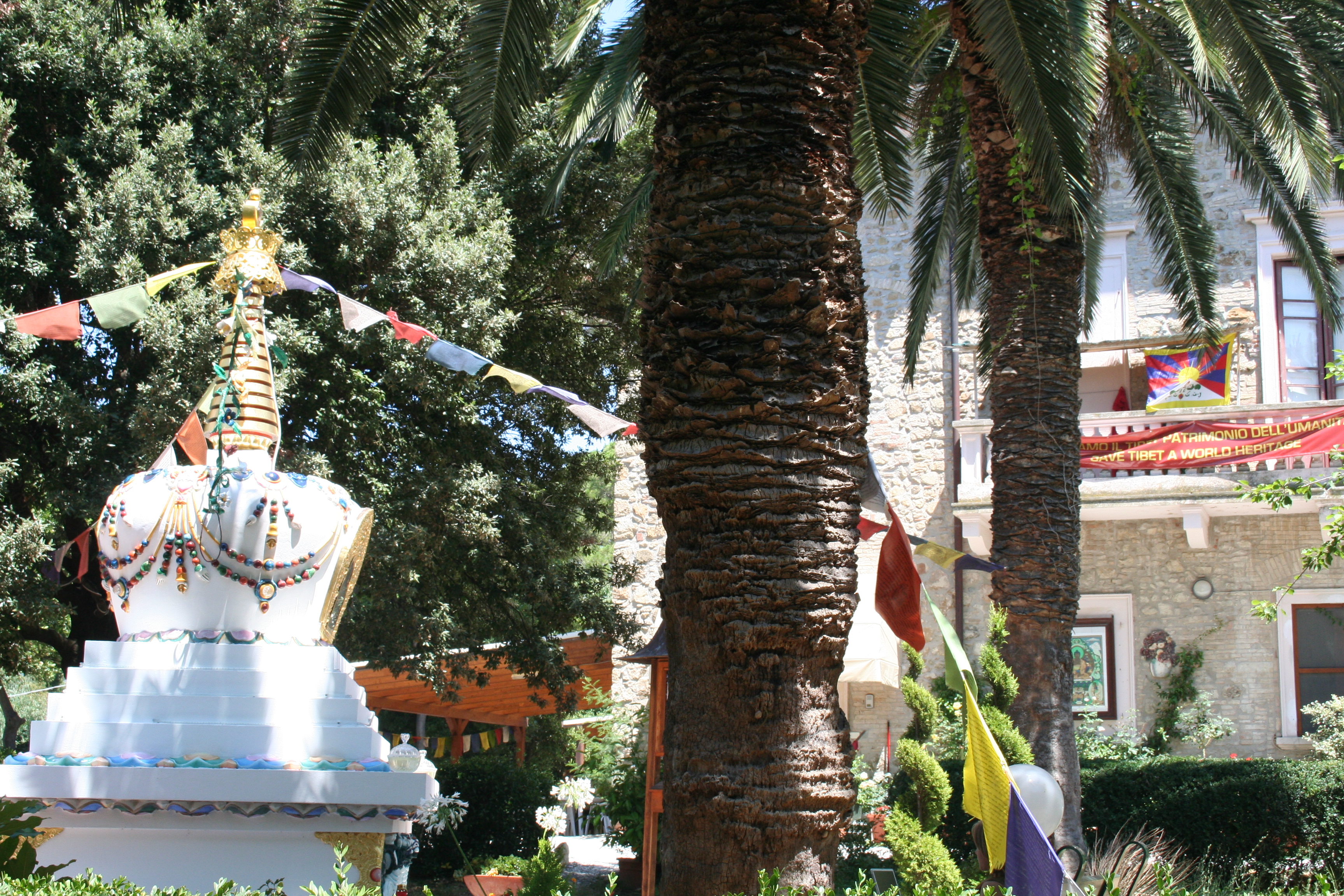
In the rolling countryside of Tuscany sits an unlikely keeper of one of the world's oldest contemplative traditions. Istituto Lama Tzong Khapa occupies a historic castle in rural Italy, a setting that speaks to a deeper truth: the teachings of Tibetan Buddhism have traveled far from the Himalayas, finding root in European soil and reshaping how Westerners engage with philosophy, meditation, and the mind itself. Since its founding in 1976, the Institute has become one of Europe's most respected centers for the study and practice of Tibetan Buddhist philosophy, drawing students and practitioners from across the continent to study under both Tibetan masters and highly trained Western instructors.

Read · 5 sections

A Bridge Between Traditions

Istituto Lama Tzong Khapa was founded by two visionary teachers: Lama Thubten Yeshe and Lama Zopa Rinpoche, architects of what would become the Foundation for the Preservation of the Mahayana Tradition (FPMT)—today the world's largest international network of Mahayana Buddhist centers. The Institute's founding reflected a particular mission: to make the rigorous philosophical and psychological teachings of Tibetan Buddhism accessible to Western practitioners without diluting their depth or authenticity. Rather than simplify the tradition for European audiences, the founders chose to embed it in serious scholarship and contemplative practice, staffing the center with teachers equally fluent in both Tibetan and Western idioms.

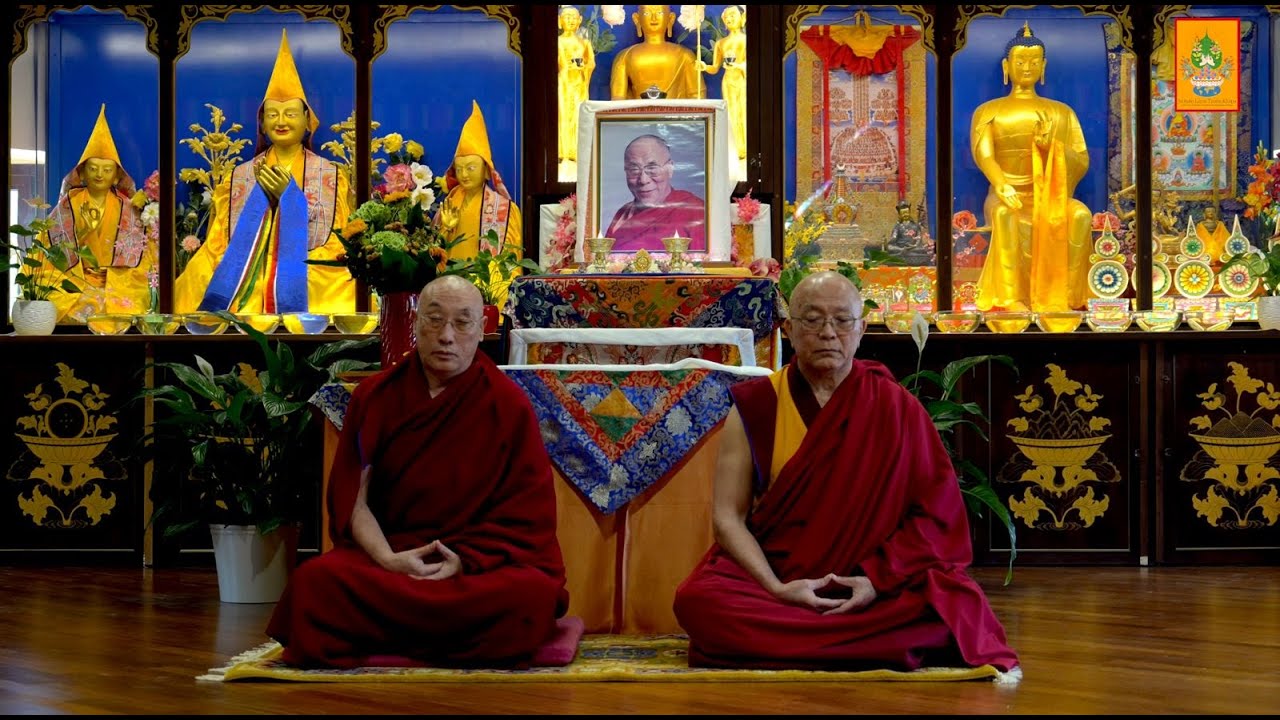
This commitment to intellectual and spiritual rigor has only deepened. The Institute is today guided by resident Geshes—master scholars in the Gelug tradition—Ghesce Tenzin Tenphel and Ghesce Jampa Gelek, both of whom carry decades of monastic training and teaching experience. The presence of resident Geshes signals something important: this is not a retreat center offering weekend workshops, but a place where serious students can undertake the long, systematic study that Tibetan Buddhism demands.

What Draws People to Study Here?

The Institute's curriculum reflects the breadth of Tibetan Buddhist philosophy. Courses span Buddhist philosophy and psychology, meditative practice, and increasingly, the dialogue between Buddhist thought and modern science. This last focus is particularly significant. As contemplative neuroscience has gained legitimacy in academic and scientific circles, centers like Istituto Lama Tzong Khapa have become crucial spaces where ancient psychological insights—mapped with extraordinary precision in Buddhist philosophy—meet contemporary research. Students come to understand how Buddhist analysis of mind, emotion, and perception connects to what neuroscientists are discovering about neuroplasticity, emotional regulation, and well-being.

The setting itself is integral to the work. A castle in the Tuscan landscape offers more than aesthetic beauty; it provides a container for deep focus. Removed from urban distraction yet connected to a living monastic and teaching community, students can engage with philosophy and meditation in an environment designed to support sustained attention and introspection. The castle's history—witness to centuries of human life, ambition, conflict, and transformation—mirrors the interior journey that Buddhist practice invites.

Part of a Global Network

The Institute does not operate in isolation. As a member of both the Italian Buddhist Union and the FPMT, Istituto Lama Tzong Khapa participates in a worldwide movement to preserve and transmit Mahayana Buddhist teachings. The FPMT's spiritual direction comes from His Holiness the Fourteenth Dalai Lama, whose own commitment to dialogue with science, education, and cross-cultural understanding has shaped the organization's ethos. This connection places the Institute within a lineage that honors both traditional scholarship and contemporary relevance.

What makes the Institute distinctive, however, is not its network affiliation but its location and character. While many Buddhist centers cluster in or near major cities, Istituto Lama Tzong Khapa has chosen to remain rooted in the Tuscan countryside. This decision reflects a particular vision: that authentic Buddhist practice requires stepping back from constant stimulation and distraction, that philosophy demands unhurried study, and that meditation needs time and space to take hold. The castle becomes a threshold—a place where people from busy European cities can cross into a different rhythm of learning and self-inquiry.

Excellence in Teaching

The Institute's reputation for philosophical rigor rests on the quality of its teaching staff. Both Tibetan masters and Western instructors bring serious credentials and lived experience. Tibetan teachers carry the direct lineage of monastic training; Western teachers often combine their own long-term practice with academic training in Buddhist studies, psychology, or philosophy. This combination creates a rare pedagogical environment where students encounter the tradition from multiple angles—through traditional interpretation and through Western intellectual frameworks—allowing for deeper understanding and personal integration.

Courses on Buddhist psychology are particularly relevant to contemporary practitioners. Buddhist philosophy contains a sophisticated analysis of mind, emotion, perception, and cognition developed over centuries of meditative inquiry. When presented by qualified teachers, this material speaks directly to modern concerns about stress, attention, emotional reactivity, and meaning. Students discover that the Buddhist analysis of suffering and its causes—central to the tradition's framework—maps onto patterns they recognize in their own lives, making the philosophy immediately applicable rather than merely historical or cultural.

Where to go from here

For anyone drawn to Buddhist philosophy and practice, or curious about how ancient wisdom traditions address contemporary challenges in understanding mind and emotion, Istituto Lama Tzong Khapa offers a serious and welcoming entry point. The Institute's website and course offerings provide details on specific programs, from introductory meditation to advanced philosophical study. Those interested in the intersection of Buddhist thought and modern science, or in spending extended time in contemplative study, will find the Institute's approach both rigorous and human-centered. The tradition itself—with its emphasis on reducing suffering, cultivating wisdom, and developing compassion—remains as relevant today as when the Dalai Lamas first articulated it centuries ago; Istituto Lama Tzong Khapa stands as one of Europe's finest guardians of that living transmission.

Comments

Loading the conversation…

Istituto Lama Tzong Khapa
ArtistIstituto Lama Tzong Khapa

Founded in 1977 by Lama Yeshe and Lama Zopa Rinpoche in the Tuscan hills near Pisa, Istituto Lama Tzong Khapa is Europe's premier center for rigorous Tibetan Buddhist study. Part o…

View profileWebsite
Explore Topics
Tibetan-buddhismMeditationPhilosophyContemplative-practiceEurope

Got Questions?

Frequently Asked Questions

Istituto Lama Tzong Khapa is one of Europe's leading Tibetan Buddhist centers, located in a historic castle in the Tuscan countryside in Italy. Founded in 1976 by Lama Thubten Yeshe and Lama Zopa Rinpoche, it offers programs in Buddhist philosophy, psychology, meditation, and contemplative practice under qualified Tibetan and Western teachers.
The Institute offers courses on Tibetan Buddhist philosophy and psychology, meditation practice, science and Buddhism dialogues, and various contemplative practices. Programs range from introductory workshops to advanced philosophical study conducted by resident Geshes and experienced Western instructors.
The Institute is guided by resident Geshes Tenzin Tenphel and Ghesce Jampa Gelek, both accomplished scholars in the Gelug tradition of Tibetan Buddhism. Teaching staff also includes highly trained Western instructors versed in both Buddhist philosophy and contemporary practice contexts.
The Institute is a member of the Foundation for the Preservation of the Mahayana Tradition (FPMT), the world's largest international network of Mahayana Buddhist centers. It follows the Gelug tradition and looks to His Holiness the Fourteenth Dalai Lama as its spiritual guide.
The Tuscan castle setting provides an intentional retreat from urban distraction, creating space for sustained study and deep contemplative practice. The historic environment supports the kind of unhurried, focused learning that Buddhist philosophy and meditation traditionally require.
Through courses exploring science and Buddhism, the Institute bridges traditional Buddhist psychology—which maps mind and emotion with precision—with contemporary neuroscience research on neuroplasticity, emotional regulation, and well-being.
Yes, it is a member of both the Italian Buddhist Union and the FPMT, connecting it to a global network of Mahayana Buddhist centers while maintaining its distinctive location and teaching approach in Tuscany.
The Gelug is a major school of Tibetan Buddhism emphasizing rigorous philosophical study alongside meditative practice. It is the tradition of the Dalai Lamas and is known for its systematic approach to understanding mind, emotion, and the path to liberation.

Continue Reading

More on Retreats

View All
Lama Yeshe's Living Presence: A Student's Testament
Inspire

Lama Yeshe's Living Presence: A Student's Testament

Fabrizio Pallotti recalls Lama Yeshe's transformative impact on Western dharma students—a teacher whose humility and gratitude shaped an ent…

1 min read
50 Years of Buddhist Study and Service in Tuscany
Inspire

50 Years of Buddhist Study and Service in Tuscany

Since 1976, Istituto Lama Tzong Khapa has cultivated Buddhist practice, scholarship, and community in rural Italy. The institute marks its 5…

1 min read
Govinda Jaya: How Sacred Sound Awakens the Heart
Inspire

Govinda Jaya: How Sacred Sound Awakens the Heart

Radhika Das channels the liberating power of mantra through a luminous kirtan performance at Medicine Festival, invoking divine names to pur…

1 min read
Deva Premal & Miten Return to Melbourne After Years Away
Inspire

Deva Premal & Miten Return to Melbourne After Years Away

Deva Premal and Miten announce their return to Melbourne's Palais Theatre on October 26, celebrating 35 years of mantra and music with longt…

1 min read

Keep exploring

Continue your journey

More wisdom and gatherings from across the BrightStar directory.

More Articles

Browse the full library of teachings, interviews, and guides.

Back to all articles →

Teachers & Artists

Explore the lineages, musicians, and guides of the conscious world.

Explore artists →

Find an Event

Kirtan, retreats, sound baths, breathwork, festivals — happening soon.

Browse events →