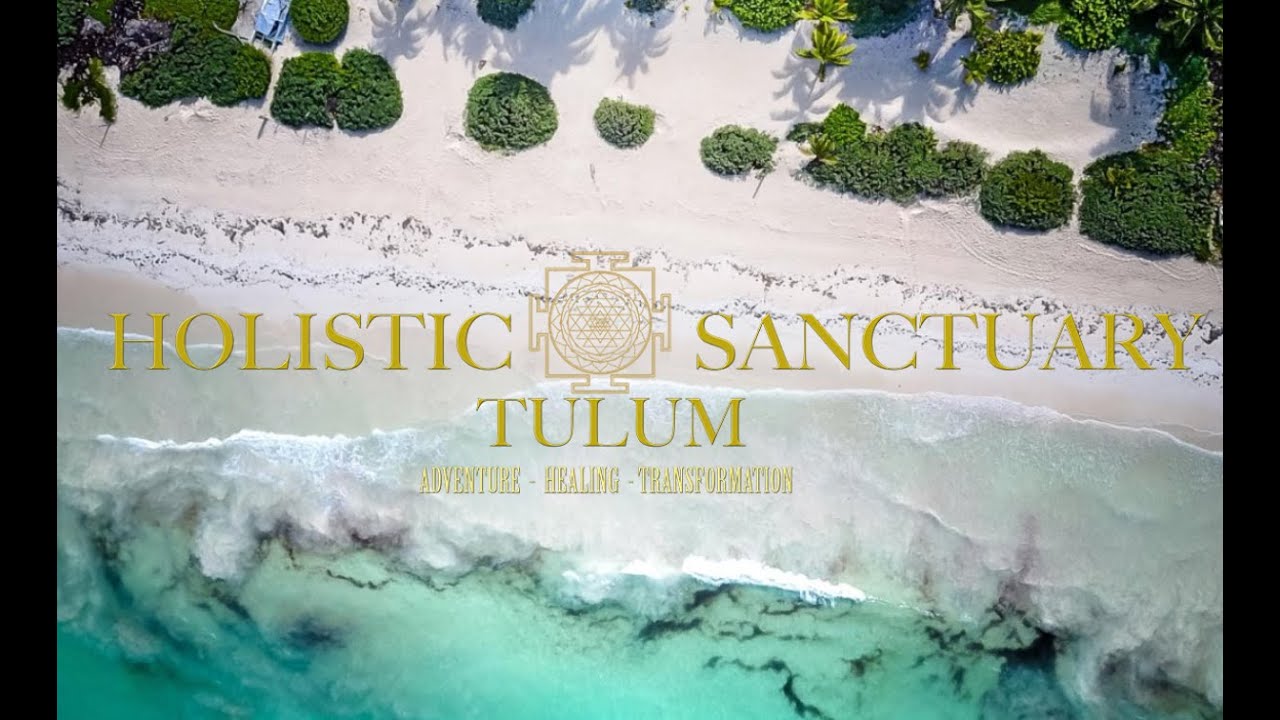
At Sanctuary Tulum, a private oceanfront retreat in Mexico's Riviera Maya, luxury means something radically different than marble columns or infinity pools. Upon arrival, guests step into a realm designed for transformation rather than display—a space where medical oversight and plant medicine work alongside ancestral wisdom, where every meal celebrates abundance and every session marks a step toward inner balance. The center's philosophy rests on a single conviction: that true wellness requires the whole person—body, mind, and soul—and that healing happens best when science and nature move in harmony rather than opposition.
What does luxury actually mean?
Sanctuary Tulum begins with a fundamental challenge to how the wellness industry defines its highest offering. The center explicitly rejects the equation of luxury with "material grandeur," instead grounding its definition in what it calls "nurturing experiences that foster growth, rejuvenate the body, and awaken the mind." This distinction cuts against the grain of luxury marketing. In an era when high-end retreats often compete on thread count and wine lists, Sanctuary frames luxury as an internal event—the quality of transformation available to you, not the visual drama of your surroundings. Every detail, from oceanfront villas to meal preparation, serves that philosophy rather than Instagram aesthetics. The premise is that people arrive seeking something real: not escape, but encounter. Not display, but depth.
How does plant medicine integrate into a contemporary medical setting?
Sanctuary's most distinctive offering is its pairing of plant medicine—a practice rooted in ancestral traditions, particularly from indigenous Amazonian and Mesoamerican cultures—with full medical supervision. The center frames this not as New Age experimentation but as grounded work: "facilitating healing through plant medicine" as an act rooted in "giving, nourishing our guests, our community, and our world." Crucially, the center operates with "dedicated professional medical staff, providing the safest environment 24 hours a day." This detail matters. It distinguishes Sanctuary from informal or underground plant medicine retreats; the medical infrastructure means continuous monitoring, emergency protocols, and clinical oversight throughout every session. Plant medicine, in this framework, isn't separate from or opposed to conventional medicine—it's integrated within it, each approach informing the other. The client receives both ancestral protocol and contemporary clinical care, working in concert rather than competition.
Why is medical presence essential in transformative work?
The 24-hour medical staff at Sanctuary serves both practical and philosophical functions. Practically, it ensures physical safety during plant medicine sessions, which can produce intense physical and psychological states requiring immediate clinical response. Philosophically, it signals that transformation and medical care are not opposing forces but complementary ones. Many wellness spaces positioning themselves as cutting-edge deliberately reject medical models, casting doctors as obstacles to authentic healing. Sanctuary's approach inverts this: it holds that the safest environment for profound inner work is one where medical expertise is present and trusted. This both/and worldview—ancestral traditions *and* contemporary medicine, rigorous safety protocols *and* deep inner work, nature *and* science—represents a coherent integration rather than a compromise between ideologies.
What does blending ancestral wisdom with contemporary technique mean in practice?
The center describes offering "a harmonious blend of ancestral wisdom and contemporary techniques" through its oceanfront villas and structured programming. While the facility's own statement doesn't specify individual modalities, this framing suggests deliberate eclecticism: drawing from traditional plant medicine lineages, yoga, meditation, therapeutic psychology, nutritional science, and perhaps somatic work. Each "session" is intentional; each "meal a celebration of life's abundance." Deliberateness is the operative principle here. This isn't passive vacation. It's structured work in a supportive environment, guided by professionals trained in multiple lineages. An individual undertaking a two-week program would encounter not just plant medicine ceremonies but coordinated nutritional protocols, guided meditation, perhaps somatic work, and consistent medical monitoring—all woven around a coherent healing narrative.
How does location and nature function as medicine?
Sanctuary is intentionally positioned as "an oasis of holistic healing" where connection with nature is not decorative but active in the therapeutic process. The oceanfront setting is structural, not incidental. The center's language—"the pristine embrace of nature," "not apart from it" but "harmoniously existing with it"—indicates that environmental immersion is itself therapeutic. For people accustomed to urban disconnection, two weeks in an ocean-facing villa with consistent exposure to natural rhythms, guided practice, and supported inner work can catalyze significant shifts. The "serene cocoon" Sanctuary describes accomplishes something specific: it's simultaneously protected (medical staff, privacy, structure) and radically open (oceanfront, natural cycles, exposure to place). Neither isolation nor chaos, but what one might call controlled openness.
Who seeks this kind of healing?
The center's emphasis on "ailment and addictions" and "personal journeys of transformation" identifies its core constituency: people seeking real change. This includes those struggling with substance dependence, trauma, existential questions, or the accumulated weight of an unexamined life. Notably, Sanctuary frames its work in language that moves beyond the clinical: "we don't merely address ailment and addictions; we touch souls." This is soulcraft language, not just medical intervention. The distinction matters. Clinical detoxification can be sterile and procedural; Sanctuary positions its detoxification programs as spiritual encounters—spaces where individuals "forge profound connections with their inner selves" and where healing becomes an act of reconnection to self, to the natural world, to what the center calls "life's abundance." It's a both/or proposition: rigorous medical safety *and* soul-level work.
What role does privacy play in the healing process?
Sanctuary emphasizes that it offers its experience "encapsulated in discretion and luxury." For clients addressing addiction, trauma, or sensitive personal work, this matters enormously. The retreat functions as a contained space where vulnerability is met not with judgment but with professional confidentiality and supportive structure. Discretion also acknowledges a practical reality: many people seeking plant medicine remain concerned about social stigma or professional consequences. By positioning privacy and discretion as core values—alongside luxury—Sanctuary signals that it understands this landscape and creates protected harbor within it. Healing sometimes requires invisibility, at least temporarily.
How does transformation continue after the retreat ends?
Sanctuary's framing—that "each visit becomes a chapter in a story of self-discovery" with "every session a step towards inner balance"—implies that a retreat stay functions as one critical moment in an ongoing arc, not a complete solution. This understanding reflects something hard-won in the healing arts: intensive experiences catalyze opening; sustained personal work maintains and deepens that opening. The initial shift that arrives in a retreat setting requires integration, practice, and often community to solidify into lasting change. What specific integration support Sanctuary provides after departure—follow-up coaching, community access, practice protocols—remains unexplained in the available material, but the language suggests these elements are understood as part of the larger container.
Where to go from here
If you recognize in yourself a call toward transformation—whether prompted by addiction, trauma, existential hunger, or the simple knowing that you need to change—Sanctuary Tulum articulates one coherent path: a space where ancestral medicine, medical oversight, and nature's rhythm converge to create conditions for genuine healing. The actual work of transformation is internal; the role of any retreat center is to provide the right container: safety, structure, skilled guidance, and the time to do what urban life does not permit. Whether Sanctuary or another center ultimately calls to you, the prerequisite is the same: the willingness to arrive as you are, to be vulnerable, to be held, to be changed. That choice, made honestly and without illusion, is where the real journey begins.