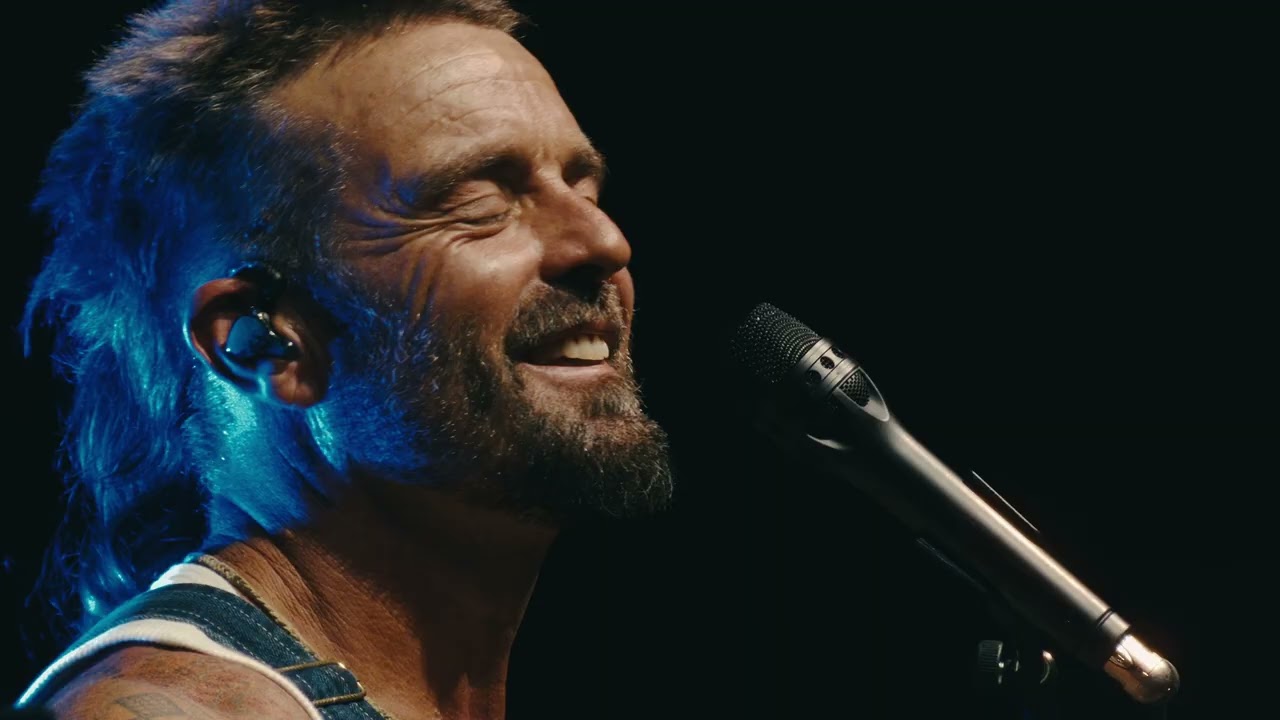
Xavier Rudd's live performance of "We Deserve to Dream" at Brussels' Ancienne Belgique venue captures a solo artist in intimate conversation with himself and his audience during the post-COVID reopening of 2022. The song weaves together themes of belonging, the integration of personal highs and lows into growth, questioning and seeking truth, and a collective aspiration to live authentically—culminating in the refrain that we, as humans, deserve the right to dream.
The Context: A Return to Togetherness and Intimate Performance
Xavier Rudd's performance at Ancienne Belgique in November 2022 arrived at a historically significant moment. As Rudd himself explained in the video description, he was returning to solo performance after many years of playing with band members. More broadly, the world was emerging from COVID-19 lockdowns, and communities were rediscovering the power of gathering in shared physical space. The venue itself—famous, beloved, and intimate—became the backdrop for an artist "locked into an intimate space with myself and my perception of the world at the time." This wasn't merely a concert; it was a cultural checkpoint, a moment of remembering "the importance of our basic freedoms and the power of community coming together as one."
The song "We Deserve to Dream" carries the weight of that context. Performed solo with guitar, it becomes less a show and more a shared reflection—an artist and audience processing collectively what it means to belong, to question, and to hope after disruption.
What Does It Mean to Truly Belong?
The opening movement of the song establishes its central emotional anchor. Rudd sings: "I belong here / I belong with you / all of our questions belong here too." This is not a claim to have arrived at certainty, but rather an assertion that the act of belonging is not conditional on having answers. Early in the song, he recalls a personal journey—"learned so much / fell in love with you / took my chances with what I knew"—that led him to a paradoxical realization: "I spent so long in the world given chase / thought my place was some other place."
This captures a common existential pattern: the restless seeking that imagines home exists elsewhere, only to discover, over time, that belonging is not a destination but a present-tense acceptance. The refrain "we belong here and we deserve to dream" suggests that dreaming is not frivolous escapism but a fundamental human entitlement—one that flows from the ground of genuine belonging.
The Integration of Struggle Into Growth
A recurring line in the song is: "we've been high, Darling, we've been low / and all of it's helped us grow." This is not motivational platitude but a deliberate theological stance. The song doesn't celebrate only the highs or romanticize the lows. Instead, it honors the total arc—the full spectrum of experience—as necessary for development. Rudd revisits this theme multiple times, anchoring it deeper each time it returns, suggesting that integration of difficulty is not a side benefit but central to the song's message.
Later, in the second verse, Rudd articulates the inner struggle more explicitly: "every waking hour of every waking day / I wake up to the sound of discussions in my brain / I don't know the answers and I don't know the truth / and I don't really know what I've been dragging since my youth." This is a portrait of ongoing uncertainty, of carrying unresolved weight. Yet he responds not with despair but with persistence: "but I push on / I philosophy / keep my prophecies by my side." He continues seeking, reflecting, holding his own intuitions close while remaining open.
Seeking Truth Amid Uncertainty
The song's middle passages turn toward spiritual longing. "I hope to meet you at the gates / see that light shining on your face" invokes an encounter beyond the present moment—a meeting with something transcendent, a light that shines on another (or perhaps on the self made whole). This isn't naive optimism. It's framed within the context of "I don't know the answers and I don't know the truth," meaning the hope persists precisely because certainty is absent.
The refrain "keep my prophecies by my side" is revealing. Rudd doesn't claim to speak prophecy or to know the future, but he keeps his own inner knowing, his intuitions, close. This stance—respecting inner vision while admitting to uncertainty—defines a contemplative posture rather than a dogmatic one.
Personal Memory and Collective Longing
As the song progresses, Rudd introduces specific imagery: "with whiskey on my breast / South America running through my head." These are personal markers—places and states that have shaped him. He then sings, "and you I was taking / it was you I was not mistaken," suggesting a relationship (romantic, spiritual, or both) that was a true finding, a recognition rather than an error. This moves the song from abstract belonging to particular love—the realization that some encounters are not mistakes but confirmations.
The transition is important: from "I belong here" to "you belong here / you belong with me / all of your secrets are safe with me." The song shifts from individual assertion to relational covenant. It's an invitation to a listener (or a partner, or the audience collectively) to find in this space a sanctuary where truth-telling is possible.
What Does the Refrain "All We Want" Reveal About Human Desire?
In the final section, the song distills itself into its most accessible form, a mantra-like repetition of four desires:
- "All we want is running down the mountains"
- "All we need is flown through the trees"
- "All we have swimming in the ocean"
- "All we can do is be our best"
These are not luxury desires. They're elemental: movement through landscape (mountains), freedom of motion (trees), immersion in vastness (ocean), and the simplest aspiration—to be the best version of ourselves that we can be. There's a poetic economy here. Running, flying, swimming—these are the body's fundamental modes. Mountains, trees, ocean—these are the primary landscapes of earth. Best—this is character, integrity, authenticity.
The repetition of this section, building with intensity, suggests that these simple longings are not obvious to everyone, nor are they easily maintained. They need to be named, restated, reinforced. The performance itself—a live musician singing these words to a gathered crowd in the post-COVID moment—becomes an act of collective remembering: Yes, this is what we want. This is what matters.
The Closing Vision
The song ends where it began, with a return to the image of light and gates: "dream and I hope to meet you at the gates / see that light shining on your face." This framing suggests that dreaming itself is a kind of spiritual practice, a way of staying oriented toward something true and transcendent even in the midst of uncertainty, struggle, and the ordinary complexity of being human.
Where to Go From Here
For listeners seeking to engage more deeply with these ideas, consider: Where in your own life have you discovered that belonging isn't about having arrived but about accepting where you are? How do you integrate your own highs and lows into a narrative of growth rather than division? And what simple desires—like running, flying, swimming, becoming your best—do you need to name and return to regularly? The song's power lies not in offering answers but in creating space for these questions to be asked aloud, together.