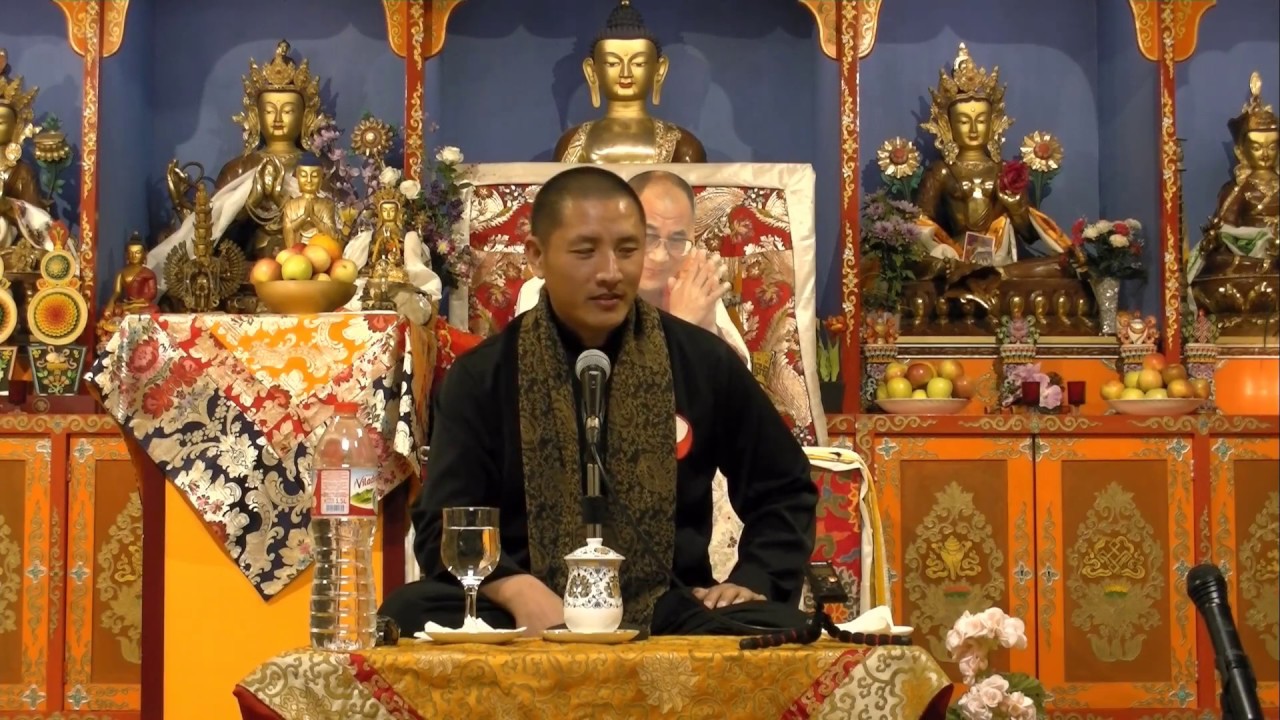
Tummo is a Tibetan Buddhist practice of inner fire that exists naturally in the human body. Tulku Lobsang Rinpoche distinguishes between foundational Tummo (for general health and happiness) and advanced Tummo (for higher spiritual realization). The foundational practice requires minimal conditions and involves specific breathing, movement, and meditation techniques combined with lifestyle choices—avoiding overeating and excessive clothing, cultivating genuine care for others—to keep the inner fire strong. When activated, Tummo melts the "frozen ice body" (characterized by pain, tension, and blocks) into a fluid, pain-free body and a calm, happy mind. Rinpoche teaches that the nine-breath exercise opens the body's channels and allows the healing fire to flow freely from the navel center upward.
What is Tummo and Why Does It Matter?
Tummo, also called the inner fire or wisdom fire, is not a foreign energy imported into the body—it is something every human naturally possesses. According to Tulku Lobsang, Tummo operates on three distinct levels: physical, energetic, and mental. On the physical level, it strengthens the body's innate self-healing powers. On the energetic level, it allows vital force to circulate freely throughout the network of channels. On the mental level, Tummo is the source of love, joy, happiness, and bliss. The practice is rooted in the Tibetan Buddhist tradition and has been preserved and transmitted by masters for centuries.
The significance of Tummo lies in its multifaceted approach to human well-being. Rather than treating health and happiness as separate concerns, Tummo unifies them through the principle of inner fire. Rinpoche emphasizes that once the inner fire is completely extinguished, "there is no life power. You know, we lose everything, we lose all the self-healing power." This suggests that Tummo is not merely an optional wellness technique but a fundamental energetic principle underlying human vitality.
What is the Difference Between Foundational and Advanced Tummo?
Tulku Lobsang makes a crucial distinction to clarify which practice is being taught. Foundational Tummo is oriented toward health and happiness and requires minimal preconditions. As he states, "whoever wants a healthy body, and whoever wants a happy mind... that is enough condition to practice the foundational Tummo." The foundational version is what Rinpoche is sharing in the course.
Advanced Tummo, by contrast, is reserved for practitioners pursuing higher spiritual realizations and requires extensive preparation, initiations, and ethical conditions. Rinpoche does not teach advanced Tummo in this introduction, explaining that "there are many conditions, many preparations needed. It is not something to be shared with everybody." However, he clarifies an important sequence: "whoever wants the advanced Tummo practice, must first learn the foundational Tummo." This means the foundational practice serves as a genuine preparation for advanced spiritual work, not merely a standalone wellness method, though it delivers real benefits on its own.
How Does the Body's Water Nature Enable Inner Fire Practice?
Rinpoche employs a striking anatomical metaphor to explain why humans can practice inner fire. He describes the body as fundamentally a "water body." In this model: the body itself is earth, the brain is the ocean, the seven main chakras (crown, throat, heart, navel, and sexual) are seven lakes, the 72,000 energy channels are 72,000 rivers, and the approximately 28 billion pores are like streams of water. This water nature is not incidental—it is essential. "Without the water body, we would not be able to practice the inner fire," Rinpoche teaches. Moreover, the fact that we live on a water planet and possess water bodies is presented as a rare cosmic condition that enables this practice to work.
The water metaphor also clarifies why the practice requires ongoing maintenance. The inner fire sits approximately four fingers below the navel. When that region has space and fluidity, fire can flow upward through the channels. When the body becomes blocked or constricted—what Rinpoche calls the "frozen ice body"—the fire cannot move, and the entire system becomes stagnant.
What Causes the Inner Fire to Weaken or Die?
Rinpoche identifies multiple causes that transform the naturally fluid water body into a frozen, blocked state. These causes fall into mental, emotional, behavioral, and dietary categories. "Because of our way of thinking, or because we have... because of our negative emotions, because of negative thoughts and because of our way of eating, because of not enough exercise," the water body becomes frozen. Excessive rumination, negative emotional patterns, and sedentary lifestyle all contribute to extinguishing the fire. The metaphor of a "frozen ice body" describes a state of chronic tension, pain, blocks, and stress.
Dietary habits are given special emphasis. Overeating is particularly damaging because excess food in the digestive tract literally blocks the space needed for inner fire and its accompanying wind (vital energy) to flow upward from the navel center. "When you eat too much, you are completely full with food, then the inner fire can not flow from down to up and you block the fire." Conversely, eating too little starves the fire of the subtle fuel it needs. The teaching is not ascetic but balanced: neither excess nor deprivation.
Clothing presents another practical consideration. Wearing excessively thick layers traps heat and suppresses the natural circulation of inner fire. Rinpoche advises beginners to maintain light, breathable clothing even when feeling cold, as the practice itself generates warmth. Overdressing signals and reinforces a mentally constricted state that dampens the fire's vitality.
What are the Simple Rules for Generating and Maintaining Inner Fire?
Tulku Lobsang offers three straightforward practices that do not require esoteric knowledge or advanced equipment. The first rule is to cultivate genuine affection for people. "People are the best fuel of the inner fire," he teaches. While appreciation for nature—mountains, rivers, animals—also helps, direct human connection and care generate the strongest fire. This shifts the focus from a purely individualistic practice to one grounded in relational warmth.
The second rule addresses diet: maintain moderate eating. Avoid both overeating and eating too little. The goal is to provide enough fuel for the body and the subtle fire without creating obstruction. This is a principle of equilibrium rather than a restrictive diet.
The third rule concerns clothing: wear light, breathable garments. Do not bundle up excessively, even when feeling cold. Beginners especially should prioritize thin layers, allowing the body to adapt and the inner fire to express itself through natural heat generation. This may seem minor, but it reflects the philosophy that external conditions either support or suppress the inner fire's expression.
How Does Overeating Block the Inner Fire?
Rinpoche explains the mechanism with anatomical precision. The inner fire is located four fingers below the navel chakra. This is the center from which the fire must rise upward through the channel system to energize the whole body. When the stomach and digestive tract are packed with food, there is literally no space for the subtle energy and wind that accompany inner fire to circulate. "When you overeat, there is no space left for the fire to flow from down to up. The fire and the wind, the fire accompanying wind, the inner fire, have no space to flow from down to up." The excess food becomes a physical blockage that prevents energetic movement.
This teaching integrates practical nutrition with subtle-body physiology. The point is not moral judgment about eating but recognition that fullness creates mechanical obstruction. Eating moderately preserves the space and conditions needed for inner fire to rise and distribute its warmth and vitality throughout the body's channels.
What Happens When the Frozen Ice Body Transforms into a Water Body?
When the inner fire is maintained and strengthened through practice, a dramatic transformation occurs. The "frozen ice body"—marked by pain, tension, blocks, and stress—melts into what Rinpoche calls a "water body": fluid, responsive, and energized. "It means the body without pain, a body without blocks. You know, your body becomes very light and you feel very, very good in your body."
This transformation is not merely physical relief. The physiological change generates a cascading effect on the mind. A body that is free of pain and tension, warm and fluid, naturally supports a calm and happy mind. "With the power of inner fire we transform the frozen ice body into clear, calm, let's say, warm water, into this nice, soft, warm water. And this makes your body free of pains, free of tension, free of blocks. And then you have a more blissful body, you have a more energized body. And that makes you have a calm mind and a happy mind."
The practice thus unifies body and mind healing. The inner fire is not presented as a mystical symbol but as an actual shift in energetic circulation that produces measurable changes in how the body feels and functions.
What is the Nine-Breaths Exercise and How Does It Work?
Tulku Lobsang introduces a foundational practice called the nine-breaths exercise as the key tool for opening the body's channels and activating inner fire. He teaches that "with the nine breaths exercise your channels open. Then this lets the ice, pain, stress body melt." The exercise is described as simple but very effective, combining specific breathing patterns with physical movement and meditative awareness.
The nine-breaths exercise is designed to dislodge stagnant energy and create fluid movement throughout the 72,000 channels. By opening these pathways, the inner fire—which is already present but may be blocked—can flow freely. This flow is what melts the frozen tension and pain held in the body. The exercise serves as both a physical and energetic reset, a way to restart the circulation when it has become constricted.
Rinpoche emphasizes that these are not purely mental visualizations but practices with real physiological and energetic effects. The breathing, the movement, and the intention work together to liberate stuck energy and restore vital circulation.
Why is Inner Fire Called the Medicine for All Problems?
Tulku Lobsang makes a bold claim: "the inner fire is one medicine for all problems." This reflects the integrated nature of the teaching. Because inner fire operates on physical, energetic, and mental levels simultaneously, activating it addresses multiple dimensions of suffering at once. Pain in the body stems from frozen, blocked channels. Mental distress arises from low energy and disconnection from joy. Emotional reactivity is fueled by a depleted inner fire. By strengthening the fire, the practitioner simultaneously addresses physical pain, energetic stagnation, and mental-emotional imbalance.
Rinpoche frames inner fire as "the source of all happiness or source of all energy." This is not metaphorical language in the spiritual sense alone but a description of how the practice actually works. When the fire is strong, the body is warm, fluid, and resilient. The mind is naturally calm and happy. When the fire is weak or extinguished, all dimensions of well-being collapse.
What Role Does Wrong Thinking and Behavior Play in Extinguishing Inner Fire?
Rinpoche traces much of the inner fire's decline to psychological and behavioral factors. "Of course, we are all born with inner fire, but because of a wrong way of thinking, wrong behaviors, mentally, physically," the fire gradually dims. This suggests that human beings are not born deficient but rather develop blockages through habitual patterns of mind and action.
The "wrong way of thinking" encompasses excessive rumination, negative thought patterns, and a contracted mental state that literally affects the body's energetic circulation. Wrong behaviors include sedentary living, overeating, overdressing, and isolation from genuine human connection. The good news, implied in the teaching, is that these patterns can be reversed. The foundational Tummo practice is designed to do exactly that—restore the naturally alive, fluid state that humans possess by birth.
Where to go from here
The foundational Tummo practice taught by Tulku Lobsang is an accessible entry point into a sophisticated system for activating natural healing capacity. Those interested in exploring this practice further should seek direct instruction in the nine-breaths exercise and related techniques, ideally from a qualified teacher in the Tibetan Buddhist tradition. The practice combines the scientific principle of improving circulation and reducing stress with the contemplative aim of awakening joy and wisdom. Practitioners can begin immediately with the three simple rules: cultivate care for others, eat moderately, and wear light clothing. These foundational habits create the conditions for inner fire to strengthen naturally. For those drawn to deeper spiritual work, the foundational practice also prepares the ground for advanced Tummo study under appropriate guidance and with proper preparation.