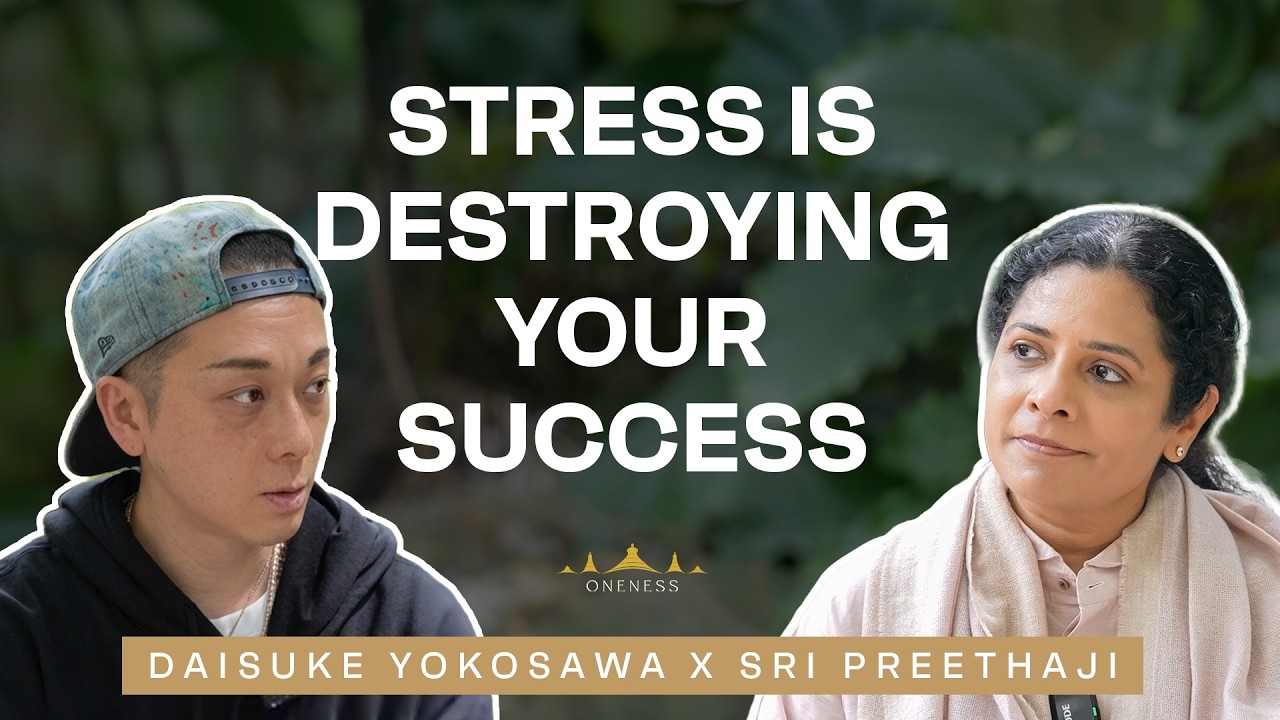
The widely held belief that stress is necessary for success is a misconception that overlooks stress's destructive impact on health and happiness. According to the Oneness Movement, real success is not measured solely by goal achievement, but by the quality of joy and blissfulness experienced throughout life. Reframing success to prioritize well-being creates the conditions for both personal fulfillment and sustainable achievement.
Is Stress Really the Price of Success?
Western culture has long promoted the narrative that stress is the cost of climbing the ladder to success. The harder you push, the more anxious you feel, the faster you hustle—this formula is presented as the only way to accomplish meaningful goals. Yet this equation contains a fundamental error in reasoning. Stress and achievement are not causally linked; rather, chronic stress actively undermines the clarity, creativity, and resilience needed for genuine accomplishment.
The Oneness Movement challenges this assumption directly, arguing that stress is not a stepping stone but an obstacle. When you operate from a place of anxiety and pressure, your nervous system remains in a state of alarm. This state narrows your perception, hardens your thinking, and depletes your energy reserves. Over time, the body suffers: elevated cortisol levels damage immune function, sleep quality declines, and cognitive performance deteriorates. The irony is that the very stress you believed was helping you succeed is actually sabotaging your capacity to think clearly and perform well.
What Does Real Success Actually Look Like?
If stress is not the engine of success, what is? The teaching reframes achievement entirely. Real success is not merely reaching a goal or accumulating external markers of accomplishment. Rather, it is the ongoing experience of joy, ease, and blissfulness in how you live. This is not a call to abandon ambition or stop working toward meaningful objectives. Instead, it is an invitation to achieve those objectives from a place of well-being rather than desperation.
When you release the belief that stress is necessary, something shifts internally. You begin to work toward goals from a place of clarity and purpose rather than fear and urgency. Your decisions become wiser because they are not clouded by anxiety. Your energy is more abundant because it is not being consumed by tension. Paradoxically, this state of relative ease and inner stability often produces better outcomes than the stress-driven approach ever could.
The Health Cost of Conflating Stress with Achievement
The teaching emphasizes the destructive impact stress has on both mind and body. Chronic stress is linked to heart disease, hypertension, weakened immunity, anxiety disorders, and depression. When you normalize stress as a necessary part of success, you normalize harming yourself in pursuit of goals. But what kind of success is it if you achieve your objectives while your health deteriorates?
Beyond the physical damage, stress erodes your capacity for joy itself. It creates a mental habit of urgency and scarcity, making it difficult to appreciate what you have or to find pleasure in simple moments. You become so focused on the next milestone that the present becomes something to endure rather than inhabit. This psychological state is self-perpetuating: the less joy you experience now, the more you believe you must succeed in the future to finally feel happy—which only deepens the stress.
How Does Well-Being Support Actual Achievement?
The teaching does not suggest that well-being and goal achievement are mutually exclusive. Rather, they are mutually reinforcing. When you approach your work from a state of relative calm and self-care, several things become possible:
- Clearer thinking: A settled nervous system allows for better focus and more creative problem-solving. You see possibilities rather than threats.
- Sustainable effort: Work done from a place of alignment lasts longer and feels less depleting. You can maintain effort over time without burning out.
- Better relationships: When you are not in a constant state of anxiety, you relate to others with more presence and warmth. Collaboration becomes easier. Others want to support you.
- Resilience: Well-being acts as a buffer against setbacks. When difficulties arise, you have emotional reserves to draw on rather than already being depleted.
- Genuine motivation: Goals pursued from a place of joy and purpose are more likely to align with your true values, making the journey itself meaningful.
Choosing Well-Being as a Practice
Choosing well-being over stress is not a one-time decision but an ongoing practice. It requires becoming aware of the stories you tell yourself about how success works. Notice when you catch yourself thinking "I have to stress about this to succeed" or "Real dedication means suffering." These are narratives you inherited, not truths about reality.
Practical choices support this shift: prioritizing sleep, moving your body, spending time in nature, maintaining friendships, and building moments of rest into your day are not distractions from success—they are the foundation of it. Meditation and other contemplative practices calm the nervous system and help rewire the habit of stress. Setting boundaries around work and learning to say no protect your energy for what truly matters.
Living Fully: The Integration of Joy and Purpose
The ultimate vision offered by this teaching is not one of passive relaxation or resigned contentment. It is one of living fully—meaning you pursue meaningful goals, develop your gifts, and contribute to the world, but you do so from a place of inner stability and joy. Your success is measured not just by external achievement but by the quality of your inner experience throughout the journey.
This shift in perspective is profound. It means you stop deferring joy to some imagined future when all your goals are met. Instead, you begin to experience joy now, in the midst of working toward those goals. You allow yourself to appreciate progress, to savor effort, to find meaning in the process itself. This is what it means to live blissfully—not as an escape from responsibility, but as the ground from which responsible, purposeful action naturally arises.
Where to go from here
If you resonate with the idea that stress is not a prerequisite for success, begin by noticing your own stress narratives. Where do you assume stress is necessary? What would change if you approached that area of your life from a place of well-being instead? Experiment with simple practices that ground you—a daily walk, consistent sleep, time with people you love. Pay attention to whether clarity, creativity, and resilience improve. Consider exploring meditation or other contemplative practices that directly calm your nervous system. Over time, you may discover that the pathway to both achievement and fulfillment runs through well-being, not around it.