
SportsCampFinder

Browse All Camps

Find the perfect camp for your athlete

camps

Basketball Camps
Soccer Camps
Baseball Camps
Football Camps
Volleyball Camps
Lacrosse Camps
Multi-Sport Camps
Elite Training
Overnight Camps
Day Camps
Popular Destinations
BaliSedonaLos AngelesCosta RicaNew YorkSan FranciscoAustinMiamiJoshua TreeTulum
View All CategoriesView All Destinations

Explore All Features

Powerful tools to grow your events

Platform Features

Smart Dynamic Pricing
Ticket Categories
Assigned Seating
Abandoned Cart Recovery
Visitor Recovery
Donations & Sliding Scale
Affiliate Engine
Ticket Scanner
Coupon Codes
Custom Questions
Ticket Sharing
Upsells & Add-ons
Analytics & Reporting
Email Sequences
Waitlist / Notify / Remind
People & Places
Camp OrganizersCamp FacilitiesKnowledge BaseInspiration
View All FeaturesAbout Us
PricingBlog
Language
Saved events
Browse All Events

camps

Basketball CampsSoccer CampsBaseball CampsFootball CampsVolleyball CampsLacrosse CampsMulti-Sport CampsElite Training

Popular Destinations

BaliSedonaLos AngelesCosta RicaNew YorkSan Francisco

People & Places

Camp OrganizersCamp FacilitiesKnowledge BaseInspiration

Platform Features

Smart Dynamic PricingTicket CategoriesAssigned SeatingAbandoned Cart RecoveryVisitor RecoveryDonations & Sliding ScaleAffiliate EngineTicket ScannerCoupon CodesCustom QuestionsTicket SharingUpsells & Add-onsAnalytics & ReportingEmail SequencesWaitlist / Notify / Remind
View All FeaturesAbout Us
PricingBlog
Log inParents & athletesCamp directors
  • Browse all camps
  • Basketball Camps
  • Soccer Camps
  • Baseball Camps
  • Football Camps
  • Volleyball Camps
  • Lacrosse Camps
  • Multi-Sport Camps
  • Elite Training
  • All sports →
  • Orlando
  • Los Angeles
  • New York Metro
  • Dallas / Fort Worth
  • Chicago
  • Phoenix / Scottsdale
  • Atlanta
  • Denver
  • Seattle
  • Boston
  • Houston
  • Philadelphia
  • San Diego
  • Minneapolis / St. Paul
  • All Cities →
  • List your camp
  • Camp director dashboard
  • Pricing
  • Coaches & academies
  • Online registration & payments
  • Waivers & medical forms
  • Check-in app
  • Family messaging
  • Waitlist & notify
  • Camp marketing
  • Reports
  • All features →
  • About SportsCampFinder
  • Camp guides
  • Help Center
  • Contact
  • Careers
  • Press
  • Terms of Service
  • Privacy Policy

Camps

  • Browse all camps
  • Basketball Camps
  • Soccer Camps
  • Baseball Camps
  • Football Camps
  • Volleyball Camps
  • Lacrosse Camps
  • Multi-Sport Camps
  • Elite Training
  • All sports →

Destinations

  • Orlando
  • Los Angeles
  • New York Metro
  • Dallas / Fort Worth
  • Chicago
  • Phoenix / Scottsdale
  • Atlanta
  • Denver
  • Seattle
  • Boston
  • Houston
  • Philadelphia
  • San Diego
  • Minneapolis / St. Paul
  • All Cities →

For Camp directors

  • List your camp
  • Camp director dashboard
  • Pricing
  • Coaches & academies

Features

  • Online registration & payments
  • Waivers & medical forms
  • Check-in app
  • Family messaging
  • Waitlist & notify
  • Camp marketing
  • Reports
  • All features →

Company

  • About SportsCampFinder
  • Camp guides
  • Help Center
  • Contact
  • Careers
  • Press
  • Terms of Service
  • Privacy Policy
SportsCampFinder
© 2026 SportsCampFinder. All rights reserved.
Inspiration

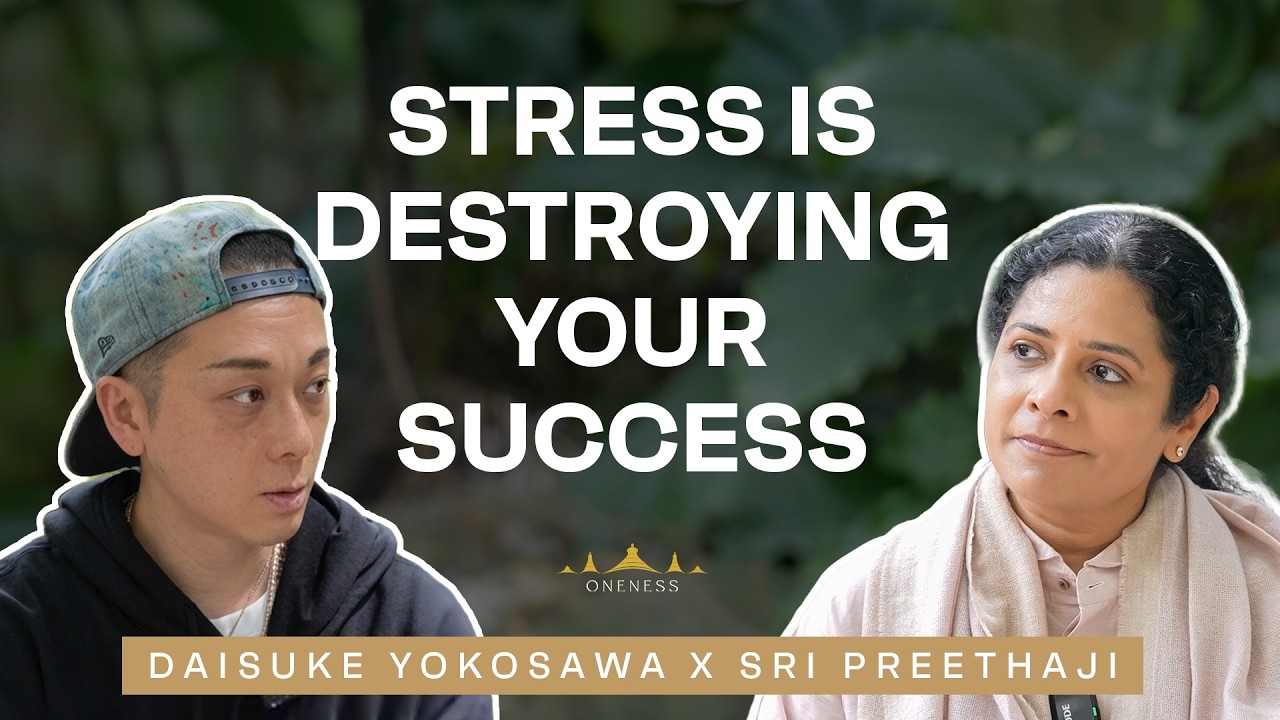
Stress and Success: Breaking the Myth of Pressure-Driven Achievement

Oneness Movement
Oneness Movement
Jul 11, 2025
6 min read

The belief that stress is necessary for success—that pressure drives performance and achievement requires suffering—is a deeply rooted cultural myth. Research in neuroscience, physiology, and contemplative traditions shows stress actually impairs cognition, creativity, and resilience while eroding health and joy. True inner power emerges not from stress but from a state of relaxed awareness and inner coherence, which paradoxically unlocks higher performance, clearer decision-making, and sustainable accomplishment.

Read · 7 sections

Why the Stress-Success Link Feels True

The belief that stress breeds success is so common that it has become almost unquestionable in modern culture. Many associate high achievement with sleepless nights, constant pressure, and the need to "push through" discomfort. This narrative runs deep: we celebrate the "grind," valorize overwork, and equate stress with seriousness and commitment. Psychologically, this conflation makes sense—people who are ambitious do experience stress, and they also sometimes achieve their goals. But correlation is not causation. The stress itself is not what produces the success; rather, the goal-orientation and effort do, and these can be pursued without chronic stress.

What Chronic Stress Actually Does to Your Brain and Body

Neuroscience reveals a more troubling reality. When stress hormones like cortisol flood the system chronically, they narrow attention, impair memory consolidation, reduce emotional regulation, and suppress immune function. The prefrontal cortex—responsible for planning, creativity, ethical reasoning, and complex problem-solving—becomes less active. Meanwhile, the amygdala (the brain's threat-detection center) becomes hyperactive, making us reactive rather than responsive. This is the opposite of the mental state required for genuine achievement. High performers in sports, music, mathematics, and leadership consistently report that their best work emerges from a state of relaxed focus, not panic or pressure.

Chronic stress also ravages the body. It accelerates aging, increases inflammation, raises blood pressure, disrupts sleep and digestion, and increases the risk of heart disease and metabolic disorders. The very pursuit of "success through stress" literally damages the instrument—your body—that you need to perform at your best. Over time, people driven by chronic stress experience burnout, decision fatigue, emotional exhaustion, and loss of purpose—the very opposite of sustainable achievement.

How Inner Coherence Unlocks Genuine Performance

Contemplative traditions and modern neuroscience converge on a different model: that genuine performance and achievement flow from a state of inner coherence and relaxed awareness. When the nervous system is calm, the prefrontal cortex is engaged, the body's resources are available for genuine problem-solving, and creativity emerges. This is sometimes called "flow"—the state where effort feels natural and performance peaks.

Inner power, in this context, is not the aggressive pushing that stress implies. It is the capacity to remain clear, resourceful, and purposeful even in challenging circumstances. It comes from a baseline state of wellbeing and inner stability, not from living on the edge of panic. When your nervous system is regulated and your mind is clear, you make better decisions, respond more creatively to obstacles, sustain effort without exhaustion, and actually accomplish more—with less collateral damage to your health and relationships.

The Hidden Costs of Stress-Based Achievement

Even when stress-driven people achieve external goals, the cost is steep and often hidden. They may reach a promotion or milestone while damaging their health, alienating their family, or losing touch with what made the goal meaningful in the first place. They arrive at "success" depleted, cynical, or hollow. Conversely, people who maintain inner stability and joy while pursuing ambitions experience their achievements as satisfying, not as compensation for suffering. They retain their health, relationships, and sense of meaning.

There is also a subtle psychological trap: the stress-success narrative becomes self-perpetuating. If you believe that stress is necessary, you unconsciously generate or accept more stress to "prove" you are serious or capable. This keeps you trapped in a physiological state that actually undermines the excellence you are chasing.

Breaking the Myth: How to Pursue Excellence Without Stress

This does not mean abandoning ambition or challenge. Optimal performance requires what psychologists call "positive stress" or eustress—challenge that stretches you but does not overwhelm you. The key difference is that the baseline state is calm and resourceful, with moments of focused intensity, rather than chronic pressure. This is how athletes train, artists create, and leaders decide.

Practically, this means:

  • Decoupling your sense of worth from outcomes. Your value is not determined by achievement; your capacity to achieve is freed when you know this.
  • Cultivating a regulated nervous system. Through practices like meditation, conscious breathing, movement, or time in nature, you train the nervous system to stay calm and resourceful even under demand.
  • Redefining success itself. If success includes joy, health, meaningful relationships, and inner peace, it changes how you pursue your goals and what you are willing to tolerate.
  • Working with clarity, not desperation. When the mind is calm, you see what needs to be done with greater accuracy and creativity than when you are driven by fear or pressure.

The Role of Joy in Sustainable Achievement

A subtle but crucial insight: joy and aliveness are not luxuries or rewards that come after success—they are prerequisites for genuine achievement. When you are joyful, your immune system is stronger, your brain more creative, your resilience higher, and your decisions more sound. A person who pursues goals while maintaining inner joy actually out-performs someone who sacrifices joy for the goal. The former has more resources, better problem-solving, and greater staying power. The latter is living in overdraft, pulling from reserves that will eventually empty.

This suggests that protecting your joy, your health, and your sense of being alive is not selfish or lazy—it is strategically wise. It is the foundation of real power.

Where to Go From Here

If you have been operating under the assumption that stress is the price of success, this is an invitation to experiment with the opposite. Notice over the next week where you create unnecessary stress in pursuit of a goal. What would change if you pursued the same goal from a state of calm clarity instead? You might discover that you are more effective, and far less exhausted. For deeper exploration of these principles and practices for building inner coherence and resilience, resources in contemplative psychology, neuroscience-based wellness, and dharma traditions offer maps and methods. The path of genuine achievement is not paved with stress; it is paved with presence, clarity, and the willingness to redefine what success actually means.

Comments

Loading the conversation…

Oneness Movement
Artist
Oneness Movement

Watch more from Oneness Movement on YouTube.

Website
Explore Topics
Stress-successInner-powerNervous-systemAchievementPerformance

Got Questions?

Frequently Asked Questions

No. While challenge and engagement (eustress) can support performance, chronic stress actually impairs the brain regions needed for creativity, decision-making, and complex problem-solving. Research shows peak performance emerges from relaxed focus, not panic or pressure.
Chronic stress elevates cortisol, suppresses the prefrontal cortex (needed for planning and complex thinking), hyperactivates the amygdala (threat detection), and impairs memory and emotional regulation. This narrows thinking and makes you reactive rather than responsive.
Yes. Genuine ambition can be pursued from a baseline of calm and inner stability, with periods of focused intensity. This approach actually produces better outcomes and sustains health and relationships, unlike stress-driven achievement.
Inner power is the capacity to remain clear, resourceful, and purposeful even in challenging circumstances. It develops through nervous system regulation practices like meditation, breathwork, movement, and nature time, combined with reframing your relationship to outcomes and success itself.
Many high achievers are stressed because they have internalized the myth that stress is necessary for success. However, research on peak performers (athletes, musicians, leaders) shows their best work comes from relaxed focus. The stress is a cultural conditioning, not a requirement.
Joy is not a reward after success—it is a prerequisite for it. When you are joyful and alive, your immune system, creativity, resilience, and decision-making all improve, making genuine achievement more sustainable and effective.
Eustress (good stress) is challenge that stretches you from a baseline of calm. Chronic stress is a state of constant threat perception and overwhelm. The key difference is whether your nervous system returns to baseline or stays dysregulated.

Continue Reading

More on Inspiration

View All
Leader's Edge: Power Without Stress or Burnout
Inspire

Leader's Edge: Power Without Stress or Burnout

True leadership excellence comes from a calm state of mind, not from stress-driven hustle. Learn why a leader's real edge depends on the men…

1 min read
Inner State Over Stress: Why Clarity Drives Leadership
Inspire

Inner State Over Stress: Why Clarity Drives Leadership

True leadership emerges from inner calm and clarity, not stress. Learn why sustainable success requires vision for both your organization an…

1 min read
Chanting as Home Base: Faith, Thought, and the Restless Mind
Inspire

Chanting as Home Base: Faith, Thought, and the Restless Mind

Krishna Das explains why chanting steadies a restless mind, how faith grows from lived experience, and what "vote" we really have over the t…

1 min read
Why Life Keeps Testing You: Building on Rock, Not Sand
Inspire

Why Life Keeps Testing You: Building on Rock, Not Sand

Eckhart Tolle reads the house-on-rock parable to explain why life keeps challenging us. A rooted inner dimension, he says, keeps grief from …

1 min read

Keep exploring

Continue your journey

More wisdom and gatherings from across the BrightStar directory.

More Articles

Browse the full library of teachings, interviews, and guides.

Back to all articles →

Teachers & Artists

Explore the lineages, musicians, and guides of the conscious world.

Explore artists →

Find an Event

Kirtan, retreats, sound baths, breathwork, festivals — happening soon.

Browse events →