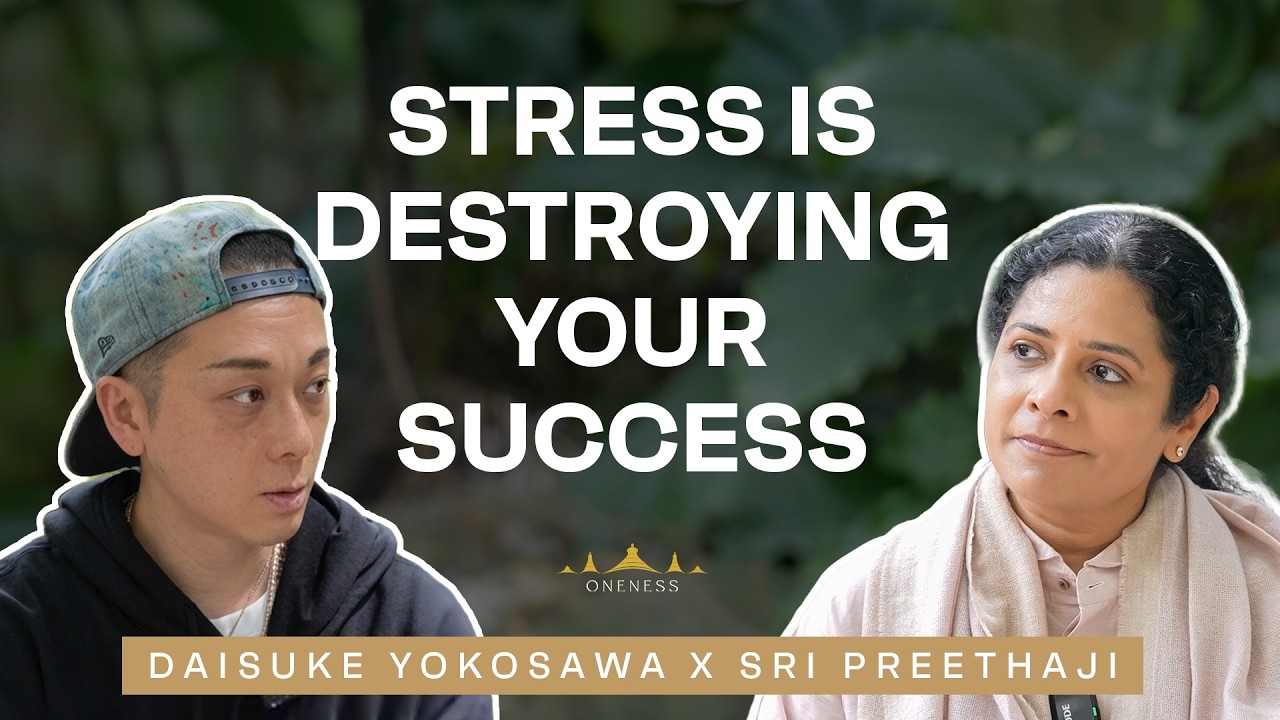
This video presents Isabella's personal account of discovering inner peace through the Oneness Movement's spiritual practices. Rather than a prescriptive teaching, it's a lived example of how systematic inner work—particularly through the techniques and consciousness frameworks taught by Sri Preethaji and Sri Krishnaji—can dissolve inner conflict and create genuine peace independent of external circumstances. The testimony illustrates the movement's core premise: that peace is not a state to be acquired but an obstacle to be removed through aligned living and conscious awareness.
What Is the Oneness Movement's Approach to Peace?
The Oneness Movement, founded by Sri Preethaji and Sri Krishnaji, operates on a distinct premise about how inner peace arises. Rather than framing peace as a goal to achieve through effort alone, the movement teaches that peace is the natural state when the mind, body, and spirit are in alignment. Isabella's story serves as a real-world anchor for this philosophy—not as a dramatic conversion, but as a gradual unfoldment of what becomes possible when someone engages consistently with the practices and consciousness frameworks the movement offers.
The movement emphasizes that peace is accessible to ordinary people living ordinary lives, not only to monastics or spiritual renunciates. This democratization of spiritual experience is central to their teaching. Isabella's testimony, though brief in duration, points to this accessible path: her peace emerges not through withdrawal from the world but through a shift in how she relates to her inner experience and her circumstances.
How Does Inner Peace Differ From Surface Happiness?
Isabella's journey reflects an important distinction the Oneness Movement makes between conventional happiness (which depends on external events going well) and genuine peace (which is independent of circumstance). Many spiritual traditions teach this distinction, but the Oneness Movement operationalizes it through specific practices and meditation techniques designed to separate one's core sense of well-being from the fluctuations of daily life.
In Isabella's case, the peace she describes likely emerged through this process of decoupling—learning to access a deeper stability that exists beneath emotional reactivity and circumstantial stress. This is what makes her story valuable: it's not presented as an exceptional or miraculous transformation, but as a natural outcome of consistent spiritual practice applied to an ordinary human life.
What Role Does Spiritual Practice Play in Transformation?
The Oneness Movement teaches that transformation requires both knowledge and practice. Intellectual understanding of spiritual principles is necessary but insufficient; sustained engagement with meditation, awareness exercises, and community support creates the actual shift in consciousness that Isabella describes. Her willingness to remain engaged with the practices—whatever their specific form—appears to be the engine of her transformation.
This reflects a core Oneness teaching: that consciousness itself can be trained and refined, much like any other capacity. Peace is not something that happens to you; it emerges when you create the conditions for it through dedicated inner work. Isabella's story, condensed as it is, demonstrates someone who did this work and found genuine results.
Why Does the Oneness Movement Use Testimonial Stories?
The inclusion of Isabella's story in the movement's public teaching serves several functions. First, it provides relatable evidence that the practices work in real lives—not in theory, but in practice. Second, it bypasses intellectual doubt; watching someone describe their own experience of peace often resonates more directly than hearing teachings about peace. Third, it signals to seekers that they are not uniquely broken or stuck; others have walked this path and found genuine transformation.
Many traditional spiritual movements have used this method. The early Buddhist tradition preserved accounts of disciples' awakenings. Hindu and Sufi traditions include stories of realized masters and sincere practitioners. The Oneness Movement continues this lineage while updating it for contemporary audiences through short video formats accessible on digital platforms.
What Conditions Support Lasting Peace?
While Isabella's specific practices are not detailed in this short testimony, the Oneness Movement generally teaches that lasting peace requires: sustained meditation practice, conscious relationships (often facilitated through group gatherings), alignment between internal values and external actions, and engagement with teachings that refresh understanding. Isabella's peace appears to rest on these foundations—she has woven spiritual practice into her life in a way that maintains itself rather than requiring constant willpower.
The movement also emphasizes that peace deepens in community. While individual meditation is essential, the transmission that occurs in group settings—in the presence of realized teachers and fellow practitioners—accelerates and stabilizes transformation. Isabella's participation in the Oneness Movement community likely plays a significant role in sustaining her experience.
How Is Peace Described Rather Than Defined?
Rather than offering abstract definitions, Isabella's story invites viewers into the felt reality of peace. Peace, as she embodies it, appears to be: a settled quality of presence; freedom from the constant mental commentary that creates stress; the ability to meet life events without automatic reactivity; and a baseline sense of okayness that doesn't depend on things being exactly as one wishes.
This experiential description is more useful than philosophical definition, because it allows seekers to recognize peace when they encounter it. It also avoids the trap of making peace seem exotic or unattainable. Isabella is not presented as superhuman or uniquely blessed; she is presented as someone who found her way back to the natural peace that exists within.
Where to Go From Here
If Isabella's story resonates with you, the next steps are practical rather than abstract. Seek out the Oneness Movement's meditation and awareness practices, which are freely available through their website and apps. Attend a gathering or meditation group if one exists in your region; the transmission from teachers and community significantly accelerates progress. Consider exploring Sri Preethaji and Sri Krishnaji's full teachings on consciousness, which provide the framework for understanding not just why peace matters, but how to access it consistently. Finally, begin or deepen your own daily practice. The peace Isabella describes is not reserved for special people or special circumstances—it emerges naturally when the conditions for it are cultivated.