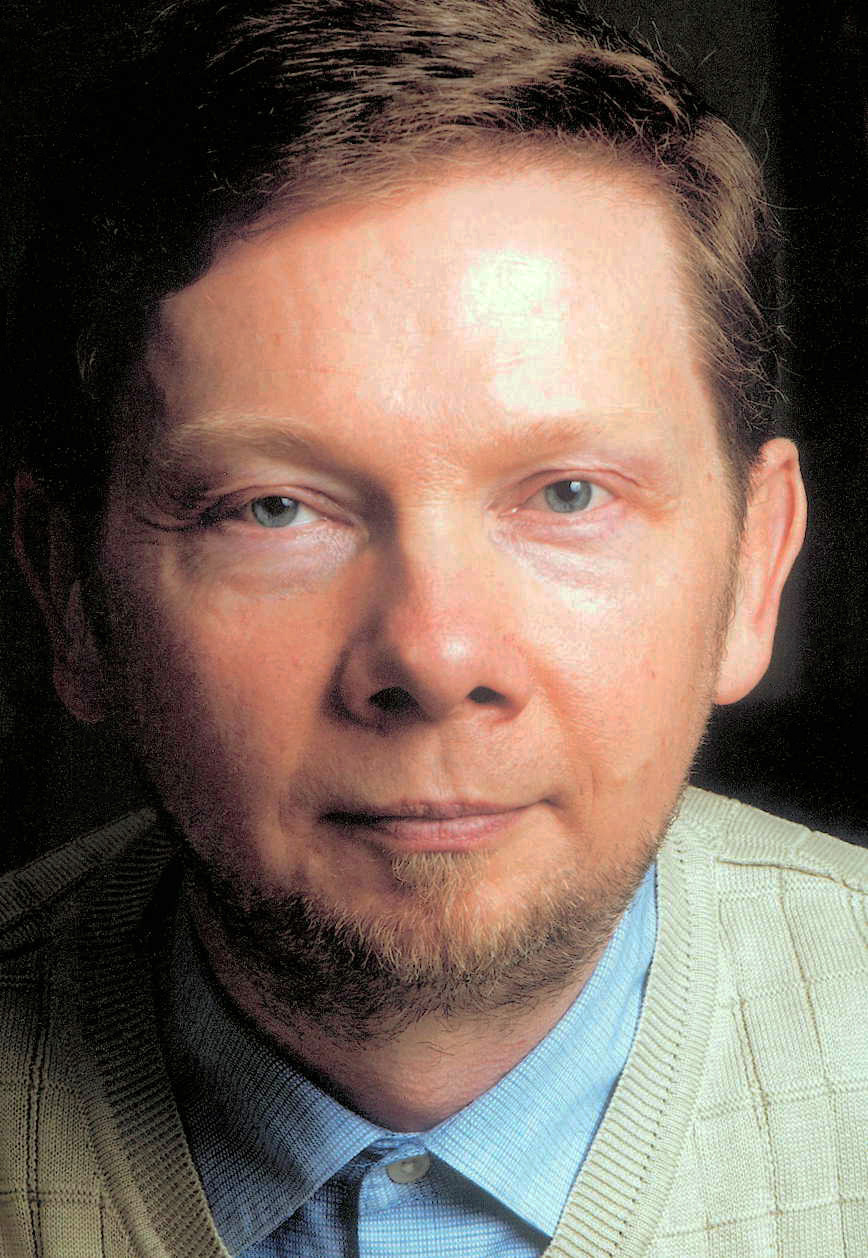
Eckhart Tolle examines the paradoxical human tendency to resist consciousness and personal growth—what he calls a "perverse pleasure" in choosing suffering over evolution. Rather than moving toward greater awareness and freedom, many people unconsciously prefer the familiar pain of their conditioning, habitual patterns, and ego-driven narratives. Understanding this resistance is the first step toward dissolving it and stepping into a more awakened, present way of being.
What Does It Mean to Resist Consciousness?
Consciousness, in Tolle's framework, is not a mystical abstraction but a practical shift in awareness—the capacity to observe your thoughts, emotions, and reactions without being completely identified with them. Resisting consciousness means actively choosing not to see clearly, not to question your habitual patterns, and not to expand beyond the prison of your conditioned mind.
When you resist consciousness, you are essentially saying no to freedom. Instead, you remain locked in a cycle where the same thoughts generate the same emotions, which trigger the same behaviors, which produce the same suffering. This is not an accident or a sign of weakness; it is, Tolle suggests, a choice made at an unconscious level—often because that resistance feels safer or more familiar than the unknown territory of awakeness.
Why Do We Take Perverse Pleasure in Suffering?
The central insight Tolle explores is that human beings often derive a strange, counterintuitive satisfaction from their own pain and limitation. This "perverse pleasure" operates below conscious awareness. Several mechanisms are at work:
- The ego's need for identity: Your suffering and your problems feel like "you." They give your mind a narrative, a story it can tell repeatedly. Without them, the ego fears it will disappear or become irrelevant. Strangely, a painful identity feels safer than no identity at all.
- Familiarity over freedom: Even when suffering is obvious and exhausting, it is known. The mind prefers the devil it knows to an uncertain future. Waking up requires stepping into the unknown, which triggers fear at the deepest levels of the unconscious.
- Secondary gain: Suffering often comes with subtle payoffs—attention from others, justification for inaction, avoidance of responsibility, or an excuse to remain small. The pleasure is "perverse" because you are unconsciously profiting from your own pain.
- The addictive quality of emotion: Even negative emotions create a burst of energy and intensity that the nervous system can become dependent on. Drama, worry, and resentment are emotionally stimulating. In contrast, peace and presence can initially feel boring or empty to a mind addicted to turbulence.
How Does Conditioning Lock Us Into Resistance?
From earliest childhood, you absorb patterns from your family, culture, and environment. You learn which emotions are acceptable, which thoughts to focus on, what kind of person you are supposed to be. Over time, these patterns calcify into what Tolle calls the "pain body"—a reservoir of accumulated emotional suffering that becomes part of your identity.
Once established, this conditioning runs on autopilot. You do not consciously decide to resist growth; instead, you simply follow the neural pathways that have been worn deepest. The mind replicates yesterday's drama because that is what it knows. And because you have no awareness of the pattern itself—no conscious distance from it—you experience your resistance as inevitable, as simply "how life is" rather than as a choice.
What Is the Role of the Ego in Resisting Consciousness?
The ego—the constructed sense of separate self—depends entirely on maintaining your pain. Without your story of being victimized, injured, not good enough, or special in your suffering, the ego loses its primary organizing principle. For the ego to survive, it must keep you identified with your thoughts, emotionally reactive, and locked in time (replaying past hurts or fearing future loss).
When you begin to awaken to consciousness, you start to see through the ego's narratives. You notice that your thoughts are not fact, that your emotional reactions have a pattern, that you are not your story. This transparency is exactly what the ego fears most. Rather than allow this dissolution, the ego will sometimes intensify its grip—it will manufacture more drama, more justification for suffering, more reasons why you cannot change. It fights for its survival.
Why Is Presence So Threatening to the Unconscious Mind?
Presence—the quality of being fully here now, rather than lost in thought about past or future—dissolves suffering because suffering exists only in time. Worry and regret require memory and projection. Resentment requires a story you keep telling. Anxiety requires imagined futures. But in the actual present moment, in pure awareness of what is, these mental constructs evaporate.
This is why the unconscious mind resists presence so violently. Presence is a threat to the entire edifice of ego and identity. The untrained mind will go to extraordinary lengths to escape the present moment—through distraction, rumination, fantasy, substance use, compulsive thinking, or endless planning. Anything but here. Anything but now. Because in the now, there is nowhere to hide and nothing to defend.
How Does Resistance Show Up in Daily Life?
Resistance to consciousness is not rare or exotic—it is everywhere. You see it in the moment you recognize a pattern in your behavior but choose not to examine it. You see it in the way you replay conversations in your mind, justifying your position rather than opening to the other person's perspective. You see it in how you defend your suffering, insisting that your circumstances are uniquely difficult and therefore you have a right to remain angry or afraid.
It appears in procrastination, in addiction, in staying in situations that no longer serve you, in relationships where you collude with someone's unconsciousness because it is easier than triggering change. It appears in how you make yourself right and others wrong, how you collect evidence for your story about who you are and what the world is like. Every one of these patterns is a form of resistance to the clarity and freedom that consciousness offers.
What Happens When You Stop Resisting?
The moment you withdraw your unconscious agreement to remain asleep, things begin to shift. This does not necessarily mean dramatic transformation overnight. Instead, it begins as a subtle shift in awareness—a slight distance between you and your thoughts, a moment of noticing that you are observing your emotion rather than being completely consumed by it.
As this gap widens, the habitual patterns lose their automaticity. You realize that the voice in your head is not you. You see that your emotional reactions have a predictable structure. You begin to recognize the moment just before you act out an old pattern, and in that recognition, you have the freedom to choose something different. This freedom does not come from willpower or self-discipline; it comes from seeing clearly what is actually happening.
The "perverse pleasure" in suffering begins to lose its charge. You notice how exhausting it is to maintain a story, to stay identified with pain, to keep yourself separate from the wholeness of the present moment. What once felt necessary—the drama, the justification, the constant inner commentary—gradually reveals itself as optional.
Where to Go From Here
If you recognize yourself in this discussion, the first step is not to try harder or to force yourself to change. Effort and force are themselves forms of resistance. Instead, begin to cultivate a simple, nonjudgmental awareness of how you are resisting consciousness right now. Notice when you are replaying a grievance, lost in worry, or defending a story about yourself. Do not judge yourself for it; simply observe.
The clarity itself is transformative. As you see your patterns with increasing honesty, the energy they have held begins to dissolve naturally. You do not need to overcome your conditioning through willpower; you need to see it clearly enough that you no longer unconsciously believe in it. That seeing is consciousness itself.


