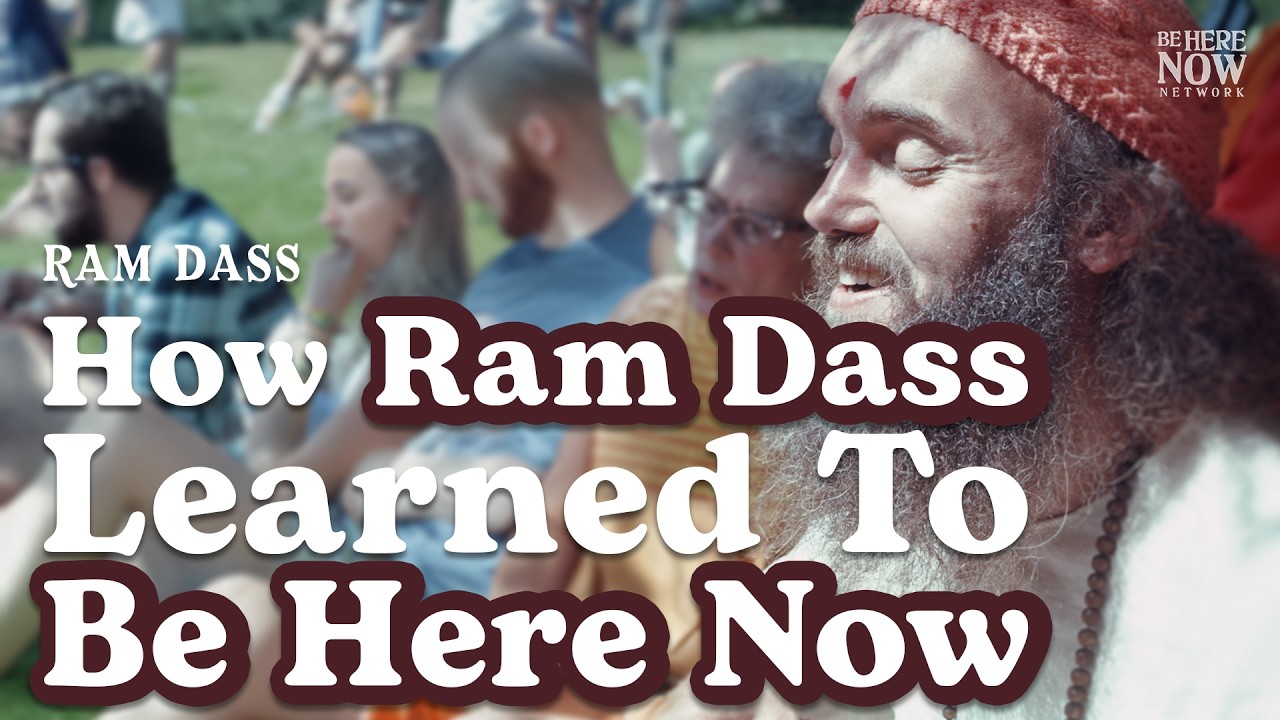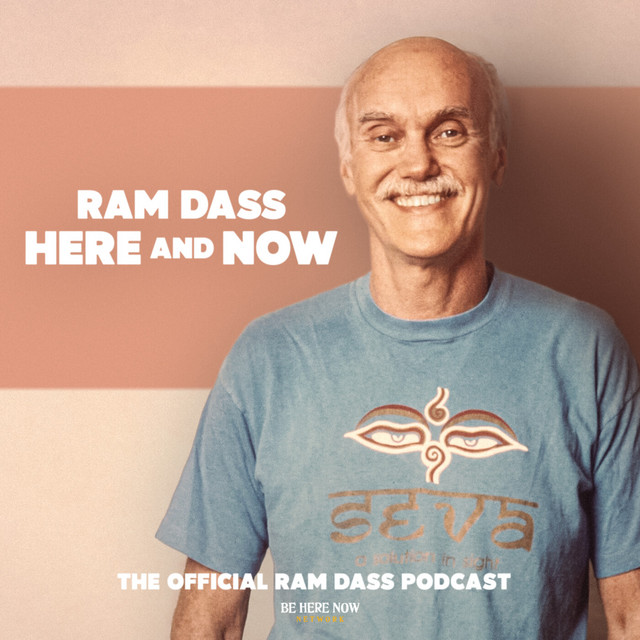
In a 1995 talk to the Shivas Irons Society, Ram Dass examines the unexamined assumptions people carry about what spirituality is and how it should look, arguing that consciousness work doesn't require retreating from the world but can happen within any activity—including golf. He frames the sport not as a mystical metaphor but as a practical laboratory for observing the mind, working with attachment, and refining awareness in real time. Rather than treating spirituality as separate from ordinary life, he invites practitioners to experiment with their consciousness using the immediate feedback loop that golf provides.
What Assumptions About Spirituality Block Real Practice?
Ram Dass begins by questioning a central assumption many people hold: that spirituality requires leaving the world behind, adopting special language, or performing recognizable "spiritual" behaviors. This assumption creates an invisible boundary between what practitioners consider "spiritual work" and their daily lives. According to Ram Dass, this division is itself a form of delusion—a way the ego protects itself by keeping spirituality exotic and distant from ordinary experience.
He points out that people often imagine spirituality as something that happens in caves, monasteries, or meditation halls—places removed from the messy complexity of the material world. While retreat practices have their value, the assumption that only those environments count as legitimate spiritual work closes off vast territories of potential awareness. Golf, in this context, becomes an unexpected teacher precisely because it shatters that assumption. A golf course is not a sacred space; it is utterly ordinary, competitive, and tied to ego and attachment. Yet that very ordinariness makes it an excellent laboratory.
Why Is Golf a Laboratory for Consciousness?
Golf presents several qualities that make it useful for consciousness experimentation. First, it offers immediate, unambiguous feedback. You hit the ball and it goes somewhere specific. There is no way to hide from the result or reframe failure as success. This directness mirrors the feedback loop built into many traditional meditation practices, where you observe the mind and note when it has wandered.
Second, golf engages the body, mind, and emotion in an integrated way. A golfer must manage physical technique, mental focus, and emotional regulation simultaneously. When the mind wanders during a swing, the body reflects that wandering immediately in the ball's flight. When fear or anger arises, it shows up in performance. This integration makes golf a complete practice for observing how consciousness actually works in moment-to-moment engagement with the world.
Third, golf creates a contained frame for working with attachment and ego. On the course, the stakes are low—it is a game—yet the ego still invests heavily in the outcome. This makes golf a safe place to experiment with letting go, witnessing without judgment, and noticing the difference between playing well and being identified with the score. The ego's attachments are visible and workable in ways that sometimes feel safer than examining them in situations with real consequences.
How Does Experimentation Replace Dogma in Spiritual Life?
Ram Dass emphasizes that the approach to golf—and to spirituality more broadly—should be experimental rather than dogmatic. Rather than accepting received ideas about what should happen when you meditate, pray, or practice yoga, he invites practitioners to become scientists of their own consciousness. This shifts spirituality from something you believe in to something you investigate directly.
When you approach golf as a consciousness experiment, you are not trying to become enlightened through golf. You are using golf as a controlled environment to notice patterns in how your mind works. You might experiment with maintaining attention during a swing. You might observe what happens to your body when you become attached to a particular outcome. You might notice the quality of thought that arises just before you make an error versus the quality that arises when you are playing well.
This experimental stance has profound implications for spiritual practice generally. Instead of following a teacher's instructions blindly, or assuming that meditation should feel a certain way, or believing that enlightenment requires specific conditions, practitioners become active agents in their own discovery. Ram Dass suggests that this empirical approach actually honors the integrity of spiritual work more than passive faith does, because it asks each person to verify their understanding through direct experience.
What Does It Mean to Use Sport as Spiritual Practice?
The mystical nature of golf, as Ram Dass frames it, is not that the game contains hidden spiritual meanings or that great golfers are secretly yogis. Rather, the mystical aspect emerges when a practitioner approaches any activity—sport, cooking, conversation, work—with full presence and awareness of the consciousness that is doing the activity.
In traditional mysticism, the goal is often to transcend the separate self and recognize one's unity with all things. Golf becomes mystical when the golfer stops being completely identified with the separate "I" that either succeeds or fails, and instead becomes the field of awareness within which the whole activity—golfer, clubs, ball, course, score—is arising. This is not a belief; it is a lived shift that becomes apparent through experimentation and practice.
Ram Dass suggests that such presence transforms any activity into a form of worship or devotion. You are no longer "just" playing golf; you are meeting the universe on the golf course. Your consciousness is awake to what is actually happening, moment by moment, rather than lost in stories about what should happen or what the score means about you as a person.
How Does This Challenge Spiritual Hierarchy and Seeking?
Another assumption Ram Dass tackles is the hierarchy implicit in much spiritual seeking: that some practices are more advanced or more legitimate than others. There is an unspoken ranking—meditation sits higher than dancing, renunciation higher than engagement, enlightenment higher than happiness, transcendence higher than embodiment. These hierarchies create a ladder on which practitioners imagine they are climbing toward some future state of completion.
By treating golf with the same seriousness and experimental rigor that one might bring to Vipassana or Advaita Vedanta, Ram Dass flattens this hierarchy. The practice is not in the activity itself but in the quality of consciousness brought to the activity. A person can be entirely unconscious while meditating in a Himalayan cave, and entirely awake while playing golf. The location and form matter far less than the practitioner's actual presence and honesty about what they are experiencing.
This also addresses the problem of spiritual seeking itself. When spirituality is treated as a goal to attain in the future, the present moment is always sacrificed for an imagined state of arrival. Ram Dass invites practitioners to investigate whether enlightenment or spiritual awakening is actually something that happens in the future, or whether it is available now, in this moment, through a shift in the quality of awareness. Golf becomes a laboratory for testing this question immediately, because a round of golf is limited in time and completely present-focused.
What Are the Practical Implications of This Approach?
One practical implication is that spiritual practitioners do not need to separate themselves from their lives in order to practice. A parent, an athlete, a businessperson, or an artist can use their actual lives as the field of practice. The commitment is not to special conditions but to a quality of attention and awareness brought to whatever you are already doing.
Another implication is that when something goes wrong—when you make mistakes, fail, feel frustrated, or become angry—that becomes material for practice rather than a distraction from practice. The golf course, in this sense, is a mirror. Your reaction to a bad shot shows you something true about your mind. Your attachment to a good shot shows you something true about your conditioning. None of this is separate from spiritual work; it is spiritual work.
Ram Dass also suggests that this approach can dissolve the distinction between practice and daily life that keeps many people perpetually practicing while never actually living. If golf is practice, then practice is what you are already doing. If cooking is practice, then practice is happening in your kitchen. If conversation is practice, then practice is happening in your relationships. This integration means that practitioners are not waiting for their real life to begin after they retire from meditation or complete a retreat.
Where to Go from Here
The invitation from Ram Dass is to examine your own assumptions about spirituality and consciousness work. What do you believe should happen when you meditate? What location or condition do you think is necessary for genuine spiritual practice? What activities in your life do you consider "separate" from your spiritual path? Once these assumptions are visible, they become workable.
Consider choosing an activity you engage in regularly—something that involves skill, presence, and some degree of stakes or engagement—and approaching it as an experiment in consciousness. It does not have to be golf. It could be running, painting, cooking, conversation, or any activity where you can notice your own mind and its patterns in real time. The practice is not to become perfect at the activity or to achieve a particular state, but to observe directly how consciousness works when you are fully present to what you are actually doing. Let the feedback be immediate. Let the laboratory be your own experience. And notice what happens when you bring the same investigative honesty and openness to your daily life that you might bring to a meditation cushion.